 Wei Chen
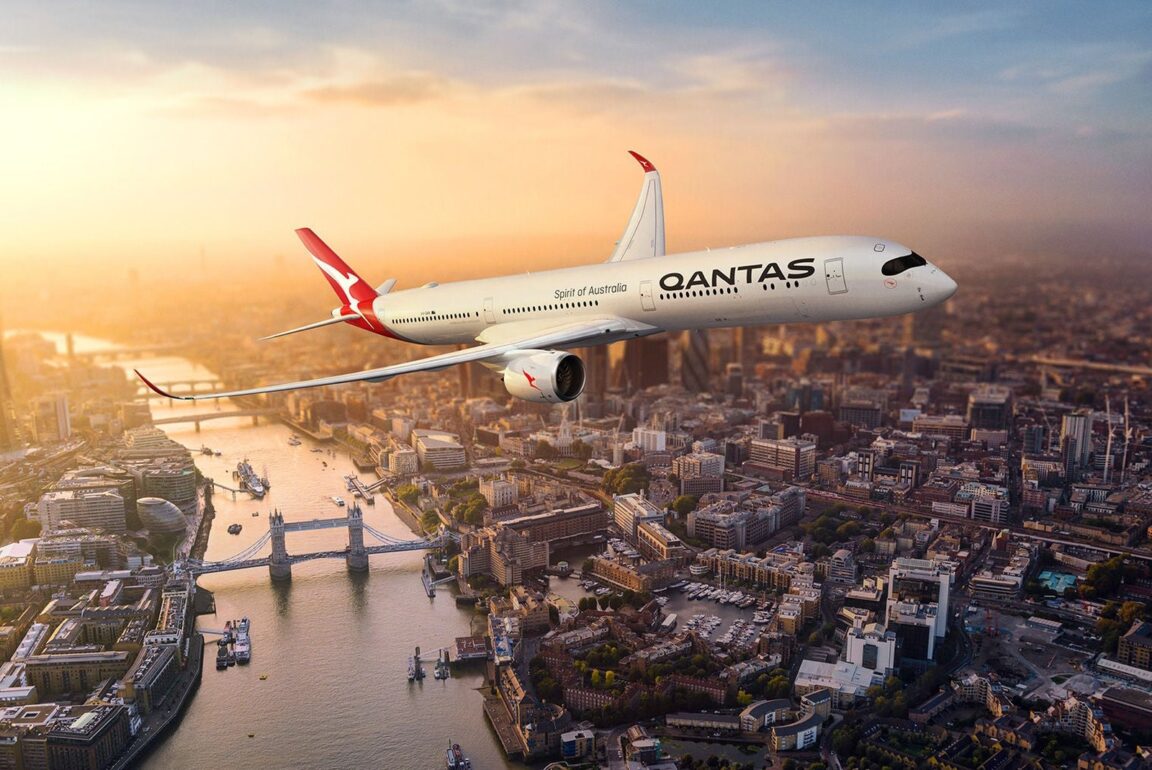
Project Sunrise is no longer a rendering and a promise. Qantas has confirmed that from October 2027 its most famous flight numbers, QF1 and QF2, will fly Sydney to London non-stop for the first time, operated by a specially configured Airbus A350-1000ULR with an extra fuel tank, just 238 seats and a dedicated Wellbeing Zone built for flights of up to 22 hours. Tickets for the direct Sydney to London service are scheduled to go on sale from February 2027, the first aircraft, named Vega, is due for delivery in April 2027, and a Sydney to New York non-stop is planned to follow in mid-2028. Until those dates arrive, nothing about Project Sunrise can be booked, and Qantas is explicit that delivery, sales and the start of service remain subject to aircraft certification and regulatory approvals.
Quick Facts
- First route: Sydney to London Heathrow, daily, flown as QF1 and QF2 from October 2027, according to Qantas.
- Tickets: Scheduled to go on sale from February 2027. No Project Sunrise fares are on sale yet.
- The aircraft: Airbus A350-1000ULR, with an additional 20,000 litre fuel tank that lets it fly more than 16,000 kilometres and up to 22 hours non-stop.
- Seats: 238 in total, which Qantas calls the lowest seat density of any A350-1000 in the world: 6 First suites, 52 Business suites, 40 Premium Economy seats and 140 Economy seats, including 42 Economy Plus seats.
- The fleet: 12 A350-1000ULRs on order. The first aircraft is named Vega and is expected to be delivered in April 2027.
- New York: Sydney to New York non-stop flights are planned to follow from mid-2028, with tickets on sale from August 2027.
- Time saving: Up to four hours compared with the existing one-stop Sydney to London services.
What exactly has Qantas confirmed?
The confirmation, published by Qantas in November 2026, closes years of speculation about which city pair would launch the program. London comes first. From October 2027, QF1 and QF2, the flight numbers that have been tied to the Sydney to London Kangaroo Route for generations, transfer to the non-stop service. The Kangaroo Route itself began in 1947, when the journey took four days and seven stops, and Qantas is leaning hard on that lineage: the non-stop is presented as the route finally shedding its last stop.
The existing Sydney to London service via Singapore does not disappear. It continues with new flight numbers, QF5 and QF6, for travellers who want the stopover, while the seasonal Perth to Rome services that currently use QF5 and QF6 move to QF105 and QF106. Perth to London, flown non-stop with the Boeing 787-9 since 2018, also continues, so from late 2027 Qantas will sell two different non-stop Australia to London products, one from the west coast and one from the east.
How does an A350 fly 22 hours?
The A350-1000ULR is a standard A350-1000 airframe adapted for one job. The defining change is an additional 20,000 litre fuel tank, which gives the aircraft the range to fly more than 16,000 kilometres in a single sector. Everything else about the configuration serves that range. A long-haul A350-1000 in a typical airline layout carries well over 300 passengers; Qantas carries 238, because every seat not installed is weight available for fuel and for the space that makes a 22 hour flight sellable.
Qantas will take delivery of 12 of the aircraft. The first test aircraft is in the final stages of its flight test program, and the first aircraft for delivery, named Vega after a star once used for navigation by the airline’s Catalina flying boats, is expected in April 2027. That gap between delivery and the October launch is deliberate: it leaves room for crew training, route proving and the certification steps that Qantas flags in its own fine print.
What are the four cabins like?
First: six suites that work like small hotel rooms
The First cabin has just six enclosed suites in a 1-1-1 layout. Each has a two metre flat bed with multi-layer memory foam, a separate reclining armchair and a flexible dining and work space that can seat two, so a companion from another suite can join for a meal. Qantas describes the design intent as blurring the line between air travel and boutique accommodation, and on a sector this long the separate bed and chair matter more than any single luxury finish: they let a passenger change posture and place across a full day in the air.
Business: doors, finally, and an 80 inch bed
Business has 52 suites in a 1-2-1 layout, every seat with direct aisle access. For the first time on Qantas, the suites have a sliding door, plus an adjustable divider between the alternating centre seats. The flat bed is 80 inches long, and each suite adds a large dining table and work surface and more storage than the current Qantas business seat. On the Sydney to London sector, where the night portion can run to ten hours or more depending on direction and season, the door and the bed length are the two specifications most likely to decide whether passengers arrive functional.
Premium Economy and Economy: pitch is the headline
Premium Economy seats 40 passengers in a 2-4-2 layout, with a winged privacy headrest and a calf rest, and Qantas’s fact sheet gives it a 40 inch pitch, the most generous on any Qantas aircraft. Economy seats 140 in a 3-3-3 layout at a 33 inch pitch across most of the cabin, again the most spacious economy pitch in the Qantas fleet, with a 13.3 inch entertainment touchscreen and Bluetooth audio. Positioned at the front of the Economy cabin, 42 Economy Plus seats offer a 34 inch pitch with priority boarding and priority access to overhead lockers, sold as an add-on comfort tier rather than a separate cabin.
What is the Wellbeing Zone, and who can use it?
The feature no other airline currently offers is the Wellbeing Zone, a purpose-built space between the Premium Economy and Economy cabins that every passenger on board can access, including Economy passengers. It has sculpted wall panels with integrated stretch handles, a guided on-screen movement program, a hydration station and a range of premium refreshments. Qantas says it will be the first airline in the world to offer a purpose-built in-flight wellbeing space of this kind.
The zone is the visible product of the research program behind Project Sunrise. Qantas developed the cabin with Caon Design, chef Neil Perry and the University of Sydney’s Charles Perkins Centre, which studies how lighting, movement, hydration and meal timing affect fatigue on ultra-long flights. The same research shaped the aircraft’s 12 programmable lighting scenes, including settings named Sunrise, Sunset and Awake, designed around circadian rhythm science to shift passengers toward destination time before they land. The entertainment system is synced with the lighting, meal service and rest periods so passengers can plan sleep rather than have it happen to them.
How does the non-stop change a Sydney to London trip?
The practical gain is time and simplicity. Qantas puts the saving at up to four hours against its one-stop services, and the non-stop removes the middle-of-the-night transit, the second security process and the missed-connection risk that hang over every one-stop itinerary. What it asks in return is endurance: up to 22 hours in one seat, on one aircraft, with no chance to walk an airport concourse halfway. That trade is exactly what the cabin design is trying to soften, and it is why the February 2027 on-sale date matters. The first weeks of inventory will show how Qantas prices the time saving, and whether the non-stop carries the premium that ultra-long-haul routes usually command.
Travellers weighing hub strategies should also read how other mega-hubs are adding capacity, in our explainer on Istanbul Airport’s triple independent runway operations, and, for a very different kind of long journey north, our guide to Svalbard’s treaty entry rules.
What should travellers do now?
Book nothing yet, because there is nothing to book. The sensible sequence is to note February 2027 for the London on-sale, keep the existing one-stop QF services and the Perth non-stop in mind as the fallback and the comparison, and treat October 2027 as a target rather than a guarantee until certification is complete. Anyone whose travel depends on arriving in London on a specific date in late 2027 should hold a refundable one-stop option as insurance, then switch if the non-stop opens on schedule.
Frequently Asked Questions
When do Qantas Project Sunrise flights start?
Qantas plans to start daily non-stop Sydney to London flights in October 2027, flown as QF1 and QF2 with the Airbus A350-1000ULR. The start remains subject to aircraft certification and regulatory approvals.
When can I buy tickets for Sydney to London non-stop?
Qantas says tickets for the direct Sydney to London service are scheduled to go on sale from February 2027. Sydney to New York tickets are planned to go on sale from August 2027, ahead of a mid-2028 launch.
How long is the Sydney to London non-stop flight?
The A350-1000ULR is fitted with an additional 20,000 litre fuel tank and can fly more than 16,000 kilometres, up to 22 hours non-stop. Qantas says the non-stop saves up to four hours compared with its existing one-stop services.
What is the Qantas Wellbeing Zone?
It is a dedicated space between the Premium Economy and Economy cabins, open to all passengers, with stretch handles, a guided on-screen movement program, a hydration station and refreshments. Qantas developed it with the University of Sydney’s Charles Perkins Centre.
How many seats does the Project Sunrise A350 have?
238 seats in four cabins: 6 First suites, 52 Business suites, 40 Premium Economy seats and 140 Economy seats, including 42 Economy Plus seats with extra pitch at the front of the Economy cabin.
Will the Sydney to Singapore to London flight still operate?
Yes. Qantas says the existing Sydney to London via Singapore service continues with new flight numbers, QF5 and QF6, for customers who prefer a stopover.
Facts checked against Qantas’s official A350 Project Sunrise pages and its November 2026 QF1 announcement on 21 November 2026. Schedules, on-sale dates and cabin designs remain subject to change and regulatory approval. Featured image: a Qantas Airbus A350 in Project Sunrise livery over London, from Qantas (qantas.com), used with credit.