 Rafael Santos
There is no single best time to go to Patagonia, and anyone who gives you one month for both parks has not walked both. Torres del Paine in Chile and El Chalten in Argentina sit on opposite sides of the Southern Patagonian Ice Field, share the same fierce west wind, and still reward different months. For Torres del Paine, the deciding factors are wind on the W Trek and whether the refugios you need are actually bookable. For El Chalten, where most walks are day hikes from the village, the deciding factors are February crowds on the Laguna de los Tres trail and the March turn of the lenga forest to gold and red, balanced against services that start to close. Decide park by park, book the Chilean nights first, and treat the shoulder months as a trade, not a bargain version of summer.
Quick Facts
- The two parks: Torres del Paine National Park in Chile, administered by CONAF, and the north zone of Los Glaciares National Park in Argentina, based in the village of El Chalten.
- Torres del Paine main season: November to March, when all refugios and services operate and daylight is longest. October and April are shoulder months with fewer visitors and reduced services.
- The W Trek: about 70 to 80 kilometres over 4 to 5 days, linking the base of the Towers, the French Valley and Grey Glacier. Wild camping is not allowed. Every night must be a booked refugio or designated campsite.
- El Chalten season: October to April, per the official El Chalten visitor information, with most travellers arriving December to March and numbers peaking in January.
- The wind: strongest in the summer months on both sides of the border. El Chalten visitor information notes the west wind blows hard mostly from October to March, and that days without wind are rare in high summer.
- The shoulder trap: in October, April and into May, some refugios, lodgings, restaurants and tours close or run reduced hours, even though the parks themselves remain visitable.
- Booking rule: reserve Torres del Paine refugios and campsites, split between the Las Torres Patagonia and Vertice Patagonia operators, as early as bookings open for December to February dates.
Why do the two parks reward different months?
The difference is how you sleep. On the W Trek you sleep inside the park, in a fixed chain of refugios and campsites, and the trek only works if every night lines up in the right order. That makes Torres del Paine a booking problem first and a weather problem second. In El Chalten you sleep in the village and walk out each morning, with trails starting at the edge of town for the Fitz Roy and Cerro Torre routes. That makes El Chalten a crowd and daylight problem: you can change your hike with the forecast, swap a rest day, or wait out a bad morning in a cafe, none of which is possible when a refugio bed 20 kilometres away has your name on it.
The ice field drives the weather on both sides. Moist Pacific air hits the Andes, dumps precipitation on the west, and pours over the crest as wind toward the Argentine steppe. Both parks can give you sun, rain and hard wind in the same hour, a point the official park guidance for Los Glaciares stresses when it advises visitors to check trail and road status and carry layers, waterproofs, proper footwear, food and water in any season. A month that looks average on a climate chart can still contain the best and worst day of your trip.
Torres del Paine month by month: what actually changes?
October and November: opening, blossom and the strongest wind
October opens the season. Trails and refugios reopen, visitor numbers are low, and snow can still sit on higher ground. November brings the start of high season and, by many trekking accounts, some of the strongest winds of the year, with gusts that can stop you on exposed sections beside the lakes. The reward is space: refugio availability is better than in January, the light is already long, and the park feels newly opened rather than fully occupied. If November is your window, build a buffer day in Puerto Natales and do not plan a tight connection the morning after the trek.
December to February: longest days, fullest refugios
December to February is the reliable core: all services open, the longest daylight, in December and January stretching to very early sunrises and late sunsets, and the best odds that every part of the W is operating normally. It is also when refugio beds sell out months ahead and when the wind is a daily factor rather than an occasional one. February is often described by operators as the sweet spot within high season, slightly past the January peak while keeping summer conditions. None of that helps if you start booking late. The practical order is to fix your W direction, east to west or west to east, reserve each night in sequence with the two operators, then buy the CONAF park entry to match, and only then arrange buses from Puerto Natales.
March and April: colour, calmer trails and closing doors
March keeps much of the summer infrastructure while crowds thin and the southern beech begins to turn. April goes further: beautiful autumn colour, quiet trails, colder mornings, shorter days and a rising chance that a refugio, campsite service or transfer you were counting on has reduced hours or closed for the season. That is the shoulder trap in its Chilean form. A cheap April bed is no use if it is the only open night in a chain that needs four. Check every night of the W, not just the first, and confirm that the return transport from the park is still running on your exit date.
How does wind change a W Trek day?
Wind in Torres del Paine is not background weather. It is the main difficulty on a trek with no technical terrain. Gusts funnel across Lake Pehoe and along the exposed shore paths, they hit hardest on open ground and near the lakes, and they can turn a moderate stage into a slow, braced walk where trekking poles earn their place and loose items disappear if they are not clipped down. Start stages early, when the wind is often lower, keep a hard shell and warm layer reachable at the top of the pack, and treat ranger closures or advice at sector checkpoints as final. The French Valley and the climb to the base of the Towers both involve exposed or steep ground where a forecast that would be merely unpleasant in town becomes a reason to reorder the day.
Packing for that wind is its own discipline, covered in our guide to what to pack for Patagonia, and the booking sequence that makes the trek possible is laid out stage by stage in our W Trek guide to refugio booking order and the wind plan. Read both before you reserve, because the right pack and the right night order are what February cannot fix for you at the trailhead.
El Chalten month by month: crowds first, then colour
December and January: peak village, peak trails
El Chalten was founded in 1985 and is promoted as Argentina’s trekking capital, a title the summer crowds take seriously. December to March brings most travellers, January most of all, per the official El Chalten site. Days are long and mild and all tours and services operate, but the signature trails to Laguna de los Tres and Laguna Torre carry a steady line of walkers, the best lodgings fill, and the wind is at its seasonal strongest. The official site notes that in January and February, the warmest months, the average temperature is about 13.3 degrees Celsius, a useful correction to anyone packing for a hot summer. Start the big hikes at dawn, not for solitude alone but because Fitz Roy is most often clear early, before cloud and wind build over the massif.
February: the crowd peak with the best conditions
February keeps January’s long days and open services and adds the fullest trail conditions of the year. If your priority is completing the long day hikes with the maximum margin of daylight, February is the honest answer for El Chalten, and you pay for it in busy trails, busy restaurants and accommodation booked well ahead. Families and first time visitors who want everything open should accept the crowds and choose February, then manage them with early starts and weekday hikes where the itinerary allows.
March: the colour case, and why many locals prefer it
March is the connoisseur’s month on the Argentine side. The lenga and nire forests turn gold and red on the Laguna de los Tres and Laguna Torre trails, visitor numbers fall away from the February peak, and the wind begins, on average, to ease from its summer strength. Days are still long enough for the full day hikes, and most services are still operating early in the month. The risk grows toward April: colder mornings, shortening days, and, as the official El Chalten guidance puts it for the May to September off season, many lodgings and restaurants close, with tours not running. Late March travellers should confirm their lodging and eating options rather than assuming the February village is still fully open.
Can you combine both parks in one trip?
Yes, and most long Patagonia trips do, moving between El Chalten and Torres del Paine via El Calafate and Puerto Natales. The combination is exactly why the park by park decision matters. A single two week window in February gives you peak conditions in both, at peak prices and peak booking pressure. The same window in mid March gives you a calmer, more colourful El Chalten and a Torres del Paine that is quieter but closer to its service limits. If you combine them, do the W Trek first while its refugio chain is fixed, keep the flexible El Chalten day hikes for the second half where you can react to weather, and add at least one spare day for the border crossing and a blown out weather day. Travellers extending to the full loop should also read our O Circuit guide to booking windows and refugio order, because the longer circuit tightens every booking constraint described here.
Which month should you actually choose?
Choose December to February if this is a once only trip, you want every service open, and you can book the W refugios many months ahead. Choose February specifically if El Chalten’s long hikes matter most. Choose March if colour, thinner trails and a calmer village matter more than maximum daylight, and you will verify that late season services are still open. Choose October or November only with a buffer day, a tolerance for snow patches and strong wind, and confirmed refugio nights. Avoid treating April as a discount February: it is a different trip, quieter and more beautiful in the forest, but one where the closed refugio, the stopped tour and the shortened day are real planning inputs, not footnotes. Facts checked against CONAF and Torres del Paine operator guidance, Los Glaciares and official El Chalten visitor information on November 23, 2026.
Frequently Asked Questions
What is the best month for the W Trek?
February is the most commonly favoured month, inside the November to March main season, with all refugios open and long daylight. December and January offer the same open infrastructure with more visitors and very strong wind. Whatever month you choose, confirmed refugio or campsite bookings for every night are mandatory, because wild camping is not allowed.
How far ahead should refugios be booked?
As early as bookings open for December to February dates. The W uses two operators, Las Torres Patagonia in the east and centre and Vertice Patagonia in the west, so the full chain of nights must be reserved in itinerary order. Shoulder months are easier, but every night still needs to be open and confirmed.
Is March really better than February in El Chalten?
For many walkers, yes. March brings autumn colour in the lenga forest, fewer people on the Laguna de los Tres and Laguna Torre trails and wind that is easing from its summer peak, while days remain long enough for the big hikes. February wins on daylight, warmth and every service being open.
What is the shoulder season trap?
Assuming the park being open means the trip is fully supported. In October, April and beyond, individual refugios, lodgings, restaurants and tours close or reduce hours at different times. A W Trek chain or an El Chalten base with one closed link can fail even though the national park itself is open.
How strong is the wind, honestly?
Strong enough to plan around daily. Official El Chalten information says the west wind blows hard mostly from October to March and that days without wind are rare in high summer. In Torres del Paine, gusts across the lakes and exposed sections are the trek’s main difficulty, which is why early starts, layers and heeding ranger advice matter.
Can El Chalten be visited outside October to April?
Yes. The official El Chalten information states the park is open all year and buses arrive daily, but winter brings cold, short days and snow, tours do not operate, some trail sections may close, and most restaurants close from May to September. It suits experienced visitors seeking quiet, not a first trekking trip.
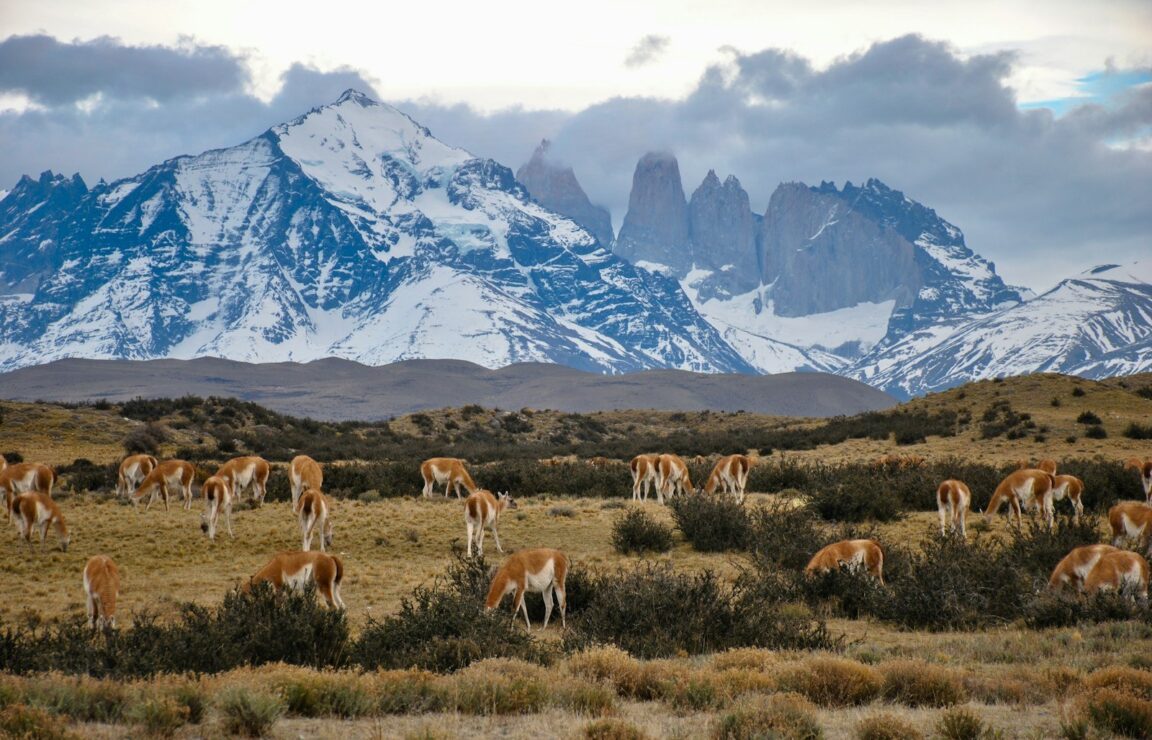
Featured image: the Towers of Torres del Paine and the snow covered Paine massif behind guanacos grazing on the steppe in Chilean Patagonia. Photo: Alex Wolowiecki, via Unsplash, Unsplash License, used with credit. Resized to exactly 1600 px wide.