 Maya Chen
Singapore with children works when you stop fighting the heat and start sequencing around it: outdoors early, air conditioning at midday, food in the evening when the hawker centres come alive. The pattern that holds a family day together is a morning at the Mandai wildlife parks, where River Wonders opens at 9am beside Singapore Zoo, a slow indoor middle of the day, a hawker centre dinner built around dishes children actually eat, and Sentosa kept to a half day with one or two paid attractions rather than a full day of queues. Check Singapore’s official heat stress advisory on the myENV app or weather.gov.sg before prolonged outdoor time, because the National Environment Agency grades heat stress as low, moderate or high using Wet Bulb Globe Temperature, and children are named among the groups who should take greater care.
Quick Facts
- The heat rule: Singapore’s NEA and Meteorological Service heat stress advisory uses Wet Bulb Globe Temperature. Below 31 degrees is low, 31 to below 33 is moderate, and 33 or above is high, when outdoor activities should be minimised and breaks taken in shade.
- River Wonders: at Mandai Wildlife Reserve, 80 Mandai Lake Road, open daily 9am to 6pm with last entry at 5pm, per Mandai Wildlife Reserve. Asia’s first and only river themed wildlife park, with more than 11,000 animals across 260 species.
- Singapore Zoo: next door at Mandai, open daily 8.30am to 6pm with last entry at 5pm, per Mandai, which makes an 8.30am zoo start the earliest outdoor option in the complex.
- The boat ride: the Amazon River Quest at River Wonders is a paid extra, with a minimum height of 1.06 metres for riders, so measure younger children before you promise it.
- Hawker anchor: Maxwell Food Centre at 1 Kadayanallur Street has more than 100 stalls, including Tian Tian Hainanese Chicken Rice, and works as an early evening dinner when temperatures fall.
- Sentosa transport: the Singapore Cable Car runs daily 8.45am to 10pm with last boarding at 9.30pm, per Sentosa. The Sentosa Express monorail from VivoCity is the simpler family entry for a half day.
- The shape of the day: outdoor attraction before 11am, indoor or rest time until about 4pm, outdoor again only in the late afternoon and evening.
How should a family day be sequenced around the heat?
Think in three blocks. The first block, from arrival until about 11am, is the only block to spend on outdoor walking, animal enclosures, beaches or playgrounds. The second block belongs indoors: a museum, a mall lunch, the air conditioned panda forest at River Wonders, a hotel rest, or the oceanarium on Sentosa. The third block starts when the sun drops, and it is made for hawker centres, the riverfront, and Sentosa’s beaches and evening shows. Families who reverse that order, arriving at a wildlife park at noon because the morning drifted, meet the worst combination Singapore offers: peak heat stress, peak queues and animals sensibly resting out of sight.
The official advisory backs the pattern with numbers rather than vibes. At moderate heat stress, the guidance is to reduce outdoor activities, take regular breaks indoors or in shade, drink more fluids and monitor for signs of heat related illness. At high heat stress, minimise outdoor activities, stay in shade where possible, take longer and more frequent breaks, and wear lightweight, light coloured clothing. Children, infants, the elderly and people who have recently travelled from cooler climates are listed as more vulnerable, which describes most visiting families on their first two days. Plan the hard outdoor work for day three onwards if you can, and keep day one deliberately gentle.
Why start at Mandai, and which park first?
Mandai Wildlife Reserve, in northern Singapore, groups Singapore Zoo, River Wonders and Night Safari together at Mandai Wildlife East, with Bird Paradise and the newer rainforest parks at Mandai Wildlife West. For a family with limited heat tolerance, River Wonders is the kindest morning of the group: much of its route is sheltered, its signature habitats follow the great rivers of the world, and its Giant Panda Forest is climate controlled, which makes it a built in cooling stop in the middle of the visit. Mandai describes River Wonders as home to one of the world’s largest collections of freshwater vertebrates, including the Indian gharial, Mekong giant catfish and the giant pandas Kai Kai and Jia Jia.
What will children remember at River Wonders?
The Amazon Flooded Forest, with manatees moving slowly through a large freshwater aquarium alongside arapaima and giant river otters, is the exhibit children talk about afterwards, because the scale reads even to a five year old. The Amazon River Quest boat ride adds motion, passing jaguars, tapirs and capybaras, but it carries the 1.06 metre minimum height and a separate charge, so it should be a bonus for tall enough children rather than the promise the morning hangs on. The Once Upon a River animal presentation at Boat Plaza runs during the day and gives the visit a fixed point: arrive at the 9am opening, walk the river zones in order, take the panda forest slowly as your cooling break, and aim to leave by late morning as the heat builds and school groups thicken.
Should you add Singapore Zoo on the same morning?
Only if your children are early risers and strong walkers. The zoo opens at 8.30am, half an hour before River Wonders, and Mandai suggests about two and a half hours for the zoo against about two hours for River Wonders. Doing both properly is a four to five hour outdoor morning, which breaks the heat rule for most families. Choose one park per morning and do it well. A practical split is River Wonders on one day and the zoo on another, each followed by an indoor afternoon, rather than a single heroic Mandai day that ends with a meltdown in the taxi queue. Families planning the wider trip can compare notes with our two days in Singapore itinerary covering hawkers, gardens and where to stay.
What belongs in the air conditioned middle of the day?
Lunch in air conditioning, first of all, and not a hawker centre at its steamy midday peak if your children are already hot. This is the slot for the National Museum, the ArtScience Museum, an indoor playground, or simply the hotel pool in shade and a rest, which younger children need more than another attraction. On a Mandai morning, the return journey toward the city passes through the heat of the day, so travel in an air conditioned taxi or the Mandai Khatib shuttle to Khatib MRT and treat the ride itself as recovery time with water. Keep a change of top for children in the day bag: humidity makes the morning shirt unwearable by lunch, and a dry shirt changes the mood of the whole afternoon.
Which hawker centres work for children, and what should they order?
Go at dinner time, around 5.30pm to 6.30pm, when the centres are busy but the air has eased, fans are turning and stalls are fully open. Maxwell Food Centre, in Tanjong Pagar at the edge of Chinatown, is the most useful first hawker experience for a family: more than 100 stalls under one roof, tables you can claim while one adult queues, and a gentle entry dish in Hainanese chicken rice, poached chicken with oiled rice, from the famous Tian Tian stall, which children who eat plainly will usually accept. Add fish soup, satay with peanut sauce for the adventurous, roti prata with a mild curry or sugar, and fresh sugarcane or lime juice, and a family can eat widely for the price of one hotel breakfast.
The method matters more than the menu. Claim a table, note its number, send one adult to queue with a tray while the other stays with the children, order small portions from several stalls rather than one large dish, and keep tissue packs and wet wipes in hand, because tables and trays are cleared by diners and napkins are not supplied as a matter of course. Old Airport Road and Tiong Bahru are excellent second centres once the system is learned. The hawker habit also balances the budget of the whole trip, a theme we return to in our guide to Kyoto’s accommodation tax rise for families weighing Asia city costs, and in our family guide to Acadia’s carriage roads, where the same early start logic applies in a very different climate.
How do you do Sentosa in half a day without the meltdown?
Sentosa fails families when it is treated as a checklist. Pick one headline attraction, one beach hour, and leave. Arrive in the late afternoon if the headline is outdoors, or late morning if the headline is the indoor Singapore Oceanarium at Resorts World Sentosa, then move to Palawan Beach, the most family oriented of Sentosa’s three beaches, with its suspension bridge to the small islet billed as the southernmost point of continental Asia. Siloso suits older children and activity stalls, Tanjong is the quietest sand. The free beach tram links the beaches from Beach Station, which saves small legs the long hot walk between them.
Queue discipline is the other half of the plan. Universal Studios Singapore is a full day commitment with dated tickets and ride height restrictions, so do not bolt it onto a half day and do not promise rides a child is too short to take. For a half day, the cable car can be the attraction itself: Sentosa lists it as running daily from 8.45am to 10pm, last boarding 9.30pm, across the harbour from Mount Faber and HarbourFront and around the island on the Sentosa Line. An early evening ride gives you the view in cooler air, and the Sentosa Express back to VivoCity puts you at a mall food court for a late, air conditioned supper if the hawker plan has already been used.
What should go in the day bag?
Water for everyone, refilled often, sunscreen applied before you leave and carried for reapplication, hats, a small umbrella that serves against both sun and the sudden tropical downpour, a dry change of top for each child, and a phone with the myENV app for the heat stress reading and rain radar. Singapore rain is usually short and violent rather than long and gentle: shelter, wait twenty minutes, and resume, rather than abandoning the day. If a child shows the warning signs the advisory warns about, dizziness, nausea, headache or unusual tiredness, stop, move into air conditioning, cool them actively and seek medical help if symptoms worsen. No attraction on this list is worth pushing through those signs. Facts checked against Mandai Wildlife Reserve, the National Environment Agency and Meteorological Service Singapore heat stress advisory, and Sentosa official pages on November 23, 2026.
Frequently Asked Questions
What time does River Wonders open and how long does it take?
River Wonders opens daily at 9am and closes at 6pm, with last entry at 5pm, per Mandai Wildlife Reserve. Mandai suggests about two hours, which fits a family morning if you arrive at opening and leave before the midday heat peaks.
What is the heat stress advisory and where do you check it?
It is the official NEA and Meteorological Service Singapore advisory, checked on the myENV app or weather.gov.sg. It grades heat stress as low, moderate or high using Wet Bulb Globe Temperature, which combines temperature, humidity, wind and solar radiation. At high levels, minimise outdoor activity and take longer breaks in shade.
Can young children ride the Amazon River Quest?
Only if they meet the minimum height of 1.06 metres. The boat ride is a paid extra on top of River Wonders admission. Measure your child before the visit and frame the ride as a bonus, so a child who is too short is not disappointed at the gate.
What should children eat at a hawker centre?
Start with Hainanese chicken rice, fish soup, roti prata and satay, ordered as small portions from several stalls so children can graze. Maxwell Food Centre, with more than 100 stalls including Tian Tian chicken rice, is the most forgiving first centre for a family. Go at dinner time when it is cooler.
Is Sentosa worth a full day with young children?
Usually not. A half day with one headline attraction, an hour at Palawan Beach and the free beach tram between stops gives children the best of Sentosa without a full day of heat and queues. Universal Studios Singapore is the exception: it needs its own full day and dated tickets.
When is the worst time of day for outdoor sightseeing?
Late morning through mid afternoon, when heat stress readings are most likely to reach moderate or high and animal parks and beaches offer the least shade relief. Use those hours indoors, at lunch, at a museum or resting, and return outdoors in the late afternoon.
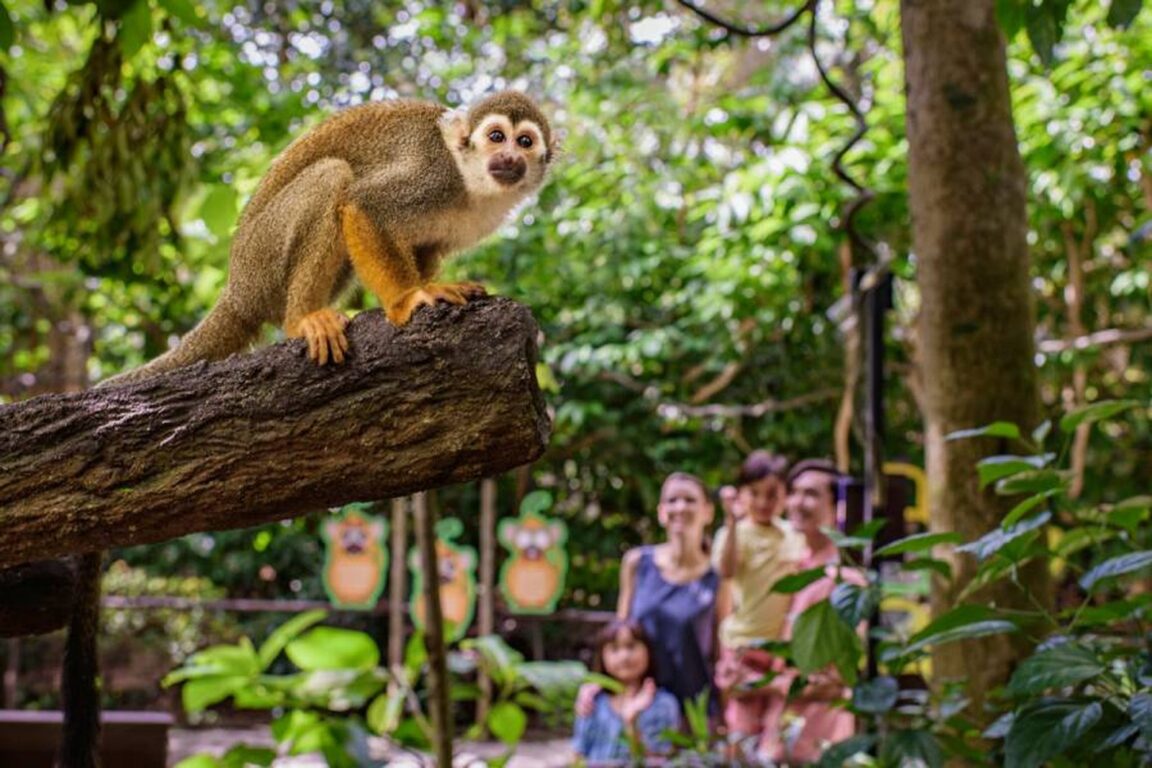
Featured image: a squirrel monkey in the Squirrel Monkey Forest at River Wonders, Mandai Wildlife Reserve, Singapore. Photo: Mandai Wildlife Reserve, via the official Mandai website (mandai.com), used with credit. Native image 900 px wide, upscaled to exactly 1600 px.