 Kwame Mensah
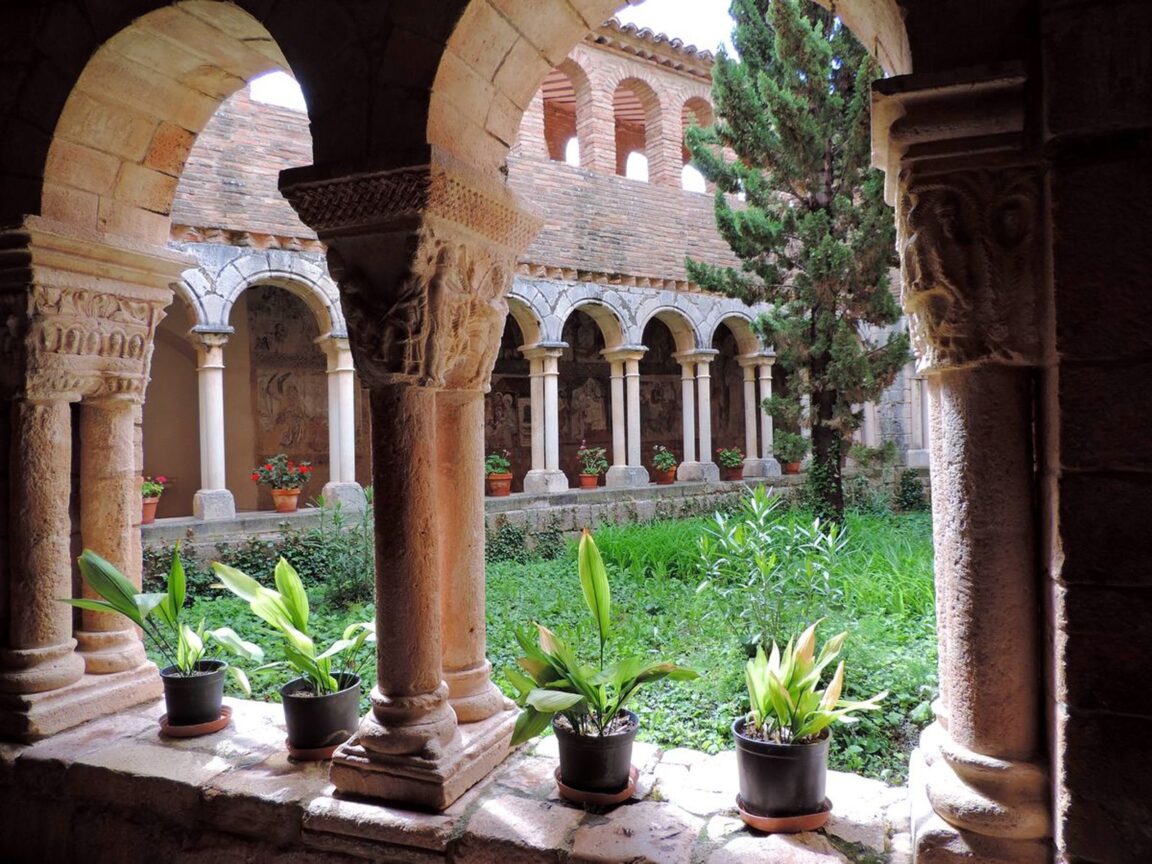
Alquezar works in two registers at once, and a good visit keeps them separate. Above the rooftops sits the castle collegiate church of Santa Maria, begun as a ninth century Muslim fortress and rebuilt after the Christian conquest, with a Romanesque cloister whose carved capitals and painted walls are the artistic core of the village. Below it, the Vero river runs through the last canyon of the Sierra de Guara, crossed by the Pasarelas, a one way circuit of walkways and stairs bolted to the rock that takes about two hours. Do the walkways first, while the canyon is cool, and save the collegiate church and the old town lanes for the afternoon.
Quick Facts
- Where: Alquezar, province of Huesca, Aragon, on a limestone outcrop above the Vero canyon in the Sierra y Canones de Guara Natural Park.
- The name: from the Arabic al-qasr, the fortress, the same root as alcazar. The village grew under a castle founded in the ninth century.
- The walkways: the Ruta de las Pasarelas is a circular, one way mountain walk of 3 km with about 200 m of elevation gain, taking around 2 hours, per the official Pasarelas de Alquezar site.
- Walkway hours and access: the official site lists opening at 8:30 and closing at 16:30, with access on Calle Iglesia in front of the Town Hall, and online ticket sales opening one month in advance. Tickets are priced at 5 euros for those over 12 in current listings; confirm on the official site before you go.
- The collegiate church: consecrated in its first Romanesque form in the eleventh century, with a fourteenth century cloister, a sixteenth century church and the carved Cristo de Lecina as its most valued piece, per the Alquezar tourist office.
- Status: the old town is a declared Historic Artistic Ensemble, and the Vero Cultural Park’s rock art is UNESCO listed.
How does the walkways route actually run?
The Pasarelas route starts opposite the Town Hall and drops into the Barranco de la Fuente on stairs and the first of seven walkway sections, descending between the rock walls toward the river. It passes the Picamartillo cave, follows the Vero past the remains of a historic hydroelectric plant and a mill, then climbs the far side on metal walkways fixed to the canyon wall to the Vero viewpoint before returning to the village. The official route description is plain about the shape of the walk: 3 km, one direction only, about 200 m of climbing, and roughly two hours at a sightseeing pace.
Two practical consequences follow. First, start early in summer, because the final climb is exposed to the sun and the canyon companies launch their canyoning groups at dawn, filling the village by mid morning. Second, book the ticket ahead in busy months: online sales open a month in advance and weekend start times go first. Footwear matters more than fitness here; the walkways are engineered and railed, but the stairs and rock sections punish smooth soles, and the route operator’s own guidance stresses proper shoes and free hands.
What is the collegiate church, and why does it sit above the town?
The castle came first. In the ninth century the Muslim commander Jalaf ibn Rasid built a fortress on this rock to hold the frontier against the Christian counties to the north, and the village took its name from that fortress. When Sancho Ramirez of Aragon took the castle in the eleventh century, a Romanesque church and a community of canons followed, and the site became a collegiate church, a church served by a college of priests rather than a parish.
What you visit now is layered. The cloister keeps Romanesque capitals carved with Old Testament scenes and walls painted with New Testament frescoes added between the fourteenth and eighteenth centuries; the tourist office describes it as the only cloister in Aragon preserved entirely painted. The church above it is sixteenth century, holding a polychrome altarpiece and the Cristo de Lecina, a pine wood crucifix from the transition between Romanesque and Gothic, carved with four nails. Guided visits run through the town tourist office, and their timing, not the building’s fame, is what decides your afternoon, so ask for the day’s visit hours when you arrive.
What fills the rest of a day in the old town?
Between the two registers, the village itself is the third sight. Alquezar’s lanes climb in stone and brick under arcaded passages to the Plaza Mayor, and the Casa Fabian ethnological museum, in a seventeenth century Somontano house, explains the farming and olive oil world that the canyon scenery hides. The Sonrisa del Viento viewpoint, named for a sculpture pierced by a wind blown smile, gives the postcard angle back across the rooftops to the collegiate church and the canyon mouth. Griffon vultures ride the thermals off the Vero walls, a reminder that the natural park is a working bird sanctuary as much as an adventure playground.
Gorge towns reward this split level reading elsewhere too. Ronda in Andalusia divides the same way, between the bridge seen from below in the Tajo gorge and the old town above it, and the ksar of Ait Benhaddou in Morocco layers a fortress summit over a river bank village in a similar pattern.
When should you come, and what should you book?
Spring and autumn are the balanced seasons: the walkways run, the canyoning season on the Vero is active from spring into autumn, and the old town is awake without the August crush. In winter the village quietens, guided visits shrink toward weekends, and the walkways keep their listed hours but the days are short, so the 8:30 start is worth taking. Whenever you come, the bookings that matter are the walkway ticket for your chosen start time and, if you want the collegiate church explained rather than merely seen, a guided visit slot from the tourist office. Canyoning is a separate booking with licensed local companies, is graded by canyon and water level, and is never a walk in extra: the Vero’s famous descents are full day commitments that replace, rather than extend, the walkways day.
Frequently Asked Questions
How long does the Pasarelas route take?
About two hours for the full circular route of 3 km with roughly 200 m of elevation gain, according to the official Pasarelas de Alquezar site. It is one way throughout, starts in front of the Town Hall and lists opening at 8:30 and closing at 16:30.
How much does the walkways ticket cost?
Current listings put the ticket at 5 euros for visitors over 12, with younger children free but still needing their own ticket. Online sales open one month ahead. Confirm the live price and conditions on pasarelasdealquezar.com before travelling, as the operator updates them.
Can children do the walkways route?
The route is widely used by families with children who can manage stairs and a two hour walk, and the operator’s guidance covers carrying small children in a proper carrier with hands kept free. It is not suitable for pushchairs, and exposed sections call for close supervision.
What is the Cristo de Lecina?
It is the collegiate church’s most valued artwork: a pine wood crucifix from the transition between the Romanesque and Gothic styles, carved with four nails, one in each hand and each foot, kept in the chapel of Lecina.
Is Alquezar a base or a day trip?
It works as both, but an overnight is the better version: the walkways at opening time and the old town in the evening belong to the people staying in the village, and the Sierra de Guara’s other canyons and the Somontano wine villages are all within a short drive.
Image: The Romanesque cloister of the Colegiata de Santa Maria in Alquezar, with its carved capitals and painted walls. Photo via Turismo Alquezar, the village’s official tourist office website (turismoalquezar.es), used with credit.