 LeVar Thomas
Dawson City is worth far more than the cocktail stunt it is famous for. Yes, the Sourtoe Cocktail exists, and yes, travellers queue for it. But the town underneath the stunt is one of the best preserved gold rush settlements in North America: a grid of boardwalks and colourful false front buildings at the meeting of the Klondike and Yukon rivers, in the heart of Tr’ondëk Hwëch’in Traditional Territory, where Parks Canada interpreters in period dress walk visitors through the stampede that pulled some 50,000 gold seekers north. Plan Dawson in this order and it coheres: the Parks Canada walking tour first, to learn how to read the streets; Dredge No. 4 on Bonanza Creek second, to understand the industrial machine that followed the individual miner; and the drive up to the Midnight Dome last, ideally late on a June evening, when the sun barely sets and the whole town, both rivers and the Ogilvie Mountains sit in one view. Everything else, the poet’s cabin, the theatre, the gambling hall, the sourtoe itself, slots happily around those three anchors.
Quick Facts
Where: Dawson City, Yukon, at the confluence of the Klondike and Yukon rivers.
Parks Canada Visitor Information Centre: Corner of Front and King Streets. Open 9 a.m. to 5 p.m. daily in season. The Klondike National Historic Sites are open year round, with visitor services available May to September.
Start here: Parks Canada’s guided Discover Dawson walking tours, led by interpreters, bring the historic buildings to life.
The industrial sight: Dredge No. 4 National Historic Site, an eight storey gold dredge on Bonanza Creek, with guided tours in summer.
The viewpoint: The Midnight Dome, the hill above town, reached by Dome Road or on foot, free at any hour.
Facts checked: 24 November 2026, against Parks Canada (parks.canada.ca) and the City of Dawson.
Why should the Parks Canada walking tour come first?
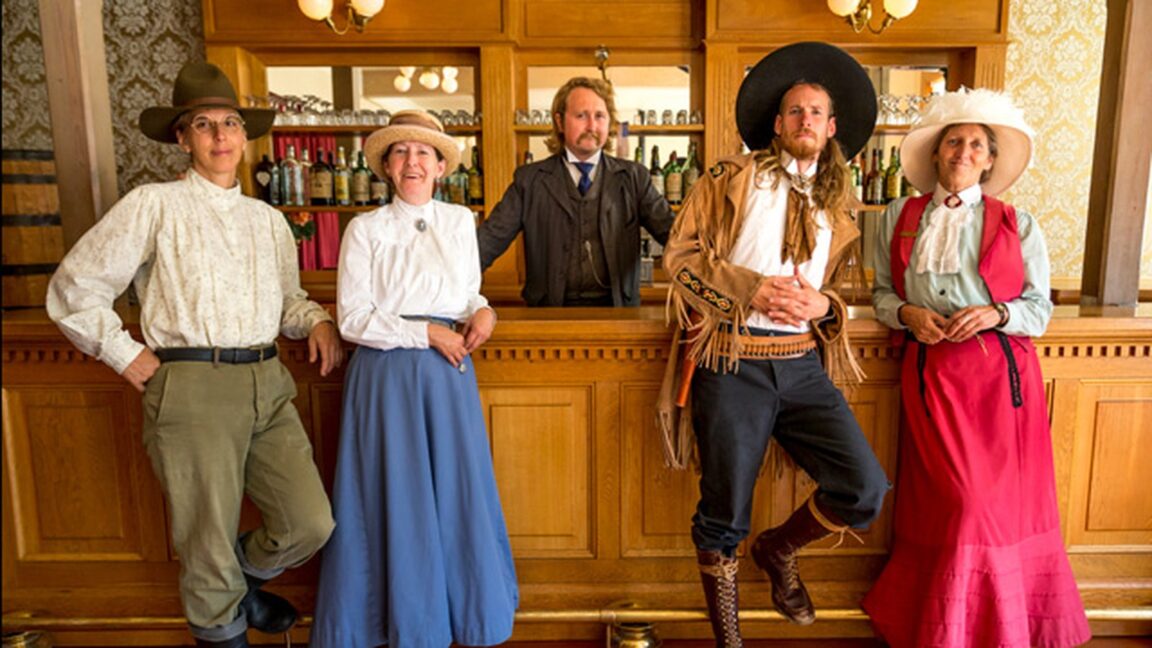
Because Dawson’s streets do not explain themselves. From the boardwalk, one false front looks much like another; after ninety minutes with a Parks Canada interpreter, the same frontage separates into banks, saloons, warehouses and the elegant Commissioner’s Residence, each with a date and a story attached. Parks Canada describes its Discover Dawson tours as the moment the historic buildings come to life, and the format matters as much as the facts: costumed interpreters carry the town’s voices, from stampeders to the officials who tried to keep order over them. The tour also teaches the geography every later stop depends on, which creek was Discovery Claim, why the town sits where the two rivers meet, and what the Tr’ondëk Hwëch’in presence here long predates, a context the Klondike story too often skips and Parks Canada now places at the centre of its telling. Book the tour at the Visitor Information Centre at Front and King, which is also where dredge tour tickets and the day’s programme are sorted out. Travellers continuing north or south through the region will find the same ground truth approach in our guide to Skagway, Alaska, Dawson’s sister stampede town at the other end of the passes.
What does Dredge No. 4 show that the town cannot?
Scale. The first Klondike chapter belonged to men with pans and rockers; the second belonged to machines, and Dredge No. 4 is the machine preserved entire: a floating, eight storey wooden dredge resting on Bonanza Creek, the richest of the gold creeks, a short drive from town. Parks Canada runs guided tours through its interior in summer, and the experience recalibrates the romance. A dredge did not search for gold so much as process a valley, digging its own pond ahead of itself and stacking tailings behind, chewing through the creek beds the hand miners had already worked and reworked. Standing inside the hull, among the screens, gears and conveyor systems, makes the gold rush legible as an industry rather than a lottery, and the worked over landscape along Bonanza Creek, ridge after ridge of tailing piles, reads differently on the drive back. Tickets are available through the Visitor Information Centre and on site in season. Pair the dredge with the goldfields drive and the discovery story is complete: claim, town, machine.
Is the Sourtoe Cocktail worth doing?
It is worth understanding, which is not quite the same thing. The Sourtoe, served at the Sourdough Saloon in the Downtown Hotel, is a shot of whisky containing a preserved human toe, and the rule of the ritual is that the toe must touch the drinker’s lips. It began, by the town’s telling, with a frostbitten toe from the rum running era and has become Dawson’s most efficient piece of folklore: cheap, strange, self mocking and entirely optional. Do it if the room is laughing and the certificate amuses you; skip it without a second thought if it does not, because nothing about Dawson’s real appeal depends on it. The better evening test of the town is Diamond Tooth Gertie’s Gambling Hall, Canada’s oldest gambling hall, where the cancan shows and the gaming floor carry the gold rush entertainment tradition in a form built for a night out rather than a dare. Either way, evenings in Dawson are short on obligation and long on light in summer, which brings the day to its proper close.
When should you drive up the Midnight Dome?
Late. The Dome is the steep hill that stands over Dawson, reached by Dome Road, with a viewpoint that takes in the town grid, the slide scarred hillside, the Yukon River bending away north and the Klondike valley running east. At any hour it is the town’s orientation table. In June, around the solstice, it becomes something else: the place locals gather to watch a sun that dips toward the horizon and climbs again without truly setting, the midnight sun that names the hill. There is no ticket, no gate and no programme, just a road, a pull off and the discipline of warm layers, because the wind on the Dome does not care that it is June. Drivers should note the road is a mountain road in miniature, gravel in places and slow by design; walkers can climb the trails from town for the same view at a better pace. Save it for the last evening if the trip allows a choice, because after the Dome, Dawson is a place you have read from above as well as walked at street level.
What else deserves time in Dawson?
Three stops round out a two day stay. The Robert Service Cabin, cared for by Parks Canada, honours the poet whose ballads fixed the Klondike in the world’s imagination; recitations in season give the verses their proper setting. The Palace Grand Theatre, a gold rush theatre within the national historic sites, stages the other half of the story, the entertainment economy that mined the miners. And the free ferry across the Yukon River, which runs through the summer season, carries drivers toward the Top of the World Highway and campers to the campground opposite town; even travellers going nowhere should ride it once, because Dawson from the far bank, small and bright under the Dome, is the postcard the town itself cannot see. For the wider northern journey that usually frames a Dawson trip, our Sitka guide covers the Alaska end of the same historic coastline.
Frequently asked questions
When is Dawson City’s visitor season? Parks Canada provides visitor services at the Klondike National Historic Sites from May to September, though the sites themselves are open year round. Most tours, the dredge included, run in the summer season.
Where do tours start? At the Parks Canada Visitor Information Centre at the corner of Front and King Streets, open 9 a.m. to 5 p.m. daily in season.
How big is Dredge No. 4? It is an eight storey floating gold dredge on Bonanza Creek, preserved as a national historic site, with guided interior tours in summer.
Do you have to drink the Sourtoe? No. It is an optional saloon ritual at the Sourdough Saloon. The town’s walking tours, dredge and viewpoints are the substance of a visit.
Why is it called the Midnight Dome? For the midnight sun: around the June solstice the viewpoint above town is where people gather to watch daylight run through the night.
Image: Parks Canada interpreters in Klondike period dress at a Dawson City bar, Klondike National Historic Sites, Yukon. Photo: Parks Canada, via parks.canada.ca, the official Parks Canada website.