 Lucas Meyer
Oklahoma holds the longest drivable stretch of Route 66 in any state, roughly 400 miles of it, and the eastern section between Oklahoma City and Tulsa is the part to drive slowly. Run it east to west or west to east in a single unhurried day and three stops carry the whole story: the Arcadia Round Barn, a timber circle raised in 1898 before the highway existed; Pops in Arcadia, where a 66 foot soda bottle marks the most modern fuel and food stop on the road; and the Blue Whale of Catoosa, an 80 foot concrete whale built in the early 1970s as a family gift. Finish in downtown Tulsa, where the oil boom paid for one of the finest collections of art deco architecture in the United States. This guide sequences those stops in driving order, with the hours and addresses verified from the attractions themselves, so the day runs on open doors rather than guesswork.
Quick Facts
Section covered: Route 66 in Oklahoma from Arcadia, east of Oklahoma City, through Tulsa to Catoosa.
Arcadia Round Barn: 107 Highway 66, Arcadia. Open daily 10 a.m. to 5 p.m. Admission is free, donations accepted.
Pops 66 Soda Ranch: 660 Highway 66, Arcadia. Open daily 6 a.m. to 10 p.m.
Blue Whale of Catoosa: 2600 Highway 66, Catoosa. Free. Visitor centre hours run 9 a.m. to 4:30 p.m. most days, to 7 p.m. on Thursdays, from 11 a.m. on Sundays. Check the City of Catoosa page before a special trip, as renovation work has affected access at times.
Driving logic: Arcadia sits about six miles east of Interstate 35. Tulsa is the natural overnight and dinner finish.
Prices checked: 24 November 2026, against the attractions and the City of Catoosa.
Where does the Oklahoma section of Route 66 actually begin?
For this drive, it begins in Arcadia, a small town on Highway 66 northeast of Oklahoma City. Arcadia works as a starting point for two reasons. First, its two headline stops sit minutes apart on the same road, so the day opens with substance instead of motorway miles. Second, the town marks the point where the route settles into its rhythm of small towns, gentle hills and long sightlines toward Tulsa. Drivers coming from the west can join from Interstate 35, which passes about six miles west of the Round Barn, and drivers crossing the whole state can treat this guide as the eastern half of a two day Oklahoma crossing, pairing it with the western towns on a second day. Packing for a drive built around short walks and long light is its own small discipline, and the layering logic in our autumn road trip packing guide transfers well to Oklahoma in the cooler months.
What makes the Arcadia Round Barn worth the first stop?
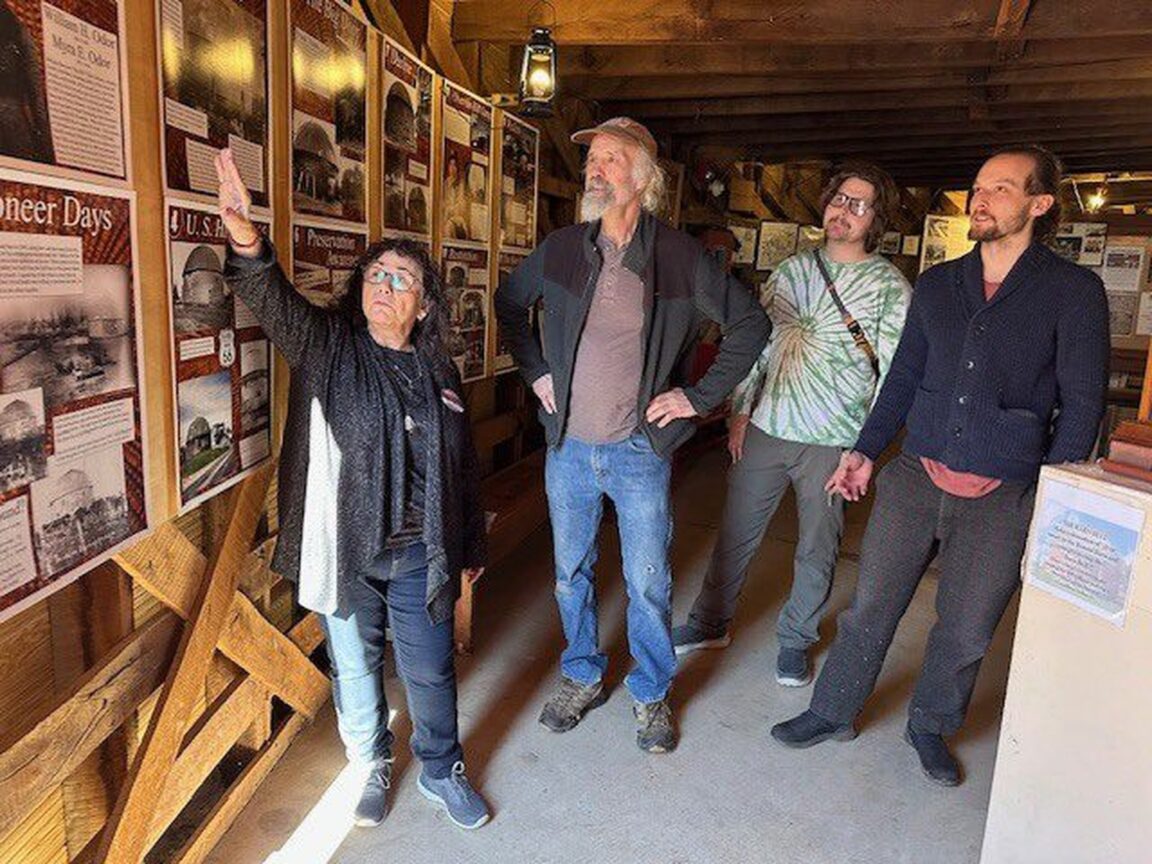
The barn is exactly what its name promises: a perfectly round red barn, built in 1898, decades before Route 66 was commissioned in 1926. According to the Arcadia Historical and Preservation Society, which maintains it, the ground floor now holds a museum and gift shop telling two stories at once, how the barn itself was built and how Arcadia grew up around the Missouri, Kansas and Texas Railway and the highway that followed. Exhibits include antique farm equipment, a restored railroad baggage cart and Route 66 memorabilia. Admission is free, with donations supporting the society and the upkeep of the building.
The upper level is the surprise. The domed loft, reached by exterior stairways, was built with a hardwood floor and served as a dance hall and community gathering place as well as a hay store. That dual life explains the barn’s acoustics, which the society still puts to work: the barn hosts regular music, including a monthly open jam, Saturday morning sessions and Sunday concerts, plus guided tours on Saturdays. None of that requires planning a whole day around the building. Forty minutes covers the museum, the loft and the gift shop comfortably, and because the barn opens at 10 a.m., it sets a civilised start time for the entire section. One practical caution from the society itself: the barn is volunteer run, and hours can change in extreme temperatures or severe weather, so a quick call to the gift shop is worthwhile on a storm threatened day.
Where should drivers eat and fuel up in Arcadia?
Five minutes east, Pops 66 Soda Ranch answers both questions under one landmark: a 66 foot tall soda bottle that glows after dark. Pops opens daily from 6 a.m. to 10 p.m., which makes it the flexible stop of the day, breakfast before the barn, lunch after it, or a late soda run on the return leg. Its fame rests on range rather than novelty alone: hundreds of bottled sodas, including hard to find regional labels, line the coolers, and the diner format suits drivers who want a proper sit down meal without leaving the highway corridor. The sensible order is to eat here rather than grazing later, because the next stretch toward Tulsa passes through smaller towns where kitchens keep shorter hours. Buy a mixed case of sodas for the car if boot space allows; it is the souvenir that actually gets used.
What is the story behind the Blue Whale of Catoosa?
East of Tulsa, at 2600 Highway 66 in Catoosa, a smiling blue whale floats in a spring fed pond, and it has been stopping traffic since the early 1970s. The City of Catoosa tells the story plainly: Hugh Davis built the 80 foot concrete whale as an anniversary gift for his wife Zelta, who collected whale figurines, and the pond around it became a beloved local swimming hole. Swimming is long finished, but the whale remains, complete with a slide, diving platforms in silhouette, picnic tables and a visitor centre and gift shop. Admission is free and parking is easy, which is why this is the right final roadside stop: it asks nothing but twenty minutes and gives back the single most recognisable photograph on Oklahoma’s Route 66.
Timing matters more here than at the barn. The visitor centre keeps shorter hours than the grounds, closing at 4:30 p.m. on most days, with a later 7 p.m. close on Thursdays and an 11 a.m. start on Sundays. Renovation work has also interrupted normal access at points in recent seasons, so drivers making a dedicated trip should confirm the day’s status on the City of Catoosa’s Blue Whale page before setting out. Even a grounds only visit is worthwhile: the whale reads best in low afternoon light, when the blue paint and the pond reflection do the work that made it famous.
Why is Tulsa the right finish to the drive?
Because Tulsa is where Route 66 stops being roadside and becomes urban. The oil money that flowed through the city in the 1920s and 1930s built a downtown of genuine architectural ambition, and its art deco towers are the earned finish the board promises. The essential sight is Boston Avenue Methodist Church, completed in 1929 and now a National Historic Landmark, whose tower and carved details make the strongest case that deco in Tulsa was a civic language, not a fashion. Around it, the Deco District downtown rewards an hour on foot: the Philcade Building’s gilded lobby, the Mid-Continent Tower and a cluster of smaller facades best seen in the raking light of late afternoon. Drivers who plan the day backwards from a Tulsa sunset get the section in its best order, barn in the morning, whale in the afternoon, deco at golden hour, then dinner downtown. For travellers building a longer American road itinerary around this section, our road trip packing list covers the kit logic for multi day drives in changing weather.
How long does the Arcadia to Tulsa section take to drive?
The pure driving time between Arcadia and Catoosa is under two hours, but that number is a trap. With forty minutes at the barn, an hour at Pops for lunch and browsing, twenty minutes at the whale and an hour walking downtown Tulsa, the section becomes a full and satisfying day of about seven hours door to door from Oklahoma City. Compress it and the stops blur into photo breaks; stretch it over two days and the obvious addition is an overnight in Tulsa, which adds the city’s museums and an evening in the Blue Dome entertainment district to the plan. Westbound drivers can run the same order in reverse, but the eastbound sequence described here puts the light where each stop wants it.
Frequently asked questions
Is the Arcadia Round Barn really free? Yes. The barn’s own site states that admission is free, with donations accepted for the Arcadia Historical and Preservation Society, which maintains the building.
Can visitors still swim at the Blue Whale? No. The pond was a swimming hole in the whale’s early decades, but today it is a look, picnic and photograph stop. The visitor centre and gift shop keep the hours listed in Quick Facts.
What are the Round Barn’s hours? Open daily from 10 a.m. to 5 p.m., subject to volunteer availability and severe weather, per the barn’s Plan Your Visit page. Guided tours are offered on Saturdays.
Is Pops just a photo stop? No. It is a working diner, fuel stop and soda shop, open daily from 6 a.m. to 10 p.m., and the most reliable meal on this section of the route.
How much of Route 66 survives in Oklahoma? Oklahoma preserves roughly 400 miles of the route, the longest drivable stretch in any state, which is why the state rewards a section by section approach rather than a single rushed crossing.
Image: Inside the Arcadia Round Barn museum, Arcadia, Oklahoma. Photo: Arcadia Round Barn, via arcadiaroundbarn.com, the barn’s official website.