 River Callahan
Queenstown suits a woman travelling alone better than almost any adventure town on earth, for a structural reason: nearly everything here is sold per person and run in groups. Bungy jumps, jet boat seats, gondola rides and guided hikes all price by the seat, so a solo traveller pays the standard rate and joins a ready made group for the day, while the town centre is compact, walkable and busy late into the evening. The honest cautions are equally specific. Adventure operators must be checked against New Zealand’s official safety registers, rental cars get targeted by thieves, alpine weather turns fast, and the solo premiums hide in accommodation and private tours rather than in the headline activities. This guide works through all of it.
Quick Facts
Base: The town centre around Shotover Street and Camp Street, walkable to the lakefront, the gondola and most operator pick up points.
Solo pricing reality: Headline activities are priced per person with no single supplement. Solo costs concentrate in rooms and rental cars.
Safety framework: Commercial adventure operators must pass a safety audit and register with WorkSafe New Zealand. Jet boat operators are regulated separately by Maritime New Zealand.
Evenings: A compact, well lit centre with hostel social spaces, lakefront dining and bars within a short walk of central accommodation.
Main theft risk: Break ins of parked cars, especially rental cars at trailhead and scenic car parks. Keep valuables out of vehicles entirely.
Weather rule: Mountain and lake conditions change quickly. Check the forecast the same morning and carry layers on every walk.
Injury cover: New Zealand’s Accident Compensation Corporation covers treatment for accidental injuries in New Zealand, including for visitors, but not repatriation or trip losses.
Which activities charge no solo penalty, and how is pricing structured?
Start with the good news, because it covers most of the famous roster. The AJ Hackett Kawarau Bridge bungy, the original commercial bungy site, a 43 metre jump over the Kawarau River, is booked and priced per jumper. The Nevis jump, at 134 metres, works the same way at a bigger number. Jet boating on the Shotover and Kawarau rivers is priced per seat. The Skyline gondola and luge on Bob’s Peak are per person tickets. Guided group hikes, lake cruises to Walter Peak and group wine tours of Gibbston all take single bookings at the published per person rate, because a solo guest fills one seat in a vehicle and a group that is running anyway.
The solo penalties appear where capacity is sold whole rather than by the seat. A private guided day, a charter boat, a scenic flight with minimum numbers and a rental car all charge for the asset, not the person, so one traveller carries the full cost. The management strategy is simple: build the trip on per seat group products, use the town’s buses and activity shuttles instead of a rental car for in town days, and reserve any whole asset splurge for the one experience you care about most, booked knowingly rather than discovered at checkout. Our three days in Queenstown itinerary sequences the headline activities into days that work without a car, and our companion piece on Queenstown solo pricing for men reaches the same per seat conclusion from the other side of the hostel dorm.
How do you check that an adventure operator is properly registered?
New Zealand regulates this industry more visibly than most countries, and a solo traveller booking alone should use the system rather than rely on reviews. Under the Health and Safety at Work (Adventure Activities) Regulations 2016, operators offering activities such as bungy, ziplining, canyoning and rafting must pass a safety audit and be registered with WorkSafe New Zealand, and it is an offence to provide an adventure activity without registration. WorkSafe maintains a public register where you can search an operator by name and see whether its registration is current, suspended or cancelled. That search takes two minutes and is the single most useful safety action in this guide.
Jet boats sit under a different regulator, which confuses visitors. A commercial jet boat ride is a maritime transport operation, so the operator needs the relevant maritime document from Maritime New Zealand rather than a place on the WorkSafe register. If a jet boat company does not appear in a WorkSafe search, that alone is not a red flag. Ask the operator directly which regime it operates under and expect a clear answer. Beyond registration, do the personal parts honestly: answer health and weight questions truthfully, listen to the full briefing, and confirm before you book that your travel insurance actually covers the activity you are buying, because policies exclude named adventure sports more often than travellers expect.
Where should a solo woman base herself, hostel or hotel?
The decision is social as much as financial. Queenstown’s central hostels, clustered within a few streets of the lakefront, offer female only dorms alongside mixed dorms and private rooms, shared kitchens that function as the town’s easiest conversation starter, and staff who book activities daily and know which operators suit solo guests. For a first solo trip or a trip where meeting people is half the point, a well reviewed central hostel in a female dorm or a private hostel room is the strongest base in town. Book ahead in the summer and ski peaks, when beds genuinely sell out.
A central hotel or apartment trades that social engine for privacy, a lockable door of your own and quieter sleep, at a solo traveller’s full room rate with nobody to split it. The middle path many women settle on is a private room in a hostel or a small central lodge: your own door, the common room when you want it. Whichever you choose, apply the location rule strictly. Stay in the walkable centre, on streets you will happily walk at 11pm, rather than saving money out at Frankton or up a steep hill and spending the saving on taxis and hesitation. In Queenstown, centrality is the safety feature and the convenience feature in one.
How do the evenings actually feel, and what precautions are worth taking?
Queenstown’s centre is small, busy and built around visitors, which makes evenings straightforward. Restaurants, bars and the lakefront promenade sit within a few flat streets, activity groups from the day often regroup for dinner, and hostel common rooms give you a social option that involves no bar at all. Violent crime against visitors is rare, and New Zealand sits at the lowest advisory level of the major government travel advisory systems, with no advice against travel to any part of the country. The precautions worth taking are the ordinary, effective ones, applied consistently rather than anxiously.
Walk the lit central streets rather than the dark lake edge paths late at night. Keep your phone charged and share your live location with someone at home if that is your habit on solo trips. Watch drinks in busy bars with the same unremarkable care you would use in any nightlife town. And manage the risk that actually tops the local statistics: theft from cars. If you do hire a car for a Milford Sound or Glenorchy day, take everything of value with you at every stop, because trailhead and viewpoint car parks are where visitor losses happen, a pattern government advisories for New Zealand call out specifically.
What about the mountains, the lake and the weather?
The serious risks in Queenstown are environmental, and they are manageable with same day information. Alpine weather changes quickly, walks that start in sun can finish in wind and rain, and tracks above the town deserve layers, water and a turned back decision made early. Check the official forecast on the morning of any walk, tell your accommodation where you are headed, and treat river and lake water with respect: Lake Wakatipu is deep, glacial and cold enough to be dangerous in any season, whatever the summer air temperature suggests.
Finally, know the backstop. New Zealand’s Accident Compensation Corporation covers the cost of treatment for accidental injuries suffered in New Zealand, and that cover extends to visitors. It does not cover getting you home, replacing a ruined itinerary or compensating lost earnings, which is why comprehensive travel insurance remains essential rather than optional. A solo traveller has no companion to organise any of that from a hospital bed, so buy the policy, store the details in your phone and with a contact at home, and then go and enjoy the rare town where travelling alone is the normal, well catered for way to arrive.
Frequently Asked Questions
Is Queenstown safe for a woman travelling alone?
Yes, by the standards solo travellers can reasonably apply. Crime against visitors is uncommon, the centre is compact and busy, and the main documented risks are car break ins, fast changing mountain weather and the adventure activities themselves, all manageable with the checks in this guide.
Do Queenstown activities charge single supplements?
Headline activities priced per seat, including bungy, jet boats, the gondola and group tours, do not. Solo premiums appear on private tours, charters, minimum number flights, hotel rooms and rental cars.
How can I verify an adventure operator is legitimate?
Search the operator on WorkSafe New Zealand’s public adventure activities register and confirm its registration is current. Jet boat operators are regulated by Maritime New Zealand instead, so ask them which regime applies.
Should I choose a hostel or a hotel as a solo traveller?
A central hostel, in a female dorm or private room, offers the best social infrastructure and value. A central hotel offers privacy at full single occupancy cost. In both cases, a walkable central location matters more than the category.
Do I need a rental car in Queenstown?
No. The centre is walkable, local buses serve Frankton and Arrowtown, and operators run shuttles to activity sites. A car helps only for independent day trips, and it brings the trailhead theft risk with it.
Am I covered if I am injured in an adventure activity?
ACC covers treatment costs for accidental injuries in New Zealand, including for visitors. It does not cover repatriation or trip losses, so comprehensive travel insurance that explicitly covers your planned activities is essential.
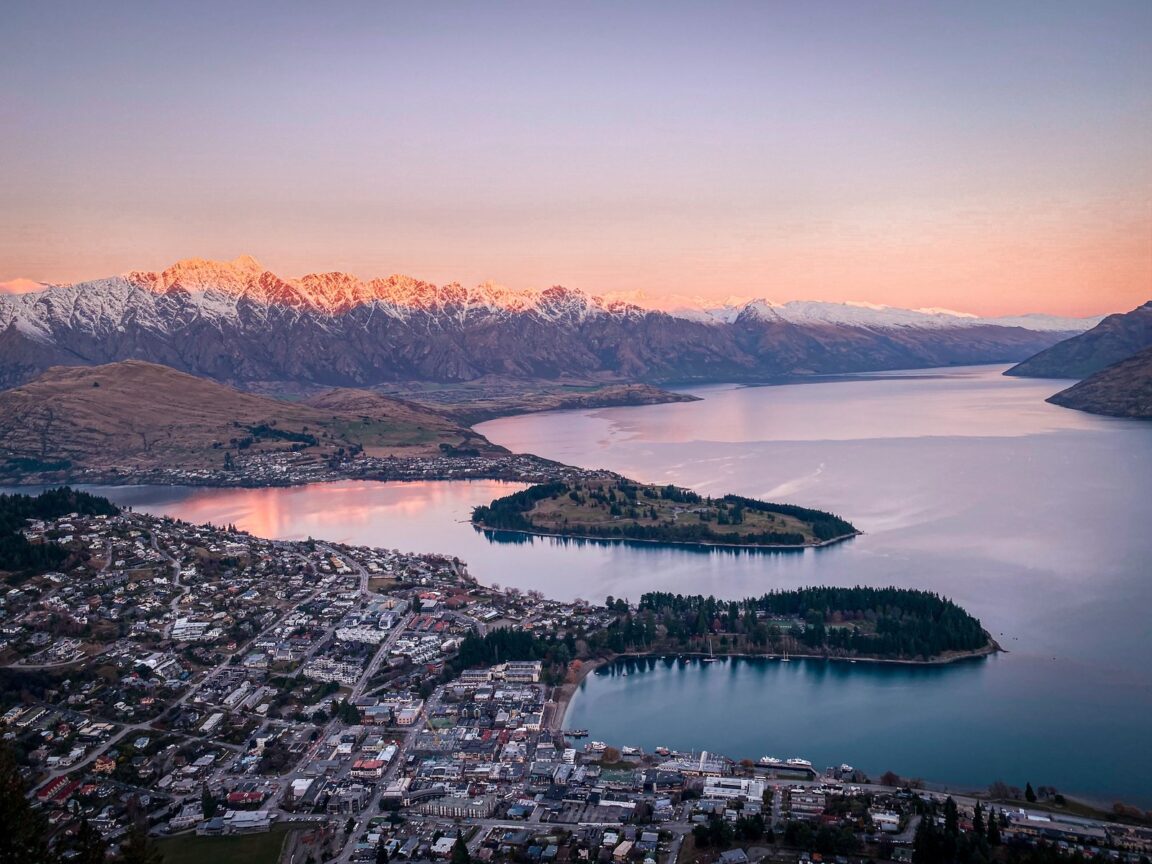
Photo: Queenstown and Lake Wakatipu from Bob’s Peak at dusk, with the Remarkables glowing across the water. Credit: Peter Luo, via Unsplash (Unsplash License).