 Rafael Santos
US, Canadian and Australian passport holders need a visa to visit Brazil, and they have needed one since 10 April 2025. That date is the fact at the centre of this story, because the rule was postponed so many times, and each postponement produced a fresh wave of outdated summaries, that travellers still arrive at booking engines believing entry is visa free. It is not. Brazil’s Ministry of Foreign Affairs confirms the requirement took effect on 10 April 2025 on reciprocity grounds: the three countries require visas from Brazilians, so Brazil requires visas from them. The visa is electronic, it is applied for through one official portal only, brazil.vfsevisa.com, and it costs 80.90 US dollars. There is no visa on arrival, and airlines check for the eVisa before boarding. This guide states the current rule precisely, sets out which passports it covers, and lists what to carry and what to have ready until the rule next changes.
Quick Facts
- Requirement in force since: 10 April 2025, after several postponements
- Who it covers: Ordinary passport holders from the United States, Canada and Australia, visiting for tourism, business and other short stays
- Basis: Reciprocity, per Brazil’s Ministry of Foreign Affairs; the three countries require visas from Brazilian travellers
- Where to apply: brazil.vfsevisa.com only, the official portal operated for the Brazilian government
- Fee: 80.90 US dollars per applicant
- Validity: Multiple entry visitor visas, up to 10 years for US passports and up to 5 years for Canadian and Australian passports, with stays of up to 90 days per visit
- Visa on arrival: None. Airlines check for an approved eVisa before boarding
Why is the start date so often stated wrongly?
Because for two years it kept moving. Brazil waived visitor visas for the United States, Canada, Australia and Japan in 2019. The government that took office in 2023 announced the waiver would end on reciprocity grounds, and then the start was announced, postponed, announced again and postponed again while the electronic application system was completed. Every one of those dates was correct in the week it was published, which is why search results still contradict each other and why even careful travellers get confused. The sequence has ended. Brazilian consulates now state the position plainly and consistently: since 10 April 2025, travellers on US, Canadian and Australian ordinary passports need a visitor visa for tourism and business, obtained as an eVisa through the official portal before travel. Anything describing visa free entry for these passports is describing a rule that expired on that date. Japan, originally grouped with the three, was handled separately and is not part of the eVisa requirement covered here.
The practical risk is asymmetric. A traveller who believes an old postponement story and books anyway will not be argued with at a consulate; they will simply not be boarded, because carriers verify the eVisa before departure. Treat the application as part of booking the trip, not as paperwork to settle in the final week, and use the timing guidance in our earlier Brazil eVisa explainer on cost, timing and how to apply, which walks through the application itself step by step.
Which passports and trips does the rule cover?
The requirement follows the passport you travel on, not the country you live in. A Canadian resident flying on a US passport needs the eVisa; so does an Australian on a Canadian one. Covered purposes are short visits: tourism, business trips, transit and similar visitor activities. The eVisa is a visitor visa, so it does not authorise paid work in Brazil, long term study or residence, and anyone travelling for those purposes needs the appropriate consular visa category instead. Travellers who already hold a valid physical Brazilian visitor visa in their passport do not need an eVisa on top of it. Everyone else from the three countries applies online: the simplified application asks for traveller information, a photograph, a valid travel document and payment of the fee, and the resulting visa is a multiple entry visitor visa, valid for up to 10 years for US passport holders and up to 5 years for Canadian and Australian passport holders under the reciprocity settings, allowing stays of up to 90 days per visit.
What should you carry, and what can officers ask for?
Carry the passport the eVisa was issued against, and keep the eVisa approval itself accessible, printed or saved offline, because the first check usually happens at airline check-in rather than at the Brazilian border. Beyond the visa, entry remains a normal visitor admission, and border officers can ask the normal visitor questions: proof of onward or return travel, where you are staying, and evidence that you can support yourself during the stay. None of that replaces the eVisa and none of it is a substitute for one; a traveller with a perfect folder of bookings and no approved visa is still refused boarding. The sensible file is small and specific: passport, eVisa approval, return or onward ticket, first nights’ accommodation details, and travel insurance documents if you have them. Keep the same set for every entry, because a multiple entry visa invites repeat trips and the checks repeat with them.
Two traps deserve naming. The first is imitation application sites, which charge service fees on top of the official 80.90 dollars for doing nothing the official portal does not do itself; the only address to use is brazil.vfsevisa.com, typed directly. The second is timing: consular guidance allows up to 10 business days for processing once an application is verified, so applying inside the fortnight before departure converts a routine step into a gamble. Apply when the flights are booked. Travellers building a first Brazilian itinerary around the new rule often start in the south, and our guide to visiting Iguazu Falls from both sides explains the border mechanics at the falls, where a Brazil entry stamp becomes part of a same day excursion.
What if the rule changes again?
It can, and the reciprocity basis means it moves with the visa policies of the three countries as much as with Brazilian politics. Until Brazil’s Ministry of Foreign Affairs or its consulates announce a change, the rule in force is the one stated here: eVisa required, in force since 10 April 2025. The check takes two minutes before booking: the consulate page for your country of residence will state the current position, and it outranks every blog post, including older ones, whenever the two disagree.
Frequently Asked Questions
When did Brazil’s visitor visa requirement for US, Canadian and Australian passports start?
On 10 April 2025. The start was postponed several times before that date, which is why older articles cite other dates, but the requirement has been in force since 10 April 2025.
Where do I apply for the Brazil eVisa?
Only through the official portal at brazil.vfsevisa.com. Brazilian consulates direct all eVisa applicants there and do not process the application in person.
How much does the Brazil eVisa cost?
80.90 US dollars per applicant, paid as part of the online application. Sites charging more are adding their own service fees.
How long is the eVisa valid?
It is a multiple entry visitor visa, valid for up to 10 years for US passport holders and up to 5 years for Canadian and Australian passport holders, with stays of up to 90 days per visit.
Can I get a visa on arrival in Brazil instead?
No. There is no visa on arrival for these passports, and airlines check for an approved eVisa before boarding, so the application must be completed before travel.
What can border officers ask to see besides the eVisa?
The usual visitor evidence: onward or return travel, accommodation details and proof you can support yourself during the stay. Carry the eVisa approval and those documents together.
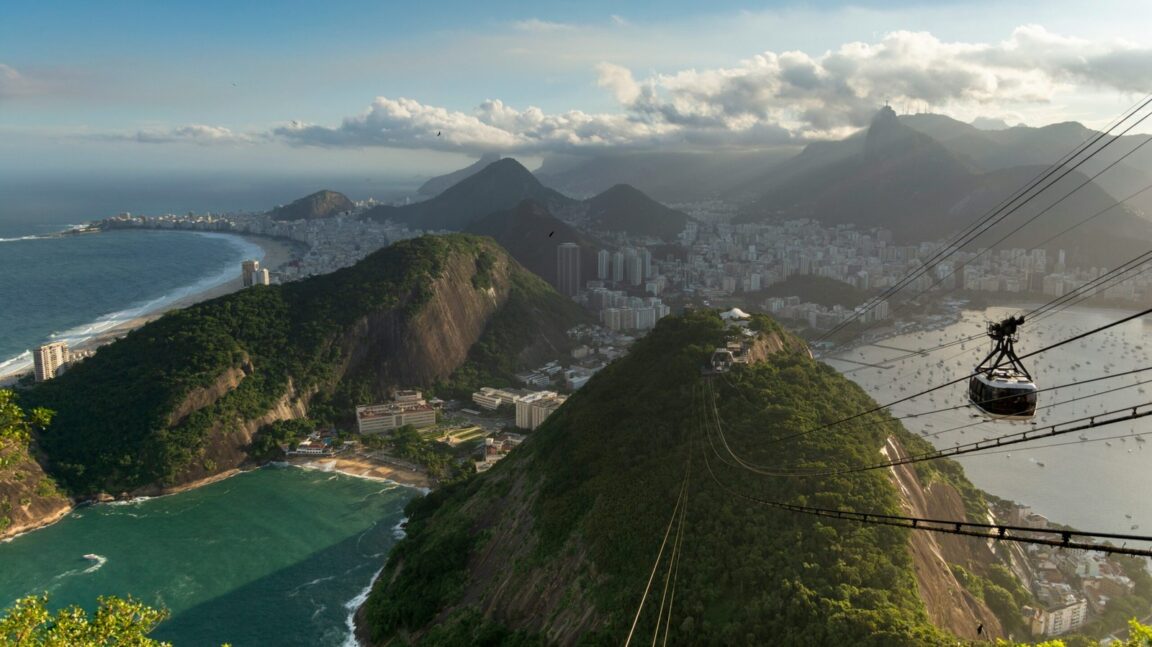
Image credit: Rio de Janeiro and the Sugarloaf cable car, Brazil. Photo by Raphael Nogueira, via Unsplash, Unsplash License. Visa rules checked against Brazil’s Ministry of Foreign Affairs and consular guidance on 25 November 2026.