 Rafael Santos
The best time to visit Patagonia is not the warmest month. It is the month when the wind, the refugios and the buses all work in your favour at the same time, and for most travellers that means late spring, from mid November into early December, or the autumn shoulder of late March and early April. The official site for El Chalten, Argentina’s trekking capital, puts the season plainly: it runs from October to April, December to March brings most travellers with a peak in January, and organised activities stop from April or May until September or October. Choose November and you get open trails, staffed refugios and spring light without the January crowds. Choose early April and you get the lenga forests turning red and gold above El Chalten, cooler air and thinning trails, at the price of shorter days and the first closures. Choose winter and you are planning a different trip altogether, one built around a few open lodgings, self guided walks in snow and services that have mostly shut until spring.
Quick Facts
- Main season: October to April, according to El Chalten’s official visitor site, with December to March the busiest stretch and January the peak
- Warmest months: January and February, when El Chalten averages 13.3 degrees Celsius; July, the coldest month, averages around 0.5 degrees
- Wind pattern: The west wind blows hardest from October to March in El Chalten, and winter is calmer but far colder
- Winter closures: Organised activities stop from April or May to September or October, and most restaurants in El Chalten close from May to September
- Park access: The northern sector of Los Glaciares National Park stays open all year, though snow and thaw mud can close trail sections from June to September
- Best all round windows: Mid November to early December for open everything and fewer people, late March to early April for autumn colour
Why does the wind matter more than the temperature?
Patagonia’s temperatures look mild on paper and mislead almost everyone who plans from a forecast alone. A January average of 13.3 degrees in El Chalten sounds gentle. What the average hides is the west wind, which the town’s official guidance says blows hard mostly from October to March, exactly when most visitors come. On exposed ground above the tree line, that wind decides whether a ridge walk is a pleasure or a retreat, whether a lake viewpoint is a photograph or a fight to stand still, and whether a long day to a famous laguna ends early. The shoulder months earn their reputation partly because the wind begins to ease as autumn arrives, and partly because the same trails carry far fewer people competing for the calm morning hours.
The practical response is to build wind into the plan rather than hope it away. Put the most exposed walk first in any settled spell, keep a lower forest walk in reserve for a blown out day, and add spare days to the itinerary, a step El Chalten’s own guidance recommends because the weather changes quickly and Fitz Roy and Cerro Torre do not show themselves every day. A traveller with four nights and one spare day will see more of Patagonia than a traveller with three perfect days planned to the hour, because the spare day is what converts a cancelled summit view into a second attempt.
What does late spring, from November to early December, actually give you?
Late spring is the window where the whole system switches on. The season has opened, tours and services operate, refugios and lodgings that close for winter are receiving guests again, and the long southern days give walkers a generous margin for slow trails and late returns. Wildflowers appear in the valleys, snow still caps the granite towers, and the crowds that define January have not yet arrived in force. For the classic multi day routes on the Chilean side and the day walks from El Chalten alike, this is the period when booking is still advisable but rarely the desperate contest of high summer.
There are trade offs, and they should be named. Early in the window some high trails can still hold snow, river levels run higher with meltwater, and the wind, as noted, is already in its strong season. November travellers should pack for four seasons in a single afternoon, a phrase locals use because it is accurate, and should confirm that any specific refugio, boat or transfer they depend on has actually opened for the season rather than assuming an October start date applies to every operator. If those checks are made, late spring is the easiest recommendation in this guide: the fullest Patagonia at less than its fullest pressure.
Why do walkers who know Patagonia argue for March and April?
Because autumn solves problems that summer creates. As March turns into April, the lenga forest that clothes the slopes around El Chalten changes colour, moving through gold into deep red, and the valleys take on a look that summer visitors never see. Visitor numbers fall away after the January peak and the busy December to March stretch. Light softens, mornings sharpen, and the wind that dominates the summer months begins, on many days, to relent. Photographers and returning walkers often rate these weeks highest of all, and the reasoning is sound: the same granite, the same lagoons, better colour and more room.
The counterweight is contraction. Days shorten noticeably, nights turn cold, and the closures that define winter begin at the edges of the season. El Chalten’s official guidance is clear that organised activities stop from April or May, and travellers in late April should expect a narrowing menu of tours, transfers and open restaurants, even though the national park itself remains open and self guided walks continue. The safe way to use April is to front load the trip: arrive in the first half of the month for the colour at its height, keep plans flexible in the final days, and do not build the whole journey around a service scheduled for the last week of the season.
What really closes in winter, and what stays open?
Winter in southern Patagonia, from June to August, is not simply the same destination with fewer people. El Chalten’s guidance describes cold, short days and snow, tours that do not operate, and trail sections that may close because of snow or mud. Most restaurants close from May to September. Some lodgings, markets and grocery stores stay open, and the town does not vanish, but the infrastructure that makes a first trekking trip simple, the staffed refugios, the frequent buses, the guided options and the choice of places to eat, is largely paused. In the in between months of May and September, many self guided hikes can still be done in much greater peace, but most tours do not run and some lodgings and restaurants close.
That does not make winter a mistake for everyone. It makes it a specialist choice. Travellers who come for snow, solitude and a small town in its quietest mood, who carry winter skills and winter kit, and who accept that high routes may be impassable, can have a powerful trip. Travellers who arrive in July expecting the summer product at a lower price will be disappointed, and the disappointment is predictable from the official season information alone. Perito Moreno glacier, visited from El Calafate, remains the great winter exception that anchors many cold season itineraries, but one glacier viewpoint does not reopen a trekking network.
How should you match the month to the trip you actually want?
Match the month to the decision that matters most. If the trip is a first trekking journey built on refugios, guided options and long days, take late spring and book the key beds early. If the trip is a return visit, a photography journey or a walking holiday where colour and calm outrank maximum daylight, take late March or early April and keep the last days loose. If the trip is a road journey, remember that distances are long, fuel stops are sparse in the far south and winter road conditions can rewrite a schedule, so the open season is doing logistical work as well as scenic work. If wildlife on the Atlantic coast drives the plan, the spring months align with the season when the coastal colonies are at their busiest, which is another argument for November.
However you choose, protect the plan with the habits that Patagonia rewards in every month. Book refugios and small lodgings well ahead for December to February, when the official guidance says most travellers arrive. Keep one or two spare days, as the El Chalten guidance advises, because weather will spend at least one of them. Carry windproof layers even in January. And treat any closure list as live information: before travelling, recheck the park, your refugios and your bus operator, because shoulder season start and finish dates move with snow, staffing and demand. For the walking itself, our guide to the O Circuit in Torres del Paine sets out booking windows and refugio order, and our shoulder season packing guide for Patagonia covers the wind layer system these months demand.
Frequently Asked Questions
What is the single best month to visit Patagonia?
For a first trip, November is the strongest all round answer: the season is fully open, services and refugios are operating, days are long and the January peak has not arrived. March runs it close, with autumn colour beginning and fewer visitors.
Is Patagonia worth visiting in winter?
Only for a deliberately winter trip. From June to August tours do not operate in El Chalten, most restaurants close, and snow can shut trail sections, though the national park stays open and some lodgings and shops remain open.
When do the lenga forests turn colour around El Chalten?
In autumn, through March and into April, when the forest moves through gold to red. Early April is the reliable window for colour at its height, before closures accelerate later in the month.
How windy is Patagonia in summer?
Windy enough to plan around. El Chalten’s official guidance says the west wind blows hard mostly from October to March, so the strongest wind season and the main visitor season are the same months.
How many days should a first Patagonia trip allow?
El Chalten’s own guidance suggests four to ten days depending on how much you walk, with five to seven suiting most enthusiasts, and advises adding one or two spare days because the weather changes quickly.
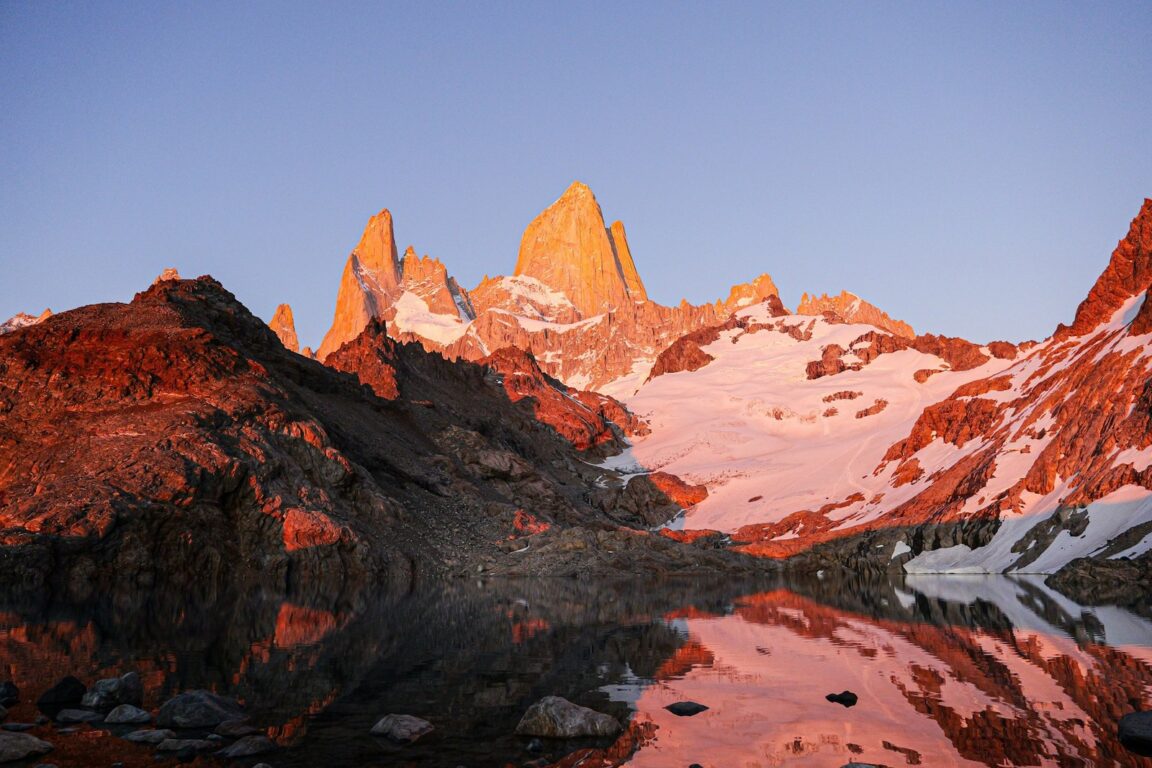
Image credit: Fitz Roy above a glacial lake in Los Glaciares, Patagonia. Photo by Carter Obasohan, via Unsplash, Unsplash License.