 Thandiwe Nkosi
Zeitz MOCAA asks to be visited building first and art second: enter the carved silo atrium before anything else, stand inside the hollowed grain tubes and understand what Heatherwick Studio cut out of this 1921 grain silo, then take the galleries floor by floor, and only then build the rest of the day around it at the V and A Waterfront, ending, if the ferries are running, with the Robben Island departure sequenced after the museum rather than against it. The museum is open Monday to Sunday from 10am to 6pm with last entry at 5.30pm, adults pay R350, under 18s enter free, and African citizens enter free every Wednesday between 10am and 1pm on presentation of a South African ID or African passport, per the museum’s own plan your visit page. Those are the facts. The day they make possible is the subject of this guide.
Quick Facts
- Address: Zeitz MOCAA, Silo District, South Arm Road, V and A Waterfront, Cape Town 8001, per the museum
- Hours: Monday to Sunday, 10am to 6pm. Last entry 5.30pm, per zeitzmocaa.museum
- Admission: Adults R350. Under 18s free. South African and African citizens pay a reduced R199 on site on presentation of ID, per the museum’s pricing notice
- Free hours: Africa Wednesday, free entry for all African citizens from 10am to 1pm on presentation of a South African ID or African passport, staying until 6pm
- Tours: Free one hour tours Monday to Friday at 12.30pm, booked on arrival, capacity limited, per the museum
- Building: A 57 metre historic grain silo, opened as a museum in 2017, with galleries and the atrium carved from its 42 silo tubes
- Checked: Hours, prices and free entry rules checked 25 November 2026 against zeitzmocaa.museum
The atrium first: reading the building before the art
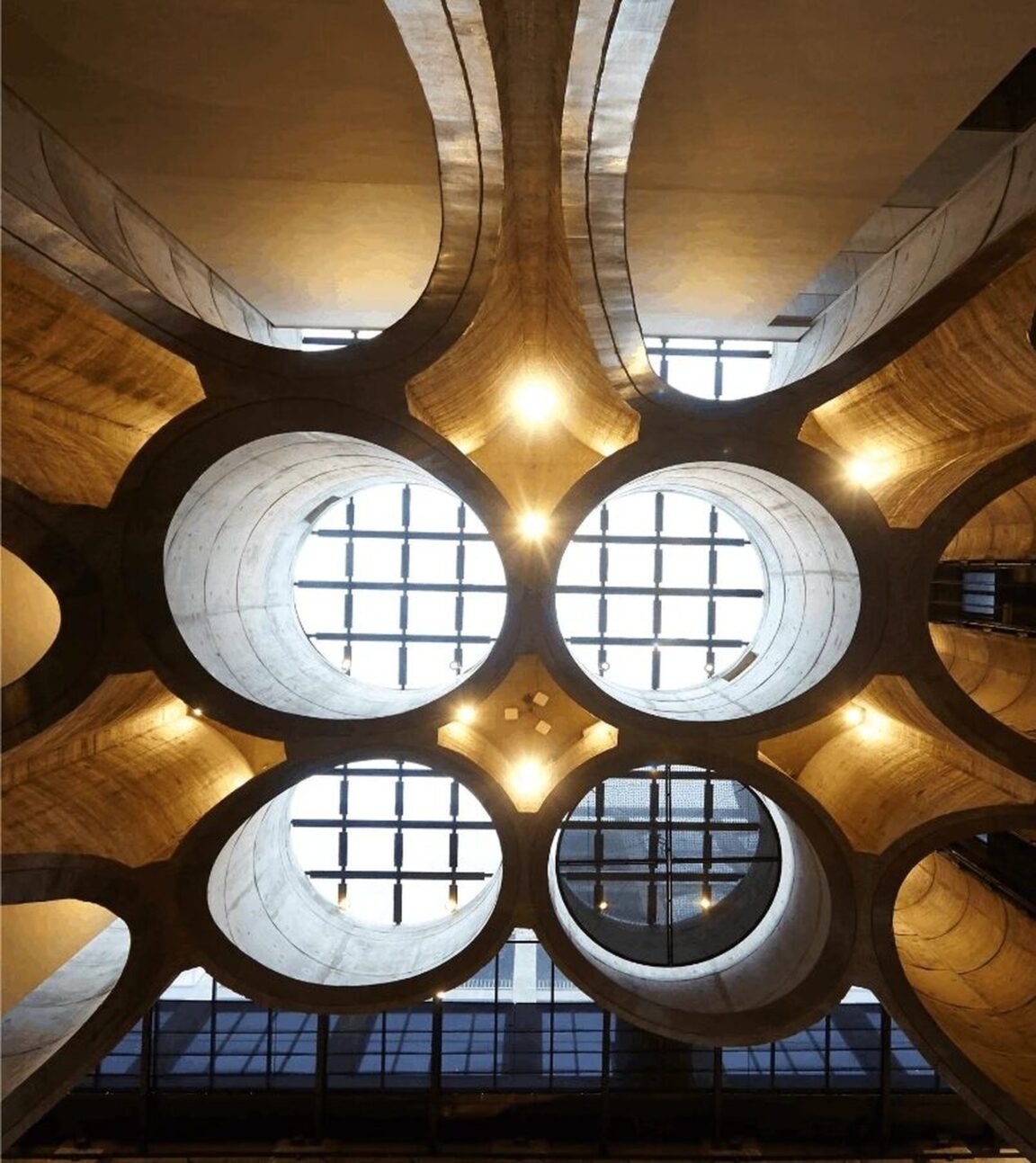
Most museums hide their architecture behind their collection. Zeitz MOCAA inverts that, deliberately. The building began as the V and A Waterfront’s grain silo complex, built in 1921 and, at 57 metres, once among the tallest structures in South Africa, its dense honeycomb of 42 concrete tubes designed to store grain, not to hold people. Heatherwick Studio’s conversion carved the galleries and a cathedral like central atrium directly out of those tubes, cutting intersecting curves through the concrete so that the atrium’s walls are the inside of the silos themselves, opened like a kernel of grain sliced in section. The museum’s own fact sheet describes 9,500 square metres of space over nine floors carved from that structure. None of this is decoration. It is the museum’s first artwork, and it frames every exhibition inside it.
So begin there, on the ground floor, looking up. The atrium tells you how to visit: this is a museum about transformation, about an industrial relic of the harbour remade as the world’s largest museum dedicated to contemporary art from Africa and its diaspora, which is how the museum describes its own mission. Visitors who rush past it to the lifts spend the day slightly disoriented, because the galleries, arranged around and above that void, only make sense in relation to it. Five unhurried minutes in the atrium buys orientation for the whole visit, and the free daily tour, offered Monday to Friday at 12.30pm and booked on arrival with the front of house team, builds on exactly that reading for anyone who wants it guided.
The galleries: checking the programme before you travel
Zeitz MOCAA is a contemporary museum, which means its exhibitions rotate in a way a national gallery’s permanent hang does not, and the single most useful planning habit is to check the museum’s own site for what is actually on during your dates before building the day around it. The collection and exhibition programme spans painting, photography, moving image, costume and performance from across Africa and its diaspora, organised through the museum’s dedicated centres, and individual floors can change completely between visits. That rotation is a strength for repeat visitors and a trap for anyone arriving with a fixed checklist copied from an old review. Check the programme, pick the two or three exhibitions that matter most to you, and give them the morning’s fresh attention, working outward to the rest.
Pacing inside is straightforward. The museum is large enough for half a day and compact enough not to defeat you, and the atrium works as a reset point between floors. The museum cafe and restaurant level, and the shop, which the museum stocks with art inspired design, books and work made with designers from South Africa and the continent, belong at the end of the visit rather than the middle. Note the practical details from the museum’s visitor information: strollers are welcome but must be parked in designated areas during specific exhibitions, secure parking is available in the Silo District garage with direct access to the museum, and from the Clock Tower the museum is a three to five minute walk. For the wider quarter’s museums in the same day, the V and A Waterfront museum quarter guide covers the aquarium and the neighbouring institutions that pair with Zeitz.
Africa Wednesday and the other free routes in
The museum’s free entry scheme is unusually generous and unusually specific, and its own page sets it out step by step. Every Wednesday, all African citizens can enter free between 10am and 1pm, presenting a South African ID or an African passport at the front of house desk and staying, once inside, until the 6pm close. Separately, the museum’s pricing notice states that South African and African citizens receive a reduced on site admission of R199 against the standard R350 adult price, on presentation of the same identification, and under 18s enter free every day. For a Cape Town family or a traveller from elsewhere on the continent, Wednesday morning is therefore the obvious slot, with the one predictable cost that free entry mornings are also the museum’s busiest. Arrive at the 10am opening on a Wednesday, take the atrium and your priority exhibitions first, and the crowd mathematics work in your favour even then.
Pairing the museum with the Waterfront and the Robben Island ferry
Zeitz MOCAA sits in the Silo District of the V and A Waterfront, Cape Town’s working harbour turned retail and leisure quarter, and the pairing writes itself if the order is right. Museum in the morning, while attention is fresh and, on Wednesdays, while free entry runs. Lunch at the Waterfront, where the food market and harbour restaurants handle every budget. The afternoon for the quarter itself: the aquarium, the craft and design market halls, the harbour walks and the Clock Tower precinct, all within minutes of the museum door. What not to do is split the museum around a midday ferry. The Robben Island ferry departs from the Nelson Mandela Gateway at the Waterfront, and its sailings are weather dependent and time fixed, so the island, a half day commitment in its own right, belongs on its own morning or afternoon, sequenced before or after a museum day rather than interrupting one. The island visit itself, its quarry, graveyard and returning penguin colony included, is covered in Robben Island beyond the Mandela cell, and reading it before booking either ticket makes the sequencing decision easy: museum and Waterfront on one day, island on another, and Cape Town’s two heaviest visits each given the attention they need.
One final planning note: the museum sits a short walk from the Waterfront’s main mall and the Clock Tower, and the Silo District around it has its own cafes and the silo hotel’s rooftop, so arriving on foot from a Waterfront hotel or by the city’s bus routes is straightforward, with the district’s parking garages as the driving fallback.
Frequently Asked Questions
How much does Zeitz MOCAA cost?
Adults pay R350 per person, per the museum’s current pricing. Under 18s enter free. South African and African citizens receive a reduced on site rate of R199 on presentation of a South African ID or African passport, per the museum’s pricing notice.
When is Zeitz MOCAA free?
Every Wednesday, African citizens enter free between 10am and 1pm on presentation of a South African ID or African passport, and may stay until the 6pm close. Under 18s are free every day.
What are Zeitz MOCAA’s opening hours?
Monday to Sunday from 10am to 6pm, with last entry at 5.30pm, per the museum’s plan your visit page. Free one hour tours run Monday to Friday at 12.30pm, booked on arrival.
How long does a visit to Zeitz MOCAA take?
Half a day covers the atrium and the main exhibitions at a proper pace. The museum has nine floors of galleries carved from the silo, and exhibitions rotate, so check the museum’s site for the current programme before you travel and prioritise accordingly.
Can I visit Zeitz MOCAA and Robben Island in one day?
It is possible but not wise. The ferry leaves from the V and A Waterfront nearby, but sailings are fixed and weather dependent and the island takes half a day on its own. Give the museum and Waterfront one day and Robben Island another, and both visits improve.
Image credit: The carved silo atrium at Zeitz MOCAA, Cape Town. Photo by Zeitz MOCAA, via zeitzmocaa.museum, the museum’s own official website.