 Rafael Santos
Budget 220 US dollars per adult for the paperwork of landing in the Galapagos, before you have paid for a single boat, bed or breakfast. Since 1 August 2024, the Galapagos National Park entry fee for most international visitors has been 200 dollars, double the 100 dollars charged for the previous 26 years. It is paid in cash, in US dollars, at the park counter in the arrivals hall at Baltra or San Cristobal. It is not the same charge as the Transit Control Card, the separate 20 dollar migration document issued by the Galapagos Governing Council, which every visitor must arrange before flying and show on the way in and on the way out. Travellers working from older guidebooks still arrive expecting the old 100 dollar fee. This explainer separates the two payments, who qualifies for which rate, and the order in which you meet them.
Quick Facts About Galapagos Entry Costs
- National Park entry fee: 200 US dollars for foreign non-resident visitors aged 12 and over, in force since 1 August 2024, up from 100 dollars.
- Foreign children under 12: 100 US dollars under the current tariff. Keep passports handy, because the rate turns on age and residency category.
- Transit Control Card (TCT): 20 US dollars per person, issued by the Consejo de Gobierno de Galapagos (the Governing Council), the islands’ migration control document.
- Total for most foreign adults: 220 US dollars per person across the two separate charges.
- Where the park fee is paid: In cash, in US dollars, on arrival at Baltra (GPS) or San Cristobal (SCY) airport. It is not paid online in advance.
- Where the Transit Control Card is handled: Registered through the Governing Council’s official portal, gobiernogalapagos.gob.ec, before the flight from mainland Ecuador, and validated at the airport in Quito or Guayaquil.
- First rise in 26 years: The 2024 increase, set by Resolution 002-CGREG-24-02-2024, was the first change to the foreign visitor fee since 1998.
- Keep both receipts: The park fee receipt and the Transit Control Card are checked during the trip, including at some visitor sites and when you leave the islands.
The park fee: what doubled, who pays what, and why
For more than a quarter of a century, the Galapagos charged foreign adults 100 dollars to enter the national park, a fee that had not moved since 1998 even as visitor numbers and conservation costs climbed. In February 2024 the Governing Council of the Special Regime of Galapagos voted to raise the tariff, and from 1 August 2024 the new table took effect. Most foreign non-resident adults now pay 200 dollars. Foreign children under 12 pay 100 dollars. Lower rates apply to Ecuadorian nationals and residents and to citizens of the Andean Community and Mercosur countries, whose categories are listed in the official tariff, so travellers in those groups should check the table for their exact rate rather than assuming the headline figure.
The money is the park’s core visitor income. The Galapagos National Park covers almost all of the archipelago’s land and the whole marine reserve around it, and the fee funds the ranger patrols, biosecurity inspections, visitor site maintenance and eradication work that keep the islands in the condition travellers are paying to see. That is the honest framing for the increase: it is a conservation price, set by the islands’ own governing bodies, and it is charged once per trip rather than per island or per day. A two-week island-hopping trip pays the same 200 dollars as a long weekend.
Payment mechanics matter more than the principle. The fee is collected at the National Park counter inside the arrivals hall, after you land and before you collect your bags and exit, and it is taken in cash in US dollars. Ecuador uses the US dollar as its currency, which simplifies the arithmetic, but it does not make cards appear at the counter. Land with the cash in your hand luggage, in notes you would be happy to hand over, and treat any plan that depends on an airport cash machine as a plan to start the trip stressed.
The Transit Control Card: the other 20 dollars, explained
The Transit Control Card, in Spanish the Tarjeta de Control de Transito or TCT, is not a park ticket and none of its money is a conservation fee. It is the province’s migration control instrument, issued by the Governing Council, and it exists so the authorities know who is in the islands, how long they are staying, and when they leave. Tourism stays are capped, residents are tracked under different rules, and the card is the paper and digital thread that ties a visitor’s entry to their exit. Every non-resident visitor needs one, children included, and it costs 20 dollars per person.
The process changed recently, and this is where older advice now misleads. Since 29 May 2025 the card has been registered online in advance through the Governing Council’s official portal, rather than being a form you simply queued for at the mainland airport. You enter your passport details, your flights and where you are staying, pay the 20 dollars, and receive the digital card, presented as a QR code, which is validated at the dedicated counters in Quito or Guayaquil airport before your Galapagos flight, and checked again on arrival and departure. The official guidance is to complete the registration 24 to 48 hours before you fly. Leaving it until the airport risks the flight itself, because without a validated card you do not board.
Keep the distinction straight when budgeting and when reading other people’s trip reports. The TCT is arranged before the flight and paid by card online. The park fee is paid after landing, in cash. Reports that fold them into a single Galapagos tax, or that quote 100 dollars as the entry cost, are working from pre-August 2024 information.
The arrival sequence, step by step
Knowing the order of events removes most of the anxiety from a Galapagos landing. Before you leave the mainland, your bags are subject to the biosecurity inspection regime that protects the islands from invasive species, and your Transit Control Card is validated at the Governing Council counter in Quito or Guayaquil. You then fly to Baltra, serving Santa Cruz, or to San Cristobal. On arrival, you pass immigration, pay the National Park fee in cash at the park counter, collect your luggage after its own inspection, including the famous sniffer-dog check, and only then head for the buses, ferries and water taxis that begin the trip proper. Travellers continuing from mainland Ecuador will find a useful mainland base in our guide to Cuenca, Ecuador’s colonial highlands city, and those building a wider South America route around the islands can pair it with the food-first planning in our Lima food guide to ceviche and the Barranco circuit.
What to carry in the cabin, not the hold
Three things should be in your hand luggage on the Galapagos flight: your passport, the cash for the park fee in US dollars, and access to your Transit Control Card confirmation. Checked bags are inspected and can be slow to reappear; the counters you meet first want documents and money, not patience. If you are travelling as a family, multiply the cash by every traveller over 12 at 200 dollars and every child under 12 at 100 dollars, then add the 20 dollar cards already paid online, and the true cost of entry stops being a surprise.
How the Galapagos compares, and whether the fee changes the trip
Set against the world’s other tightly managed natural wonders, 200 dollars is high but not an outlier, and it buys entry to an entire archipelago rather than a single viewpoint. Gorilla permits in East Africa cost many times more for a single hour. The Galapagos fee also covers the whole stay, however many islands the itinerary strings together. What the doubling should change is not whether to go, but how honestly the trip is budgeted: cruises and land-based tours quote their prices without these government charges more often than they include them, so a fare that looks complete can be 220 dollars per person short before the first excursion. Ask every operator, in writing, whether the park fee and the Transit Control Card are included, and assume they are not until told otherwise.
Frequently Asked Questions About Galapagos Entry Fees
How much does it cost to enter the Galapagos in total?
For most foreign adults, 220 US dollars per person: the 200 dollar National Park entry fee paid in cash on arrival, plus the separate 20 dollar Transit Control Card registered online before the flight. Foreign children under 12 pay a 100 dollar park fee, plus the card.
When did the Galapagos entry fee rise to 200 dollars?
On 1 August 2024, under Resolution 002-CGREG-24-02-2024. The previous foreign adult rate of 100 dollars had been unchanged since 1998, so any source still quoting 100 dollars is out of date.
Can I pay the park entry fee by card or in advance?
No. The National Park fee is paid on arrival at the park counter at Baltra or San Cristobal, in cash, in US dollars. The charge you handle online in advance is the different one, the 20 dollar Transit Control Card.
What is the Transit Control Card, and do children need one?
It is the Governing Council’s migration control document for the province, costing 20 dollars per person. Every non-resident visitor needs one, children included. Since 29 May 2025 it is registered online through the official portal before flying, and it is checked on entry and on departure.
What happens if I arrive without enough cash for the park fee?
You have a problem at the worst possible moment, because the fee is due in cash in the arrivals hall before your trip begins. Carry the full amount in US dollars in your hand luggage. Do not rely on airport cash machines or card payment at the counter.
Does the park fee cover multiple islands and the whole stay?
Yes. It is a single entry fee for the national park, paid once per trip, not a per-island or per-day charge. Keep the receipt, as it can be checked at visitor sites and when leaving the islands.
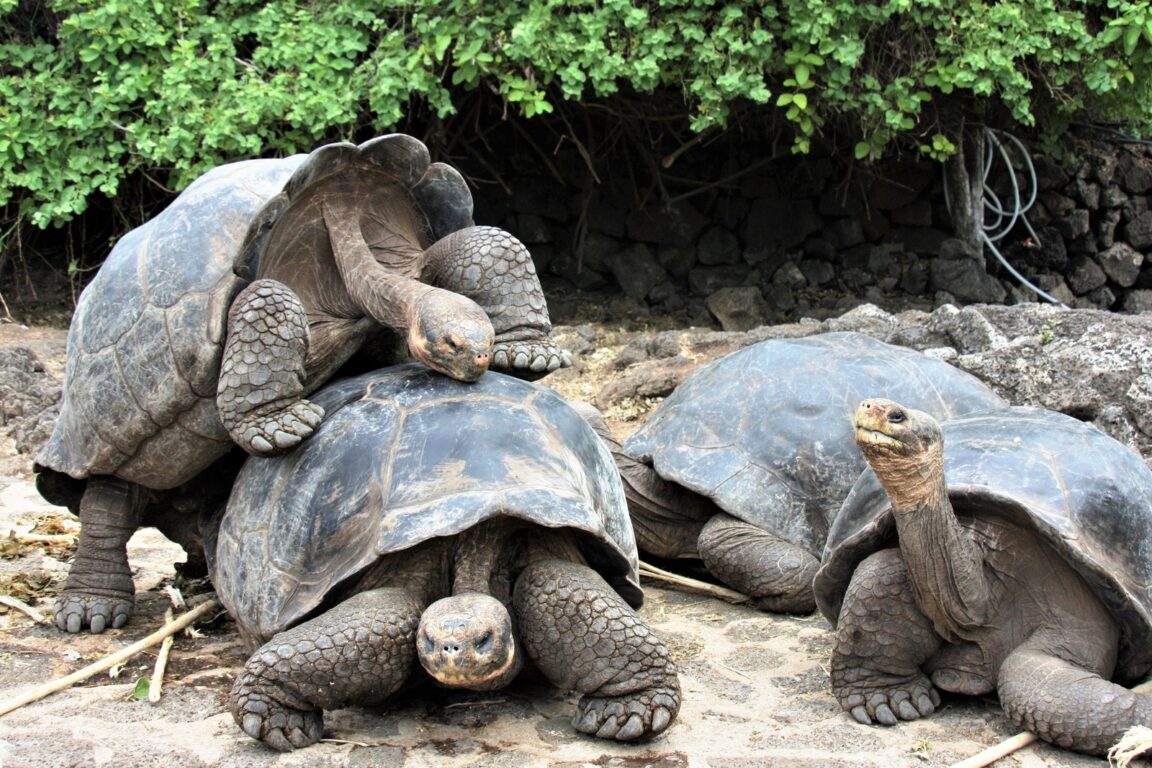
Facts checked 13 November 2026 against the Galapagos National Park Directorate tariff and the Governing Council of Galapagos (CGREG) guidance, including Resolution 002-CGREG-24-02-2024 and the official Transit Control Card portal at gobiernogalapagos.gob.ec. Tariffs can be revised; recheck before booking. Featured image: a Galapagos giant tortoise at a tortoise reserve, by Deb Dowd on Unsplash, Unsplash License.