 James Wolfe
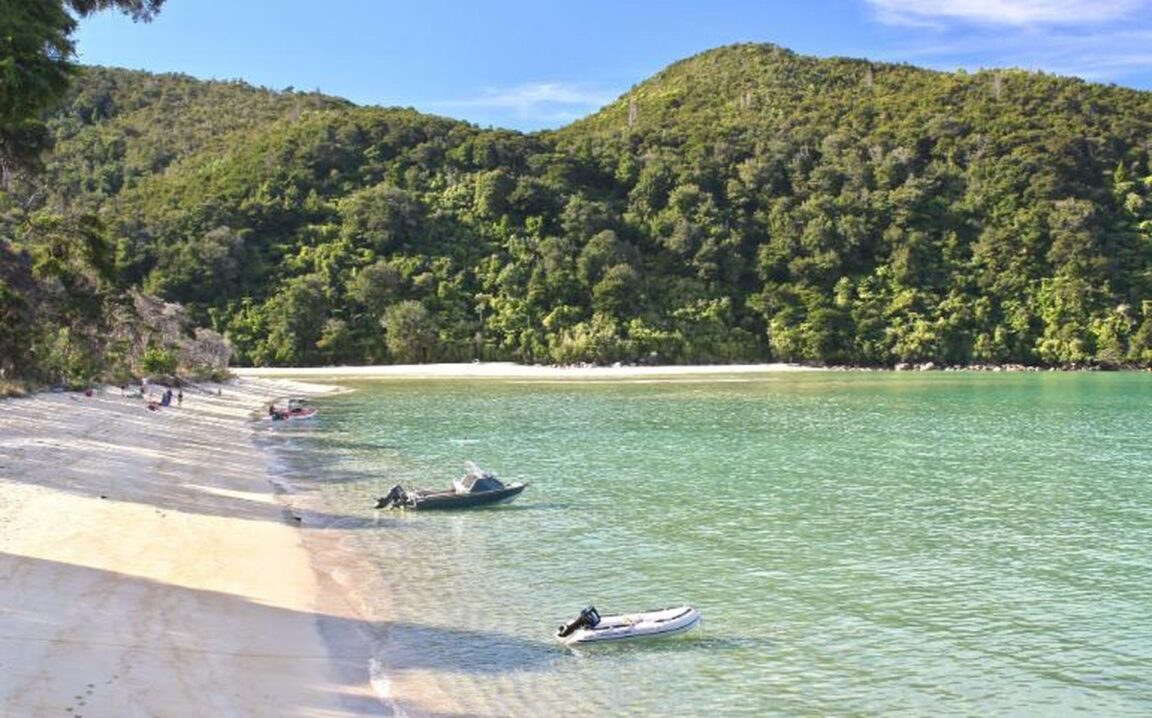
Nelson, known in Māori as Whakatū, is the sunny base camp at the top of New Zealand’s South Island, and its best use is as a launchpad for Abel Tasman National Park. The city itself is compact and walkable, with a cathedral hill, a long main street of cafes and galleries, and Tasman Bay at its feet. The park is the headline: New Zealand’s smallest national park, a coast of golden granite beaches, clear green water and bush clad headlands, crossed by the 60 kilometre Abel Tasman Coast Track, one of the country’s Great Walks. Base in Nelson for beds, food and supplies, ride out to Marahau or Kaiteriteri for the track, the water taxis and the kayaks, and use the city as the weatherproof, well fed frame around park days. This guide explains how to split your time between the two.
Quick Facts: Nelson and Abel Tasman at a Glance
- Base: Nelson city, at the top of the South Island, with the airport, supermarkets, gear shops and restaurants that the park gateway villages do not have.
- The park: Abel Tasman National Park, New Zealand’s smallest national park, famous for golden sand beaches, granite headlands and clear coastal water.
- The track: The Abel Tasman Coast Track runs about 60 kilometres from Marahau to Wainui, usually walked in 3 to 5 days, per the Department of Conservation.
- Bookings: All 4 huts and 18 campsites on the track must be booked in advance, all year round, through the Department of Conservation. Day walks and park entry itself carry no fee.
- Sunshine: The park climate averages about 2,200 hours of sun a year, with rainfall around 1,800 millimetres, per the Department of Conservation track guidance.
- Tide rule: The Awaroa Inlet crossing on the track is passable only within 1 hour 30 minutes before and 2 hours after low tide, and only in daylight. Tide tables shape the whole itinerary.
- Distances: Marahau, the southern track gateway, is about 67 kilometres from Nelson. Totaranui, at the northern end, is about 160 kilometres from Nelson.
- Dogs: Not allowed in the national park, including its islands and most of the foreshore.
- Facts checked: 13 November 2026, against the Department of Conservation Abel Tasman pages.
Why Base in Nelson Rather Than at the Park Gate?
Nelson earns its keep before and after the park. It is where you stock up, because there are no shops on the Coast Track and every meal on a multi day walk is carried in or arranged ahead. It is where the outfitters, kayak companies and shuttle desks are concentrated, where a rainy day can be spent in galleries and cafes instead of a tent, and where a flight or an intercity bus actually arrives. The gateway settlements of Marahau and Kaiteriteri are smaller, closer and quieter, and they suit travellers who want to walk out of bed and onto the sand. The practical pattern for most first trips is Nelson for the first and last nights, the track or a gateway stay in the middle, and Nelson again for the celebration dinner. Travellers building a South Island route can pair this coast with its opposite number in our guide to Dunedin, its Scottish streets, albatross colonies and the Otago Peninsula, which shows how different the South Island’s two historic city bases feel.
How Do Abel Tasman Days Work From Nelson?
The full Coast Track: 3 to 5 days, booked end to end
The Coast Track is the complete experience: about 60 kilometres of beaches, estuaries, suspension bridge and bush, walked in either direction between Marahau and Wainui. The Department of Conservation counts 4 huts and 18 campsites along it, and every night must be booked in advance, in every season, with a limit of two nights at any one hut or campsite during the October to April season. There is no entry fee for the park and no charge for a day walk, so the booking bill is purely for beds. Book the tides before you book the beds: the Awaroa Inlet can only be crossed in a narrow window around low tide, in daylight, and an itinerary that ignores the tide tables will strand a day somewhere scenic but wrong.
Day trips: water taxis and kayaks
Abel Tasman is unusually kind to travellers with one day. Water taxis run the coast year round, dropping walkers at bays such as Anchorage, Bark Bay, Onetahuti and Totaranui so a single section of track can be walked one way and the boat taken back. Kayaks open the other half of the park, the water itself, with seal colonies around the islands and granite formations such as Split Apple Rock off Kaiteriteri best seen from sea level. A classic Nelson day is the shuttle to Marahau, a water taxi north, a half day walk back along the track, and a swim at every second beach. Book water taxis in advance, as the Department of Conservation advises, and carry food and water, because the park sells neither.
What Should You Do in Nelson Itself?
Give the city its own half days rather than treating it as a dormitory. Trafalgar Street, the main street, climbs gently to Christ Church Cathedral on its hill, and the streets around it hold the cafes, bakeries and outdoor shops that service the region’s walking culture. The Saturday market tradition in the city centre is the region’s social fixture and the best single stop for local food, produce and craft. Tahunanui Beach, a short ride from the centre, is the city’s own safe swimming beach, and the bays beyond it toward Kaiteriteri make an easy coastal drive on a day when the park feels too far. Nelson also sits between three national parks, Abel Tasman, Kahurangi and Nelson Lakes, so a longer stay can rotate coasts, limestone country and alpine lakes without changing beds.
When Should You Go, and How Does the Booking System Bite?
The track can be walked all year and is busiest from October to April, per the Department of Conservation, with summer bringing the warmest swimming water and the hardest competition for hut bunks. Winter is quieter, calmer on the water and shorter in daylight, with heating in all huts. Bookings for the 2026 and 2027 season are open through the Department of Conservation, and popular summer nights at Anchorage and Bark Bay go early, which is the single most common way a Nelson trip goes wrong: flights booked, beds gone. Our explainer on New Zealand’s Great Walks and how the booking system works covers the release pattern and the reserve strategy across all the Great Walks, and it is worth reading before you fix dates. Before you fly at all, sort the entry paperwork in our guide to New Zealand’s visitor levy and NZeTA, and what you pay before you fly, because the NZeTA and levy are departure desk issues, not arrival desk ones.
Frequently Asked Questions About Nelson and Abel Tasman
How many days do you need for Nelson and Abel Tasman?
Four nights is a comfortable minimum: a night in Nelson on arrival, two or three nights on the track or split between gateways, and a final Nelson night. Travellers with only two nights should stay in Nelson and run Abel Tasman as a water taxi and walking day trip rather than starting a track they cannot finish.
Do you need to book Abel Tasman huts and campsites?
Yes, in advance, all year round, through the Department of Conservation. There are 4 huts and 18 campsites on the Coast Track, stays are limited to two nights per site in the October to April season, and arriving without a valid booking can mean a penalty fee or being asked to leave the park. Day walks need no booking and park entry is free.
Can you walk the Coast Track in either direction?
Yes. The track runs about 60 kilometres between Marahau in the south and Wainui in the north and can be walked either way, or in sections using water taxis. Whichever direction you choose, plan around the Awaroa Inlet tidal crossing, which is passable only from 1 hour 30 minutes before to 2 hours after low tide, and only in daylight.
What is the weather like in Abel Tasman?
Mild and comparatively sunny by New Zealand standards. Department of Conservation guidance for the track puts sunshine at about 2,200 hours a year and rainfall at about 1,800 millimetres, with sea breezes, summer droughts and occasional winter frosts. The sun is strong, the water is swimmable in summer, and a rain layer still belongs in the pack in every month.
Can you take a dog into Abel Tasman National Park?
No. Dogs are not allowed in the national park, on its islands, or on most of the park foreshore. Travellers with dogs need care arranged in Nelson or at the gateways before a park day, not a plan to tie the dog at a trailhead.
Track conditions, bookings and alerts change with weather and maintenance. This guide was checked on 13 November 2026 against the Department of Conservation Abel Tasman National Park and Coast Track pages. Check the current Nelson and Tasman alerts and the tide tables on the DOC site before you walk.