 LeVar Thomas
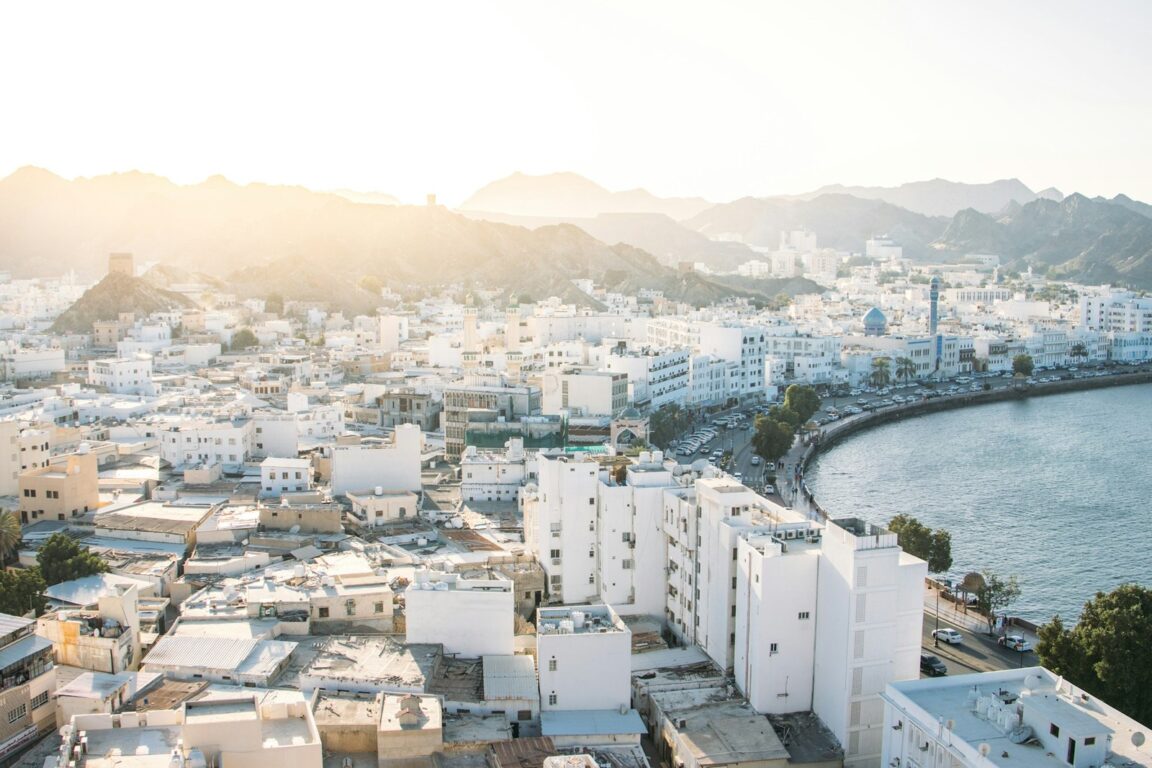
Two days in Muscat work best when you stop fighting the city’s shape. The Omani capital is not one compact old town but a long, low, whitewashed spread along the coast, and its three essential stops sit in different pockets of it: the Sultan Qaboos Grand Mosque in the modern west of the city, the Mutrah Corniche and its souq in the old port district, and the ceremonial quarter of Old Muscat a few minutes beyond. This itinerary sequences them around the two fixed points of a Muscat day, the Grand Mosque’s short morning visiting window for non-Muslims and the late afternoon reopening of Mutrah Souq, so that nothing important lands in the fierce midday hours. Day one covers the mosque, the Royal Opera House quarter and a first Corniche walk. Day two covers Old Muscat in the morning and gives Mutrah the evening it deserves.
Quick Facts
- The shape of the city: Muscat runs for many kilometres along the Gulf of Oman coast. The Grand Mosque, Mutrah and Old Muscat are separate districts, so plan on taxis or ride-hailing between them rather than walking the whole trip.
- The mosque window: Non-Muslim visitors are received at the Sultan Qaboos Grand Mosque from Saturday to Thursday, in the morning only, roughly 8am to 11am. The mosque is closed to visitors on Fridays. Confirm the current arrangement and any entry fee on the official Experience Oman visitor channels before you go, as a managed entry system and a fee have been reported in recent seasons.
- The dress code: Women must cover their hair, arms and legs with loose clothing. Men need long trousers and covered shoulders. Shoes come off before the prayer halls. Coverings can usually be hired at the entrance, but arriving already dressed correctly is faster and more respectful.
- The mosque itself: Completed in 2001, the complex holds around 20,000 worshippers across its halls and courtyards. The main prayer hall is known for its vast single piece hand woven carpet and its 14 metre Swarovski crystal chandelier.
- The Corniche: The Mutrah Corniche is a waterfront promenade of roughly three kilometres curving around Mutrah harbour, overlooked by the restored Mutrah Fort.
- The souq rhythm: Mutrah Souq trades in a morning session and a livelier evening session, with a midday lull and a later start on Fridays. The evening session, from around 4pm or 5pm, is the one to build your day around.
- The season: The comfortable months run from about October to March. Summer heat is severe, and even in winter the middle of the day belongs indoors.
Day one: the Grand Mosque, the opera house quarter and a first look at Mutrah
Why does the Grand Mosque have to come first?
Because the visiting window is short and immovable. Be at the Sultan Qaboos Grand Mosque close to 8am on any day from Saturday to Thursday and you get the courtyards at their calmest, with the sandstone complex still cool and the main prayer hall seen properly before the tour groups build up. Arrive at 10.30am and the same visit becomes a shuffle against the clock. The mosque sits on Sultan Qaboos Street in the Ghubra and Bawshar side of the city, a short drive from the airport corridor, which is why it pairs naturally with arrival day or a first morning rather than with the old town at the other end of Muscat.
Inside, take the prayer hall slowly. The scale is deliberate: a single hand woven Persian carpet that took hundreds of weavers years to complete, the great chandelier above it, and carved and inlaid detail that rewards looking up as much as looking across. Dress rules are checked at the entrance, and they are not negotiable. Women need hair, arms and legs covered in loose clothing, men need long trousers and sleeves or at least fully covered shoulders, and everyone removes shoes for the halls. If you are travelling onwards in Oman afterwards, our guide to Salalah and the green khareef season explains the very different Oman you meet in the far south during the monsoon months.
What fills the middle of day one?
Late morning belongs to the Shatti Al Qurum district and the Royal Opera House Muscat, opened in 2011 and built in pale stone and carved wood in a style that reads as a palace until you are inside it. Even without a performance ticket, the building anchors a pleasant few hours: tours run on scheduled days, the surrounding Qurum quarter has the city’s easiest cafes and beach access, and the whole district shows you the modern, prosperous Muscat that the old port quarters deliberately do not. If a performance falls on one of your evenings, book it. The opera house programme runs across the cooler season and formal dress is expected.
Use the hottest hours the way Muscat residents do. Lunch long and indoors, rest, and do not attempt the Corniche at 1pm in anything but the mildest week of winter. The city is built around this pause, and your second day will thank you for respecting it on the first.
How should the first evening run?
Head to Mutrah as the light softens. Walk the Corniche from the fish market end, past the restored merchant houses and the harbour where dhows still moor, and let this first pass be orientation rather than shopping. The souq will be reopening for its evening session. Duck in for a first circuit without buying, note the lanes that specialise in frankincense, silver and textiles, and save the serious bargaining for tomorrow when you know the layout. Dinner near the Corniche, with grilled fish the obvious order in a working port, closes the day at the pace the district sets.
Day two: Old Muscat in the morning, Mutrah properly in the evening
What is there to see in Old Muscat?
Old Muscat is the ceremonial heart of the capital, a small quarter held between rocky hills and the old harbour. Its centrepiece is Al Alam Palace, the Sultan’s ceremonial palace, recognisable at a distance by its flared blue and gold columns. Visitors do not go inside, but the forecourt and approach are open for photographs, and the palace makes most sense as part of a short walking circuit. Guarding the harbour mouth on either side stand the twin forts of Al Jalali and Al Mirani, Portuguese era strongholds from the 1580s that are viewed from outside and give the quarter its storybook outline.
Directly opposite the palace, the National Museum of Oman, opened in 2016, is the single best introduction to the country a short trip allows. Its galleries cover Oman’s maritime history, the frankincense trade and the country’s network of aflaj irrigation channels, and two unhurried hours here will change how you read everything else on this itinerary, including what the souq sells and why. Go in the morning, pair it with the palace forecourt and the fort viewpoints, and the whole of Old Muscat fits neatly before lunch.
When should you climb Mutrah Fort?
Late afternoon, and not before. The fort above the Corniche is a compact Portuguese era watchtower reached by a steep but short stair climb, and in the middle of the day the steps and the exposed terraces are punishing. An hour or so before sunset the climb becomes the best viewpoint in the district: the harbour curve below, the Corniche lights coming on, the old town’s white houses stacked against the brown hills. Access arrangements and the small entry charge have varied in recent seasons, so treat any printed figure as provisional and check the current position locally. If the fort is closed on your day, the Corniche itself at the same hour loses very little by comparison.
How do you shop Mutrah Souq without wasting the visit?
Give the souq the full evening session on day two. Mutrah Souq is one of the oldest markets in the Arab world, a covered warren of lanes just back from the harbour, and it is a working market first and a visitor attraction second. The goods that matter here are the ones with Omani roots: frankincense, graded by quality with the pale green hojari resin from Dhofar the most prized, bakhoor incense, silver jewellery and khanjar daggers, pashminas and the sweet, dense Omani halwa sold by weight. Prices in the tourist facing lanes are opening positions, and bargaining is expected and good natured. Counter politely, settle somewhere in the middle, and walk the full circuit once before buying, because the same goods recur at different prices three lanes apart. Small notes in Omani rials make transactions smoother than cards in the smaller shops.
Between the two days you will also have absorbed the practical grammar of the city. Taxis are plentiful, ride-hailing apps operate in the capital, fares in street taxis should be agreed before you set off, and a rental car only earns its keep if you are adding a wadi or mountain day beyond the city. For a model of how to sequence a spread out city over a few days, the same logic we use in our first time Sydney itinerary, anchor sights first and neighbourhoods second, applies here in miniature.
Where should you base yourself in Muscat?
Mutrah and the neighbouring Ruwi side of old Muscat suit this itinerary best, putting the Corniche and souq evenings on your doorstep and Old Muscat minutes away, at the price of a longer taxi ride to the mosque on day one. The Qurum and Shatti Al Qurum districts reverse the trade: beaches, the opera house and the city’s cafe strip outside the door, the old quarters a drive east. The airport corridor and Al Khuwair sit between the two and work well for travellers with a car. There is no wrong answer, only a choice about which end of the city you want to walk out into after dinner.
Frequently Asked Questions
Can non-Muslims visit the Sultan Qaboos Grand Mosque?
Yes, during the morning visiting window from Saturday to Thursday, roughly 8am to 11am. Fridays are reserved for worship. Dress rules are enforced at the entrance, and you should confirm the current entry arrangement, including any fee or managed entry system, on official Experience Oman channels shortly before your visit.
What should women wear for the Grand Mosque?
Loose clothing covering the arms and legs in full, and a headscarf covering the hair. Everything except face and hands should be covered. Coverings can usually be hired at the entrance if you arrive without them, but bringing your own scarf and a long sleeved, ankle length outfit is simpler.
Is two days enough for Muscat?
Two days cover the essentials of the capital itself: the Grand Mosque, Old Muscat and the National Museum, the Corniche, Mutrah Fort and the souq. A third day is what a wadi trip, a boat trip or a mountain drive into the interior requires, and those are additions to a city trip rather than part of it.
When is Mutrah Souq at its best?
During the evening session, from around 4pm or 5pm until late evening, when the lanes are fully open, the heat has dropped and the market is serving local shoppers as well as visitors. Mornings are quieter and useful for a first look. Expect a midday lull and a later Friday start.
How do you get between the mosque, Mutrah and Old Muscat?
By taxi or ride-hailing app. The districts are too far apart, and the roads between them too exposed, for walking the whole pattern to make sense. Agree fares in street taxis before setting off, and allow extra time in the late afternoon when the Corniche traffic builds.
What is the best month for this itinerary?
The winter months, roughly November to February, give the most comfortable version of it, with evenings cool enough to enjoy the Corniche slowly. October and March are workable with disciplined midday pauses. In high summer the same itinerary is possible only by compressing everything into early mornings and evenings.