 Thandiwe Nkosi
Arusha rewards three unhurried days far more than the single overnight most safari itineraries give it. Day one belongs to the centre: the Clock Tower, the Maasai Market for curios and crafts and the working Central Market. Day two goes to the green slopes of Mount Meru for a coffee farm tour, where beans are picked, pulped, roasted and brewed on the same smallholding. Day three is the flexible day: a waterfall trip toward Moshi and Materuni, or a compact game drive in Arusha National Park, which sits about an hour from town. Treated this way, the safari capital stops being a briefing room with beds and becomes a place with its own markets, coffee culture and mountain weather, and the safari that follows starts calmer for it.
Quick Facts
- Base: Arusha, northern Tanzania, the staging city for Serengeti, Ngorongoro and Tarangire safaris
- Landmark: The Clock Tower, locally said to stand halfway between Cairo and Cape Town
- Markets: Maasai Market for curios and crafts near the Clock Tower; Central Market (Soko Kuu) for food and daily life
- Coffee: Smallholder farm tours on the lower slopes of Mount Meru, bookable through hotels and local operators
- Mountain backdrop: Mount Meru, 4,562 metres, inside Arusha National Park
- Day trip: Materuni waterfall and coffee village on the slopes of Kilimanjaro, reached via Moshi
- Airport: Kilimanjaro International Airport (JRO), about an hour by road
- Best months: The dry seasons, roughly June to October and January to February
Why does Arusha deserve three days?
Most visitors meet Arusha through a windscreen. They land, sleep, attend a safari briefing, and leave at dawn for the parks, returning only to fly home. That pattern made sense when the city was purely a logistics hub, but it undersells what is actually here. Arusha is a working Tanzanian city with a market culture, a coffee economy on its doorstep and a national park close enough for a day trip. Three days is not padding. It is the difference between starting a safari jet lagged and starting it settled, oriented and already a little attached to the country beyond the parks.
There is a practical dividend too. Safari days are long and expensive, and the northern circuit parks reward travellers who arrive rested. A gentle first day in town, a farm day with walking built in, and one chosen excursion spread the adjustment across three days instead of cramming it into one transfer. Anyone continuing to a rim top lodge should read our guide to Ngorongoro Crater Lodge, Tanzania before fixing dates, because crater logistics shape which Arusha nights matter most.
Day 1: The Clock Tower, two markets and a calm centre
Start at the Clock Tower
The Clock Tower is Arusha’s compass point. Hotels, drivers and market traders all give directions from it, and the story attached to it, that it marks the halfway point on the old road between Cairo and Cape Town, is repeated with pride whether or not the geography is exact. Use it as a meeting point and a mental anchor. The streets around it hold banks, coffee shops and safari offices, so a slow first morning here doubles as errands time: change money, confirm pickups, and buy anything the flight made urgent.
The Maasai Market for curios and crafts
A short walk from the Clock Tower, the Maasai Market is the city’s concentrated craft stop: rows of stalls selling beadwork, carvings, paintings, jewellery, fabrics and gemstones, including tanzanite, the violet blue stone found only in Tanzania. It is a browsing market, not a sprint. Prices are negotiated, and the negotiation is part of the etiquette, so go in daylight, take time, and treat the first quoted price as an opening rather than a verdict. Because the stalls sit close together, the smart method is a full lap first, noting where the good carving, beadwork or fabric sits, then a second lap to buy. Travellers who buy on the first lap almost always see a better version ten stalls later.
The Central Market for the real city
Where the Maasai Market serves visitors, the Central Market, known locally as Soko Kuu, serves Arusha. Produce, spices, grains, household goods and street snacks fill a dense, noisy grid that shows what the city actually eats and buys. It rewards a morning visit, an unhurried pace and small notes for snacks. Photographers should ask before raising a camera at a stall. The contrast between the two markets is the day’s lesson: one is Tanzania presenting its craft, the other is Tanzania getting on with its week, and a good Arusha stay makes room for both.
Day 2: Coffee on the slopes of Mount Meru
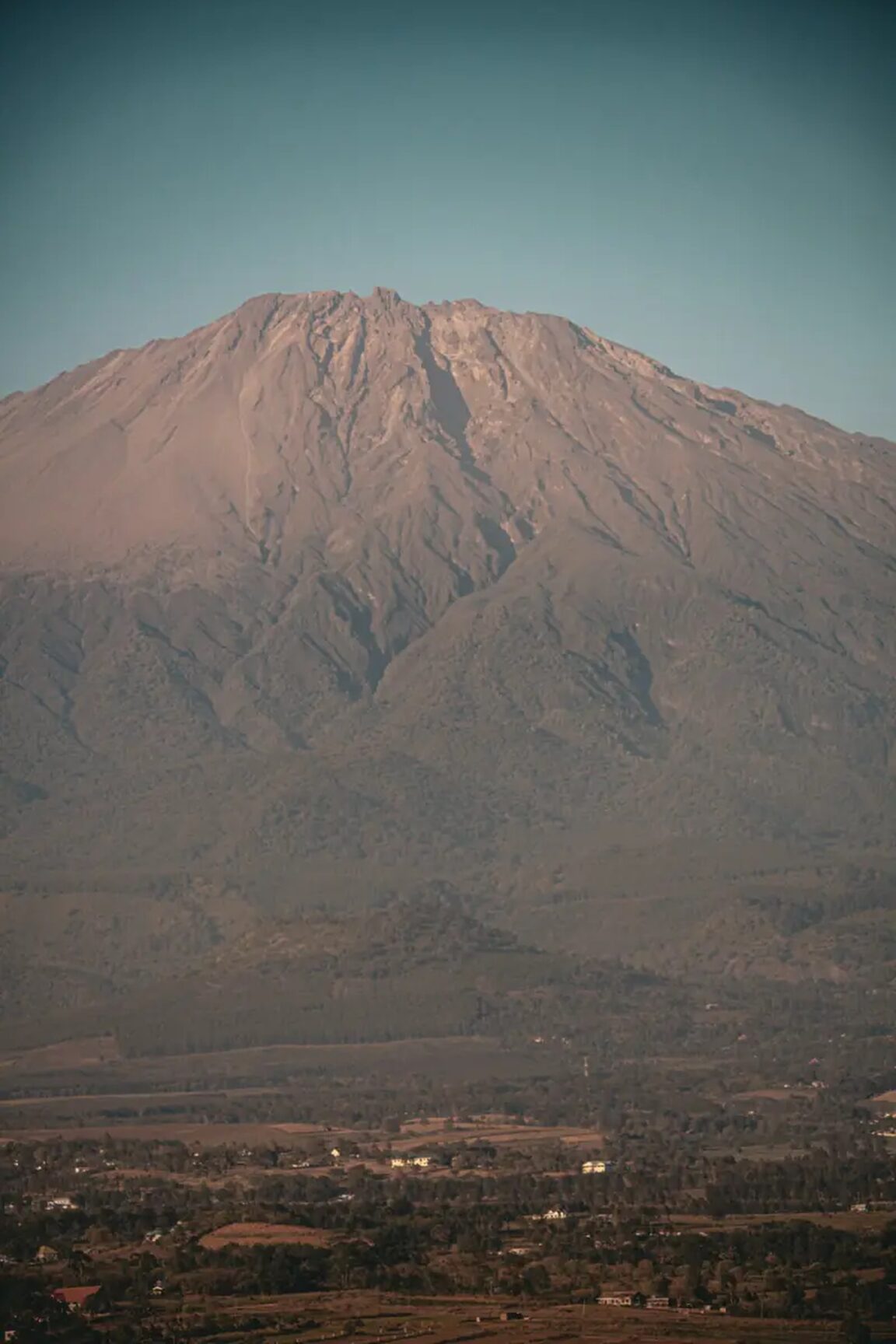
Mount Meru fills Arusha’s skyline, a 4,562 metre dormant volcano whose forested lower slopes hold the small farms that grow some of Tanzania’s best known coffee. Farm tours from Arusha typically combine a walk through the coffee plots with the full smallholder process: picking ripe cherries in season, pulping, fermenting, drying, roasting over a fire and finally grinding and brewing a cup from the same harvest. A village lunch is often part of the day. The value of the tour is not the caffeine. It is seeing how much hand labour sits inside a single cup, and how coffee income threads through Meru slope villages alongside bananas and other crops.
Practical notes matter here. The farms sit on slopes, so paths can be muddy after rain and sturdy shoes beat sandals. Tours run through hotels and local operators, and confirming what is included, transport, lunch, guide and any village contribution, avoids the one awkward conversation of the day. Travellers planning to climb Meru itself should treat the farm day as reconnaissance only: the mountain is a serious three to four day climb inside Arusha National Park, usually via the Momella route, and it needs its own booking, guides and ranger arrangements. For a contrast in safari styles after Arusha, our inside look at Londolozi Game Reserve shows how a private reserve lodge day differs from Tanzania’s national park circuit.
Day 3: Materuni waterfall, or Arusha National Park
Option A: Materuni, toward Moshi
Materuni sits on the green lower slopes of Kilimanjaro, beyond Moshi, and a day there pairs a walk to a tall waterfall with a village coffee experience run by the Chagga community who farm the area. The waterfall path crosses farmland and can be slippery, and the pool at the base is cold in the way mountain water always is. The drive from Arusha is the longest of the three days, so this option suits travellers who are not flying out that evening and who like a day that builds slowly: road, village, walk, water, coffee, road home. On a clear morning the Kilimanjaro views along the way are the quiet bonus.
Option B: Arusha National Park in a day
Arusha National Park is the underused card in the city’s hand. About an hour from town, it packs the Momella Lakes, the small Ngurdoto Crater and Meru’s lower slopes into a compact park where giraffe, buffalo, monkeys and rich birdlife are the draw rather than big cats. Guided walks with a ranger are a signature here, a genuine change of texture after days in vehicles. For travellers whose main safari starts tomorrow, the park works as a gentle rehearsal: early start, packed lunch, wildlife manners, home by dinner. For travellers ending a safari, it works as a soft landing before the flight.
Where to stay and how to pace the evenings
Arusha accommodation splits into city hotels near the Clock Tower and garden lodges on the greener outskirts toward Usa River and the airport road. City bases win for market mornings and restaurant choice. Garden lodges win for quiet, birdsong and a pool after a dusty day. With three days, either works; with an early safari departure on day four, ask the lodge about breakfast timing and a packed option before booking, because departure briefings tend to be early and non negotiable. Evenings in Arusha are for eating well and sleeping early. The city’s restaurant scene clusters around the centre and the lodge belt, and Tanzanian staples, grilled meats, pilau and fresh juices, repay ordering with confidence.
Getting there and getting around
Most international arrivals use Kilimanjaro International Airport, about an hour from Arusha by road, and many hotels and safari operators include or arrange the transfer. The smaller Arusha Airport handles domestic flights, useful for anyone connecting to the Serengeti by air later in the trip. Inside the city, taxis and ride arrangements through hotels are the straightforward option for market days, while dala dala minibuses are the local system and suit confident travellers with time. For the coffee and waterfall days, an organised tour with transport included removes the friction entirely, which on a three day stay is usually the right trade.
Frequently asked questions
Is three days in Arusha too long before a safari?
No. One day covers the centre and markets, one covers a Meru slope coffee farm, and one covers either Materuni or Arusha National Park. Travellers who cut Arusha to a single night usually spend that night asleep, and start the safari having seen none of the city.
What should I buy at the Maasai Market?
Beadwork, carvings, paintings, fabrics and tanzanite jewellery are the staples. Walk a full lap before buying, negotiate politely, and keep purchases in hand luggage, especially gemstones and fragile carvings.
When is the best time of year for these three days?
The dry seasons, roughly June to October and January to February, give the firmest paths on farm and waterfall walks and the clearest Mount Meru views. The long rains around March to May make slope paths muddy.
Can I visit Arusha National Park without a multi day safari?
Yes. The park is about an hour from town and works as a single day trip with game drives and, by arrangement, a guided walk with a ranger. Book through a hotel or operator so park fees and transport are handled together.
Is the Materuni day suitable before an evening flight?
It is risky. Materuni is the longest drive of the three days, via Moshi on Kilimanjaro’s slopes. Keep it for a full free day, and use the Clock Tower and markets on a departure day instead.