 Jonas Lindqvist
Two days in Bergen divide cleanly: day one stays in the city, walking the Bryggen wharf, riding the Floibanen funicular to Mount Floyen and eating at the Fish Market, while day two is the fjord decision, and the honest answer for most visitors is to take a fjord trip as its own full day rather than squeezing it around city sights. Bryggen, a UNESCO World Heritage Site since 1979, needs a slow morning before the crowds. The funicular, running since 1918, climbs 320 metres to the Floyen viewpoint in minutes and works best early or late. This plan sequences both days so the weather, which in Bergen is a genuine planning factor, can move the fjord day without breaking the trip.
Quick Facts
- Base: Bergen, on Norway’s southwestern coast, the traditional gateway to the fjords
- Old town: Bryggen, the Hanseatic wharf, UNESCO World Heritage Site since 1979, about 62 buildings survive
- Funicular: Floibanen, opened in 1918, lower station at Vetrlidsallmenningen 23A, summit at 320 metres
- Winter funicular fare: NOK 145 return for adults from October to March, NOK 75 with the Bergen Card (Visit Bergen, checked today)
- Food anchor: The Fish Market (Fisketorget) at the head of the harbour, a short walk from Bryggen
- Fjord day: Norway in a Nutshell and similar fjord tours run as full day trips from Bergen
- Closed note: The Hanseatic Museum’s main building remains closed for restoration, reopening planned for 2027
- Weather rule: Keep the two days interchangeable and give the clearer forecast to the fjords
Day 1 morning: Bryggen before the harbour fills
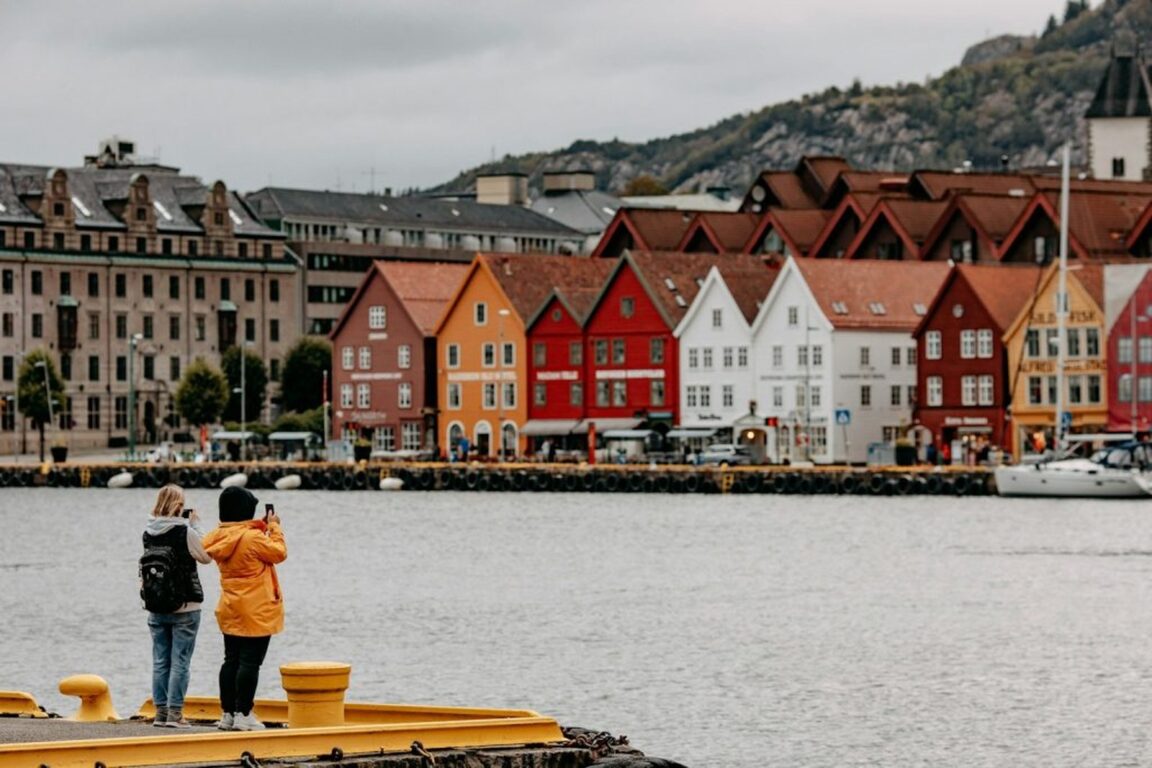
Bryggen is a row of tall, narrow, gabled wooden buildings on the eastern side of the Vagen harbour, rebuilt after the great fire of 1702 in the pattern of the Hanseatic trading quarter that stood here for centuries. Bergen was one of the Hanseatic League’s overseas offices, and the trade that built these warehouses was stockfish from northern Norway exchanged for grain and goods from Europe. About 62 buildings remain, and the front row is only the postcard. The real Bryggen is behind it: narrow wooden passages, galleries and yards where the merchants lived, worked and stored goods through the dark winters.
Go early. The wharf photographs best and reads best before the day’s visitors arrive, and the small shops, galleries and workshops in the passages open into a quieter quarter. Bryggens Museum, at the northern end, covers the medieval city beneath the wharf and is the right context stop before the funicular. Travellers building a longer Norwegian route should pair this city plan with our guide to the Lofoten Islands, Norway, because Bergen and Lofoten reward the same slow, weather aware pacing.
Day 1 midday: The Fish Market and the harbour head
The Fish Market sits at the head of the harbour, a few minutes from Bryggen, and it has been Bergen’s trading floor for seafood for centuries. Today it mixes working stalls with places to sit and eat: prawns, salmon, fish soup and, in season, king crab. It is not the cheapest lunch in Norway, and no honest guide should pretend otherwise, but as a first day ritual it earns its place, because it teaches the city’s geography in one meal: harbour in front, Bryggen to one side, the funicular station a short walk away. Eat, then ride, while the light is still high.
Day 1 afternoon: Floibanen up Mount Floyen
The Floibanen funicular leaves from Vetrlidsallmenningen 23A, about five minutes on foot from Bryggen, and climbs to the top of Mount Floyen at 320 metres above the city. The ride takes only a few minutes, and the top station opens onto the classic Bergen panorama: the harbour, Bryggen’s gables, the city bowl and the islands to the west. Fares are seasonal. Visit Bergen’s current listing, checked today, puts a winter adult return at NOK 145 from October to March, with a one way fare of NOK 80 and a Bergen Card return of NOK 75. Summer fares run higher, so check the operator’s current prices at floyen.no before the trip rather than budgeting from memory.
On top, the choice is the viewpoint terrace alone or one of the forest paths that lace the plateau. The walk back down to the city takes roughly 45 minutes to an hour on clear paths and turns a viewpoint stop into a proper afternoon. Families should note the playground and the troll forest trails near the top station. If cloud sits on the summit, swap the order: do the museums and the market first, and ride up when the weather lifts, because Bergen weather turns quickly in both directions. For another Norwegian plan built around honest weather odds, see our guide to seeing the Northern Lights in Tromso.
Day 2: The fjord tour decision, made clearly
Here is the decision this guide exists to make: with only two days, give the fjords a whole day or skip them properly. The famous Norway in a Nutshell route, Bergen to the Naeroyfjord and Flam by rail, bus and boat in its various forms, is a long day of around ten to twelve hours. It is spectacular and it is not a half day add on. Travellers who bolt it onto a city day end up doing both badly: Bryggen at a run and the fjord from behind glass at the tired end of the day.
Take the fjord day if the forecast cooperates
Fjord scenery is weather multiplied. In clear conditions the Naeroyfjord, a UNESCO listed arm of the Sognefjord, justifies every hour of the route: steep sides, waterfalls, small farms and still water. Book the tour as the full second day, start early, sit on the side the operator recommends for the boat leg, and keep the evening free for a harbour dinner back in Bergen. Shorter fjord cruises from Bergen, including half day trips into the nearer fjords, are the compromise option: less grand than the full route, but they leave the afternoon for the city.
Stay in the city if the weather closes in
If day two dawns with low cloud and rain, the fjord day loses most of its value, and Bergen is unusually good at absorbing a wet day. The KODE art museums, the Bryggen passages, the aquarium and a long fish market lunch make a respectable storm plan, and the funicular can still pay off if the cloud base lifts by evening. The two day structure in this guide is deliberately swappable: check the forecast on arrival, assign the better day to the fjords, and let the city take the weather it gets. Bergen has centuries of practice at rain, and its indoor life is built accordingly.
Where to stay and eat across the two days
Stay near the harbour. Bryggen, the Fish Market and the funicular all sit within a compact centre, and a hotel in that bowl removes transport from the plan entirely. The Bryggen side is the atmospheric choice, with historic buildings converted to hotels; the station side is often better value and still an easy walk. For food beyond the Fish Market, the streets behind Bryggen and around the harbour head hold Bergen’s traditional restaurants, where fish soup, seafood platters and game in season carry the menus. Book dinner in summer, when the city fills with fjord travellers passing through in both directions.
Getting to Bergen and moving around the centre
Bergen Airport at Flesland connects to the centre by the Bergen Light Rail, known as Bybanen, and by airport bus, and the light rail is the straightforward choice for travellers staying near the harbour, since its central stops sit within walking distance of Bryggen and the Fish Market. The Bergen railway from Oslo is the scenic alternative, a celebrated mountain crossing that turns the arrival itself into part of the trip and lands travellers at the station on the edge of the centre. Inside the city, this two day plan needs almost no transport at all: Bryggen, the Fish Market, the funicular station, the museums and most harbour hotels form a single walkable bowl, and the only tickets most visitors buy are the funicular and the fjord tour. That compactness is Bergen’s quiet advantage over bigger gateway cities, and it is why two days here feel fuller than two days in a capital.
Frequently asked questions
How much does the Floibanen cost?
Fares are seasonal. Visit Bergen’s listing checked today gives a winter adult return of NOK 145 from October to March, NOK 80 one way, and NOK 75 return with the Bergen Card. Summer fares are higher. Check floyen.no for the prices in force on your dates.
Is Norway in a Nutshell worth it with only two days in Bergen?
Yes, if it gets the full second day and a reasonable forecast. It runs around ten to twelve hours, so it cannot share a day with Bryggen and Floyen without short changing both. In poor weather, a shorter fjord cruise or a city day is the better spend.
What is closed in Bergen that visitors expect to be open?
The Hanseatic Museum’s main building has been closed for restoration since 2018, with reopening planned for 2027. Bryggens Museum and the Schotstuene assembly rooms cover the Hanseatic story in the meantime.
When should I visit Bryggen to avoid the crowds?
Early morning, before the day’s tour groups and cruise passengers reach the wharf. The passages behind the front row stay quieter than the harbourfront all day.
Can I walk down from Floyen instead of riding?
Yes. Clear paths run from the top station back to the city centre and take roughly 45 minutes to an hour. Riding up and walking down is the classic Bergen afternoon.