 Aiko Tanaka
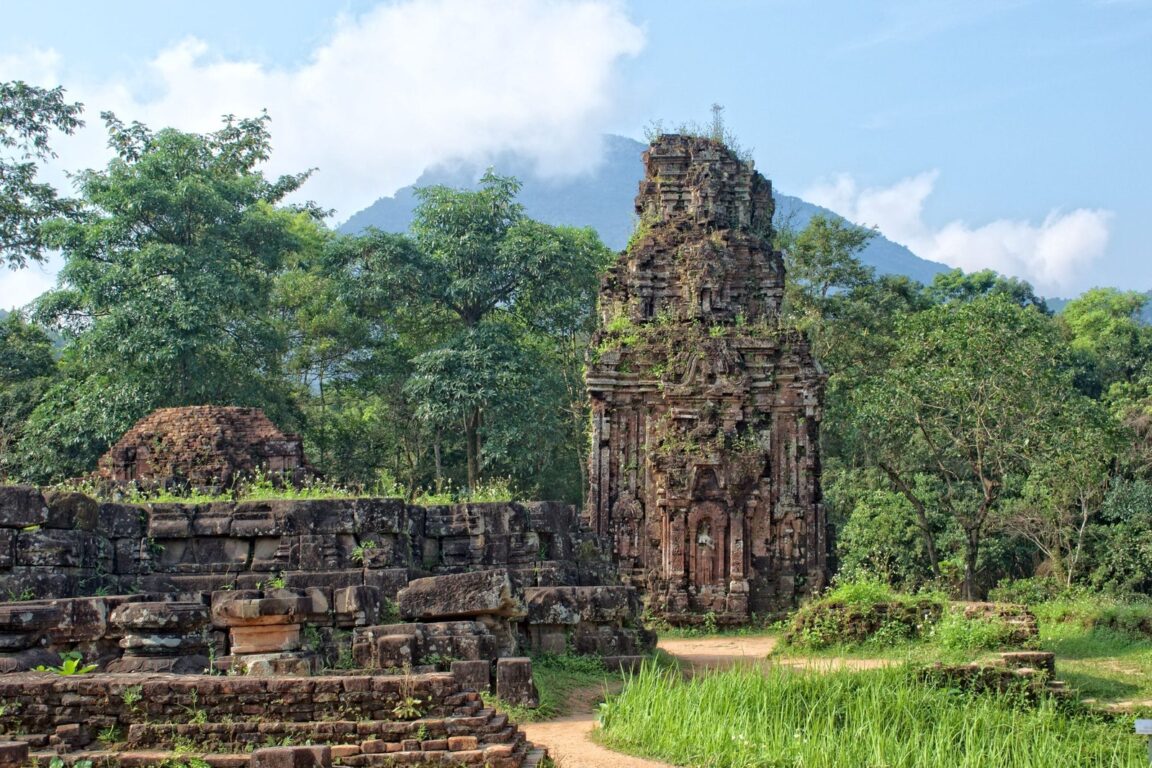
Go at opening time. That is the single decision that shapes a visit to My Son, the ruined Hindu sanctuary of the Champa kingdom in a jungle valley about 40 kilometres southwest of Hoi An. The site opens at 06:00, the tour buses from Hoi An and Da Nang mostly arrive from about 09:30 onward, and in between those two moments the red brick tower groups stand quiet in mist and birdsong, with the sacred mountain of Hon Quap rising behind them. Arrive with the groups instead and the same towers are still extraordinary, but they are shared, hotter and harder to read. This guide explains the temple groups in the order that makes them legible, what the bomb craters in the main group actually are, what the ticket covers, and how to fit the sanctuary into a half day from Hoi An without wasting the afternoon.
Quick Facts
- What it is: The religious and political centre of the Champa kingdom, built and rebuilt from the 4th to the 13th century and dedicated above all to Shiva as Bhadreshvara
- World Heritage status: Inscribed by UNESCO in 1999 under criteria (ii) and (iii)
- Ticket: 150,000 VND for international visitors and 100,000 VND for Vietnamese visitors, checked against Da Nang tourism guidance on 14 November 2026
- Ticket includes: The archaeological site, the My Son Museum, the electric shuttle from the gate to the temple zone and the Cham cultural performances
- Hours: Open daily; ticket sales run 06:00 to 17:00, so plan a morning visit and confirm the closing time on the day
- Distance: About 40 kilometres from Hoi An, roughly an hour by road; about 70 kilometres from Da Nang
- Time needed: Two hours for the main groups alone; three to four hours with the museum and a performance
- Best arrival: At the 06:00 opening, before the day tour groups and before the valley heat builds
What was Champa, and why does this valley matter?
Champa was the maritime kingdom of the Cham people, holding much of what is now central and southern Vietnam for well over a thousand years while Vietnamese states pressed down from the north. Its culture looked across the sea as much as inland. Hindu ideas, art and architecture arrived from the Indian subcontinent and were adapted into a distinctly Cham language of brick towers, sandstone carving and ancestor worship, which is exactly the interchange UNESCO recognised when it listed the sanctuary in 1999.
My Son was not a city in the ordinary sense. It was the dynasty’s sacred valley, the place where kings were consecrated, where temples to Shiva anchored royal authority, and where Cham rulers and heroes were buried. Construction ran from the 4th century into the 13th century, and more than 70 structures once stood here in groups scattered along the valley floor. Fewer survive now, and many are partial, but the valley setting does a great deal of the work: this was always a landscape sanctuary first and a collection of individual buildings second.
How is the site laid out, and which groups should you see first?
The ticket gate, museum and shuttle stop sit apart from the ruins. After buying a ticket, visitors take the included electric shuttle along a forest road of a little over a kilometre to the temple zone, then walk a loop between groups labelled with letters. The labelling is archaeological rather than scenic, so a simple order helps: start with the central cluster, Groups B, C and D, then continue to Group A if time and energy allow, and treat the smaller outlying groups as additions rather than obligations.
Groups B, C and D: the heart of the sanctuary
The central cluster holds the towers most visitors picture. Group C’s main tower, with its saddle shaped roof and carved sandstone, is the classic My Son image, and Group B beside it carries some of the finest surviving brickwork and decoration. Group D held the meditation and preparation buildings and now displays Cham sculpture, including altars and carved pieces that are easier to study here at close range than anywhere else on the site. Read these groups slowly. The brickwork rewards it: Cham builders fitted bricks so tightly, with a bonding technique researchers still debate, that many walls show almost no visible mortar lines after eight or more centuries outdoors.
Group A and the crater you will be shown
Group A was once among the grandest clusters, and its main tower, known as A1, was described by early French archaeologists as a masterpiece. In 1969, during the Vietnam War, United States bombing struck the sanctuary, and A1 was destroyed. What remains at Group A is a partial tower base, scattered carved stones, and a large bomb crater that guides point out as part of the site’s modern history. The crater is not an ancient feature and it is not scenery. It is the clearest evidence on the ground that My Son’s losses are not only about age and weather. Standing there also explains why so much of the sanctuary’s interpretation is about survival and restoration, including the conservation work carried out in recent decades with international support, notably on Groups A, G and K between 2017 and 2022.
Do you need a guide at My Son?
A guide is not compulsory, but the sanctuary is the kind of site where interpretation changes what you see. Without it, the groups can blur into picturesque ruins. With it, the Shiva worship, the royal consecrations, the difference between a main sanctuary tower (kalan), a gate tower and a fire house for offerings, and the meaning of the lingam and yoni altars all come into focus. Site management guidance lists an official interpretive service priced per group, scaled by party size, which makes it good value for small groups who split the cost. Independent tours from Hoi An almost always include a guide, and that inclusion, rather than the transport, is their strongest argument.
Self guided visitors are not abandoned. The My Son Museum near the entrance, included in the ticket, sets out the Champa story, the site plan and key sculptures before the shuttle ride, and it is worth 20 to 30 minutes first rather than as an afterthought on the way out, when most people are hot and ready to leave.
When should you go, dawn or with the tours?
The dawn case is strong. The site opens at 06:00, the light in the valley is soft, the temperature is manageable, and the central groups can be almost empty for the first hour or two. The trade off is logistics: a 06:00 arrival means leaving Hoi An at about 05:00, which usually means a private car or an organised sunrise tour rather than a standard day tour. Standard tours leave Hoi An after breakfast, arrive as the heat builds, and put you in the central groups at the same time as everyone else.
There is one counterweight. The Cham cultural performances, included in the ticket, run through the day in the performance hall and at set times near the temple groups, with morning and afternoon sessions listed on the current schedule. Very early visitors may finish the ruins before the first full performance, so check the day’s times at the gate and sequence the museum, ruins and performance around them rather than assuming the show will be on when you are ready for it. Travellers combining the sanctuary with a wider central Vietnam route will find our guide to packing for Vietnam’s Reunification Express useful for the rail legs that link Hoi An’s nearest station at Da Nang with Hue and the north.
How do you get there from Hoi An and Da Nang?
The sanctuary sits inland from the coast in what is now administered as part of Da Nang City, at My Son Hamlet in Thu Bon Commune; older sources still give the former Quang Nam Province address, which refers to the same place. From Hoi An the drive takes about an hour. The main options are a private car with driver, which is the flexible dawn choice; an organised half day tour, which is the simplest choice; or a rented motorbike, which suits confident riders but makes a 05:00 departure in the dark a serious undertaking. From Da Nang the drive is longer, roughly 70 kilometres, and most Da Nang visitors come on tours that pair the sanctuary with a Hoi An stop. Note that a previously listed public bus connection has been reported suspended in 2026 Da Nang transport notices, so do not build a dawn plan around a bus without checking its current status locally.
What should you bring, and what are the site rules?
Bring water, sun protection and shoes suited to uneven brick and earth paths. Shade exists in the valley but the central groups stand in open clearings, and by late morning the heat reflects off the brickwork. Carry cash in Vietnamese dong for the ticket and small purchases, because card acceptance at rural ticket counters can be limited. Dress respectfully for an active place of Cham cultural and spiritual significance, stay on the paths, and do not climb on the towers or enter roped interiors: the brickwork that survived a millennium and a war is still fragile, and several structures are under active conservation. If your trip continues north afterwards, our Ha Long Bay kayaking and Luon Cave guide covers the other great early start in Vietnamese travel, and for the wider pattern of reading a sanctuary in order, our Delphi day trip guide applies the same museum first logic in Greece.
Frequently Asked Questions
How much does it cost to enter My Son Sanctuary?
Official Da Nang tourism guidance lists 150,000 VND for international visitors and 100,000 VND for Vietnamese visitors, with a child ticket of 30,000 VND listed for ages 5 to 15 in management guidance. The ticket includes the site, the museum, the electric shuttle and the Cham performances. Prices were checked on 14 November 2026 and can change, so confirm at the gate.
What time does My Son open, and when is it quietest?
Ticket sales begin at 06:00 daily. The quietest window is the first two hours after opening, before the day tours from Hoi An and Da Nang arrive from about 09:30. That early window is also the coolest, which matters in the unshaded central valley.
How long do you need at My Son?
Allow two hours for the central Groups B, C and D plus Group A at a steady pace. Allow three to four hours if you include the museum properly and a Cham dance performance. As a half day from Hoi An, door to door, the trip takes about four to five hours including the hour’s drive each way.
What are the bomb craters at My Son?
They date from the Vietnam War. Bombing in 1969 destroyed the main tower of Group A, known as A1, and left craters that are now interpreted on site as part of the sanctuary’s history. They are the most direct explanation for why Group A survives only in part.
Is My Son worth it if you have seen Angkor?
Yes, but expect a different scale. My Son is smaller, more ruined and more intimate than Angkor, and its interest lies in the Cham brick technique, the valley setting and the layered story of worship, abandonment, rediscovery and war damage rather than in monumental scale.
Can you visit My Son and Hoi An in one day?
Easily. The standard pattern is My Son in the early morning and Hoi An’s old town from late morning onward. Starting at dawn keeps both halves comfortable: the ruins before the heat and crowds, and the town when its shops, cafes and tailors are open.
Prices and hours checked 14 November 2026 against Da Nang tourism and sanctuary management guidance and UNESCO’s listing. Recheck performance times at the gate on the day, as the schedule changes seasonally.