 Kwame Mensah
Go between February and April. That is the short answer for the vegetable village quarter on Hoi Ans northern edge, the working herb gardens of Tra Que in Hoi An Tay ward, about 3 kilometres from the lantern streets of the old town. In those months the dry season is established, the beds are freshly planted and intensely green, farm work starts early in cool air, and the cooking schools that run between the plots can work outdoors all day. The weeks to avoid are mid October to late November, when Hoi Ans rains peak, the Thu Bon and Co Co rivers rise, and low lying garden lanes can flood. Everything else in this guide is the reasoning behind those two windows, season by season, crop by crop.
Quick Facts
- The place: Tra Que Vegetable Village, Hoi An Tay ward, Da Nang, the herb and vegetable gardens the local itineraries group with Hoi Ans northern wards, between the Co Co River and Tra Que Lagoon
- Distance: About 3 kilometres northeast of Hoi An Ancient Town, an easy bicycle ride on flat roads toward An Bang beach
- Best months: February, March and April, dry, warm and before the summer heat peaks
- Dry season: February to August; wet season September to January, per Da Nang and Hoi An climate summaries
- Wettest months: October, with roughly 630 to 650 millimetres of rain in long term averages, and November, with roughly 430 to 450 millimetres; typhoons are possible September to November
- Village hours and entry: Listed by the Da Nang tourism portal as 8am to 6pm daily, with admission of about 35,000 dong per person
- Recognition: Tra Que vegetable farming was inscribed as a National Intangible Cultural Heritage in 2022, and the village was named one of UN Tourisms Best Tourism Villages in 2024
- Best time of day: Early morning, when farmers water, harvest and carry seaweed fertiliser, and the light is on the beds
What is this village, and why does timing change it so much?
Tra Que is not a show garden. It is a working village of more than 18 hectares of beds, farmed by around 200 households, that has grown herbs and leafy vegetables since the 16th century. The plots sit on sandy soil between the Co Co River and Tra Que Lagoon, and the method is the attraction: no chemical fertiliser or pesticide, beds enriched with algae and seaweed gathered from the lagoon and river, watering done by hand with paired cans on a shoulder yoke, and crops rotated and intercropped so that basil, perilla, coriander, Vietnamese mint, lettuce and spring onions are always at different stages. Some crops are ready in as little as 20 days, which means the village visibly changes week by week.
That is why the calendar matters here more than in the old town. A timing guide for the lantern streets is mostly about crowds and rain on stone lanes. A timing guide for Tra Que is about the farming cycle itself: whether the beds are newly planted green rows or flooded brown rectangles, whether the water wheel cooking schools can run their outdoor classes, and whether farmers are working at dawn or sheltering from a storm. The name on older signs, Nhu Que, was changed, local accounts say, after a Nguyen dynasty king tasted the cinnamon scented herbs; the village has been Tra Que, roughly tea and cinnamon, ever since.
February to April: the weeks locals prefer
The consensus across climate records and local guides is unusually clear. February opens the dry season with daytime temperatures around 26 degrees Celsius and nights near 20, and March is the driest month of the Hoi An year, with long term averages putting its rain at roughly 20 to 25 millimetres and daytime highs near 28 to 29 degrees. April warms up, highs around 30 to 31 degrees, but stays dry, and the sea at An Bang, just beyond the village, becomes swimmable. For the gardens, this is the prime planting and growing window after the wet season: beds are replanted, herbs are at their most aromatic, and farm experiences, joining a farmer to rake, plant, water and harvest, run on firm dry paths.
Two cautions belong in this window. Tet, the lunar new year, usually falls in late January or February, and in the days around it some family run cooking schools and farm tours pause, while Vietnamese domestic travel peaks; check specific dates for your year. And late April is the hinge into heat, so schedule the village for the first morning of your Hoi An stay rather than the last afternoon. Pair the season choice with our two days in Hoi An itinerary to sequence the village against the old town.
May to August: green, hot and still workable
Summer does not close the village; it changes its hours. Daytime highs climb into the mid 30s, June and July are the hottest months, and the working day in the beds compresses toward dawn and late afternoon. Crops grow fast in the heat, the gardens are at their lushest, and the water wheel farms and cooking schools, the Water Wheel in Tra Que is the best known name, lean into morning classes that end with lunch cooked from what you picked. If you come in these months, be at the beds by 7am, take the shade and the cooking class through the middle of the day, and treat An Bang beach, ten minutes beyond the village, as your afternoon.
Crowds in summer are a different shape from the old town crowds. International visitors thin out in the heat, but Vietnamese school holidays bring domestic families to Hoi An in July and August, and weekend farm tours fill. Weekday mornings remain the quiet slot all summer. Late August is the shoulder to watch: the first heavy rains can arrive before the season officially turns, and a stormy week can waterlog the lowest beds even in a nominally dry month.
September to January: the honest case for and against
The wet season runs from September to January, and it splits into two very different trips. September is a transition month: rain jumps to roughly 310 to 350 millimetres in long term averages, typhoon risk begins, but there are still bright days, the gardens are intensely green, and visitor numbers drop. If your dates are fixed in September, go early in the month, keep the village visit flexible by a day or two, and check the forecast each morning.
October and November are the months this guide advises against, and the numbers explain why. October is Hoi Ans wettest month, around 630 to 650 millimetres of rain across about 20 wet days, with typhoons at their seasonal peak and the old town streets nearest the Thu Bon River flooding in most years between mid October and late November. The village lanes are low and flat by design, close to the lagoon water table, so this is when beds flood, farm experiences cancel and cooking schools move indoors or close. November eases only slightly, still around 430 to 450 millimetres. December and January cool down, highs near 24 to 26 degrees, rain tapers through January, and the gardens recover; a late January visit, Tet aside, can be calm and atmospheric, with misty mornings over the lagoon and few visitors, as long as you accept short days and damp paths.
How do crowds, prices and the farm day actually vary?
The village itself charges a flat, small admission, listed at about 35,000 dong, and that does not move with the season. What moves is everything around it: Hoi An hotel rates peak in February to April and again in the summer domestic season, and bottom out in October and November for the obvious reason. Farm tours and cooking classes are priced per booking rather than per season, but in the best months the popular morning slots at the water wheel farms sell out days ahead, while in the wet months the same schools may not run at all on storm days. The crowd pattern in the beds is gentler than in the old town at every time of year: most Hoi An visitors never leave the lantern streets, so even in March the village at 7am is farmers, a few cyclists and the cooking school groups. By 10am the tour minibuses arrive, and by midday heat or rain empties the lanes again.
Getting there is part of the pleasure in dry months: rent a bicycle in the old town and ride the flat road northeast, about 15 minutes, with the gardens opening up after the last houses. In wet months take a taxi instead, because the same flat road ponds quickly. However you arrive, plan the visit as a half day with lunch, either at a village cooking school or back in town with the dishes the village supplies; Hoi Ans signature plates, cao lau, white rose and mi Quang, are herb heavy, and they taste different after you have seen where the leaves are cut. Our guide to what to eat in Da Nang covers the wider regional table the village feeds.
Frequently Asked Questions
What is the best month to visit Tra Que Vegetable Village?
March. It is the driest month in Hoi Ans long term records, warm without the summer heat, and the beds are in full growth after the post wet season planting. February and April are close seconds; late January can also be lovely outside the Tet holiday days.
Does Tra Que flood in the rainy season?
The village sits low between the Co Co River and Tra Que Lagoon, and in the peak rains of October and November, when Hoi An receives roughly 430 to 650 millimetres a month and the old town floods in most years, garden lanes and low beds can be under water and activities cancel. September and December carry a smaller, forecast dependent risk.
How much does it cost to enter the village, and when is it open?
The Da Nang tourism portal lists opening hours of 8am to 6pm daily and admission of about 35,000 dong per person. Hands on farm sessions and cooking classes at the water wheel farms are booked and priced separately, and morning slots in February to April should be reserved ahead.
What happens at the village in summer?
Farming continues, compressed into the cooler ends of the day. Crops grow at their fastest, cooking schools run morning classes ending in lunch, and weekday mornings stay quiet. The trade offs are heat in the mid 30s by day and, in July and August, domestic holiday crowds on weekends.
Can you combine Tra Que with the old town in one day?
Easily, and that is the standard pattern: the village at 7am to late morning, lunch, a rest through the heat or rain, then the old town in the late afternoon and lantern lit evening. The two are about 3 kilometres apart, 15 minutes by bicycle on flat roads.
Is a winter visit in December or January worth it?
Yes, with expectations set. Days are cooler, around 24 to 26 degrees, paths can be damp, and January rain is tapering rather than peaking. You get misty lagoon mornings, working gardens and very few visitors. Avoid the Tet holiday days themselves if you want farm tours, as family run operations may pause.
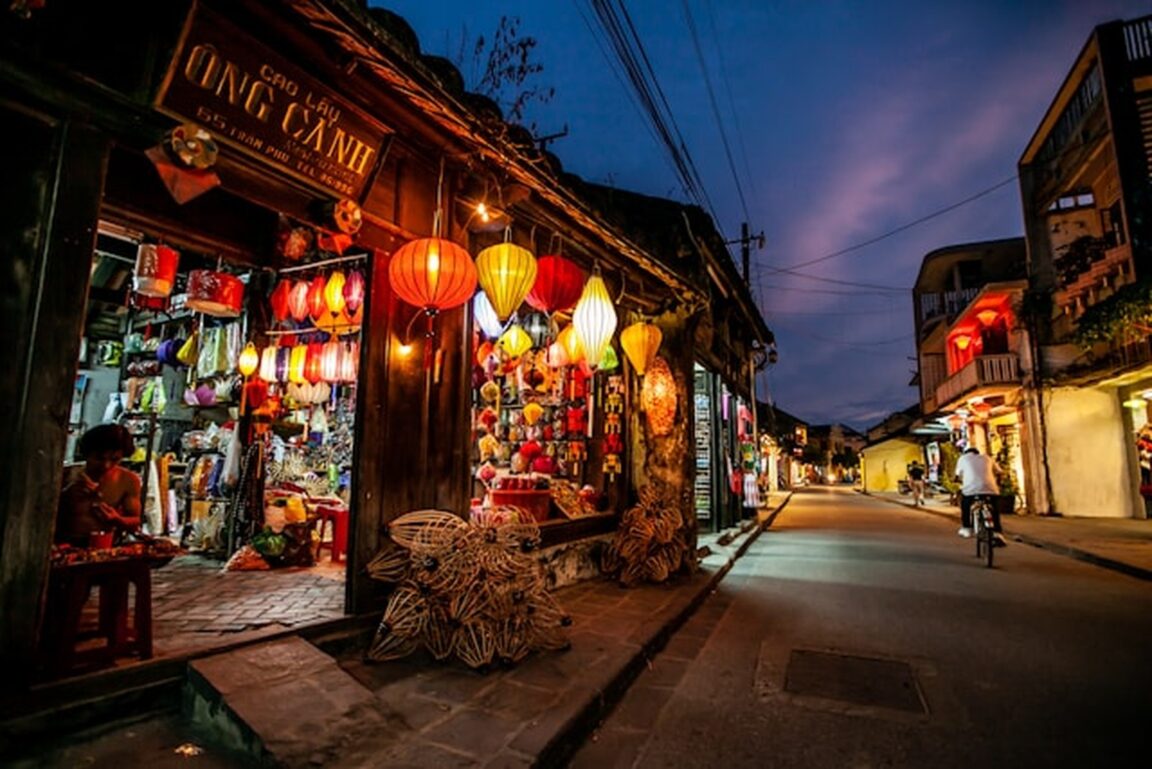
Facts checked 16 November 2026 against the Da Nang tourism portal listing for Tra Que Vegetable Village, the Hoi An Creative City heritage summary and long term Hoi An climate averages. Featured image: A lantern lit street in Hoi An old town at dusk, 3 kilometres from the village. Photo by Mario La Pergola on Unsplash, Unsplash License, via a captioned hosted copy on Places Unveiled. No verifiable Unsplash photograph of the Tra Que beds themselves was found, so the old town image is captioned as what it is.