 Aiko Tanaka
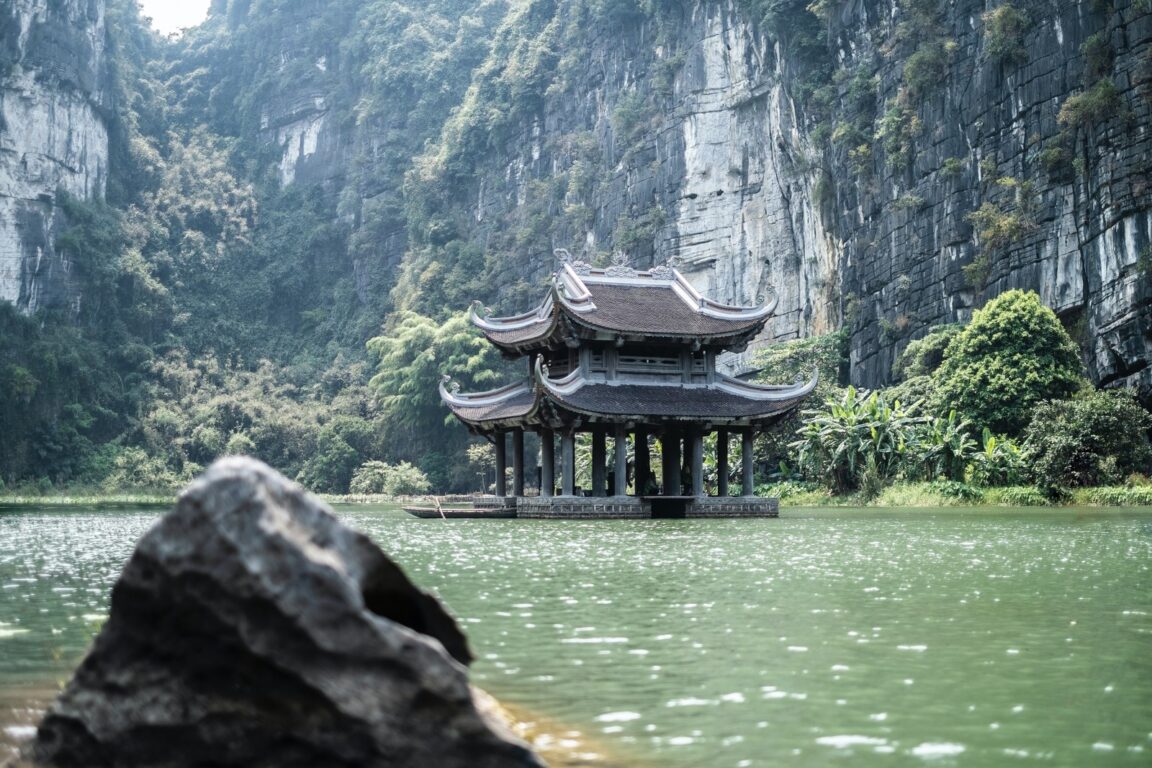
Trang An rewards travellers who split the day between water level and ridge level. In the morning, take a sampan from the Trang An wharf in Ninh Binh province, Vietnam, and let a local rower take you through flooded limestone caves and temple valleys for about three hours, while you sit low in the boat and do almost nothing. In the afternoon, or better the following morning, climb the roughly 500 stone steps of Hang Mua to the dragon ridge above Tam Coc and earn the view back down over the rivers you have just floated. Add a bicycle for the flat lanes between karsts, temples and villages, and the Trang An Landscape Complex, a UNESCO World Heritage site since 2014, becomes a complete active trip rather than a single boat ticket. This guide gives the current 2026 prices, compares the boat routes, explains the Hang Mua climb honestly, and sets out how to pace boat, bike and steps across two days without heat or crowds spoiling any of them.
Quick Facts
- Place: Trang An Landscape Complex, Ninh Binh province, about 7 km west of Ninh Binh city and roughly 2 to 2.5 hours by road or rail from Hanoi.
- Status: Inscribed by UNESCO in 2014 as a mixed cultural and natural World Heritage site, Vietnams first mixed listing.
- Boat ticket: 300,000 VND per adult and per child over 1.3 m, 150,000 VND for children from 1 m to 1.3 m, free for children under 1 m, in force since 1 January 2026, per the 2026 provincial price reporting checked today. The fare covers admission and the shared rowing boat.
- Boat routes: Three main routes of about 2.5 to 3 hours, plus a shorter fourth route of about 1.5 to 2 hours on current Ninh Binh tourism information. Route 1 runs nine caves, Route 2 runs four caves and the Kong film set area, Route 3 runs three caves including Dot Cave, described as more than 1,000 m long.
- Ticket office: Buy at the official Trang An Ecotourism ticket counter by the wharf. Published office hours are 7:00 am to 4:00 pm, with boats finishing their routes after the last departures. Routes can be suspended or changed for storms, heavy rain or water levels.
- Hang Mua: Entry 150,000 VND per person over 1 m, children under 1 m free, in force since 1 April 2026 per the provincial price list. The climb is roughly 500 stone steps, often counted as 486, to the Ngoa Long ridge viewpoints.
- Effort profile: The boat is restful, the cycling is flat, and the Hang Mua steps are the one hard effort. Schedule them in that spirit.
Should you take the boat first or climb first?
Boat first, and as early as you can manage. The Trang An wharf is calmest in the first departures of the day, the caves are cool, the light sits low on the limestone, and tour groups from Hanoi have not yet arrived in force. A route of about three hours returns you to the wharf by late morning with the hardest decision of the day, which route, already behind you. Hang Mua, by contrast, punishes a midday start: the steps are steep, uneven and almost entirely without shade, and the summit ridge in early afternoon heat is an endurance test rather than a viewpoint.
The strongest pattern across two days is therefore simple. Day one, the boat at opening, then cycling in the afternoon shade between karsts and villages. Day two, Hang Mua at dawn or in the last light, with the middle of the day given to Hoa Lu, the ancient capital temples, a long lunch, or a second, shorter ride. Travellers with only one day should boat at opening, rest through the heat, and climb Hang Mua late in the afternoon, accepting a busier summit in exchange for survivable temperatures.
Which Trang An boat route should you choose?
All routes leave from the same wharf, in small sampans rowed by local rowers and seating up to four passengers, and all thread the same flooded valley system, ducking through caves that pass clean through the limestone mountains and stopping at temples on the banks. You choose one route per ticket, and the routes cannot be combined in a single ride.
Route 1 is the fullest circuit, about three hours through nine caves, the most of any route, with temple stops including Trinh Temple and Tran Temple and the strongest link to the Dinh dynasty history of nearby Hoa Lu. Choose it if caves are the point and you have the morning for it. Route 2, about 2.5 to 3 hours through four caves, is the balanced first visit: caves, temples including Cao Son and Suoi Tien, Vu Lam Palace, open water scenery, and the filming location used for Kong: Skull Island, which is why it is also the busiest route. Route 3, about three hours through three caves, is built around Dot Cave, at more than 1,000 m the longest cave passage in the complex, and suits travellers who want the single most dramatic underground stretch. Current Ninh Binh tourism information also lists a shorter Route 4, sometimes called the Phoenix route, of about 1.5 to 2 hours, which is the sensible pick for a tight schedule or a very hot day.
Two cautions belong in every route decision. First, the exact cave and temple sequence can shift with water levels and operations, and heavy rain or flooding can suspend boats entirely, as happened during storms in September 2026, so confirm which routes are running when you buy the ticket rather than holding the boat to a blog itinerary. Second, the fare system is refreshingly fixed: one official ticket office, one price, no competing boat companies to haggle with. The adult fare rose from 250,000 VND to 300,000 VND on 1 January 2026, and many older guides still quote the old figure, so budget for the current one. A tip for the rower, who does three hours of skilled work, is customary and not included in the fare.
How hard is the Hang Mua climb, really?
Hang Mua, the Dancing Cave site near Tam Coc, is not really about its small cave. It is about the staircase: roughly 500 stone steps, the count often given as 486, zigzagging up Ngoa Long Mountain in two branches to a ridge crowned with a stone dragon, a small pagoda and a Quan Am statue, looking down over the Ngo Dong River curling through the Tam Coc rice fields. It is the finest viewpoint in the Ninh Binh lowlands, and it is a genuine climb, steep, uneven underfoot and exposed to the sun from the first step.
Most reasonably fit visitors take 20 to 30 minutes to go up at a steady pace with stops, and the honest advice is to take the stops. Carry water, there is none reliably available on the steps, wear shoes with grip rather than sandals, and be careful after rain, when the stone is slippery. Go at dawn for cool air and mist over the paddies, or late in the day for the warm light, and avoid the late morning to mid afternoon window in the hot months altogether. Entry has been 150,000 VND per person over 1 m since 1 April 2026, replacing the older 100,000 VND price that older guides still print, with children under 1 m free.
One roadside warning is worth repeating because it is the site one persistent irritation: touts along the access road try to wave vehicles into unofficial parking lots. Ride or drive past them to the official entrance and its parking inside the gate, and buy the ticket at the official booth. Cyclists have the easiest version of this, a polite wave and no stopping.
How does cycling fit between the karsts?
Beautifully, because the country between the sights is flat, lane based and built for bicycles. From a base in Tam Coc or near the Trang An wharf, the classic rides link the boat wharf, Hang Mua, Hoa Lu and Bich Dong Pagoda on quiet roads and concrete village paths, with karst towers rising straight out of rice fields on both sides and almost no gradient anywhere. Distances between sights are short, a few kilometres at a time, so the cycling works as transport and as sightseeing simultaneously, and a traveller can cover in a day by bicycle what a car tour rushes in half a day, at a pace that allows stops for temples, coffee and photographs whenever a view opens.
Rent from your accommodation or a shop in Tam Coc, check brakes and tyres before leaving, and confirm the rental terms and return time in person rather than relying on printed rates. Ride defensively at junctions, carry water and sun protection, and plan the longest exposed stretches for morning and late afternoon. In the rice growing months the fields run green, and around harvest they turn gold, which is why the same lanes justify riding twice in one trip.
Trang An sits inside a longer northern Vietnam journey for most visitors. Paperwork first: the Vietnam 90 day eVisa guide, who qualifies, how to apply and the entry points that count. Food after the steps: the Hanoi food guide to pho, bun cha and the Old Quarter, dish by dish, for the return night in the capital.
How should you pace two active days in Trang An?
Day one is the water day. Be at the wharf for an early departure, take Route 1 or Route 2, and let the rower set the rhythm while you stay hydrated and out of the sun under the boat canopy stops. Back on land, eat a long lunch, rest through the heat, then take the bicycles out in the late afternoon for the Hoa Lu temples and the lanes toward Bich Dong, finishing before dark. Day two is the ridge day. Climb Hang Mua at dawn, descend slowly, and spend the rest of the morning over breakfast and the Tam Coc lanes by bicycle, with the option of the shorter boat route or a Van Long or Tam Coc boat as a gentler second water trip if legs allow. Keep one rule across both days: only one hard effort per day, and never the Hang Mua steps in the midday sun. The travellers who enjoy Trang An most are not the ones who did the most. They are the ones who were on the water early, on the ridge at dawn, and in the shade at noon.
Frequently Asked Questions
How much does the Trang An boat tour cost in 2026?
300,000 VND per adult and for children over 1.3 m tall, 150,000 VND for children from 1 m to 1.3 m, and free for children under 1 m, in force since 1 January 2026. The ticket covers admission and the shared rowing boat on one route. It replaced the previous 250,000 VND adult fare that many older guides still quote.
Which is the best Trang An route for a first visit?
Route 2, for most first time visitors: about 2.5 to 3 hours, four caves, temple stops and the Kong: Skull Island filming location, in the best overall balance. Route 1 has the most caves at nine, Route 3 has the longest cave, Dot Cave at more than 1,000 m, and the shorter Route 4 suits a tight schedule. Confirm which routes are operating on the day, because water levels and weather can change the offer.
How many steps are there at Hang Mua and how long does the climb take?
Roughly 500 stone steps, often counted as 486, climbing in two branches to the dragon ridge viewpoints. Allow 20 to 30 minutes up at a steady pace with stops, longer in heat or crowds. The steps are steep, uneven and unshaded, so climb at dawn or late in the day and carry water.
How much is Hang Mua entry in 2026?
150,000 VND per person over 1 m tall, with children under 1 m free, in force since 1 April 2026 under the provincial price list. It replaced the 100,000 VND fare printed in older guides. Buy at the official entrance and use the official parking inside the gate rather than roadside lots touts promote.
Can Trang An boats be cancelled for weather?
Yes. Ticket sales and boat operations can be suspended during storms, heavy rain or flooding, and individual routes can close when cave water levels are wrong. Check the operating status the day before and again on the morning of your visit in wet periods, and keep the Hang Mua and cycling plans flexible enough to swap days.
Is one day enough for Trang An?
One long day can hold an early boat route and a late afternoon Hang Mua climb, and many Hanoi day trips do exactly that, but two days is materially better: the boat at opening without travel fatigue, cycling at a humane pace, and the climb at dawn rather than in a crowd. If you can sleep in Tam Coc or Ninh Binh, do.