 Lucas Meyer
Vlora in winter is a city visit, not a beach visit, and travellers who understand that swap have the best version of it. From November to March the boat tours to the Karaburun Peninsula and Sazan Island do not run, the beach clubs along the Lungomare are shut, and the swimming season is firmly over. What remains is the Vlora locals use: a long, open seafront promenade for the evening walk, cafes that stay open all year, the National Museum of Independence in the building where Albania declared independence on 28 November 1912, the old town and its Muradie Mosque, the monastery island at Zvernec in the Narta Lagoon, and the lowest hotel prices of the year under mild, wet Mediterranean weather, with December highs around 14 degrees and lows around 7. Come for the promenade, the history and the quiet, time it for the 28 November independence celebrations if you can, and leave the marine park for a May to October return.
Quick Facts
- The city: Vlora (Vlore), Albania’s third most populous city and second port, on the Bay of Vlora where the Adriatic meets the Ionian Sea
- Winter weather: Mild and wet; December averages about 14 degrees by day and 7 degrees at night, with December the wettest month at roughly 165 mm of rain in climate tables
- The promenade: The Lungomare seafront promenade stays open all winter; beach clubs and seasonal restaurants along it close from autumn
- Not running: Boat tours to Karaburun and Sazan Island operate May to October, weather permitting, and do not run in winter
- The museum: National Museum of Independence, in the building that housed Ismail Qemali’s government in 1913; listings show split morning and afternoon hours, so check on the day
- The date: 28 November, Independence Day, is celebrated most seriously in Vlora, where the declaration was made in 1912
- Road caution: The Llogara Pass south toward the Riviera can close for snow, ice and fog in winter; the Llogara Tunnel, open since 2024, is the reliable route
- Prices: Winter brings the lowest hotel rates of the year, and the city centre and museum quarter stay fully functional
The Lungomare without the crowds
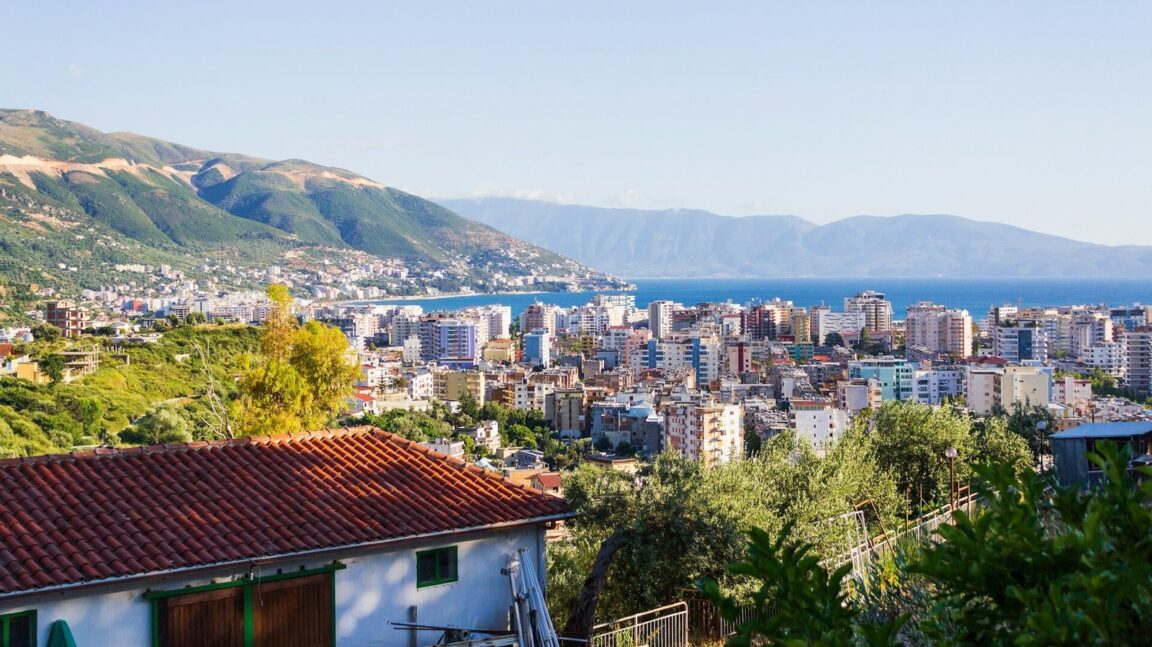
The Lungomare is Vlora’s social centre in every season: a modern, palm lined seafront promenade running for kilometres along the bay from the port toward Uji i Ftohte, the cold water springs quarter at its southern end, with the Karaburun Peninsula closing the view across the water and Sazan Island on the horizon. In summer it fills from about 7pm and stays busy past midnight. In winter the passeggiata still happens, at local scale: an early evening walk, a coffee in one of the year round cafes, the bay turning grey and gold under a low sun. The beach infrastructure behind the promenade is dormant, umbrellas and beach clubs packed away, and that is the honest trade. You are walking a handsome civic waterfront in a working port city, not a resort in hibernation, and judged on those terms the winter Lungomare is genuinely enjoyable, especially on the clear, still days that Albanian winters regularly produce between rain systems.
Build the winter day around light. Mornings belong to the old town and the museum quarter inland around Flag Square, where the Independence Monument stands; afternoons, when the sun drops toward Sazan, belong to the promenade. North of the city, the Narta Lagoon and the Zvernec Monastery, a Byzantine monastery of St Mary on a small pine covered island reached by a long wooden footbridge, make the best short excursion, with flamingos sometimes present on the lagoon in the cooler months. It is a quiet, photogenic half day that works in any winter weather short of a storm.
The Independence Museum and the old town
Vlora’s claim on Albanian history is absolute: on 28 November 1912, delegates under Ismail Qemali declared independence from the Ottoman Empire here, ending nearly five centuries of Ottoman rule, and 28 November remains Albania’s Independence Day. The National Museum of Independence occupies the building by the port that served as the seat of Qemali’s government in 1913 and hosted the first anniversary celebrations that year; it was formally opened as the independence museum in 1962, for the fiftieth anniversary, and displays the documents and artefacts of the declaration. Listings give split hours, a morning and a late afternoon session, which catches visitors out; check the current hours on arrival and plan the museum for the morning of a weekday. If your trip can flex, being in Vlora for 28 November itself is the single best reason to choose a winter date, because no city in Albania marks the day like the city where it happened.
Around it, the old town repays an unhurried hour: the Muradie Mosque, a 16th century Ottoman mosque in the historic centre, the restored old town streets, and Kanina Castle on its hill above the city for the sunset view over the bay, weather allowing. None of these sights depends on the season, all of them are emptier in winter, and together with the museum they are why Vlora, alone among Albania’s beach cities, holds up as a winter destination at all. For the coast in its summer mode, compare our scenic drive through Dhermi and the Llogara Pass, and for the inland south in the same trip, our guide to getting to Gjirokaster’s bazaar quarter.
What winter closes, and what it does not
The Karaburun Peninsula, about 16 km long and 4 km wide, forms the western wall of the bay and, with Sazan Island, makes up the Karaburun Sazan Marine Park, protected since 2010: limestone cliffs, sea caves including the great Haxhi Ali Cave, and coves like Grama Bay that are reachable only from the water. In summer this is Vlora’s headline excursion. In winter it is simply unavailable, because the boat tours that are the only way in run from May to October and need calm morning seas even then. Do not let any operator sell you a winter sailing without a very specific weather conversation, and do not plan a winter itinerary that needs the marine park. The same realism applies south: the Riviera road over the Llogara Pass, at 1,027 metres, can close in snow, ice and fog, and winter storms regularly affect the mountain roads; the Llogara Tunnel underneath the pass, open since 2024, keeps the route to Dhermi and Himara workable, but confirm pass and tunnel status before driving south in bad weather.
What winter does not close is the city. Restaurants and cafes in the centre stay open, mussels from the bay’s cultivation are the local speciality to look for, hotels cut their rates to the year’s floor, and Vlora keeps its role as the last big city before the Riviera, with buses and the A2 motorway and SH8 highway connecting it to Tirana and the south. Pack for a wet Mediterranean winter rather than a continental one: a waterproof shell, layers for 7 to 14 degrees, and shoes that forgive wet promenade stone will cover almost everything the season sends.
Frequently Asked Questions
Is Vlora worth visiting in winter?
Yes, as a city break rather than a beach holiday. The Lungomare promenade, the National Museum of Independence, the old town and Muradie Mosque, and the Zvernec Monastery excursion all work in winter, hotels are at their cheapest, and the crowds are gone. Swimming and beach clubs are not part of a winter trip.
Can you take a boat to Karaburun or Sazan Island in winter?
No. Boat tours to the Karaburun Peninsula and Sazan Island run from May to October, weather permitting, and do not operate in winter. The marine park is reachable only by boat, so it is a May to October excursion; plan it for a return trip in season.
What is the weather like in Vlora in winter?
Mild and wet by Mediterranean standards. December averages about 14 degrees by day and 7 degrees at night and is the wettest month, at roughly 165 mm of rain in climate tables. Expect bright, still days between rain systems, and pack a waterproof shell and layers.
When are the Independence Day celebrations in Vlora?
28 November, the anniversary of the 1912 declaration of independence in Vlora. The city marks the national holiday more seriously than anywhere else in Albania, and it is the strongest single date in the winter calendar.
What are the opening hours of the National Museum of Independence?
Listings show split hours, with morning and late afternoon sessions, and hours change. The museum stands by the port in the building that housed the 1913 government; check the current hours when you arrive in Vlora and plan a weekday morning to be safe.
Can you drive to the Albanian Riviera from Vlora in winter?
Yes, with a conditions check. The Llogara Pass can close for snow, ice and fog, but the Llogara Tunnel, open since 2024, provides the reliable route south toward Dhermi and Himara. Confirm pass and tunnel status before setting off in bad weather.
Facts checked 16 November 2026 against regional visitor guides, climate tables for Vlore and museum listings. Hours, tour seasons and road status change; confirm locally before travelling. Featured image: Vlora and its bay from above the city, with the Karaburun Peninsula across the water. Photo by Dmytro Kuzmenko on Unsplash, Unsplash License, via a captioned hosted copy on Topguide24.