 Lucas Meyer
The history at Voyageurs is not behind glass: it is the route itself. This water park in northern Minnesota protects a 56 mile stretch of the voyageur highway, the chain of lakes and portages that French Canadian canoe men paddled with furs and trade goods nearly 200 years ago, and the way to read that story today is to travel it the same way they did, by water, ideally sleeping on it in a houseboat. Under the fur trade layer sit Ojibwe homelands, a gold rush that flickered and failed, logging, fishing camps and a Civilian Conservation Corps ranger station, all of it reachable from the visitor centres at Kabetogama, Rainy Lake, Ash River and Crane Lake. This guide walks the layers in the order you will meet them.
Quick Facts
- Location: Northern Minnesota, along the Canadian border near International Falls, about five hours north of Minneapolis and St Paul.
- Established: 1975, to protect the lakes and commemorate the voyageurs, the French Canadian fur traders who first travelled this route regularly.
- Scale: About 218,000 acres, roughly 40 percent of it water: four major lakes, Rainy, Kabetogama, Namakan and Sand Point, plus 26 interior lakes, more than 500 islands and 655 miles of undeveloped shoreline, per the National Park Service.
- Entrance fee: None. Entry to Voyageurs is free; fees apply to campsites, houseboat permits and ranger boat tours.
- Houseboat permit: 15 dollars per night for the season from 1 May to 31 October, booked on Recreation.gov, with reservations opening on 15 November at 9:00 Central for the following season, per the NPS permits page checked today.
- Visitor centres: Four: Rainy Lake, Kabetogama Lake, Ash River and Crane Lake, with hours varying by season.
- Dark skies: Voyageurs is a certified International Dark Sky Park, with designated viewing spots including the upper parking lot at Rainy Lake Visitor Center and the Meadwood Road day use area near Ash River.
Who were the voyageurs, and where do you see their world?
The park name is the first exhibit. The voyageurs were the French Canadian canoe men of the fur trade, hired hands who paddled enormous loads between trading posts in 25 foot north canoes, carrying furs east and trade goods west along the border lakes. The National Park Service protects a 56 mile stretch of that historic water route here, and the geography has barely changed: Rainy Lake still runs big and open, the narrows still pinch between islands, and the portages still connect the same waters. Around 1840 the trade collapsed as silk replaced beaver felt in fashion, and the voyageur era ended almost as quickly as it had run.
You meet their world most directly on the water. Each summer the park runs guided trips in a 26 foot north canoe replica from the Rainy Lake, Kabetogama Lake and Ash River visitor centres, which is the closest a modern visitor gets to the working height, rhythm and exposure of the original crews. On land, the named stopping places carry the story: Grassy Portage, Cutover Island and Surveyors Island, where crews paused before committing to the large waters of Rainy Lake. Read alongside our Badlands first timer guide, Voyageurs shows the opposite American pattern: a park built around movement across water rather than viewpoints above land.
What came before, and after, the fur trade?
Long before the canoes, these lakes were and remain Ojibwe country. The Bois Forte Band of Ojibwe connection runs through the park story to the present, and the park tour boat based at Kabetogama carries it in its name: Ne Zho Dain, meaning Twin or Two Hearts, honouring Chief Ne Zho Dain of the Bois Forte Band, a leader who lived at Kabetogama. The 42 foot, 32 passenger boat, in service since summer 2022, runs ranger led tours from the Kabetogama Lake Visitor Center toward Kettle Falls and the Ellsworth Rock Garden, reaching the parts of the park no road touches.
After the fur trade came the brief, improbable gold rush on Rainy Lake in the 1890s, remembered at Little American Island, where a gold mine operated in the middle of the lake country, then commercial fishing, resorts and logging. The twentieth century layer is written in log and stone at the Kabetogama Ranger Station District, built between 1933 and 1941 by the Civilian Conservation Corps as the administrative centre for the Kabetogama State Forest: a 1921 patrol cabin, the 1935 ranger residence, boathouse, warehouse and breakwater, listed on the National Register of Historic Places in 1993 and still in park use beside the modern visitor centre, which was built in 1988. Kettle Falls, reachable only by water, holds the other great survivor: its hotel, built in 1912, still taking guests who arrive the only way anyone ever has, by boat.
Why is the houseboat the right way to read this park?
Because the houseboat is the modern form of the voyageur pattern: slow, waterborne, self contained and ruled by weather and distance. Rentals are run by private operators in the gateway communities just outside the park boundary, and every houseboat staying overnight in the park needs an NPS permit at 15 dollars per night for the 1 May to 31 October season, booked on Recreation.gov from the 15 November opening. Designated houseboat sites are first come, with no more than two houseboats per site, and the permit covers the boat, not a reserved berth, so the daily skill is the old one: pick a protected bay, arrive in good time, and let the shoreline decide the evening.
Plan routes in short hops. Kabetogama, about 25,000 acres and lying entirely in Minnesota, is the gentlest water for a first houseboat trip and the natural partner to the Kabetogama visitor centre programs. Rainy Lake is the grander, windier stage, where the fur trade story runs deepest and small craft pick their days with care. Ash River and Crane Lake give quieter entries again. Wherever you moor, the park after dark is the final historical exhibit: as a certified dark sky park, Voyageurs shows the same unlit sky the canoe brigades navigated by, and on clear winter nights the northern lights that travellers here have watched for centuries. Visitors planning the practical side should pair this story with our Wind Cave where to stay guide for how national park bases work when the park itself holds almost no lodging.
Frequently asked questions
Why is it called Voyageurs National Park?
For the voyageurs, the French Canadian fur trade canoe men who paddled this chain of border lakes with furs and trade goods. The park, established in 1975, protects a 56 mile stretch of their historic water route.
Does Voyageurs charge an entrance fee?
No. Entry is free. The costs are activity based: tent campsites require reservations and nightly fees, houseboats need a 15 dollar per night permit in season, and ranger led boat tours carry a fee, all booked through Recreation.gov.
When do houseboat permits open for booking?
Reservations for the following season open on 15 November at 9:00 Central on Recreation.gov. The houseboat season itself runs from 1 May to 31 October, and permits are required for overnight stays within those dates.
What is the Ne Zho Dain tour boat?
The park 42 foot, 32 passenger tour boat based at the Kabetogama Lake Visitor Center since 2022, running ranger led trips to destinations including Kettle Falls and the Ellsworth Rock Garden. Its name, meaning Twin or Two Hearts, honours a Bois Forte Band of Ojibwe chief who lived at Kabetogama.
Can you see the northern lights at Voyageurs?
Yes. Voyageurs is a certified International Dark Sky Park with very low light pollution. Designated viewing spots include the upper parking lot at Rainy Lake Visitor Center and the Meadwood Road day use area near Ash River, and clear, dark nights give the best chances.
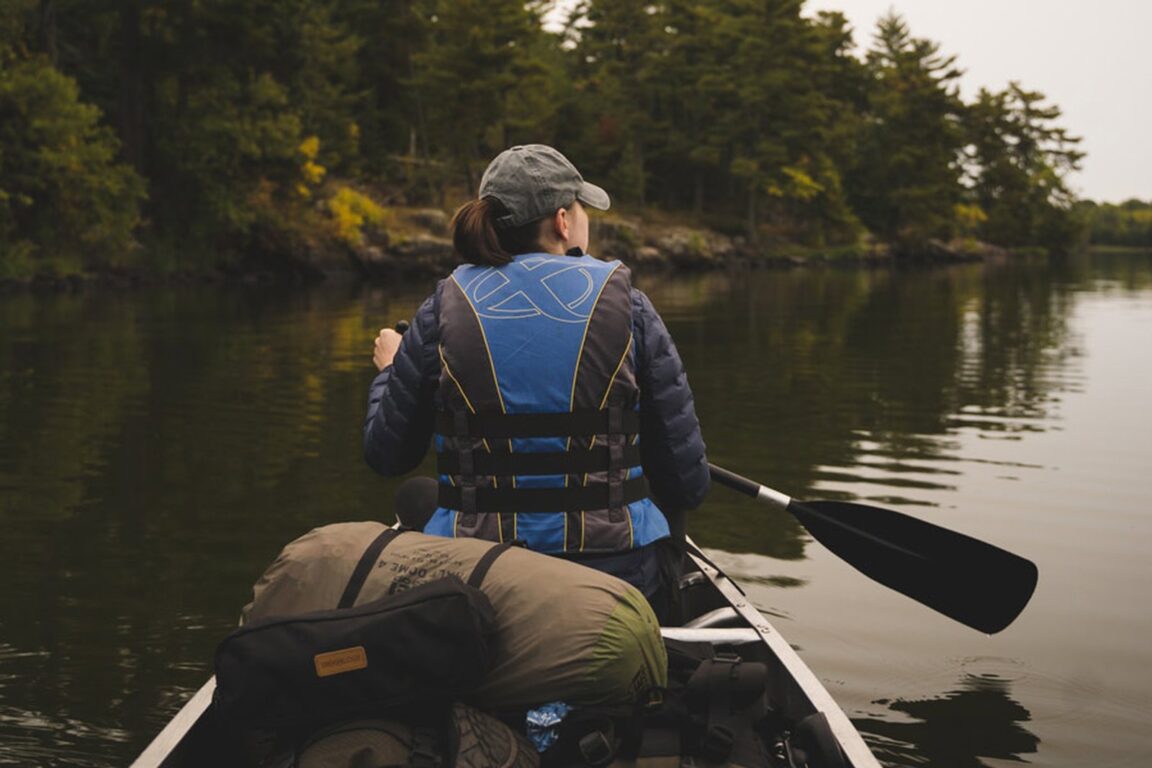
Featured image: A canoeist on Kabetogama Lake, Voyageurs National Park, Minnesota. Photo by Tim Umphreys on Unsplash, via the captioned hosted copies at Sunny Sports and The Travel. Unsplash License. Facts checked 16 November 2026.