 River Callahan
Boca Chita Key rewards visitors who plan around the boat, not around the island. The most visited island in Biscayne National Park is reachable only by water, there is no bridge and no park run ferry, so a weekend here starts with a booking decision: take the Biscayne National Park Institute Heritage of Biscayne Cruise from the Dante Fascell Visitor Center in Homestead, which runs 3.5 hours with departures at 9:30 a.m. and 1:30 p.m. and includes a one hour stop on one of the park keys, or arrive on a private or chartered boat and set your own clock. One correction matters before anything else. The Heritage cruise does not guarantee Boca Chita. The Institute states that the one hour stop is at Boca Chita Key, Elliott Key or Adams Key depending on the conditions of the day, so if the lighthouse island is the whole point of the trip, a private boat, a charter or a Boca Chita specific Institute sailing is the safer plan, and the cruise is best treated as a bay crossing with a bonus island stop. Build the rest of the weekend, the visitor center, a snorkel or paddle trip and a picnic, around whichever crossing you lock in first.
Quick Facts
- Where: Boca Chita Key, Biscayne National Park, Florida. The mainland base is the Dante Fascell Visitor Center, 9700 SW 328th Street, Homestead, FL 33033, at Convoy Point.
- Park entrance: Biscayne National Park charges no entrance fee, per the National Park Service. Costs on this trip are the boat, plus docking or camping fees if you come by private boat.
- Guided cruise: Heritage of Biscayne Cruise, operated by the Biscayne National Park Institute, 3.5 hours, departing the Dante Fascell Visitor Center at 9:30 a.m. and 1:30 p.m., with a one hour stop at Boca Chita, Elliott or Adams Key depending on conditions. Operator listings at research time showed $83 for adults and $49 for children ages 5 to 12. Confirm the current price and schedule when you book.
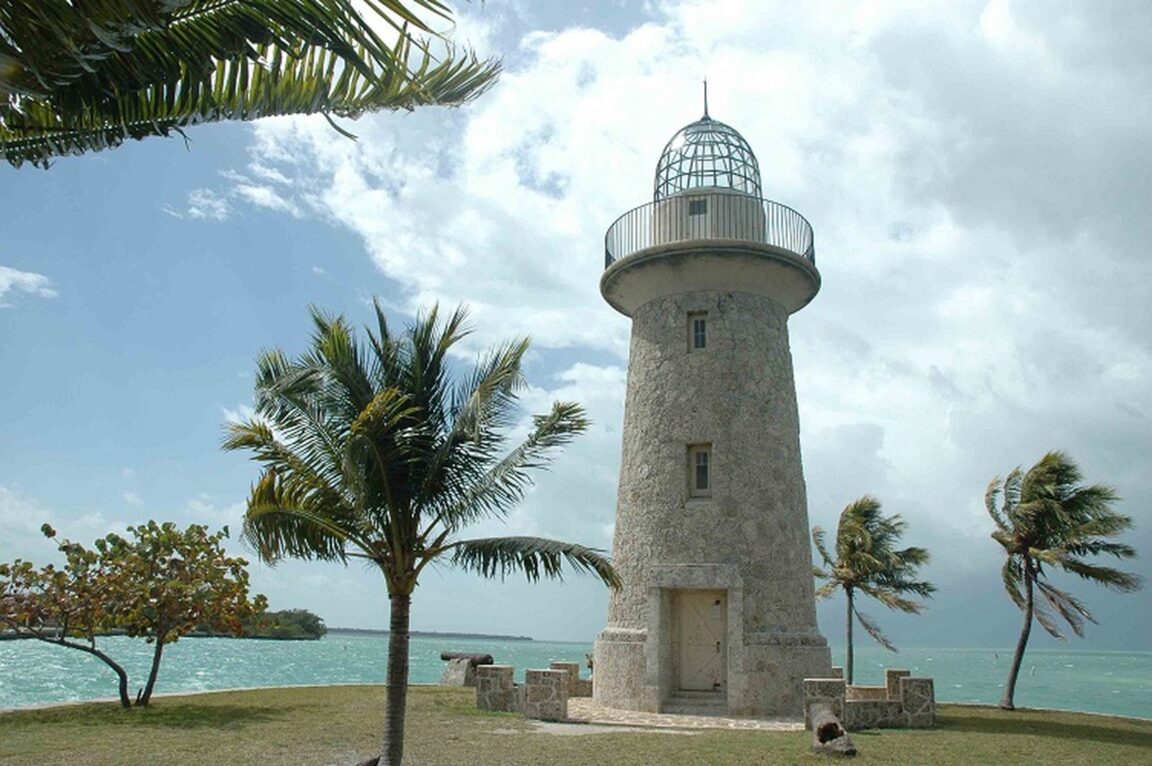
- Lighthouse: The ornamental lighthouse at the harbor entrance is 65 feet tall, built by Mark Honeywell in the 1930s. Its observation deck opens only when park staff are on the island and able to open it, so a climb is a bonus, never a promise.
- Private boat fees: Day use docking at Boca Chita costs $25 on Fridays through Mondays and federal holidays. Overnight camping and docking together cost $60 per night. Fees are paid by phone using the Recreation.gov app Scan and Pay, are required year round, and slips and campsites are first come, first served.
- On the island: No drinking water, no electricity, no showers, no sinks and no sales facilities. Pack out all trash. Pets are not permitted on the island, service animals excepted. Mosquitoes are present year round.
- Walking: A half mile trail starts just east of the restrooms, runs to the south end of the island and comes out near the pavilion.
- Facts checked: 17 November 2026, against National Park Service pages for Boca Chita Key and park fees, and the Biscayne National Park Institute cruise page.
How Do You Actually Get to Boca Chita Key?
By boat, full stop. Biscayne National Park protects the northernmost Florida Keys and the bay and reef east of Homestead, and roughly 95 percent of the park is water. Boca Chita sits in the middle of that water, about a 45 minute boat ride from the mainland by most operator accounts, with no road, causeway or scheduled public ferry. That single fact shapes the whole weekend. Visitors without a boat have three realistic routes: the Institute heritage cruise from Homestead, Institute sailings that depart Dinner Key Marina in Coconut Grove or the Deering Estate on specific dates, or a private charter arranged in Miami or Homestead. Visitors with their own boat launch from marinas around Homestead and Miami and navigate to the key, where the cleated bulkhead is the only docking area and boats may raft no more than two deep.
Private boaters should read the harbor note on the park page before committing. The harbor entrance is approximately four feet deep at low tide, and the National Park Service warns that deep draft vessels should exercise extreme caution. Low tide at Boca Chita is calculated by adding one hour and forty three minutes to low tide at Government Cut in Miami. A shallow draft center console has an easy day of it. A deep keel sailboat arriving at the wrong state of tide does not, and no weekend plan survives grounding at the harbor mouth.
Which Departure Should You Choose From Dante Fascell?
The 9:30 a.m. sailing is the better weekend choice for most visitors, and the reason is sequencing rather than scenery. A morning crossing puts you on the island late morning, leaves the visitor center exhibits for the hot part of the return afternoon, and keeps the whole second day free for a snorkel, paddle or reef trip, which is how a Biscayne weekend earns its keep. The 1:30 p.m. cruise suits visitors driving down from Miami the same morning or pairing the bay with a slow Homestead lunch first, and it returns toward evening light on the water, which photographers will appreciate. What neither sailing gives you is control of the island stop. Because the captain chooses among Boca Chita, Elliott Key and Adams Key on the day, anyone whose weekend is built specifically around the Boca Chita lighthouse should say so before booking, check whether a Boca Chita focused sailing is running, and hold a private boat or charter as the fallback rather than discovering the substitution at the dock.
Book ahead either way. These Institute boats are the only public route out to the keys for visitors without a boat, weekend departures are the first to fill, and the operator sells through its online booking system. Arrive at Convoy Point with time in hand: the visitor center itself is worth thirty minutes before or after the cruise, with exhibits on the bay, reef and mangrove ecosystems that make the crossing make more sense, and the grounds and shoreline at Convoy Point are the one part of the park a landside visitor can enjoy without any boat at all.
How Should You Spend the Hour Ashore?
Sixty minutes on Boca Chita goes faster than it sounds, so spend it in a deliberate order. First, walk straight to the lighthouse at the harbor entrance. If park staff are present and the observation deck is open, climb it immediately, because the deck does not stay open on a schedule and the view from 65 feet takes in the islands, the bay, the open ocean and the Miami skyline in a single turn. If the deck is closed, the lighthouse is still the island landmark and the best orientation point on the key. Second, take the picnic seriously. The island has a pavilion and picnic grounds in the harbor area, and a lunch you carried across the bay, eaten in the shade with the lighthouse in view, is the core pleasure of this island. Nothing is sold on Boca Chita, so the picnic is entirely what you packed at the visitor center end: sandwiches, fruit, and far more water than feels necessary on the mainland.
Third, if time remains, walk the start of the half mile trail east of the restrooms for a look at the quieter south end of the island, keeping one eye on the boat clock. Swimming and wading happen around the harbor and the small beach, and the shell and coral rubble shoreline is rough on bare feet, so water shoes earn their space in the bag. What the hour does not allow is everything at once. Visitors who try to climb, swim, picnic and walk the full trail in sixty minutes end up rushing all four, which is exactly the failure mode this guide exists to prevent. Pick the lighthouse and the picnic as the fixed points and let the rest be optional.
What Does a Private Boat Weekend Cost, and How Does Camping Work?
Arriving on your own boat trades the cruise fare for park fees and full control of the timetable, including sunrise and sunset on the island, which no day cruise offers. The fee structure is simple and current as of the park update of 1 January 2024. Day use docking costs $25 on Fridays, Saturdays, Sundays, Mondays and federal holidays. Staying overnight, whether tent camping on the key or sleeping aboard at the dock, costs a combined $60 per night for camping and docking. Payment is by mobile phone using the Recreation.gov app and its Scan and Pay function, fees apply year round, and both slips and campsites are first come, first served with no reservations. On a fine winter weekend that means an early arrival is not a preference, it is the mechanism by which you get a spot at the bulkhead at all.
Camping on Boca Chita is deliberately basic. There is no drinking water, no electricity and no showers on the island, so campers carry every litre they will drink and cook with, plus a way to pack out all trash. The campground sits near the harbor, the lighthouse is a short walk away, and the evening and early morning hours, after the day boats leave, are the island at its best. The honest trade offs: mosquitoes are present year round and are at their worst around dawn and dusk in the warmer months, and winter weekends, when South Florida weather is at its most reliable, are also the busiest. Visitors comparing the two island campgrounds should know Elliott Key, the park largest island, offers the alternative base, with more room to walk and a quieter feel, while Boca Chita wins on the lighthouse, the harbor scene and the picnic infrastructure.
How Do You Fill the Rest of the Weekend Without Rushing?
A good Biscayne weekend has one boat day and one flexible day, not two maximal days. Day one is the Boca Chita plan above, run at cruise pace. Day two is where the rest of the park comes in, and the strongest pairing is a snorkel or paddle trip with the Institute, which runs reef, mangrove and shipwreck snorkeling and Jones Lagoon paddling from the same Dante Fascell base, so the logistics you learned on day one carry straight over. Visitors building a wider South Florida park weekend often pair Biscayne with the Everglades, and our guide to Shark Valley for first time visitors covers the tram and loop on the Tamiami Trail side of the same trip. For a second island day with a completely different character, the ferry served island covered in our Dry Tortugas food and planning guide shows what a longer boat commitment buys you further down the Keys chain.
Pacing rules that keep the weekend relaxed: never schedule the cruise on your departure day if you are flying out of Miami that evening, because weather can cancel or delay small boat trips; keep one unscheduled half day as weather insurance, since wind is the most common reason Biscayne plans move; and do the visitor center, the Convoy Point shoreline and any gift shop stop on the flexible day rather than stacking them onto cruise day. Homestead itself works fine as the base, with the visitor center minutes away, while Coconut Grove and Coral Gables suit visitors who want Miami dining in the evenings and are willing to drive down in the morning, ideally for the 9:30 a.m. sailing rather than against afternoon traffic for the 1:30 p.m. one.
What Should You Pack for an Island With Nothing to Buy?
Everything, because Boca Chita sells nothing and provides no drinking water. The non negotiables are water at a litre per person beyond what feels polite, food for the full stop or the full stay, sunscreen and a hat for a crossing with no shade until the pavilion, insect repellent for a key where mosquitoes are present in every month, water shoes for the rubble shoreline, a dry bag for phones and cameras on an open boat, and a bag for carrying every scrap of trash back off the island. Campers add a tent, full water containers, a camp stove if they plan hot food, and a headlamp, and should download the Recreation.gov app and set up payment before leaving the mainland, because the Scan and Pay fee system assumes a working phone in the harbor. A light layer is worth carrying even in Florida: the return crossing after sunset or on a windy winter afternoon is cooler than the picnic hour suggests.
Frequently Asked Questions
Is Boca Chita Key guaranteed on the Heritage of Biscayne Cruise?
No. The Biscayne National Park Institute states that the cruise one hour island stop is at Boca Chita Key, Elliott Key or Adams Key depending on the conditions of the day. If Boca Chita specifically is your goal, ask the Institute about Boca Chita focused sailings or plan on a private boat or charter.
Can you climb the Boca Chita lighthouse?
Sometimes. The 65 foot lighthouse observation deck offers views over the islands, bay, ocean and Miami skyline, and park staff may open it when they are on the island. There is no published opening schedule, so treat a climb as a welcome bonus and go straight there on arrival if it matters to you.
How much does it cost to visit Boca Chita Key?
The park itself charges no entrance fee. On the guided cruise, operator listings at research time showed $83 for adults and $49 for children ages 5 to 12, to be confirmed at booking. By private boat, day use docking is $25 on Fridays through Mondays and federal holidays, and overnight camping with docking is $60 per night, paid through the Recreation.gov app.
Can you camp on Boca Chita Key, and can you reserve a site?
Yes to camping, no to reservations. Campsites and dock slips are first come, first served, the overnight camping and docking fee is $60, and the island has no drinking water, electricity or showers, so campers arrive fully self sufficient and pack out all trash.
Are dogs allowed on Boca Chita Key?
No. Pets are not permitted on the island or on boats in the harbor, with the exception of service animals, per the National Park Service.
What is the best time of year for a Boca Chita weekend?
Late autumn through spring brings South Florida most reliable boating weather and its mildest temperatures, and it is also the busiest season, which makes advance cruise booking and early private boat arrivals matter most then. Summer brings heat, stronger mosquitoes and afternoon storms, but calmer weekday islands. In every season, check the marine forecast the day before, because wind and rough bay conditions are the most common reason trips change.