 Maya Chen
Do Clifton Gorge properly and the order is simple: walk the lower Gorge Trail beside the Little Miami River while the light and your legs are fresh, climb out for the Rim Trail views, then finish with Clifton Mill and the village of Yellow Springs. The preserve itself is free, it opens from half an hour before sunrise to half an hour after sunset, and its roughly three miles of trails link directly into John Bryan State Park next door, so a half day here easily becomes a full and very satisfying Ohio day out.
Quick Facts
- Where: Clifton Gorge State Nature Preserve, 2381 State Route 343, Yellow Springs, Ohio 45387, about three miles east of Yellow Springs.
- Cost: Entry to the preserve is free. No ticket or pass is required.
- Hours: Open daily from half an hour before sunrise to half an hour after sunset, per the Ohio Department of Natural Resources.
- Size: 268 acres protecting a two mile stretch of the Little Miami State and National Scenic River.
- Trails: About three miles in total, made up of the Gorge Trail (1 mile), Rim Trail (1 mile), Narrows Trail (0.5 mile) and Orton Trail (0.5 mile).
- Pets: Pets are not permitted in the state nature preserve. Leave dogs at home for this one.
- Contact: Ohio Department of Natural Resources, (614) 265-6453. Check the official preserve page for trail notices before you drive out.
- Prices checked: 16 November 2026.
What exactly is Clifton Gorge?
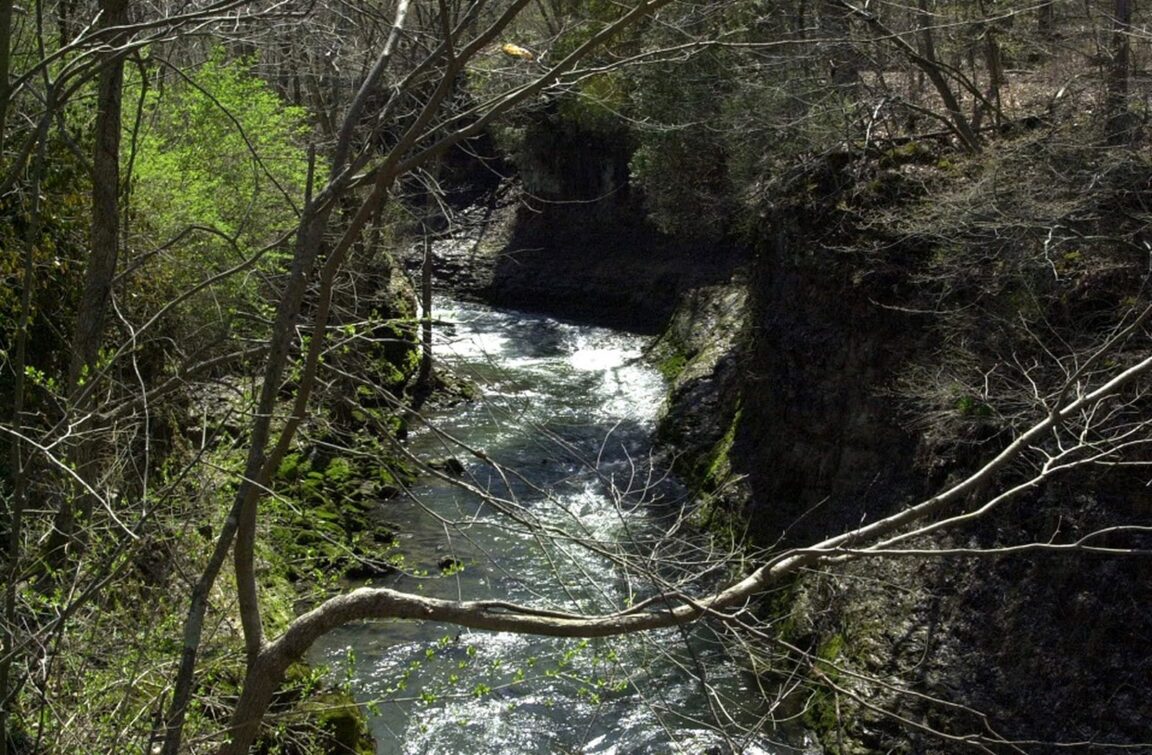
Clifton Gorge is a deep, narrow canyon that the Little Miami River cut through dolomite and shale bedrock laid down in the Silurian period, roughly 400 million years ago. The gorge itself is far younger. Glacial meltwater tore through here at the end of the last ice age and left a chasm that still feels startlingly wild for farmland Ohio. The river squeezes through a section called the Narrows, drops over ledges, and gathers in deep pools below cliffs draped with hemlock and northern plants that survive in the cool shade of the gorge walls.
The site carries serious designations. It was registered as a National Natural Landmark in 1968, and the upper gorge became a state nature preserve in 1973. That preserve status matters for visitors, because protection comes first here. Rules are stricter than in an ordinary state park, trails are the only place you may walk, and the whole site is managed by the Ohio Department of Natural Resources Division of Natural Areas and Preserves. In June 2025 a new exploration center opened at the preserve, described by the state as the first of its kind in an Ohio state nature preserve, with aquariums of native fish and exhibits on the mills that once lined this river.
Which trail should you walk first?
Start low. The Gorge Trail is the reason people come, a one mile path that descends by stairs into the canyon and follows the river at water level. Down here the scale of the place lands properly. The walls rise on both sides, the river runs fast and loud after rain, and you pass the rock formations and pools that rim walkers only glimpse from above. The tread is rocky and uneven in places, with narrow spots near the Narrows, so sturdy shoes are not optional and trekking poles help anyone with unhappy knees.
Then climb out and take the Rim Trail for the second act. The rim path runs along the top of the cliffs for about a mile, with overlooks down into the channel you have just walked. Doing the two in this order, low then high, means the views from above read as a map of where you have been, which is far more satisfying than the reverse. The short Narrows Trail and Orton Trail fill in the remaining half miles and work well as connectors or as a gentler outing for visitors who want a taste of the gorge without the full descent.
How long do you actually need at Clifton Gorge?
Two to three hours covers the Gorge Trail and Rim Trail at a photographer pace, with time at the overlooks and the exploration center. Add John Bryan State Park, which adjoins the preserve and covers 752 acres of the same river corridor, and you have a full day of linked hiking without moving the car. Many visitors build the classic loop by walking through the preserve, continuing into John Bryan, and returning along the opposite bank. Trail junctions are signed, but a photo of the trailhead map on your phone is a sensible backup because the gorge walls block any useful sense of direction from the sun.
Timing shapes the experience more than fitness does. Spring brings the strongest water, wildflowers on the shaded slopes, and the fullest river. Summer is green and cool at water level even on hot days, though the flow eases. Autumn colour on the rim is the local favourite. Winter is quiet and stark, with ice on the ledges, and it demands real caution on the stairs and rock steps. After heavy rain the lower trail can be slick and sections may close, which is one more reason to check the official Ohio Department of Natural Resources page on the morning of your visit.
What pairs with Clifton Gorge on the same day?
Clifton Mill, in the village of Clifton at the eastern end of the gorge, is the natural pairing. The great red mill building beside the river is one of the most photographed sights in this part of Ohio, and the mill operates as a separate private attraction with its own hours, restaurant and seasonal events, so check its own website for current opening times and any admission charges rather than assuming the preserve hours apply. Walking the gorge in the morning and eating lunch overlooking the millrace is the classic local order of play.
Yellow Springs, three miles west, supplies the rest of the day. The village is known for its independent shops, galleries and cafes along Xenia Avenue, and for Glen Helen Nature Preserve on its edge, a separate preserve with its own trail network and the spring that gave the town its name. Glen Helen charges its own parking or entry arrangements at times, so treat it as its own visit and check its official site before adding it. Readers planning a wider American parks trip will find our guide to US national park reservations in 2026 useful for understanding which famous sites now need advance booking, something Clifton Gorge happily does not. For another North American gorge and river day with a very different climate, see our guide to Banff in winter.
What are the rules you need to respect?
Because this is a state nature preserve, the rule list is short and firm. Stay on designated trails and behind railings at overlooks. Pets are prohibited, full stop, which catches out many first time visitors who arrive with a dog and face a wasted trip. Swimming and rock climbing are not permitted. Collecting plants, rocks or anything else is off limits, and the rare northern species on the shaded slopes are exactly what the preserve exists to protect. Boot brushes at trailheads exist to stop invasive seeds hitching a ride on your soles, so use them on the way in and out.
Facilities are modest. Parking is at the preserve lots on State Route 343, and the new exploration center has added interpretation and aquariums with native fish and turtles. Carry water, because there is none on the lower trail, and expect no phone signal worth relying on at the bottom of the gorge. Download anything you need before you descend.
How do you get to Clifton Gorge?
The preserve sits on State Route 343 between Yellow Springs and Clifton in Greene County. From Yellow Springs, drive east on State Route 343 for about three miles to the signed preserve entrance and parking at 2381 State Route 343. Dayton is the nearest city, roughly half an hour away by road depending on your starting point, and Columbus is about an hour. There is no practical public transport to the trailhead, so this is a drive up destination. Arrive before mid morning on fine weekends if you want the lower trail at its quietest, because the lots are not large and the word is well and truly out about this place.
Frequently Asked Questions
Is Clifton Gorge free to visit?
Yes. Entry to Clifton Gorge State Nature Preserve is free, and neighbouring John Bryan State Park is also free to enter. Separate attractions nearby, such as Clifton Mill and Glen Helen, run their own arrangements, so check their official sites for any charges.
Can you bring a dog to Clifton Gorge?
No. Pets are not permitted in the state nature preserve. Dogs are allowed in parts of neighbouring John Bryan State Park under its own rules, but they cannot come into the preserve itself.
How hard is the Gorge Trail?
It is a moderate one mile trail with stairs, rocky and uneven tread, and narrow sections near the Narrows. Most reasonably mobile walkers manage it comfortably in sturdy shoes. The Rim Trail is the easier option for anyone avoiding the descent.
When is the best time to visit Clifton Gorge?
Spring offers the strongest river flow and wildflowers, autumn offers the best rim colour, and early morning offers the quietest trails in any season. The preserve is open from half an hour before sunrise to half an hour after sunset daily.
Can you swim in the Little Miami River at Clifton Gorge?
No. Swimming is not permitted in the preserve. Admire the pools from the trail, stay behind railings, and keep to the marked paths.
What should you combine with Clifton Gorge in one day?
Clifton Mill at the east end of the gorge, John Bryan State Park next door, Glen Helen Nature Preserve, and the shops and cafes of Yellow Springs village, three miles west, make a complete and easy day.