 Jonas Lindqvist
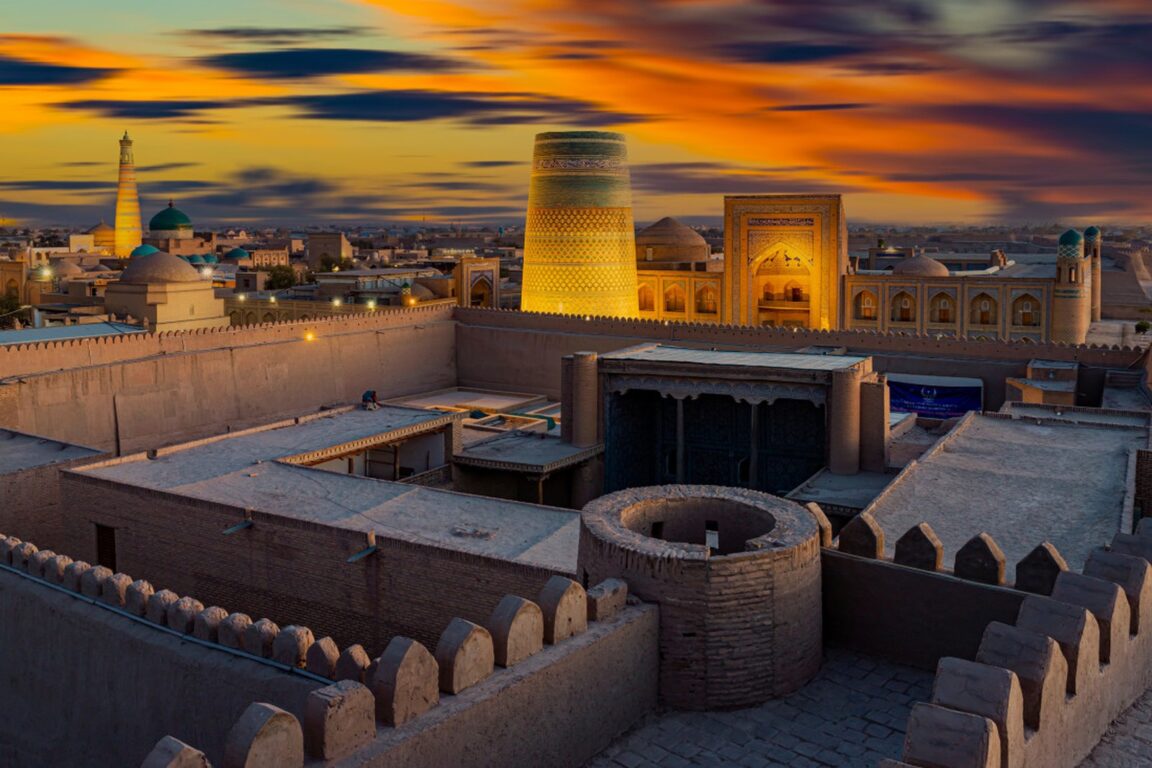
Khiva serves the most recognisable plate of food in Central Asia: a mound of bright green noodles. Shivit oshi, hand made noodles coloured and scented with fresh dill, topped with a slow beef and vegetable stew and finished with cool sour yogurt, belongs to Khiva and the Khorezm region alone, and you will struggle to find it anywhere else in Uzbekistan. Eat it inside the walled old town of Itchan Kala, where teahouses and small restaurants line lanes of mud brick and blue tile, then graze the bazaars for the melons Khorezm is famous for, and finish the day with tea as the minarets catch the evening light. This is a one dish town in the best sense: everything else on the table, the bread, the salads, the kebabs, exists in orbit around those green noodles.
Quick Facts
- Where: Khiva, in the Khorezm region of western Uzbekistan, beside the Kyzylkum desert
- Order first: Shivit oshi, dill green noodles with beef stew and katyk, sour yogurt
- Also called: Khorezm lagman, marking it as the Khorezm member of the Uzbek noodle family
- Season: Mainly a summer dish, made when fresh dill is at its best
- Setting: Restaurants and teahouses inside Itchan Kala, the walled inner city listed by UNESCO in 1990
- Sweet stop: Melon stalls in the bazaars, at their best in late summer and autumn
- Prices checked: November 2026, against the sources named in this guide
What exactly is shivit oshi?
Shivit means dill in Uzbek, and oshi refers to the noodle dish itself. Cooks blend fresh dill with water, let the liquid steep until it is vividly green, at least an hour in documented recipes, then work it into a flour and egg dough. Rolled and cut by hand, the noodles come out emerald, aromatic and unmistakable. On top goes a stew of beef cooked down with onion, pepper, tomato, potato and carrot, in Khorezm often enriched with milk until it turns deep and savoury, and beside or over it a spoonful of katyk or suzma, the soured milk of the region, to cut the richness.
Current food writing on the dish is consistent about its geography. Shivit oshi is a quintessential dish of Khorezm cuisine, associated specifically with Khiva, also written shivit osh, and known secondarily as Khorezm lagman. Its origin story is genuinely unsettled: Khiva cooks call it an old local dish whose beginnings no one can trace, and one account credits a Khiva cook, Rajab Sattarov, with carrying it to Tashkent in 1958. What is not in doubt is the eating geography today: inside Khiva the dish is on every restaurant menu in the old city, while outside the region it remains rare, which makes Khiva the place to eat it and, if you can, to learn it.
Expect the bowl to be generous and the flavours clean rather than fiery: dill and fresh herbs up front, a tomato and pepper stew in the middle, cool yogurt at the edges. Recipes documenting the dish put a serving at roughly 450 to 500 calories, and note the obvious practical points, that the noodles contain wheat and egg and the accompaniments contain milk, for travellers managing allergies.
Where do you eat shivit oshi in Itchan Kala?
Inside the walls. Itchan Kala, the inner city inscribed as a UNESCO World Heritage Site in 1990, holds more than 50 historic monuments within a walkable mud brick enclosure, and its restaurants and teahouses cook for the people moving between them. The practical advice from Khiva food guides is simple: shivit oshi appears on virtually every menu inside the old city, so choose by setting, a terrace facing a madrasa facade, a courtyard teahouse, a family room off a side lane, and order the house version.
One address is named in current listings for a hands on version of the dish. Mirzaboshi Restaurant, also listed as Tapas, hosts a shivit oshi master class in which participants make the green noodle dough themselves over about 60 minutes, with the sauce and toppings prepared by the instructor in some sessions, priced at 35 US dollars per person in the tour listing checked for this guide. Treat the class as a souvenir as much as a lesson: you leave knowing why the dough is green, how thin to roll it, and how the stew and yogurt balance, which changes every bowl you eat afterwards.
Teahouses are the other half of Khiva eating. The chaikhana format, tea first, food unhurried, bread always on the table, suits the desert edge climate, where the middle of the day belongs indoors. Order a pot of green tea, a plate of shivit oshi, tomato and onion salad, and non, the round Uzbek bread, and let lunch take the time it takes.
What else is on a Khorezm table?
Khorezm cooking diverged from the rest of Uzbekistan behind the desert, and the wider Uzbek canon fills out the menu around the green noodles. Plov, the rice dish cooked with carrot, onion and meat, appears in a lighter Khorezm style. Samsa, baked pastries from the clay tandir oven, make the snack round with tea. Lagman in its standard form, hand pulled noodles in broth or sauce, shows the family shivit oshi belongs to, and tukhum barak, small egg filled dumplings, is named among the dishes Uzbekistan counts as its own alongside plov, samsa and lagman. Kebabs, fresh salads of tomato and cucumber, and pickled vegetables round out a table built for sharing.
Why do the melon bazaars matter in Khiva?
Khorezm melons are a regional pride with a long history on the Silk Road, and the bazaars of Khiva, inside and just outside the walls, stack melons and other produce through the warm months. Late summer and autumn are the peak, when the melon stalls become the dessert course of the whole town: buy a melon, have it cut, and eat it after the noodles instead of ordering anything from a printed dessert list. Bazaar grazing also covers the traveller staples, dried fruit, nuts, bread and cheese, which together make the picnic version of a Khiva food day for the train or the desert fortress trips outside town.
Pair the food with the place using our Caucasus and Silk Road coverage, starting with Tbilisi, Georgia: Why Go, When to Go, and How the Old Town Actually Works at the western end of the old trade routes, and What to Eat in Istanbul: A First-Timer Food Guide, from Turkish Breakfast to Kokorec for the teahouse and bazaar culture where those routes ended.
How do you plan a food day in Khiva?
Let the heat set the schedule. Breakfast on bread, cheese, eggs and tea at your guesthouse or a teahouse, then walk Itchan Kala in the cool of the morning. Make shivit oshi the main lunch, eaten slowly in shade, with a cooking class at Mirzaboshi as the alternative midday plan. Graze the bazaars in the afternoon for melon and dried fruit, climb toward the walls for the evening light, and finish with tea, samsa or a light kebab dinner at a terrace inside the walls. Khiva is small enough that every one of these stops is a short walk from the others, and the dish you came for is available at almost every stop, which is a luxury few food towns offer.
Frequently asked questions about eating in Khiva
What makes shivit oshi green?
Fresh dill. Cooks blend dill with water, steep the liquid until it turns bright green, then knead it into the noodle dough. Shivit is the Uzbek word for dill, which is where the dish takes its name.
What is served on top of the green noodles?
A slow stew of beef with onion, peppers, tomato, potato and carrot, plus a spoonful of katyk or suzma, soured milk or strained yogurt, served cool against the warm stew.
Can you eat shivit oshi outside Khiva?
Rarely. Food guides stress that the dish is primarily available in Khiva and the Khorezm region, which is the strongest reason to make it the centre of a Khiva visit.
When is shivit oshi season?
Mainly summer, when fresh dill is abundant, though old city restaurants serve it through the visitor season. Melons, the other Khorezm signature, peak in late summer and autumn.
Can you learn to make shivit oshi in Khiva?
Yes. A master class at Mirzaboshi Restaurant teaches the green noodle dough in about 60 minutes, listed at 35 US dollars per person, with the sauce prepared by the instructor in some sessions.
Is Khiva food suitable for vegetarians?
Partly. The classic shivit oshi topping is a beef stew, but teahouses and restaurants serve vegetable salads, bread, samsa with pumpkin or greens in season, and yogurt based dishes. Ask for the stew to be made without meat before ordering, as kitchens vary.
Last updated and prices checked: 16 November 2026. Sources consulted the same day include the shivit oshi references and Khiva guides named in this article.