 Aiko Tanaka
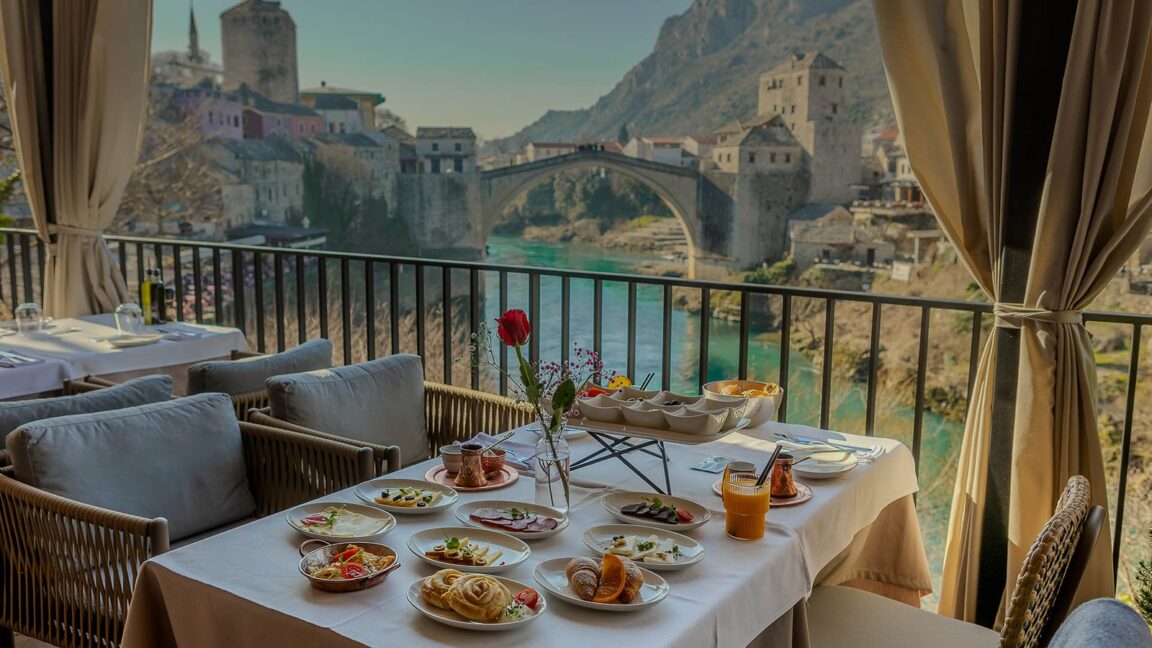
In Mostar you eat with the river in view and the grill doing the talking. The food of this Herzegovinian city is built on three things: cevapi, small grilled minced meat rolls served in flatbread with raw onion and kajmak; burek and its sister pastries from the pekara bakeries; and river fish, above all the trout farmed and caught around the Buna spring at Blagaj, a short drive south. The old town terraces along the Neretva sell the view of Stari Most, the 16th century bridge, but locals judge a kitchen by its grill smoke, its somun bread and whether the cevapi arrive with proper char. Eat one cevapi meal in the old bazaar, one burek breakfast standing at a bakery counter, and one trout lunch in Blagaj, and you have understood Mostar.
Quick Facts
- Where: Mostar, in Herzegovina, southern Bosnia and Herzegovina, on the Neretva River
- Order first: Cevapi in somun flatbread with chopped onion and kajmak, the creamy dairy spread
- Breakfast order: Burek with meat, or zeljanica with greens, from a pekara bakery, eaten hot
- Day trip meal: Grilled trout at Blagaj, beside the Buna river spring and its cliff side tekke
- Old town grill anchor: Urban Grill at Mala Tepa 22, open daily 8.00 to 23.00, no reservations
- Sweet finish: Baklava with Bosnian coffee, served in a dzezva pot with a Turkish delight
- Prices checked: November 2026, against the sources named in this guide
Where should you eat cevapi in Mostar?
Start at the old town grill rooms around Kujundziluk, the coppersmiths bazaar street that runs to Stari Most. Urban Grill, at Mala Tepa 22 on the edge of the old town, lists cevapi at the top of its offerings alongside beef sausages, kofte and baklava, keeps long daily hours from 8.00 to 23.00, and states plainly that it does not accept reservations, which tells you the format: walk in, order at the grill, eat when it lands. That is the authentic cevabdzinica rhythm, and it is the right first cevapi experience in the city.
Know what you are ordering. Cevapi in Bosnia are finger sized rolls of seasoned minced beef, or beef and lamb, grilled over charcoal and served five or ten at a time inside a somun, the soft round flatbread baked fresh through the day. The standard plate adds finely chopped raw onion and kajmak. Purists eat with fingers, tearing bread, wrapping a cevapi with onion, and alternating bites with sips of drinking yogurt. Mostar portions are generous, prices are low by western European standards, and the half portion exists for a reason: it leaves room for the bakery round that should follow.
For a fuller restaurant meal rather than a grill counter, the old town and the streets west of the river hold a second tier of kitchens serving the wider Bosnian repertoire: begova corba, the slow chicken and okra soup thickened for celebrations; sogan dolma, onions stuffed with minced meat; and japrak, vine leaves filled and simmered. These are the dishes to order when the table wants more than the grill, and they appear on traditional restaurant menus across the old town.
How do Mostar bakeries and burek actually work?
The pekara is Mostar at breakfast. Bakeries open early and sell by weight and by the piece: burek properly means the meat filled spiral of filo, while the same pastry filled with cheese is sirnica, with greens zeljanica, and with potato krompirusa, even though visitors call them all burek. Order by the quarter or half kilo if you are sharing, ask for yogurt to drink alongside, and eat it hot, ideally standing or on a nearby bench while the layers are still crisp.
The skill is in the dough, stretched by hand until it is translucent, then rolled around the filling in a coil and baked in a round pan. A good Mostar bakery turns pans out continuously through the morning, so if a tray looks tired, wait for the next one. Bakery culture here is daily and local rather than touristic, which makes the pekara the most reliable cheap meal in the city at any hour it is open.
What coffee ritual should you not rush in Mostar?
Bosnian coffee is a ceremony disguised as a drink. It arrives in a dzezva, the small copper pot, poured into a handleless cup, with sugar cubes and a piece of rahat lokum, Turkish delight, on the tray. The method matters: let the foam settle, sip slowly, and never treat it as a takeaway espresso. Cafe terraces on both banks of the Neretva, especially those facing Stari Most, exist for this pause, and the coffee break between a burek breakfast and a cevapi lunch is a structural part of eating in Mostar, not a gap in it.
Why is Blagaj the essential Mostar food day trip?
Twelve kilometres southeast of Mostar, the village of Blagaj sits where the Buna river bursts from a cliff at one of the largest karst springs in Europe, with a 16th century dervish tekke built into the rock face beside it. The restaurants along the Buna channel farm and serve river trout, grilled whole and eaten at tables beside water so clear you can watch fish move below the spring. Order the trout, a shopska style salad and house bread, and you have the Herzegovinian counterpart to the city grill meal: where Mostar old town is smoke and minced meat, Blagaj is cold spring water and delicate fish.
Combine Blagaj with the old town in one day without strain: burek and coffee in Mostar in the morning, the bridge and bazaar before the day trip crowds peak, then the drive or bus to Blagaj for a late trout lunch, and back to a Neretva terrace for coffee or a grill dinner. Our destination guide Mostar, Bosnia and Herzegovina: The Bridge Town, and How to See It Beyond the Day Trip covers the bridge, the old town and the timing that avoids the worst crowds, and pairs naturally with the eating plan here. For the pizza and grill culture at the other end of the Balkan to Italy spectrum, see also What to Eat in Naples: Pizza in Its Birthplace, From Margherita Rules to Fried Pizza.
What should you drink and finish with in Mostar?
Herzegovina is wine country as well as grill country. The region around Mostar and the Neretva valley grows two native grapes worth asking for by name: Zilavka, a white, and Blatina, a red. A glass of Zilavka with Blagaj trout and Blatina with cevapi or grilled lamb is the local pairing logic, and traditional restaurants in and around the old town list both. Finish sweet with baklava, the walnut layered pastry sold by grill rooms and sweet shops alike, or with tufahija, a poached apple stuffed with walnuts, when it appears on a traditional menu.
Evenings on the Neretva terraces run late in summer. The terraces on the east bank below the old town and the restaurant decks upstream of Stari Most sell the same combination, grilled meat, river air and the lit bridge after dark. Choose your terrace by the grill smell and the crowd mix rather than by the menu board, and keep the order classic: cevapi or a mixed grill, somun, onion, kajmak, and a local red.
Frequently asked questions about eating in Mostar
What is the one dish you must try in Mostar?
Cevapi, grilled minced meat rolls served in somun flatbread with raw onion and kajmak. Eat them at an old town grill room such as Urban Grill at Mala Tepa 22, which lists cevapi first among its offerings and takes no reservations.
What is the difference between burek and the other bakery pastries?
Strictly, burek is the meat filled version. Cheese filling makes sirnica, greens make zeljanica and potato makes krompirusa. All are sold by bakeries through the morning and are best eaten hot with drinking yogurt.
Where do you eat trout near Mostar?
At Blagaj, about 12 kilometres southeast of the city, where restaurants along the Buna spring serve grilled river trout at tables beside the water, below the cliff side tekke.
What wine should you order in Herzegovina?
Zilavka, the native white, with fish and lighter dishes, and Blatina, the native red, with grilled meat. Both are grown in the Neretva valley wine country around Mostar.
Is Mostar food expensive?
No. Grill meals and bakery food are among the best value eating in the Balkans, and even old town terrace restaurants with a bridge view sit well below comparable prices in coastal Croatia.
When are the Neretva terraces at their best?
Early evening, when the grill fires are lit, the day trip groups have left the old town, and Stari Most is lit after dark. Arrive before 19.00 in summer to get a river facing table without a wait.
Last updated and prices checked: 16 November 2026. Sources consulted the same day include the restaurant listings named in this guide and Mostar city guides.