 Omar Haddad
On Pucon’s biggest weekends, when the town fills for summer festivals, holiday crowds and Ironman-season energy, the Villarrica volcano climb is decided by paperwork and alert levels long before it is decided by fitness. The summit is open only to climbers booked with a licensed operator, or to credentialled mountaineers who have arranged access with CONAF in advance, every climber needs the specific ascent pass bought ahead on the national parks booking portal, and the whole plan can be cancelled the same morning if SERNAGEOMIN raises the volcanic alert or the weather turns. This guide sets out how to book around a peak weekend in Pucon: permits first, a flexible second day for hot springs and the Caburgua lakes, and the alert checks that tell you whether the crater is even an option.
Quick Facts
- Town: Pucon, on the eastern shore of Lake Villarrica in Chile’s Araucania Region, about 780 kilometres south of Santiago
- Volcano: Villarrica, 2,847 metres, one of South America’s most active volcanoes, inside Villarrica National Park
- Summit rule: Licensed operator required for ordinary visitors; independent ascent only for FEACH-credentialled athletes or experienced mountaineers with prior CONAF coordination
- Pass: Buy the Ascensiones Volcan Villarrica pass in advance on pasesparques.cl; general park entry does not cover the summit
- Climb day: Register in person at the CONAF control booth in the Rucapillan sector between 07:00 and 09:00; full day, roughly 7 to 9 hours
- Alert authority: SERNAGEOMIN sets the technical alert; a rise to yellow normally suspends summit access
- Checked: Permit rules and alert guidance verified against CONAF guidance as summarised by the Villarrica volcano guide services and SERNAGEOMIN reporting on November 17, 2026
Why do permits, not weather, come first on a big weekend?
Pucon’s peak weekends stack three scarcities on top of each other. The town’s beds fill, the licensed operators’ guide rosters fill, and the number of climbers CONAF will register on the mountain on any one morning is capped by the control process at the Rucapillan sector booth. A traveller who books a hotel first and thinks about the volcano later discovers that the remaining scarcity is the one that matters. The correct order is the reverse: secure the climb with a licensed operator for the first full day of the trip, hold the second day deliberately loose, and only then arrange the rest of the weekend around those anchors.
The legal position is unusually clear for a famous summit. CONAF authorises the ascent for three categories only: registered tour operators, athletes holding current FEACH mountaineering federation credentials, and mountaineers with demonstrable experience who arrange access with the park in advance, by email, before they arrive. There is no category for a fit, well-equipped tourist walking up alone, and park staff turn unaccredited climbers back at the control booth. For almost every international visitor, then, the licensed operator is not an upsell but the permit itself, and the operator also handles the group paperwork, the equipment and the morning registration.
How does the ascent pass and registration actually work?
Two separate steps are involved, and confusing them is the commonest booking error. First, the pass: every climber must hold the specific summit product, listed as Ascensiones Volcan Villarrica on pasesparques.cl, the official booking portal for Chilean national parks. General entry to Villarrica National Park admits you to the park’s sectors and trails; it does not admit you to the summit route, and summit passes are not reliably sold at the gate. Buy the ascent pass for your climb date as soon as the operator confirms it, and keep the confirmation on your phone and on paper.
Second, the morning control: on climb day, registration is completed in person at the CONAF booth in the Rucapillan sector, at the ski area on the volcano’s flank, between 07:00 and 09:00. Operators collect their groups in Pucon before dawn, drive up, handle the group registration, check equipment against the park’s requirements and start the climb inside the window. Expect a risk acceptance form, an equipment inspection covering crampons, ice axe, helmet and proper boots and layers, and a firm turnaround discipline on the upper mountain. The climb gains roughly 1,400 to 1,500 metres from the trailhead area to the 2,847 metre summit, takes about five to six hours up and considerably less down, partly by sliding the snowfields in season, and returns to Pucon by late afternoon. Guided prices vary by operator and season and are best confirmed at booking; recent seasons have commonly priced the full day, with gear, transport and permit handling included, in a broad band that travellers should verify rather than assume.
What does the SERNAGEOMIN alert level do to a booked climb?
Villarrica is monitored continuously by SERNAGEOMIN, Chile’s geological service, through its OVDAS observatory, and the technical alert level governs access. The scale runs green, yellow, orange and red. At green, climbs run subject to weather. When the alert rises to yellow, as it did in September 2026 after increased activity in the crater, access close to the crater is normally restricted and summit climbs are usually suspended, sometimes for weeks. No operator can override that, and no refund argument changes it: the mountain, not the agency, cancels.
The practical response is to build the weekend so a suspension is a substitution, not a collapse. Keep the climb on day one so a weather or alert delay has a day two to slide into. Choose an operator whose terms explicitly allow rescheduling within your stay. Then pre-plan the swap days from Pucon’s unusually deep bench: the Termas Geometricas, a complex of slate-lined hot pools linked by red wooden walkways in a forested ravine in the national park, which is at its best exactly when the summit is closed by cloud or rain; the lakes and waterfalls around Caburgua, including the Ojos del Caburgua pools; rafting on the Trancura River; and the black-sand Playa Grande on Lake Villarrica in town. A Pucon weekend that treats the volcano as the headline and the hot springs as the insurance policy almost never disappoints. Our Atacama stargazing guide applies the same book-the-weather-dependent-night-first logic in Chile’s north, and cold-weather layering for the summit follows the system in our Patagonia packing guide.
How should a festival or event weekend be paced, hour by hour?
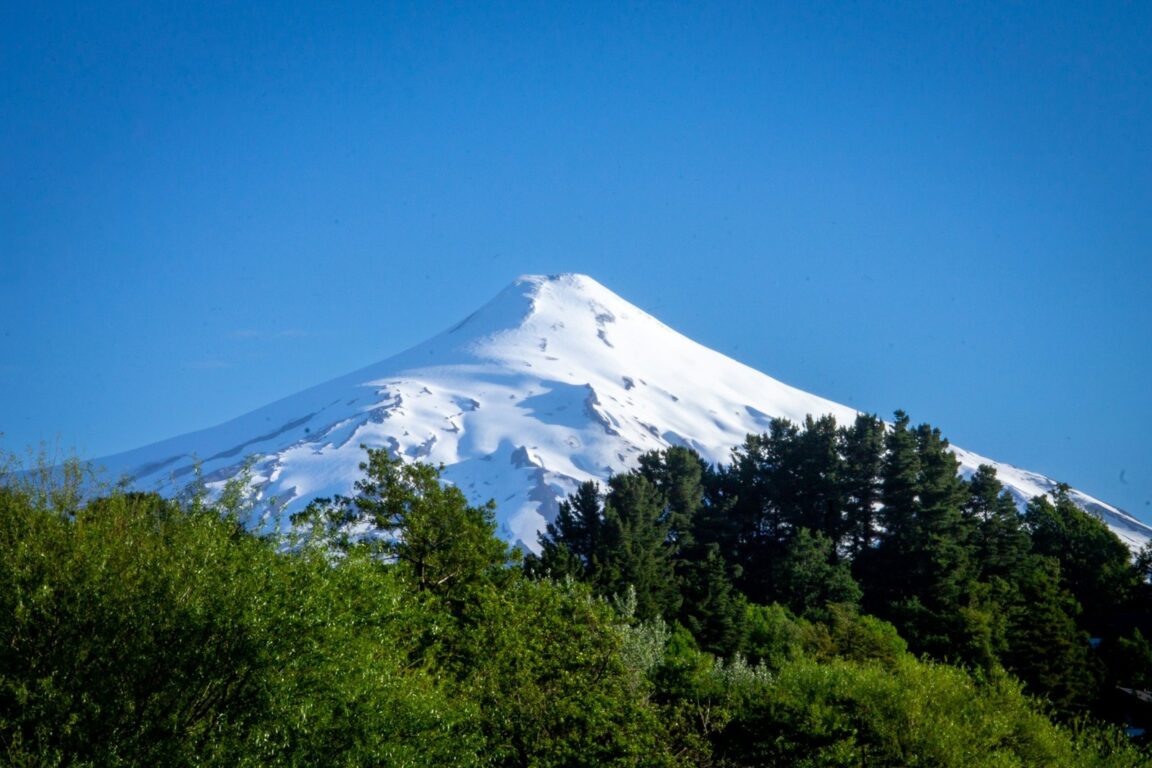
Arrive the day before the climb, not the morning of it. Use the arrival afternoon for the operator’s equipment fitting, an early dinner and a walk along the lakefront to see the cone over the water, the view in our featured image, which is also your first honest weather forecast. Climb day starts before dawn and ends tired; keep that evening to food and sleep. Day two is the flex day: if the climb slid, it happens here; if it summited on schedule, day two becomes Termas Geometricas in the morning, when the pools are quietest, and Caburgua in the afternoon. Event nights in town, concerts, markets and the lakeside promenade, belong at the end of day two, not stacked against a 4:00 a.m. alarm.
Getting the logistics right matters more on peak weekends than any other choice. Pucon is reached by bus from Santiago in about nine to ten hours, or far more comfortably by flying to Temuco and transferring about an hour and a half by road, with additional summer services closer in season; on holiday weekends both buses and transfers sell out, so transport is the third booking, right after the operator and the bed. Cash in Chilean pesos is useful for park-adjacent purchases and small operators, cards are widely accepted in town, and Spanish, even basic Spanish, smooths every negotiation around rescheduling. Finally, respect the mountain’s terms. Villarrica’s last major eruption, in 2015, forced evacuations around Pucon, and the alert system that can cancel your climb is the same one that keeps the town safe. A summit postponed by SERNAGEOMIN is the system working, and the crater, on the next clear green-alert morning, is worth the wait.
Frequently asked questions
Can I climb Villarrica without a guide?
Only if you hold current FEACH federation credentials, or can document serious mountaineering experience and arrange access with CONAF in advance by email. Ordinary visitors must climb with a licensed operator; there is no independent tourist permit.
Where do I buy the Villarrica ascent pass?
On pasesparques.cl, the official Chilean parks booking portal, selecting the specific Ascensiones Volcan Villarrica product for your date. General park entry does not include the summit, and passes are not reliably available at the gate.
What time does the climb start, and how long does it take?
Groups register at the CONAF Rucapillan booth between 07:00 and 09:00 after a pre-dawn pickup in Pucon. The round trip takes roughly 7 to 9 hours, gaining about 1,400 to 1,500 metres to the 2,847 metre summit.
What happens if the alert rises to yellow before my climb?
Summit access is normally suspended at yellow alert, and climbs are rescheduled or refunded under the operator’s terms. Build a flexible second day around the Termas Geometricas, Caburgua and the Trancura River so the weekend still works.
When is Pucon at its busiest?
Chilean summer, December to March, and national holiday weekends, when festivals, lake traffic and climb demand peak together. Book the operator, transport and lodging in that order, as early as the season allows.
Sources checked November 17, 2026: CONAF ascent rules for Villarrica as published by the park’s guide services (villarricavolcano.com), SERNAGEOMIN alert reporting, and Pucon and Villarrica National Park visitor sources. Featured image: snow-covered Villarrica volcano above forest near Pucon, via Unsplash.