 Kwame Mensah
Congaree National Park in South Carolina is free to enter on any normal day, but its famous synchronous firefly nights are the one exception, and they run on a lottery you have to plan months ahead. For about two weeks between mid May and mid June, male fireflies of the species Photuris frontalis flash in unison across the dark floodplain forest, and the National Park Service limits the crowds with event passes awarded through Recreation.gov. One important correction for anyone planning now, in November 2026: the 2026 event has already happened, running May 13 to 20, 2026, and the 2027 dates have not been announced yet. Treat the 2026 dates and prices below as the working pattern, watch the park fireflies page from March, and enter the lottery the moment it opens in April.
Quick Facts: Congaree Firefly Season at a Glance
- Where: Congaree National Park, 100 National Park Road, Hopkins, South Carolina, about 30 minutes southeast of Columbia
- The display: Synchronous fireflies, Photuris frontalis, flashing in unison for roughly two weeks between mid May and mid June
- 2026 event dates: May 13 to 20, 2026, now finished. 2027 dates to be announced by the park in spring
- 2026 lottery window: Opened 10:00 a.m. EST on April 7 and closed 10:00 a.m. EST on April 14, on Recreation.gov
- Cost: $1 non refundable lottery entry fee, plus $24 if you win, for a $25 pass in total. 145 passes per event night in 2026
- Pass rules: One entry per household, one standard passenger vehicle per pass, maximum 8 passengers, gates open 7:00 p.m. to 8:30 p.m. on event nights
- Normal entry: Free the rest of the year, no reservation needed, park open 24 hours a day
- Anchor walk: Boardwalk Loop, 2.4 miles of elevated boardwalk from the Harry Hampton Visitor Center
- Best base: Columbia, South Carolina, for hotels and restaurants, about a 30 minute drive from the park
- Checked: November 19, 2026, against the National Park Service fireflies, fees and visitor pages at nps.gov
What Makes Congaree’s Fireflies Synchronous, and Why Is Entry Rationed?
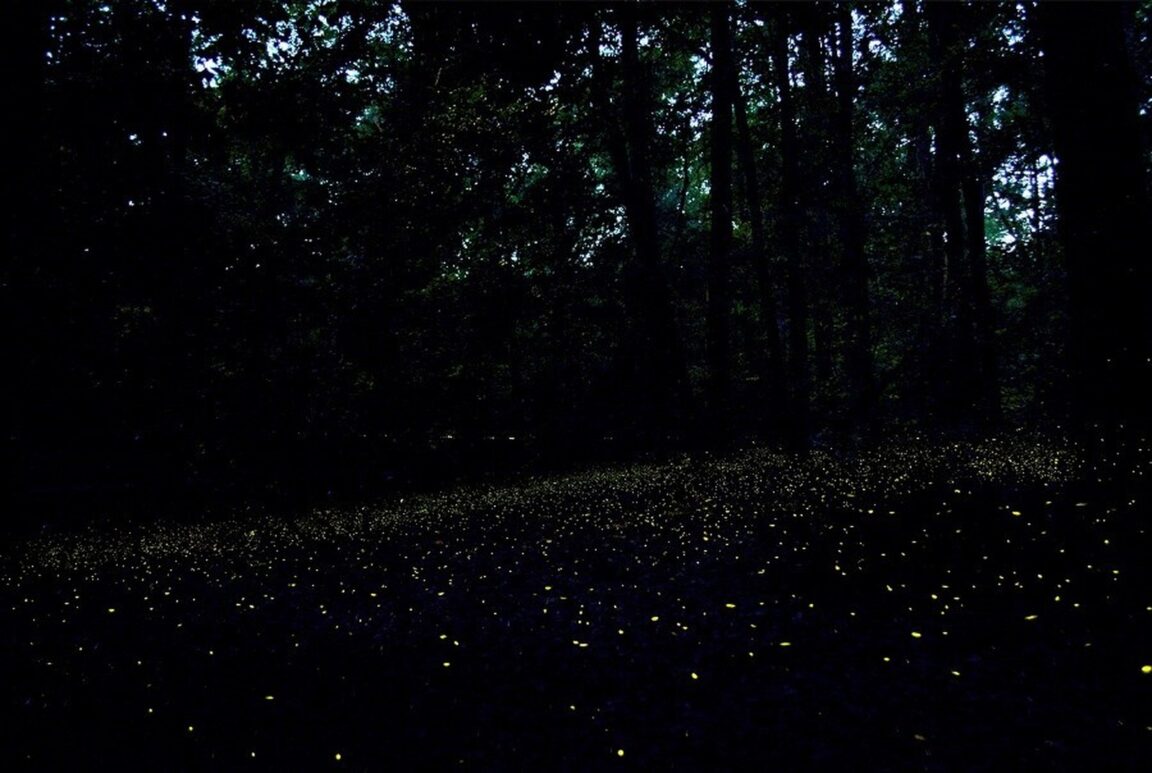
Of the more than 2,000 firefly species found worldwide, only three species in North America flash in true synchrony, and Congaree protects one of the few places where the habitat and the viewing conditions line up. The males rise after dark and pulse together, so waves of light roll through the bottomland hardwood forest instead of the random blinking you see in a summer garden. The park service notes that viewing is usually best just after dark, between about 9:00 p.m. and 10:00 p.m., and that rain can slow or stop the display for an evening, because thunderstorms are common in South Carolina in late spring.
The viewing area is small, the forest floor habitat is fragile, and demand is far larger than the parking lots. That is why the park runs a managed event rather than open access. During the 2026 event, 145 passes were available for each night, each pass admitting one standard vehicle that fits a normal parking space, with up to 8 passengers. Recreational vehicles, trailers, large vans and buses were not admitted. Passes were non transferable, valid only for the date and the person named, and could be scanned only once.
How Does the Firefly Lottery Actually Work?
The sequence matters more than anything else in this guide, so set reminders around it. In 2026 the lottery opened at 10:00 a.m. Eastern on Tuesday, April 7 and closed at 10:00 a.m. Eastern on Tuesday, April 14. Entries were limited to one per household and were made through the Recreation.gov ticket page for the park. Every applicant paid a $1 non refundable service fee to enter. Applicants drawn in the lottery were then charged the remaining $24 event fee, making $25 in total, and everyone was notified on Friday, April 17 whether they had won a pass or not.
Expect the 2027 lottery to follow the same shape: an early to mid April window of about a week, a small entry fee, results within days, and per night numbers in the same range. The exact dates, the pass count and the fees are set fresh each year, so none of the 2026 figures are a promise. The park directs all lottery questions and technical help to Recreation.gov on 877-444-6777, because the park itself does not run the lottery system. If you miss out, do not assume a resale market exists: passes are tied to the named holder and scan once only, so a pass offered by a stranger is very likely worthless at the gate.
What Changes in the Park on Event Nights?
Firefly season reshapes an ordinary Congaree visit, and day visitors feel it first. From May 13 through the end of the 2026 event, all day use visitors had to be off the trails, out of the parking lots and out of the park by 4:30 p.m. at the latest. At 4:30 p.m. each day the Harry Hampton Visitor Center, the boardwalk and the frontcountry hiking trails closed to everyone, along with the Bannister Bridge canoe launch and the Cedar Creek section between Bannister Bridge and the South Cedar Creek launch. The Longleaf and Bluff campgrounds closed for the event period, and no backcountry camping permits were issued at all.
Pass holders came back in the evening, with gates opening at 7:00 p.m. and closing to entry at 8:30 p.m. That early arrival is deliberate: it gives eyes time to adjust and lets staff settle everyone on the designated Firefly Trail before dark. If you are visiting Congaree in mid May or mid June without a pass, plan your hiking for the morning, because the park effectively ends its normal day in the mid afternoon during the event window. Our three day Congaree boardwalk itinerary shows how to pace the trails on ordinary days outside the event.
What Are the Rules After Dark on the Firefly Trail?
The etiquette list is short, strict and entirely about protecting a light sensitive mating display. Keep flashlight use to a minimum, use only a red mode or a red filter, and keep any light pointed at the ground. Cell phones may not be used in the viewing area at all, neither as a light nor for photos or video, so the display is something you watch rather than record. Stay on the designated Firefly Trail, and never catch or disturb the fireflies. No pets are allowed in the park during the event, though service animals are welcome. One rule surprises people: insect repellent cannot be applied after you arrive at the park, so apply it before you get there, at your hotel or at home, and bring long sleeves as your second line of defence against mosquitoes.
Dress for a warm, humid night in a floodplain forest. Closed shoes matter because you will be standing and shuffling in the dark on a set route, and a light layer helps once the temperature drops after sunset. Arrive with dinner already eaten or planned back in Columbia, because the visitor center is closed during the event and there is no food service at the park entrance.
What Should You Do in Congaree During the Day?
The fireflies are a night event, and the park earns the trip in daylight too. Congaree protects the largest intact expanse of old growth bottomland hardwood forest in the southeastern United States, with some of the tallest trees in the east growing out of a floodplain shaped by the Congaree and Wateree rivers. Start at the Harry Hampton Visitor Center, open 9:00 a.m. to 5:00 p.m. daily and closed on federal holidays, for exhibits, trail conditions and the day’s flood picture.
The Boardwalk Loop is the essential walk: 2.4 miles of elevated boardwalk from the visitor center through tupelo and cypress, past the knees that rise from dark water, and suitable for almost every visitor when it is dry. Allow one to two hours, longer if you stop for barred owls, woodpeckers and turtles. For more distance, the Weston Lake Loop extends the boardwalk into a longer forest walk of about 4.4 miles, and the Oakridge Trail pushes deeper still at roughly 6.6 miles. Paddlers can put in on Cedar Creek outside the event closure window and drift under the canopy, which is the closest the park gets to showing you how the forest looks from the water that built it. Readers building a wider national parks trip can compare the experience with our guide to Capitol Reef for first time visitors, another park where one anchor walk organises the whole visit.
When Is Flood Season, and Which Dates Should You Avoid?
Congaree is a floodplain first and a forest second, and water sets the terms in every season. The Congaree and Wateree rivers spill into the park many times in a typical year, most often in the cooler months and after heavy rain, and low sections of trail and boardwalk can go under water quickly. Flooding is not a reason to skip the park, because the elevated boardwalk was built for exactly this landscape, but it is a reason to check the park conditions page on the morning of your visit and to accept a shortened route without argument.
For a firefly trip specifically, the risk window is different. The event sits in late spring, when afternoon thunderstorms are routine, and a wet evening can mute the display even for pass holders. Building two or three nights in Columbia rather than one gives you a buffer if your single lottery night is rained out and you want to try the forest again on a non event evening later in the season, when the fireflies may still be active at lower intensity outside the managed area. In high summer, heat, humidity and mosquitoes make midday hiking genuinely hard work, and in mid May to mid June without a pass, the 4:30 p.m. closure cuts the day short. The sweet spot for a non firefly visit is autumn, when the water is usually lower, the air cools and the boardwalk is at its best.
Where Should You Base Yourself, Columbia or Closer?
Columbia, the state capital, is the practical base. The park entrance at 100 National Park Road, Hopkins, is about 18 to 20 miles and roughly 30 minutes by car southeast of downtown, reached from Interstate 77 at Exit 5, then SC Highway 48, Bluff Road, for about 8 miles and Old Bluff Road for about 4.5 miles to the entrance. There is no public transport to the park, so a car is essential, and that short drive is the price of a full choice of hotels, restaurants and a supermarket run for water and snacks.
Staying in Columbia also solves the event night logistics neatly. You can hike in the morning, rest through the heat of the afternoon, eat an early dinner in the Vista or on Main Street, apply repellent before you leave, and drive out in time for the 7:00 p.m. gate opening. Hopkins and the small communities nearer the park have very limited lodging, so most visitors sleep in Columbia regardless. If you prefer to camp on a non event trip, the park campgrounds and permitted backcountry camping put you inside the forest, but remember both options close completely during the firefly event, so a lottery trip is a hotel trip by definition.
What Does a Firefly Trip to Congaree Cost?
Congaree is one of the cheapest national park trips in the country. Entry is free, with no entrance fee and no timed reservation for a normal day visit, and the park is open 24 hours a day outside event restrictions. The firefly event is the only charge the park itself imposes: $1 to enter the lottery and $24 more if you win, $25 in total per vehicle, not per person, which makes a full car of up to 8 people remarkable value. Your real budget goes on the Columbia hotel, fuel for the 30 minute drive each way, and food. There are no concessions selling meals at the trailhead, so carry water and snacks in, and take everything out again.
Frequently Asked Questions
When is Congaree firefly season?
For roughly two weeks between mid May and mid June each year. The managed viewing event in 2026 ran May 13 to 20. The park announces each new season’s dates in spring, and the 2027 dates had not been announced when this guide was checked on November 19, 2026.
How do I get a firefly event pass?
Through the lottery on Recreation.gov, which in 2026 opened April 7 to 14, cost $1 to enter and $24 more if drawn, and offered 145 passes per night with results on April 17. Entry is limited to one per household, and the park does not run the lottery itself.
Can I see the fireflies without a pass?
Not inside the managed event area on event nights. Entry after the 4:30 p.m. closure requires a valid pass, and day visitors must leave by 4:30 p.m. Fireflies can be active elsewhere in the region around the season, but the protected synchronous display viewing is the ticketed event on the Firefly Trail.
Can I take photos of the synchronous fireflies?
No. Cell phones may not be used in the viewing area for light, photos or video, and flashlights are limited to red mode pointed at the ground. The rules protect the display and everyone else’s night vision, so plan to watch rather than shoot.
Is the Boardwalk Loop open during firefly season?
During the day, yes, but it closes at 4:30 p.m. daily throughout the event period, along with the visitor center and frontcountry trails. Event viewing happens on the designated Firefly Trail, not as a free roam of the boardwalk after dark.
What if it rains on my event night?
Go anyway unless the park says otherwise, but set expectations: the park notes that thunderstorms are common in the season and rain can slow or stop firefly activity for the evening. Passes are date specific, which is why a multi night Columbia base is the sensible hedge.
Sources checked November 19, 2026: National Park Service, Congaree synchronous fireflies page, park fees and visitor information at nps.gov/cong, and the Recreation.gov lottery terms quoted there. Dates, pass numbers and fees are set each year, so confirm the new season on nps.gov before entering.