 Omar Haddad
No traveller is paying Norway’s visitor contribution yet, and anyone who tells you it is already on hotel bills is ahead of the facts. Norway’s parliament passed the Visitor Contribution Act in June 2025 and the law took effect on 1 July 2026, but it is a permission, not a national tax: each municipality must prove that tourism is straining its shared infrastructure, submit a spending plan, win approval from the Ministry of Trade, Industry and Fisheries, and pass its own local regulation before a single krone can be charged. On 28 October 2026 the ministry approved the first three: Tromsø, Vågan in the Lofoten Islands, and Stranda, the municipality that holds the Geirangerfjord. Even they cannot collect before 1 January 2027. This guide explains the opt in rule, the two collection channels, and which destinations are genuinely first in line.
Quick Facts
- Law: Visitor Contribution Act, passed by parliament in June 2025, in force from 1 July 2026
- Maximum rate: Up to 3 percent of the accommodation price, set locally by each approved municipality
- First approvals: Tromsø, Vågan (Lofoten) and Stranda (Geirangerfjord), plans approved by the ministry on 28 October 2026
- Earliest collection: 1 January 2027, and only after each town adopts its local regulation. Tromsø’s plan sets the fee at 3 percent
- Covered stays: Hotels, guesthouses, apartments, holiday homes and short term rentals in approved municipalities
- Exempt: Motorhomes, caravans, leisure boats and tents, including wild camping under the right to roam
- Cruise passengers: Not covered by the municipal scheme as passed. A separate, centrally designed cruise fee is in preparation, targeted for 2027, with no rate set yet
- Use of money: Ring fenced for tourism related shared goods such as trails, toilets, parking, signage, waste handling and visitor facilities
- Review: The scheme is due for review after three years
How does the municipal opt in rule actually work?
The Act hands municipalities a right to apply, not an instruction to charge. The sequence has four gates, and a destination must clear all of them. First, the municipality documents what the law calls genuine pressure on public goods and infrastructure: the toilets, trails, car parks, waste systems and rescue capacity that visitor numbers overwhelm in small fjord and Arctic communities. Second, it writes a plan showing how contribution revenue would be spent on those shared goods. Third, the Ministry of Trade, Industry and Fisheries approves the plan. Fourth, the municipal council adopts a local regulation, and only then can accommodation providers in that municipality add the fee.
That design was a political choice. Parliament considered and rejected a broader nationwide hotel tax before settling on the local model, which targets the hotspots feeling the strain and leaves the rest of Norway untouched. The practical consequence for travellers is that Norway will not have one tourist tax. It will have a patchwork: a fee in one fjord village, nothing in the next valley, and different start dates town by town as applications are approved through 2027 and beyond. The ministry is already processing further applications, including Bodø, Lyngen, Karlsøy and Vega, plus a joint plan from the six Lofoten municipalities of Røst, Værøy, Moskenes, Flakstad, Vestvågøy and Vågan.
Which destinations can charge it first?
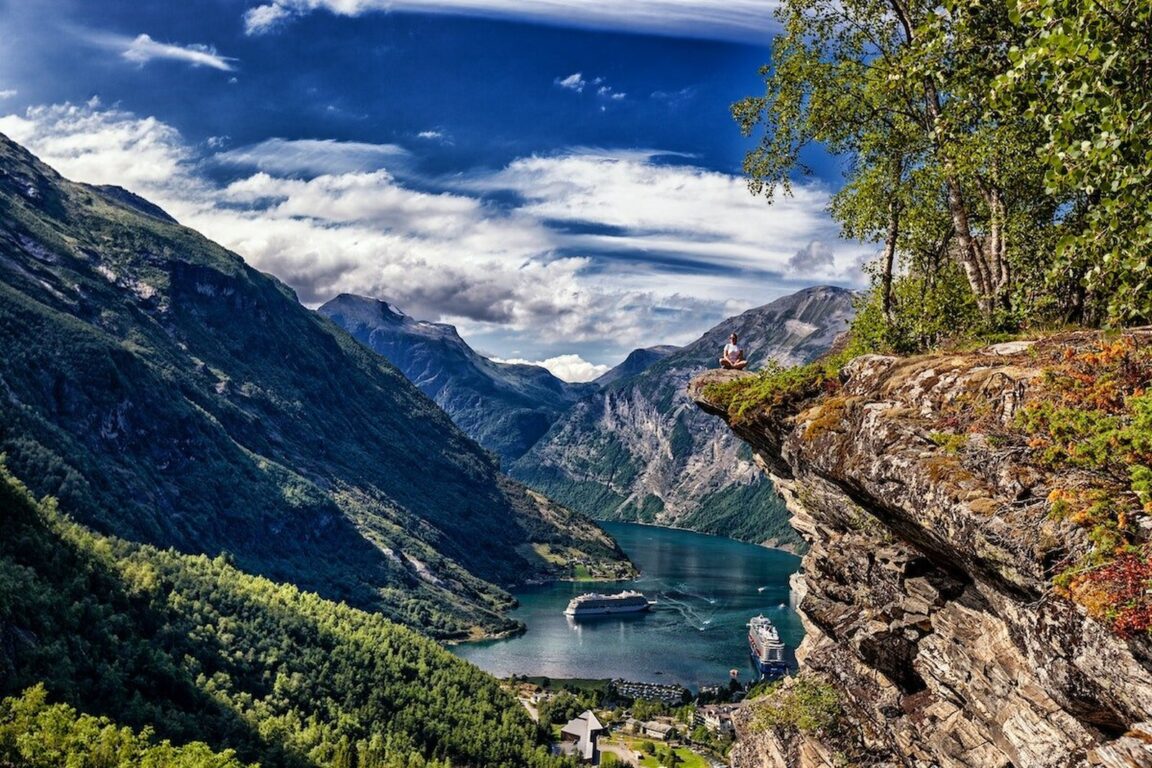
As of November 2026, the honest list has three names on it. Tromsø, the Arctic city and northern lights capital, is the largest of the first approvals, and its plan sets the contribution at the maximum 3 percent of the accommodation price across hotels, apartments, holiday homes and other short term rentals. Vågan, the Lofoten municipality that contains Svolvær and Kabelvåg, is the second; its approval sits alongside a joint application from all six Lofoten municipalities, which signals where the archipelago as a whole is heading. Stranda, home to Geiranger and the Geirangerfjord, is the third, and the clearest fjord case: a village of modest resident numbers hosting one of the most visited fjords in Europe.
Note what approval does and does not mean. The ministry announcement of 28 October 2026 approved the plans; it did not start the meters. Each of the three must still adopt its local regulation, and collection can begin on 1 January 2027 at the earliest. A December 2026 trip to Tromsø, Svolvær or Geiranger pays no visitor contribution, whatever a booking site’s fine print implies. A trip in 2027 to those towns probably will, at up to 3 percent on the accommodation price: noticeable on a week of Arctic hotel rates, trivial on a single night, and in every case payable as part of the stay rather than as a separate border or airport charge.
Beyond the first three, treat every other named destination as an expectation, not a fact. Bergen and Ålesund are routinely listed in coverage as likely adopters because of their cruise and city break volumes, and the wider Lofoten municipalities have a live joint application, but none of them held an approved plan at the time of writing. Our guides to the Lofoten Islands and a first trip to Oslo cover the two ends of that spectrum: Lofoten, where the fee is coming, and the capital, which is not among the early movers.
What does the accommodation channel cover, and what is exempt?
In an approved municipality, the contribution attaches to paid overnight accommodation: hotels, guesthouses, hostels, apartments, holiday homes and short term rentals booked through platforms. It is calculated as a percentage of the accommodation price, up to the 3 percent ceiling, with the local regulation setting the exact figure. Tromsø has chosen the ceiling. Travellers will see it as a line on the accommodation bill in an approved town, collected by the provider, in the same practical fashion as a city tax elsewhere in Europe.
The exemptions are as Norwegian as the law itself. Motorhomes and caravans are out. Leisure boats are out. Tents are out, including wild camping, a direct protection for allemannsretten, the right to roam that lets anyone pitch a tent in uncultivated land under set conditions. A traveller crossing Lofoten with a tent and a rucksack pays no visitor contribution at all, while the same traveller in a Svolvær hotel pays 3 percent. Whether that split is fair is a live local argument; that it is deliberate is not in doubt.
What about cruise passengers?
Cruise is the unfinished half of the scheme, and the point where most summaries go wrong. The original government bill did not include a cruise fee, and the municipal accommodation charge does not capture a passenger who sleeps on a ship. A separate cruise contribution is being designed as a central regulation rather than a municipal one, in part because an itinerary crosses many municipal boundaries in a single voyage, and in part because the cruise debate in Norway runs on emissions and port pressure as much as on money. Collection is targeted for 2027, but no rate has been set and no final design published at the time of writing.
Until that regulation exists, a cruise passenger calling at Geiranger, Bergen or Tromsø in 2026 or early 2027 pays no visitor contribution for the port call itself, though anyone adding a pre or post cruise hotel night in an approved municipality from 2027 will pay the accommodation fee on that night like any other guest. If a cruise line adds a Norway visitor fee line to a 2027 fare before the central regulation is published, ask what legal charge it represents; at present there is no set cruise rate for it to be.
Frequently Asked Questions
Is Norway’s tourist tax already in effect?
The law took effect on 1 July 2026, but no traveller pays yet. The first three municipal plans, for Tromsø, Vågan and Stranda, were approved on 28 October 2026, and collection can start on 1 January 2027 at the earliest, after local regulations are adopted.
How much is the Norway visitor contribution?
Up to 3 percent of the accommodation price in a municipality that has opted in and been approved. Tromsø’s approved plan sets its fee at the full 3 percent. There is no charge at all in municipalities without an approved plan.
Do cruise passengers pay the visitor contribution?
Not under the municipal scheme. A separate, centrally designed cruise fee is in preparation with collection targeted for 2027, and its rate has not been set. Do not treat any current cruise line surcharge as this fee.
Are camping and motorhomes exempt?
Yes. Tents, including wild camping under the right to roam, motorhomes, caravans and leisure boats are all exempt. The charge falls on paid accommodation such as hotels and short term rentals in approved municipalities only.
What is the money spent on?
By law it is ring fenced for the shared goods tourism pressures: hiking trails, public toilets, parking, signage, waste systems and visitor facilities, as set out in each municipality’s approved spending plan.
Photo: The Geirangerfjord in Stranda municipality, one of the first three approved for the visitor contribution, with cruise ships at Geiranger. Photo by Damir Spanic on Unsplash, Unsplash License.