 Rafael Santos
St Gilgen in winter is two different villages on the same day, and planning well means knowing which one you are booking. Between 10:00am and 4:00pm in Advent it is a day trip village, with bus 150 dropping Salzburg visitors at the Zwolferhorn cable car station and the painted Baroque market filling the church square. Before the first bus and after the last boat, it is a quiet lakeside village of under 4,000 people on the northwest shore of the Wolfgangsee, with the market lights reflecting on dark water and nobody in the lanes. The season math is simple: the Wolfgangsee Advent runs from November 20 to December 20, 2026, Wednesday to Sunday only, the Zwolferhorn cable car reopens for winter on November 20 after its maintenance closure, and both shut again in the gaps the calendars below spell out. Stay overnight if you can. The village rewards it out of proportion to its size.
Quick Facts
- Where: St Gilgen, on the northwest shore of Lake Wolfgang (Wolfgangsee) in the Salzkammergut, Salzburg state, Austria
- The Mozart link, stated accurately: Mozart mother, Anna Maria Pertl, was born here, and his grandfather built the district court house in 1718 to 1720. Mozart himself never visited St Gilgen
- Wolfgangsee Advent 2026: Friday November 20 to Sunday December 20, 2026, in St Gilgen, St Wolfgang and Strobl, closed Mondays and Tuesdays except December 7 and 8, free admission, per the organizer
- St Gilgen market hours: Wednesday 1:00pm to 7:30pm (a small selection of stalls on the lake promenade), Thursday and Friday 11:00am to 7:30pm, Saturday and Sunday 10:00am to 7:30pm
- Zwolferhorn cable car: 1,522 metre summit, about 11 minutes up in red and yellow gondolas, winter season from November 20, 2026 to January 6, 2027, daily 9:00am to 4:00pm, closed for maintenance November 2 to 19, 2026 and January 7 to 29, 2027
- Cable car price 2026/27: Ascent and descent 37 euros adult, 21.50 euros child, tariffs valid from November 20, 2026, per the operator
- From Salzburg: Regional bus 150 from Salzburg main station via Hof and Fuschl to St Gilgen, continuing to Strobl and Bad Ischl; Advent boats link the three market villages in season
- Facts checked: November 19, 2026, against the Wolfgangseer Advent organizer, the Zwolferhorn cable car operator and Salzburg transport listings
What is actually Mozart about this village?
Less than the postcards imply, and more honestly interesting for it. St Gilgen calls itself the Mozart village, and the claim rests on family, not on the composer. His mother, Anna Maria Pertl, was born in the house on the square that is now the Mozart House, and his grandfather, Wolfgang Nikolaus Pertl, built the district court building between 1718 and 1720 and worked in the village. Wolfgang Amadeus Mozart himself never came to St Gilgen. That correction does not weaken the place; it reframes it. What you are visiting is the prosperous lakeside world the Pertl family belonged to, a Baroque village of painted facades and a parish church dedicated to Saint Aegidius, the Saint Giles who gives the village its name, set where the Salzkammergut lakes begin east of Salzburg.
The village scale is the other fact to hold onto. St Gilgen has under 4,000 residents and covers a large, mostly mountainous municipality, but the visitable centre is a few lanes around Mozartplatz, the church square and the lake promenade. Everything in this article, the market, the cable car valley station at Konrad-Lesiak-Platz 3, the boat pier and the bus stop, sits within an easy walk of everything else. That compactness is why the day crowd question matters so much: a village this small changes character completely between a Tuesday, when the Advent market is closed, and a Saturday at noon, when it is not.
How does the Wolfgangsee Advent actually run in 2026?
As a three village season, not a single market. The organizer, Wolfgangsee Tourismus, runs the Wolfgangsee Advent across St Gilgen, St Wolfgang and Strobl from Friday November 20 to Sunday December 20, 2026, and the rhythm is the planning fact most visitors miss: the markets are closed on Mondays and Tuesdays, with two exceptions, Monday December 7 and Tuesday December 8, 2026, when they open from 10:00am to 7:30pm. Admission is free in all three villages. In St Gilgen the week builds: Wednesday opens only a small, fine selection of stalls on the lake promenade from 1:00pm to 7:30pm, Thursday and Friday run 11:00am to 7:30pm, and Saturday and Sunday run the full day from 10:00am to 7:30pm.
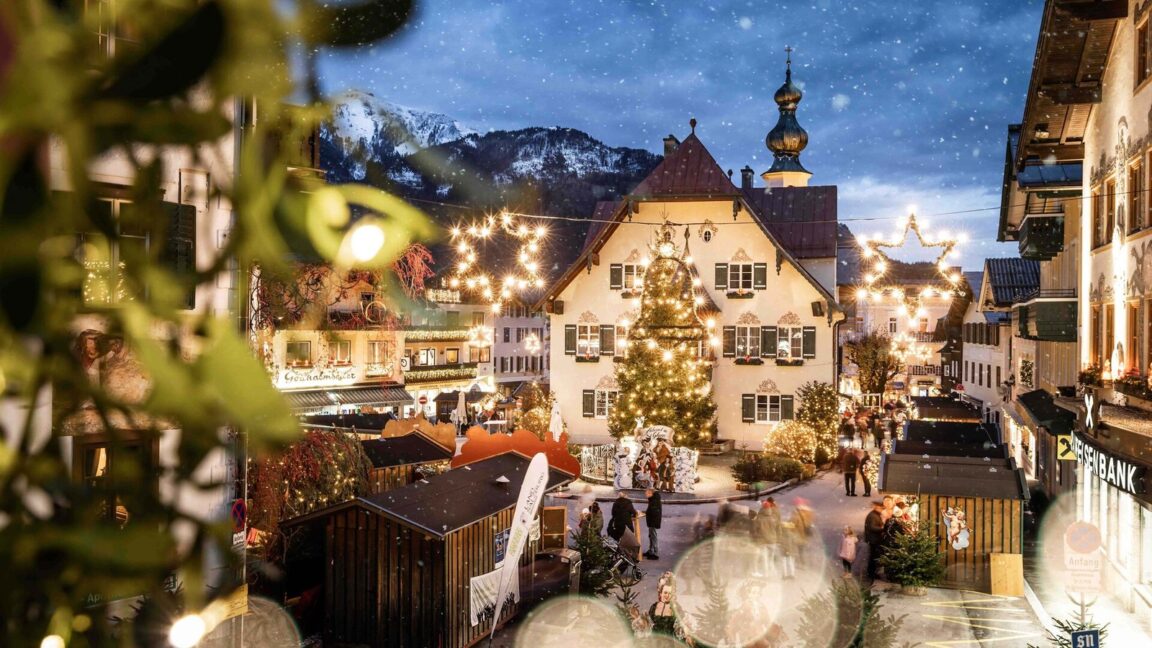
St Gilgen contribution to the trio is the Baroque one. The organizer describes Baroque interpretations of the Saint Nicholas story on the church square and traditional bellringers, colourfully and elegantly staged, with painted figures in the style of Baroque wall and ceiling painting defining the look of the market. Across the water, St Wolfgang counters with its Nativity village and the 16 metre Peace Light lantern floating in front of the village, the symbol of the whole Advent, and Strobl turns itself into a Nativity village along a shepherd path. The Lake Wolfgang boat service connects all three markets on market days, which turns a market visit into a small lake crossing itinerary, and the Schafberg cog railway runs a decorated Advent train from St Wolfgang up to the Schafbergalm station at 1,364 metres from Thursday to Sunday in the season. Travellers building a wider Austria winter around this should read our guide to Hallstatt, the lake village managing its own fame, two valleys south, and our winter circuit of Salzburg Gaisberg in winter for the city mountain day.
When does the Zwolferhorn fit, and what does it cost?
The Zwolferhorn is St Gilgen local mountain, 1,522 metres above the lake, and its cable car is the village vertical escape. The rebuilt lift, opened in 2020, runs 14 red and 14 yellow gondolas from the valley station in the village to the Horndl summit in about 11 minutes, is barrier free, and carries prams without complications, per the operator. At the top a circular hike of about an hour follows the Pillstein ridge trail, and in winter the mountain is a viewpoint and ski touring base rather than a piste resort: skis and snowboards are not transported on the cable car, so the descents belong to ski tourers who climb under their own power.
The calendar has a trap in it. The cable car closes for maintenance from November 2 to November 19, 2026, so an early November trip finds it shut, and it closes again from January 7 to January 29, 2027. In between, the winter season runs from November 20, 2026 to January 6, 2027, daily from 9:00am to 4:00pm, with a shorter Christmas Eve day to 2:00pm, and a second winter block follows from January 30 to March 31, 2027. The 2026/27 tariff, valid from November 20, 2026, prices the return ride at 37 euros for adults and 21.50 euros for children, with a single ascent at 32 euros. The planning conclusion is direct: pair the cable car with the market on a clear morning before the stalls open, because a 4:00pm last ride and a 7:30pm market close make the mountain first, market second order the only one that fits both into a short winter day.
What is the Salzburg base math, honestly?
Salzburg is the default base, and bus 150 is why it works. The regional bus runs from Salzburg main station through Koppl, Hof and Fuschl am See to St Gilgen, then continues around the lake to Strobl and Bad Ischl, so a Salzburg based traveller can be at the market without a car, and the organizer even arranges free bus travel to the Advent on December 18 to 20, 2026 with a limited free ticket through the Salzburg transport association. For St Wolfgang, the same corridor continues by changing at Strobl to bus 546. As a day trip it is clean, cheap and car free.
The cost of that convenience is timing. Day trippers arrive in a band from late morning, fill the church square and the promenade through the middle of the day, and leave before the early evening, which is precisely when the market is at its best: stalls lit, candles and stars reflected on the lake, and the Baroque figures doing the work they were painted for. Staying in St Gilgen inverts the trip. You get the village empty at breakfast, the cable car on the first gondolas, the market at opening and at dusk, and Salzburg becomes the day trip instead, an easy bus ride in the other direction. Lodging in a village of this size is finite and Advent weekends price accordingly, so the honest trade is money for hours: Salzburg saves money and spends the best hours on a bus, St Gilgen spends money and keeps them. For a one night Advent trip, the village wins. For a longer Salzburg stay with one market day, the bus wins, provided you stay to the 7:30pm close rather than leaving with the afternoon crowd. Our 3 days in Vienna itinerary covers the onward capital leg most Salzburg travellers add next.
What should a winter day in St Gilgen look like?
Start with the mountain on any clear morning: first gondolas at 9:00am, the Pillstein loop if the ridge is walkable in the day conditions, and down before the market crowds peak. Spend the middle of the day on the slow village material the day trippers rush: the Mozart House square, the parish church, the promenade and a long lunch indoors while the square is busiest. Take the Advent boat in the afternoon if the day sailing pattern suits, to St Wolfgang for the Peace Light lantern and the Nativity figures, and be back in St Gilgen for the last hour of the market, when the stalls are lit and the buses have gone. On a Monday or Tuesday, when the market is closed, the same village becomes a walking base only, and that is a fine day too, provided you booked it knowingly rather than discovering the closure at the bus stop.
Frequently asked questions
Did Mozart live in St Gilgen?
No. His mother, Anna Maria Pertl, was born here and his grandfather built and worked in the district court house, but Mozart himself never visited the village. The Mozart House and Mozartplatz commemorate his family, not a stay by the composer.
When is the Wolfgangsee Advent in 2026?
From Friday November 20 to Sunday December 20, 2026, in St Gilgen, St Wolfgang and Strobl, Wednesday to Sunday, plus Monday December 7 and Tuesday December 8. Admission is free. St Gilgen hours run from 1:00pm on Wednesdays and 10:00am on weekends, closing at 7:30pm.
How much is the Zwolferhorn cable car in winter 2026/27?
The return ride is 37 euros for adults and 21.50 euros for children under the tariff valid from November 20, 2026. The lift runs daily 9:00am to 4:00pm from November 20, 2026 to January 6, 2027, and is closed for maintenance November 2 to 19, 2026 and January 7 to 29, 2027.
How do you reach St Gilgen from Salzburg without a car?
Take regional bus 150 from Salzburg main station via Hof and Fuschl to St Gilgen, continuing to Strobl and Bad Ischl. For St Wolfgang, change at Strobl to bus 546. During Advent, boats also link the three market villages on market days.
Is one night enough?
One night is the highest value stay: it buys the market at dusk and the village before the day buses, which are the two experiences a day trip cannot have. Add a second night if you want the Schafberg Advent train and a full Salzburg day in the same trip.
Photo credit: The St Gilgen Advent market at dusk, with the painted market house, Christmas tree and illuminated stars above the stalls. Photograph by Mirja Geh, from the Wolfgangseer Advent site of Wolfgangsee Tourismus, the destination official tourism company. Used with credit.