 Kwame Mensah
Yes, a wheelchair user can stand on the Acropolis plateau beside the Parthenon, and the route is more straightforward than most visitors expect: a dedicated elevator on the north slope, installed in 2020, lifts visitors with mobility difficulties from a separate entrance up about 25 metres to the plateau north of the Erechtheion, where specially designed step free routes lead toward the Parthenon and the Propylaea. The catches are procedural rather than architectural. You must phone the site before you arrive, the elevator stops in strong wind and severe weather, and the plateau beyond the marked routes is ancient, uneven rock. Plan the call, pick a calm early slot, and ancient Athens becomes genuinely workable. This guide sets out the whole accessible core: the elevator, the south slope, the Acropolis Museum and the Ancient Agora.
Quick Facts
- The elevator: A special access lift for people with mobility difficulties and disabilities, in service since 2020 on the north side of the Acropolis, reached from a separate entrance north of the main west entrance via a route of about 350 metres, per the Greek Ministry of Culture’s site guide.
- Phone first: The Ministry asks elevator users to contact the site before arrival on +30 210 321 4172 or +30 210 923 8470. The service is suspended in severe weather and strong winds.
- Who may use it: Wheelchair users and people with diminished abilities, always accompanied by trained security staff in the lift, and also a parent attending two or more infants alone.
- On the plateau: Designed routes run west of the Erechtheion toward the north side of the Parthenon, with options to continue parallel to the Parthenon’s north colonnade or back toward the Propylaea. An accessible restroom sits at the end of one route.
- The south slope: Wheelchair accessible with an attendant’s help, entered at the junction of Dionysiou Areopagitou and Thrasyllou streets, passing the Theatre of Dionysos. An accessible WC is at the information centre at 18 to 20 Dionysiou Areopagitou.
- The museum: The Acropolis Museum, 300 metres from the site, is fully step free across all floors, with wheelchairs available at its entrance.
- Honest limit: The Ministry itself describes the Acropolis site as partially accessible. The designed routes are manageable; the wider plateau of worn marble and bedrock is not.
The elevator: how the system actually works
Start with the official source. The Greek Ministry of Culture’s guide to the site, at odysseus.culture.gr, describes the arrangement precisely. The elevator stands on the north side of the hill, about 350 metres from the main entrance, and serves a separate entrance north of the central west entrance. A visitor route of roughly 350 metres leads to it, the lift rises about 25 metres, and it deposits you on the plateau in the area north of the Erechtheion, which is to say already among the monuments, with the Parthenon a short roll to the south.
Three rules govern its use. First, phone ahead: the Ministry states that visitors should contact the site before arrival, on +30 210 321 4172 or +30 210 923 8470, both to confirm the lift is running and to arrange the staff escort, since wheelchair users are always accompanied by appropriately trained security staff in the elevator. Second, weather rules: the service does not operate in severe weather or strong winds, and the Ministry posts urgent notices on the site page when the elevator is taken out of service, so check that page on the morning of your visit as well as calling. Third, eligibility is defined but generous: people with mobility difficulties and disabilities, and a parent managing two or more infants alone. It is not a shortcut for the general queue, and staff do check.
Timing the visit: slots, heat and crowds
Acropolis entry is by timed ticket slot, and the accessible visit rewards the same strategy as any other, only more so. Book the earliest slot you can manage. Morning brings three advantages at once: the plateau is at its calmest, which matters when your route is a defined path that other visitors cross; the designed routes are at their least crowded for turning and pausing; and in summer you are off the exposed rock before the midday heat, which reflects hard off the marble and offers a wheelchair user no shade to retreat into. The elevator queue, such as it is, is also shortest early, since every lift journey is staff escorted and therefore paced.
Allow more time than an able bodied visitor, not less. The 350 metre approach route, the escorted lift ride and the plateau routes at a comfortable pace add up to a visit of around two hours for the hill itself. Build the Acropolis Museum into the same day only if energy allows; many visitors with limited stamina do better splitting the hill and the museum across two mornings, using the flat, pedestrianised Dionysiou Areopagitou promenade, one of Athens’ most pleasant step free walks, as the link between them.
On the plateau: the designed routes
From the elevator’s plateau landing north of the Erechtheion, the Ministry’s described routes run in a clear pattern. The first route heads west of the Erechtheion and the ancient Temple of Athena toward the north side of the Parthenon, which gives you the two great buildings in sequence and the famous view along the Parthenon’s flank. At its end you choose: turn left and follow a route running parallel to the Parthenon’s northern colonnade in an easterly direction, or turn right and roll back toward the Propylaea, the monumental gateway. An adequate restroom for visitors with mobility impairments sits at the end of the second branch of the route, a detail worth knowing before you start.
Set expectations honestly for the ground itself. These are designed, hardened routes across an archaeological plateau, not pavement. Worn marble is slippery, bedrock undulates, and off route areas remain rough ancient surface that no one should attempt on wheels. Stay on the marked paths, wear the visit at your own pace, and treat the Erechtheion’s Porch of the Maidens and the Parthenon’s north side as the twin high points: both are fully visible from the accessible routes, close enough to read the carving and the restoration work.
The south slope and the north slope on wheels
The hill’s approaches matter as much as the summit. The Ministry describes the south slope, the side with the Theatre of Dionysos and the Odeon of Herodes Atticus, as wheelchair accessible with the help of an attendant, entered through the main south entrance at the junction of Dionysiou Areopagitou and Thrasyllou streets, following the course toward the west passageway of the theatre. The north slope is likewise described as wheelchair accessible with an attendant’s help, through the specially designed entrance and exit for people with disabilities north of the main west entrance, with the Peripatos path running east as far as the guardhouse near Anaphiotika.
Two facilities complete the picture. The information centre at 18 to 20 Dionysiou Areopagitou, about 50 metres from the south slope entrance, provides a WC for visitors with disabilities. The Odeon of Herodes Atticus, the great stone theatre still used for summer festival performances, is viewed from the slope paths rather than entered at seat level; evening concert access has its own arrangements and is worth a separate enquiry if a performance is your goal.
The Acropolis Museum and the Agora: the barrier free pair
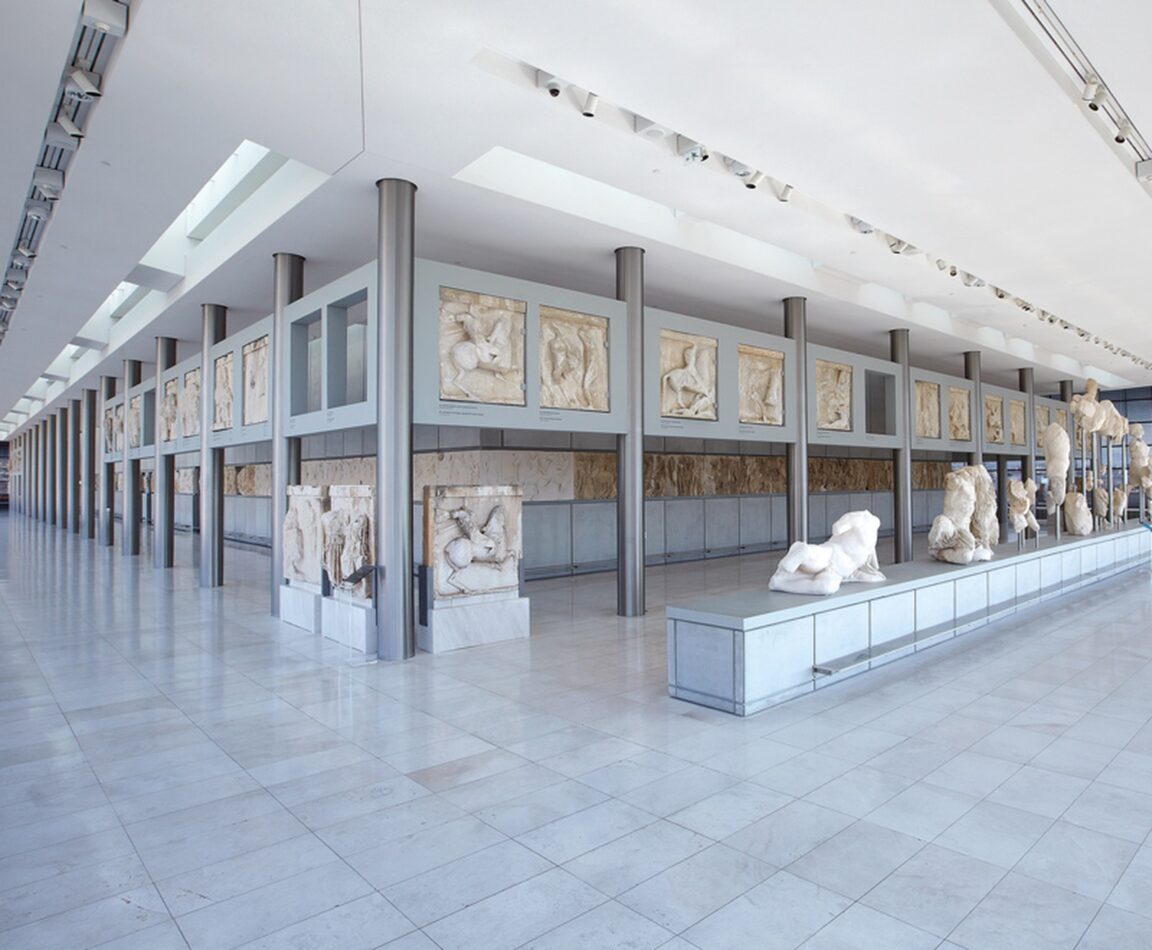
The Acropolis Museum is the accessible traveller’s best friend in Athens. Opened in 2009 on Makrigianni street, a few hundred metres from the south slope entrance, it is step free throughout: level entry, lifts to every floor, wide galleries and seating everywhere. Its top floor Parthenon Gallery is built to the temple’s exact orientation and dimensions, with the frieze mounted at eye level around a concrete core, so the sculpture that sits 100 feet up a hill outdoors can be studied from a wheelchair at reading distance. Wheelchairs are available at the entrance, and the museum runs tactile and accessibility programmes; check its site for the current offer.
Pair it with the Ancient Agora, the civic heart of classical Athens below the hill’s northwest slope. The Agora’s main paths are comparatively level dirt and stone, the Stoa of Attalos, rebuilt as the site’s museum, is the most approachable ancient building in the city, and the Temple of Hephaestus, the best preserved Doric temple in Greece, is viewed from a path circuit. For travellers building a wider Greek itinerary, our guide to Zagori’s stone villages covers the mountain northwest, while Pitigliano in Tuscany shows how another cliff town handles, and sometimes fails to handle, the same access questions.
A workable accessible day in ancient Athens
Put it together like this. The day before, phone the site to confirm the elevator and note the weather; wind is the usual spoiler. Arrive at the separate north entrance for your early timed slot, ride the lift with your escort, and walk the plateau routes slowly: Erechtheion first, then the Parthenon’s north side, then the Propylaea branch if energy holds. Descend the same way, rest on Dionysiou Areopagitou, and take the Acropolis Museum either as the afternoon’s cool second act or as tomorrow’s first. Keep the south slope theatre walk for the same outing only if the attendant assisted route suits your chair and your companion. Athens will still ask effort of you. But the effort is now planned rather than improvised, and the Parthenon from its own plateau is worth every phone call.
Frequently Asked Questions
Is there an elevator to the top of the Acropolis?
Yes. A dedicated elevator on the north slope, in service since 2020, lifts visitors with mobility difficulties about 25 metres to the plateau north of the Erechtheion. Phone +30 210 321 4172 or +30 210 923 8470 before arrival, and note it stops in strong wind and severe weather.
Is the Acropolis fully wheelchair accessible?
No, and the Greek Ministry of Culture says so plainly: the site is partially accessible. Designed step free routes cover the Erechtheion, the Parthenon’s north side and the Propylaea direction, but the wider plateau is uneven ancient rock and marble.
Who is allowed to use the Acropolis elevator?
People with mobility difficulties and disabilities, who are accompanied by trained security staff, and a parent attending two or more infants alone. It is not open to the general public.
Is the Acropolis Museum accessible?
Yes, fully. The Acropolis Museum is step free across all floors with lifts throughout, and wheelchairs are available at the entrance. Its Parthenon Gallery displays the frieze at eye level.
Can I visit the Theatre of Dionysos in a wheelchair?
The south slope, including the theatre area, is described by the Ministry as wheelchair accessible with the help of an attendant, entered at Dionysiou Areopagitou and Thrasyllou streets. An accessible WC is at the information centre nearby.
What is the best time for an accessible Acropolis visit?
The earliest timed slot of the day: calmest routes, shortest elevator wait, and in summer you are off the exposed plateau before peak heat. Always confirm the elevator is running that morning.