 Hana Kim
Monhegan Island is a granite speck about twelve miles off midcoast Maine where the plan for the day is written by a ferry timetable, a trail map and the weather: ride the Monhegan Boat Line out of Port Clyde in the morning, walk the village lanes to open artist studios, climb to the 1850 lighthouse and its museum, then follow the cliff trails around the island’s wild east side before the boat takes you back. There are almost no cars, no through roads and no chain anything. What there is, and what has drawn painters here for well over a century, is a working lobster harbour, some of the highest headlands on the Maine coast and light that changes by the hour. Stay overnight if you can. The island after the last day boat leaves is the version artists fell for.
Quick Facts
- Where: Monhegan Island, Maine, roughly twelve miles southeast of Port Clyde in the Gulf of Maine, administered as Monhegan Plantation in Lincoln County.
- Getting there: Passenger ferries only. The Monhegan Boat Line from Port Clyde is the year-round service, with crossings of about 55 minutes on the Elizabeth Ann and 70 minutes on the Laura B. Seasonal boats also run from New Harbor and Boothbay Harbor.
- Fares, checked on the operator’s site: Monhegan Boat Line lists $52 per adult round trip and $35 per child aged 2 to 12, with parking at the Port Clyde dock at $10 per day. Advance reservations are required.
- Cars: None for visitors. Ferries are passengers only, and the island is walked: dirt roads in the village and about 12 miles of marked trails beyond it.
- The art colony: Artists have summered and painted on Monhegan since the 1890s. Robert Henri, George Bellows, Edward Hopper and Rockwell Kent all worked here, and dozens of studios still open to visitors in season.
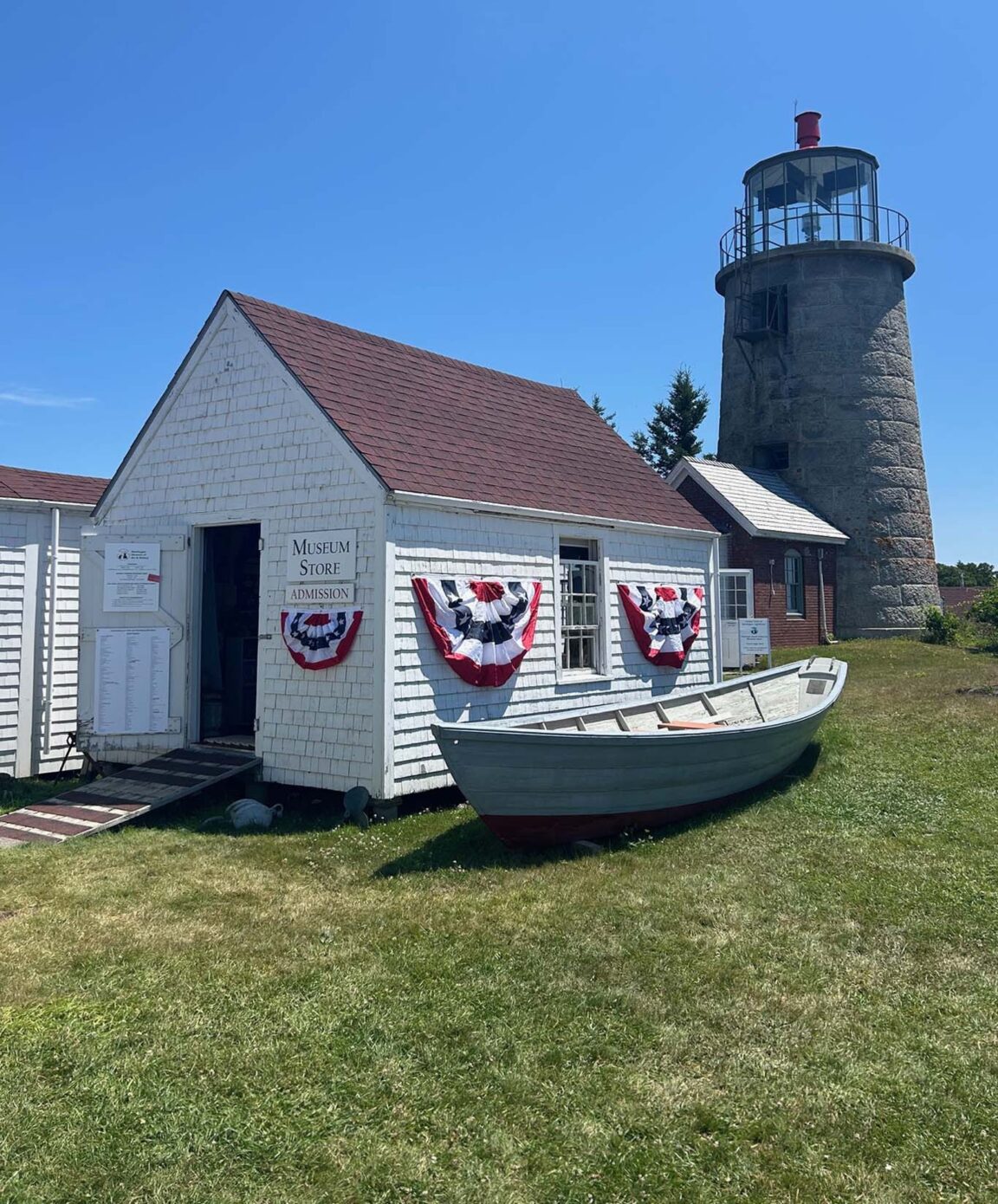
- The landmark: Monhegan Island Light, a granite tower first lit in 1824 and rebuilt in 1850, whose keeper’s house now holds the Monhegan Museum of Art and History at 1 Lighthouse Hill.
- Season: The full island, museum, inns and studios, runs from mid June to the end of September. The museum’s published 2026 hours are daily from June 15 to September 30, longest in July and August.
The crossing sets the terms
Every Monhegan trip begins on a dock, and the choice of dock shapes the day. Port Clyde, served by the Monhegan Boat Line, is the classic departure: the Laura B has carried passengers, mail and freight out to the island for generations, and the run is the shortest of the three mainland options. In high summer the line runs up to three sailings a day; in winter it drops to a few sailings a week, on a mail boat rhythm that tells you exactly how remote the island becomes once the season ends. Hardy Boat Cruises from New Harbor and Balmy Days Cruises from Boothbay Harbor add seasonal capacity, the Boothbay run being the longest at about ninety minutes.
Two practical consequences follow. First, book ahead: summer sailings sell out, and the boat line holds reserved tickets only until half an hour before departure. Second, plan the island around your return boat. A day trip on the mid morning sailing gives you roughly five hours ashore, enough for the village, the lighthouse and one good cliff walk, but not for the full trail circuit. Overnight guests get the island’s two best hours, the early morning and the evening after the day boats leave, when the harbour belongs to the lobster fleet and the studios close up for supper.
Why the painters came, and why they stayed
Monhegan’s art colony is not a marketing invention. Artists began arriving in the 1890s, drawn by the same combination that still works today: a compact fishing village, spruce woods, and an east shore of cliffs dropping straight into open Atlantic. Robert Henri and George Bellows painted the island’s surf and fishermen in the early 1900s, Edward Hopper produced some of his sparest watercolours here, and Rockwell Kent built a house and studio that still stand on the island. Three generations of the Wyeth family followed. The colony never became a resort scene, partly because the island never made itself easy: no bridge, no cars, winters that empty the place out.
The living version of that history is the island’s open studio culture. Through the summer, dozens of resident and visiting artists post hours on bulletin boards around the village, and you walk lane to lane, ducking into converted fish houses and purpose built studios to see work made within sight of where you are standing. The Monhegan Museum of Art and History, up at the lighthouse, anchors the story with exhibitions of island art alongside displays on fishing, the lighthouse service and the island’s natural history. Its Rockwell Kent and Jamie Wyeth material alone justifies the climb.
Lighthouse Hill and the museum
The walk from the wharf up to Lighthouse Hill takes about fifteen minutes and is the island’s essential orientation. Monhegan Island Light is a plain, handsome granite tower, 47 feet tall with a focal plane 178 feet above the sea, automated in 1959 and still an active aid to navigation maintained by the Coast Guard. The museum owns the rest of the station: the 1874 keeper’s house, the oil house and the small museum store building in front of the tower, where a wooden dory sits on the grass and admission is taken in season.
Check the museum’s hours before you climb, because they are short and seasonal: in the published 2026 schedule the museum opens daily from June 15 to September 30, with the longest hours, 11:30 to 3:30, from July 1 to September 15, and shorter midday windows at the season’s edges. The Kent Stoddard Fitzgerald artists’ home and studio opens on a separate, smaller schedule of a few afternoons a week. On occasional summer days the tower itself opens for climbs; ask at the store. Even without the tower, the hill gives you the island in one view: village and harbour below, Manana Island across the gut, and the cliff shore running away to the east.
The cliff trails: the island’s other half
The village occupies Monhegan’s sheltered west side. The rest of the island, most of its roughly 700 acres, is conservation land threaded by about 12 miles of trails maintained by Monhegan Associates, the island land trust founded in 1954. Pick up the trail map, it is sold on the boat and around the village, and take the numbering seriously: the trails are well marked at junctions but the east side is genuinely rugged, with roots, ledges and surf at the bottom of the cliffs.
The classic circuit runs from the village through Cathedral Woods, a mossy spruce forest where generations of island children have built fairy houses at the bases of the trees, then out to the headlands. White Head and Black Head are the great viewpoints, cliffs rising well over 100 feet above the Atlantic, with Burnt Head on the south shore and the long walk to Christmas Cove and Lobster Cove, where the wreck of the tug D.T. Sheridan has rusted on the rocks since 1948, completing the set. Allow half a day for the full loop and carry water: there is none on the trails. In spring and autumn the island is also a famed birding stop, a rest point for migrating warblers crossing the Gulf of Maine, and the woods can be as full of binoculars as of easels.
Eating, sleeping and the working harbour
Monhegan feeds its visitors simply and well. The village has a small cluster of options in season: inn dining rooms, a cafe culture built around the island’s coffee roasting, pizza and sandwiches near the wharf, and the Monhegan Brewing Company pouring small batch ales a short walk from the dock. The Island Inn, the big shingled hotel above the harbour, and the Trailing Yew and Shining Sails guesthouses cover most overnight stays, alongside rental cottages booked well ahead for July and August. Book ferries and beds together: in peak weeks either can strand the other.
Remember that this is a working island first. Lobstering is the economy, the harbour is a workplace, and the island’s year round population is only a few dozen people who haul traps, run the boats and keep the place functioning through winter. Lobster season here traditionally pauses in summer, which is why the harbour looks peaceful in July; the fleet you see is resting, not retired. Visitors who respect the working rhythms, staying off private wharves and giving the trucks their narrow roads, get the warmest version of the island.
Day trip or overnight?
If Monhegan is one stop on a midcoast road trip, a day trip from Port Clyde is a complete experience: lighthouse, museum, studios and one headland walk fit comfortably between boats, and you can pair the sailing with the mainland’s own charms. Our guide to Ocracoke Island covers another ferry only village with the same car free rhythm, and Block Island makes the natural next comparison for New England island hopping. But Monhegan rewards the overnight stay more than either: the sunset from White Head, the harbour at dawn, and a second day for the full trail circuit turn a scenic excursion into the slow island the painters actually knew. Whenever you go, check both the ferry schedule and the museum hours on the operators’ own sites before you set out, because on Monhegan those two timetables are the whole plan.
Frequently Asked Questions
How long is the ferry to Monhegan Island?
The Monhegan Boat Line crossing from Port Clyde takes about 55 minutes on the Elizabeth Ann and 70 minutes on the Laura B, per the operator. The seasonal Boothbay Harbor run takes about ninety minutes.
Can you take a car to Monhegan Island?
No. All ferries are passengers only, cars are not permitted for visitors, and the island is explored on foot via village roads and about 12 miles of trails.
What does the Monhegan ferry cost?
Monhegan Boat Line lists $52 per adult round trip and $35 per child aged 2 to 12, plus $10 per day for parking at the Port Clyde dock, checked on the operator’s site in November 2026. Fares change, so confirm when you reserve.
When is the Monhegan Museum open?
The Monhegan Museum of Art and History publishes a season from June 15 to September 30, with daily hours of 11:30 to 3:30 in July and August and shorter midday hours in June and late September.
Is one day enough for Monhegan?
One day covers the village, lighthouse, museum, studios and one cliff walk. Stay overnight for the full trail circuit, the evening light and the island after the day boats leave.
What should I bring for the trails?
Sturdy shoes, water, and layers. The east side trails are rooty and exposed, there is no water on route, and Gulf of Maine weather changes fast even in July.