 LeVar Thomas
Isle au Haut is the half of Acadia National Park that most visitors never see. About half of this rugged island off Stonington, Maine, is federal park land, reached only by a passenger mail boat, with no auto ferry, no bridge and no way to drive to it. What waits on the far side of the crossing is a working fishing island of fewer than 100 year-round residents, 18 miles of trails over rocky shoreline and wooded uplands, and a five-site campground that sells out on a single April morning. If Bar Harbor feels too busy, this is the Acadia trip to plan instead, and it has to be planned, because the boat, the campground and the island’s small scale reward preparation and punish improvisation.
Quick Facts
Where: Isle au Haut, an island about six miles long by two miles wide in Penobscot Bay, off Stonington, Maine. About half the island is part of Acadia National Park.
Access: Passenger-only mail boat from Stonington, run by Isle au Haut Boat Services. No auto ferry exists. The boat runs year-round to the town landing and, from mid-June through late September, also to Duck Harbor.
Boat rules: First come, first served, with no reservations. The National Park Service advises being at the dock at least half an hour before departure.
Camping: Duck Harbor Campground, five lean-to shelters, reservations required through Recreation.gov, maximum stay three nights, one stay per camper per calendar year, no pets.
Hiking: 18 miles of trails, from the 0.2-mile Deep Cove path to the 3.8-mile Duck Harbor Trail. Duck Harbor is the best starting point.
Services: A small store and post office with limited hours near the town landing. No private campgrounds. Pack in everything essential.
Facts checked: 21 November 2026, against the National Park Service pages for Isle au Haut and Duck Harbor Campground and Recreation.gov.
Why does Isle au Haut feel so different from the rest of Acadia?
Start with the name. Samuel Champlain called it the high island during his explorations of the Maine coast in 1604, and shell heaps along the shores record an American Indian presence long before that. Farmers, fishermen and boat builders arrived in numbers after the American Revolution, and in the 1880s a small summer community formed, drawn by the weather and the scenery. In 1943, heirs of that community’s founder donated portions of the island to the federal government as part of Acadia National Park. The other half stayed private, and it still holds summer residents and a year-round fishing community.
That split explains the island’s character. The park half is trail, bog, marsh and cliff. The private half is a real town in miniature, with a small store and post office near the landing and working boats in the harbour. Visitors are guests in both halves. The National Park Service notes that the number of visitors allowed in the Isle au Haut section of Acadia is limited, and the island’s infrastructure keeps numbers low without any gate at all: one boat, a handful of campsites, and trails that begin where the road effectively ends. Travellers who like the ferry-only rhythm of other island parks will recognise the pattern from Ocracoke Island in North Carolina, where the boat schedule sets the pace of the whole visit.
How does the mail boat from Stonington actually work?
The Isle au Haut Boat Services ferry is a mail boat first and a visitor boat second, and understanding that order makes the trip smoother. It sails year-round from Stonington to the Isle au Haut Town Landing. From mid-June through late September it also continues to the Duck Harbor Boat Landing, near the campground on the island’s southwest side. There is no auto ferry at any time of year, so every visitor arrives as a foot passenger, and everything you need comes on your back or in your arms.
Boarding is first come, first served. No reservations are taken for the boat, and the Park Service advises arriving at least half an hour before departure. In the campground season that half hour matters, because the same sailing carries islanders, mail, freight and the day’s campers. Check the current schedule directly with Isle au Haut Boat Services before travelling, on 207-367-5193 or through the operator’s site, since sailings change with the season. Bicycles can be carried for an additional fee, but only to and from the town landing, never to Duck Harbor, which shapes the cycling plan described below.
The landing you choose matters more than the sailing time. A camper arriving outside the Duck Harbor boat season, or on a sailing that stops only at the town landing, faces a hike of over four miles to reach the campground. In season, the Duck Harbor landing puts the campground about 300 feet away. Read your sailing against your reservation dates before you leave Stonington, not after you land.
How do you book Duck Harbor Campground?
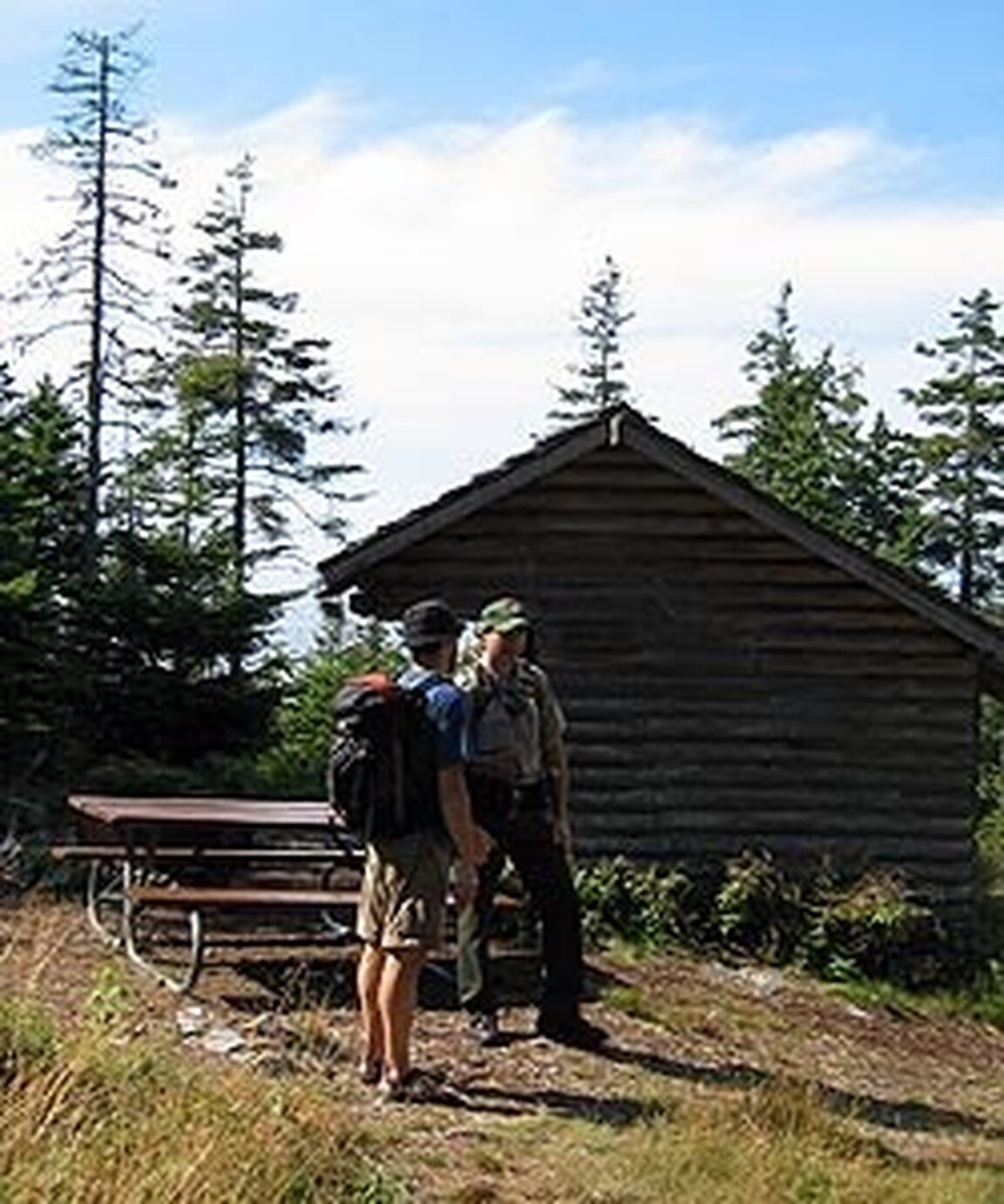
Duck Harbor is one of the smallest and most sought-after campgrounds in the national park system. It holds five sites, each with a three-sided lean-to shelter with a roof and floor, measuring 8 feet tall, 8 feet deep and 12.5 feet wide, plus a fire ring and a picnic table. Party size is limited to six people per site. Tents are allowed only if they fit inside the shelter, which turns packing into a geometry problem worth solving at home. This is backcountry camping, not car camping, and the Park Service says so plainly.
Reservations are required and are made in advance through Recreation.gov. The campground season runs from mid-June through mid-October, and the sites are released for booking on April 1 at 10 am Eastern, which is the single most important date in an Isle au Haut trip. Stays are capped at three nights and four days, and each camper is limited to one stay per calendar year, rules that spread the five shelters across as many parties as possible. Checkout is 11 am and quiet hours run from 10 pm to 8 am, with generator use prohibited.
The water situation deserves respect. A hand pump stands 1,600 feet from the shelters, and Recreation.gov warns that there is no potable water source at the campground and that the pump supply may not be available, so carry treatment and a reserve. Composting toilets serve the sites. No pets are allowed in the campground, all trash must be carried out, and firewood must be dead and downed wood collected near the campground rather than brought from the mainland, a rule that slows the spread of non-native insects. Campers who miss their arrival should call the park, because a party that has not arrived by 11 am the day after its scheduled arrival can lose the reservation and incur a service fee.
Which cliff trails should you walk first?
Eighteen miles of trails cross the park half of the island, exploring rocky shorelines, wooded uplands, marshes, bogs and a mile-long freshwater lake, Long Pond. The Park Service is direct about conditions: be prepared for rough trails, bring proper foot gear, warm clothing and rain gear, and expect temperatures on the island to average about 10 degrees Fahrenheit cooler than the mainland. Duck Harbor, at the island’s southwest, is the best starting point, and the southern trail cluster is where a short stay should concentrate.
The southern loop: Western Head, Cliff and Goat trails
The classic half-day circuit strings together the shore paths at the island’s southern end. The Western Head Trail runs 1.3 miles, rated moderate, along the shore at Western Head, the island’s exposed southern tip. The Cliff Trail, 0.7 miles and moderate, keeps to the high rocky edge, and sturdy shoes are not optional on its stones. The Goat Trail, 2.1 miles and moderate, loops back toward Duck Harbor through marsh country. Together they deliver the island’s signature walking: spruce forest opening suddenly onto cobble beaches and headlands, with open Atlantic beyond. The Park Service birding notes for the island pick out this same southern shore, where the rocky coast around Western Head and the Cliff Trail is the place to scan for cormorants, sandpipers and terns in season.
The longer lines: Duck Harbor Trail and Long Pond
The Duck Harbor Trail is the island’s spine, 3.8 miles, rated moderate, linking the town landing side of the island with Duck Harbor. It is the route campers walk when the boat does not serve Duck Harbor, and as a day hike it gives the full cross-section of the island, forest, bog bridges and shore. The Long Pond Trail runs 3 miles, moderate, to the mile-long freshwater lake. Duck Harbor Mountain, 1.2 miles and rated difficult, is the short, steep climb near the campground. For an easy hour, Eben’s Head offers 0.8 miles of gentler walking, and the Deep Cove path is a five-minute, 0.2-mile stroll. Bowditch at 2 miles, Median Ridge at 1.8 miles and Nat Merchant at 1.1 miles fill out a second or third day without repeating ground.
What about the town side of the island?
Not everything on Isle au Haut is park. The town landing area holds the small store and post office, both on limited hours, and the ranger station sits a short walk from the landing. The island has five miles of paved road and seven miles of rough, unpaved road. Mountain bikes are the recommended machine, bicycles are prohibited on hiking trails, and the ferry’s bicycle rule, town landing only, means a cycling day starts and ends in the village rather than at Duck Harbor. A practical split for a two-night stay is one day on the southern trails from the campground and one day walking or riding the roads to the town side, the store, and the Eben’s Head shore. Travellers building a wider Maine and Great Lakes island itinerary can pair this trip with Isle Royale in Lake Superior, the other great ferry-only park island in this season’s coverage, or with Block Island off Rhode Island for a softer, road-served contrast.
How should you time a visit?
The campground season, mid-June through mid-October, is also the season when the boat serves Duck Harbor, roughly mid-June through late September, and that overlap is the natural window for a camping trip. Day trips are possible whenever the boat runs, which is year-round to the town landing, but a winter or early spring day visitor walks the town side and the road network rather than basing at Duck Harbor, and must count the four-mile gap carefully if aiming for the southern trails. Whatever the month, build the day backwards from the return sailing, carry food rather than counting on the store’s limited hours, and treat the weather margin seriously on an island that runs cooler than the mainland in every season.
Frequently Asked Questions
Can you drive to Isle au Haut or take a car on the ferry?
No. There is no auto ferry and no road connection. The Isle au Haut Boat Services boat from Stonington is passenger-only, and visitors explore on foot or by bicycle.
Do you need a reservation for the mail boat?
No. The boat is first come, first served and takes no reservations. The National Park Service advises arriving at the Stonington dock at least half an hour before departure, and checking the current schedule with the operator before travelling.
How do Duck Harbor Campground reservations work?
All five lean-to sites must be reserved in advance through Recreation.gov, with the season’s sites released on April 1 at 10 am Eastern. Stays are limited to three nights, and each camper may stay only once per calendar year.
Is there drinking water at Duck Harbor Campground?
There is no potable water source at the campground. A hand pump stands about 1,600 feet from the shelters, but its supply may not be available, so bring treatment and carry a reserve.
Can dogs come to Isle au Haut?
Dogs may travel on the boat, but pets are not allowed in Duck Harbor Campground. Day visitors should check current park rules for trails before bringing a dog ashore.
What is the best base for hiking on Isle au Haut?
Duck Harbor, in the island’s southwest, is the starting point the National Park Service recommends. It sits beside the campground and the southern trail cluster of Western Head, Cliff and Goat trails.
Facts checked 21 November 2026 against the National Park Service and Recreation.gov. Ferry schedules change with the season, so confirm sailings with Isle au Haut Boat Services before travelling. Featured image: a Duck Harbor lean-to shelter with a park ranger and a camper, Isle au Haut, Maine. Photo: National Park Service (NPS Photo), via nps.gov, used with credit.