 Rafael Santos
If you have one museum day in Lima, spend it at the Museo Larco in Pueblo Libre. Founded in 1926 by the archaeologist Rafael Larco Hoyle and housed in an 18th century viceregal mansion built over a pre-Columbian pyramid, the museum tells more than 5,000 years of ancient Peruvian history in a single, calm visit. It is open every day of the year, including public holidays, from 9am to 7pm, and one ticket covers the permanent exhibition, the famous Visible Storage storerooms and the Checan Erotic Gallery. General admission is S/50 at the door, with a discount for buying online in advance, and the gardens and cafe restaurant on the terraces make it as much a place to linger as a place to look.
Quick Facts
- Address: Avenida Simon Bolivar 1515, Pueblo Libre, Lima, with the visitor entrance on Calle Navarra 169, opposite Parque Larco
- Opening hours: Monday to Sunday, 9am to 7pm, including public holidays; shorter hours, 9am to 6pm, on 24, 25 and 31 December and 1 January, and 9am to 5pm on 1 and 2 December 2026
- Admission: General S/50; seniors over 60 S/35; students and ages 9 to 17 S/25; children ages 3 to 8 S/1; under 3s free. Online advance tickets carry a discount and preferential access
- Ticket includes: Permanent Exhibition, Visible Storage and the Checan Erotic Gallery
- Time needed: Two to three hours for the galleries, plus lunch in the garden cafe
- Getting there: Around 35 to 50 minutes by taxi from Miraflores or the airport, per the museum; free bag check, free Wi-Fi and accessible restrooms on site
- Prices checked: 21 November 2026, against the museum’s own website, museolarco.org
Why does this one museum explain the rest of Peru?
Most travellers meet ancient Peru backwards: Machu Picchu first, context later. The Larco reverses that. Its permanent exhibition is organised as a clear walk through the cultures that rose and fell on Peru’s coast and in its highlands long before the Incas, among them the Cupisnique, Viru, Moche, Nazca, Wari, Chimu and Lambayeque. Because the collection was assembled by one family of archaeologists who excavated in the valleys of Peru’s north coast, it has a depth in Moche material in particular that few museums anywhere can match.
The museum’s own framing is that the visit helps you understand the development of pre-Columbian societies and the Andean worldview behind them: how these cultures thought about death, sacrifice, fertility, metal, cloth and power. Textiles, gold and silver work, ceramics and ritual objects are displayed as evidence of ideas, not just as beautiful things, and the exhibition texts are presented in seven languages, including English. Go before a trip to Cusco and the Sacred Valley and the Inca stones read differently afterwards, because you can see what the Incas inherited.
What will you actually see in the permanent exhibition?
The galleries move from the earliest ceramic traditions through the great regional cultures. The Moche rooms are the heart of it: portrait vessels modelled as individual human faces, stirrup spout bottles painted with warriors, priests and ritual combat, and ceramics so precisely observed that plants, animals and illnesses can be identified from them. The Moche flourished on the north coast roughly between 100 and 800 AD, and the Larco’s holdings of their pottery are the reference collection against which other museums’ Moche pieces are usually judged.
Gold and silver work gets its own focus, including crowns, ear ornaments, nose rings and funerary masks that show how metal in the Andes was about light, status and the sacred rather than money. The textile room matters more than visitors expect. In the Andes, fine cloth was often worth more than gold, and the museum’s pre-Columbian textiles, including Wari and Nazca era weaving, survive in the dry coastal climate in a state that textiles almost nowhere else in the ancient world can match. Give the textiles time; they are the quiet highlight for many visitors.
What is Visible Storage, and why do people talk about it?
It is exactly what it sounds like, and almost no other museum offers it. Since the museum was established in 1926, its storerooms have been open to the general public, which the museum notes makes them the only ones in Peru, and among the few anywhere in the world, that visitors can simply walk into. Row after row of shelving holds around 30,000 meticulously catalogued ancient pottery artifacts, arranged so you can see the sheer scale of a working study collection rather than the small fraction a normal exhibition can show.
Walking the storage aisles changes how you read the galleries. Patterns emerge that a curated display hides: the same vessel form repeated with small variations, whole families of Moche faces, storage jars by the hundred. Researchers use this collection, and the museum’s full catalogue is searchable free online, but for a traveller the pleasure is simpler. It feels like being trusted backstage. Allow at least half an hour for it, and more if ceramics are your thing.
Should you visit the Erotic Gallery?
The Checan Erotic Gallery is included in your ticket and sits apart from the main exhibition, so the choice is yours. Checan means love in the Muchik language of the north coast, and the gallery presents the museum’s major collection of pre-Columbian erotic pottery, most of it Moche, with a seriousness that surprises people who arrive expecting a joke. The pieces are treated as evidence about how ancient Peruvian cultures understood fertility, life, death and the natural world, and the display is frank, scholarly and unlike anything else in Lima.
Practically, it is a normal gallery of ceramics with explicit subject matter, in its own space that you can enter or skip without missing the rest of the museum. Adults travelling with children should know it is there and clearly signposted. For everyone else, it is one of the things that makes the Larco genuinely singular rather than simply very good.
Why is the garden cafe part of the visit?
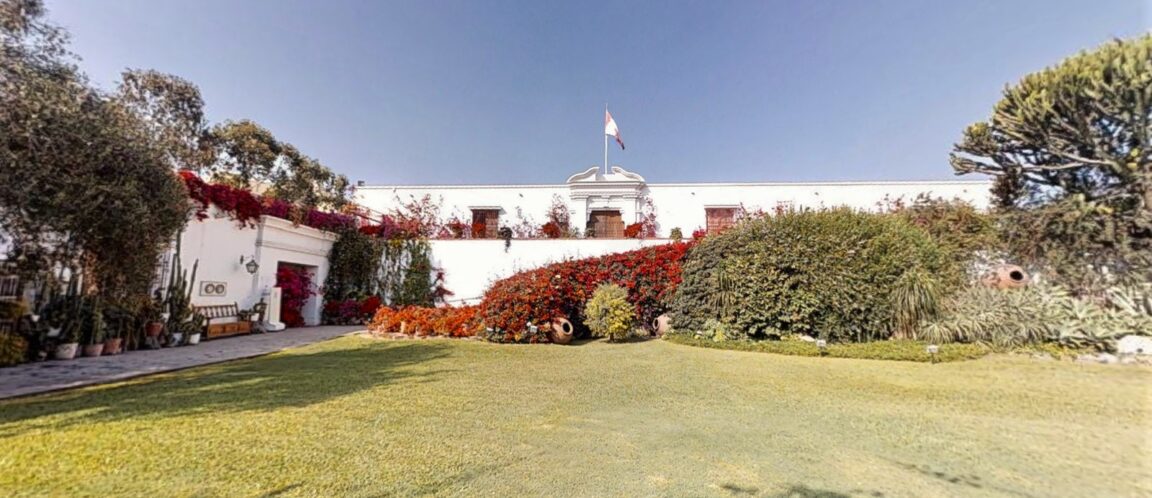
The mansion sits in gardens planted with bougainvillea and orchids, and the Museo Larco Cafe Restaurant works from the terraces overlooking them. The museum describes a menu of Peruvian and international dishes, cold and hot plates, salads, sandwiches, cakes and hot and cold drinks, and you do not need a museum ticket to use the restaurant, though the museum suggests booking ahead. After two hours of pottery and gold, lunch under the flowers is the city’s calmest museum pause, and it is built into how most people end up structuring the visit: galleries first, storage second, lunch last.
The setting does real work. Pueblo Libre is a residential district away from the Miraflores seafront circuit, and the white mansion, built in the Trujillo colonial style over a seventh century pyramid, feels like a country house that happens to hold a national class collection. The museum store boutique by the exit sells books, jewellery, textiles and replicas based on pieces in the collection, which makes it a better than average place for a considered souvenir.
How do you plan the visit well?
Arrive at opening if you can. The museum opens at 9am every day, and the first hour is the quietest, before tour groups build up late in the morning. Buy online in advance if you want the discount and preferential access; the museum notes the online shop currently runs in Spanish only, and door tickets are straightforward if you prefer. Leave bags at the free bag check in reception, since a bag size policy applies in the galleries.
Budget the visit honestly. Two hours covers the permanent exhibition at a good pace; three lets you do the storage aisles and the textile room justice and still sit down for lunch. Taxis are the simple option from Miraflores or Barranco, at the 35 to 50 minutes the museum quotes, and the museum publishes detailed bus routes on its plan your visit page if you would rather ride like a local. If Lima’s museum time stretches to a second stop, pair the Larco with an evening in Barranco, or save your energy for the kind of slow, candlelit celebration you will find in our guide to the Day of the Dead in Mixquic, and for contrast in scale, the private island calm of Islas Secas in Panama.
Frequently Asked Questions
How much does Museo Larco cost?
General admission is S/50 on site, with a discount when you buy online in advance. Seniors over 60 pay S/35, students and visitors aged 9 to 17 pay S/25, children aged 3 to 8 pay S/1, and children under 3 enter free, per the museum’s published prices checked on 21 November 2026.
What are Museo Larco’s opening hours?
The museum is open Monday to Sunday from 9am to 7pm, including public holidays. Hours shorten to 9am to 6pm on 24, 25 and 31 December and 1 January, and to 9am to 5pm on 1 and 2 December 2026.
How long do you need at Museo Larco?
Plan two to three hours. The permanent exhibition takes about ninety minutes at a steady pace, Visible Storage deserves at least thirty minutes, and the garden cafe rewards a slow lunch afterwards.
Is the Erotic Gallery included and can you skip it?
Yes, the Checan Erotic Gallery is included in the standard ticket, along with the permanent exhibition and Visible Storage. It sits in its own space, so you can visit it or pass it by without affecting the rest of your visit.
Where is Museo Larco and how do you get there?
The museum is at Avenida Simon Bolivar 1515 in Pueblo Libre, with the entrance on Calle Navarra 169. The museum puts taxi time from Miraflores and from the airport at around 35 to 50 minutes, and publishes bus routes on its website.
Can you eat at the museum without a ticket?
Yes. The Museo Larco Cafe Restaurant, on the terraces overlooking the gardens, can be used without museum admission, and the museum suggests booking in advance.