 Aiko Tanaka
Kyoto with small children works beautifully if you filter the city the right way: choose temples with level garden paths over mountain shrines, do the Arashiyama bamboo grove before 8am while it is still a grove and not a queue, and keep the Kyoto Railway Museum in Umekoji Park as your big indoor anchor for rain, heat or a temple strike. The museum alone, with 54 trains, a steam ride and a third floor terrace over the shinkansen lines, can carry a whole day for a train mad five year old. Add one golden pavilion morning, one early bamboo walk and the covered arcades of Nishiki Market, and a family of four can see the real Kyoto in three unhurried days without once carrying a stroller up a flight of temple steps.
Quick Facts
- The family anchor: Kyoto Railway Museum, Umekoji Park, two minutes from Umekoji Kyotonishi station on the JR Sagano line. Open 10:00 to 17:00, last entry 16:30, closed Wednesdays except public and school holidays, and from December 30 to January 1.
- Museum admission: Adults ¥1,500; university and high school students ¥1,300; elementary and junior high school ¥500; children from age 3 ¥200; under 3 free. The SL steam ride costs ¥300 for adults and ¥100 for children, and the driving simulator is ¥100 with an advance ticket.
- Stroller logistics at the museum: Wide halls, lifts to every floor and free loan strollers and wheelchairs at the entrance. Strollers cannot be taken aboard the steam train.
- Free and always open: Fushimi Inari shrine and the Arashiyama bamboo grove both cost nothing and never close, which makes dawn the family’s secret weapon at both.
- Best stroller temples: Kinkaku ji, the Golden Pavilion, on a one way gravel garden circuit; Nanzen ji, with its level grounds and brick aqueduct; and the flat lanes of Arashiyama around Tenryu ji’s garden edge.
- Hardest with a stroller: Kiyomizu dera, approached by the stepped lanes of Sannenzaka and Ninenzaka, and the upper mountain paths of Fushimi Inari. Do the shrine’s lower torii tunnels and turn back at the first viewpoint.
- Rainy day pair: The railway museum and Kyoto Aquarium share Umekoji Park, so one wet day needs no cross city travel at all.
The railway museum day: Umekoji done properly
Start with the museum, because for children under ten it may honestly be the best thing in Kyoto. The Kyoto Railway Museum opened in 2016 on the site of the old Umekoji steam locomotive depot and holds 54 vehicles, from Meiji era steam engines to a 500 series shinkansen nose, arranged across a main hall, a promenade and a working roundhouse where steam locomotives are still turned and serviced. Children drive simulators, work the model railway diorama, ride a real steam hauled train on the museum’s short line and watch expresses pass from the Sky Terrace on the third floor, which looks straight over the JR Kyoto line and the Tokaido shinkansen.
The planning details matter. The museum closes on Wednesdays, the single most common family planning error in Kyoto, so check your dates first. Arrive at the 10:00 opening: SL steam ride tickets are sold at the platform from opening and go quickly on weekends, while driving simulator tickets, ¥100, must be bought in advance through the reservation channels the museum lists, not at the door. Admission itself is simple and cheap by Kyoto standards: ¥1,500 for adults and only ¥200 for a child aged 3 to 5, with under 3s free. Budget three hours minimum and four with a train obsessed child, eat in the museum restaurant overlooking the roundhouse, and let toddlers burn off the afternoon in the second floor Kids Park while someone watches the Sagano line trains through its windows.
Getting there is part of the ease. Umekoji Kyotonishi station on the JR Sagano line is one stop and a two minute walk from the museum doors, and the flat twenty minute walk from Kyoto Station works with a stroller if you prefer it. Kyoto Aquarium sits in the same park for a combined ticket day, and the park itself has lawns for the picnic reset every family day eventually needs.
Temples that welcome a stroller
Kyoto has over 1,600 Buddhist temples, and the family question is never which are finest but which are flat. Three pass the stroller test with honours. Kinkaku ji, the Golden Pavilion, runs a one way circuit on gravel and packed paths around its mirror pond: no steps on the main route, a clear flow that suits a pushchair, and a visit that naturally lasts forty five unhurried minutes. Go at the 9:00 opening, before the school groups, and the garden is calm enough for a toddler to toddle the straights. Nanzen ji, at the southern end of the Philosopher’s Path, offers broad level grounds, a startling red brick aqueduct children love to walk under, and sub temple gardens you can sample or skip as energy dictates. In Arashiyama, Tenryu ji’s garden edge and the flat lanes down to the Katsura river and Togetsukyo bridge make a gentle half day once the bamboo grove is done.
Two famous names need honest warnings. Kiyomizu dera is approached through Sannenzaka and Ninenzaka, preserved lanes that are stepped, sloping and packed by ten in the morning; with a stroller it becomes a carry, and with a toddler it becomes a negotiation. If Kiyomizu matters to you, go at opening with the child in a carrier, not wheels. Fushimi Inari is the reverse case: the lower shrine, its courtyard and the first tunnels of the Senbon torii are manageable and magical at dawn, but the mountain above is a hiking trail of thousands of steps. Enjoy the tunnels, photograph the gates, and turn around without guilt. Travellers planning the wider trip should also read our guide to packing for a Japan rail trip, which covers the luggage forwarding services that make travelling with children and cases genuinely painless.
The bamboo grove, timed like a local
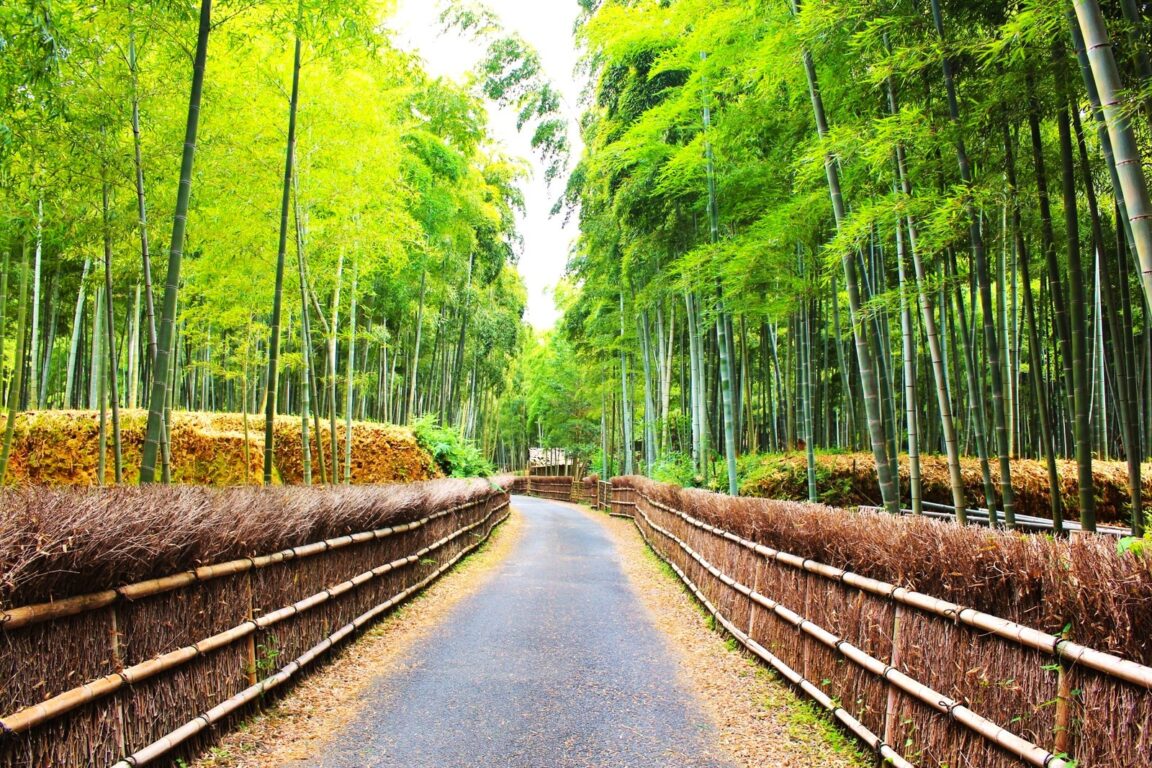
The Arashiyama bamboo grove is a short, free, always open path, about ten to fifteen minutes end to end, and its crowd level is purely a function of the clock. The Kyoto City Tourism Association promotes it as one of the city’s signature sights, and by ten in the morning the signature comes with rickshaw traffic, rental kimono photoshoots and a slow shuffle. Before 8am it is a green cathedral your children can actually run in. Build the Arashiyama morning backwards from that: grove at 7:30, Tenryu ji’s garden at its 8:30 opening, the river and the bridge by ten, and an early lunch as the day crowds arrive. The smaller bamboo stands on the approach to Adashino Nenbutsu ji, further north, give the same canopy effect at a fraction of the pressure if you sleep in.
Rainy day saves and reset buttons
Every family Kyoto itinerary needs a weather plan that is not a shopping mall. The strongest is already built: the railway museum and Kyoto Aquarium in Umekoji Park cover a full wet day within a few hundred metres of each other. Nishiki Market, Kyoto’s covered food arcade in the city centre, is the second save: flat, roofed, pushchair navigable in its wider morning hours, and a grazing lunch of tamagoyaki sticks, soy donuts and tofu doughnuts that children treat as a treasure hunt. The Manga Museum, housed in a former elementary school with a wall of comics and a lawn for reading, is the third. And when the whole family simply needs an hour of nothing, the station building itself delivers: the skyway, the rooftop garden and the train watching from the concourse windows have rescued many an over templated afternoon. Families continuing east to Korea’s slower pleasures may enjoy our guide to South Korea’s healing forests as a change of pace.
A three day family shape
Day one, arrive and settle near Kyoto Station or the flat city centre, then the railway museum from mid morning with the aquarium or the park lawns after. Day two, the dawn bamboo grove and Arashiyama, home by mid afternoon for naps, then Nishiki Market and the Pontocho lanes at dusk. Day three, Kinkaku ji at opening, Nanzen ji and the Philosopher’s Path in the late morning, and Fushimi Inari’s lower tunnels in the golden hour before dinner. Nothing starts after a long cross city bus ride, no day stacks two climbs, and every day holds one thing a child would choose for themselves. That, more than any single sight, is what makes Kyoto work for a family.
Frequently Asked Questions
Is the Kyoto Railway Museum good for toddlers?
Yes. Children from age 3 pay just ¥200 and under 3s are free, there is a second floor Kids Park, loan strollers at the entrance, and lifts throughout. Note the museum closes on Wednesdays except public and school holidays.
How much does the Kyoto Railway Museum cost for a family?
Two adults and one child aged 3 to 5 pay ¥3,200 in admission at the published rates (¥1,500 per adult, ¥200 for the child). Add ¥300 per adult and ¥100 per child for the steam ride, and ¥100 for a pre booked simulator ticket.
Which Kyoto temples are stroller friendly?
Kinkaku ji on its one way garden circuit and Nanzen ji on its level grounds are the easiest. Kiyomizu dera’s stepped approach lanes and Fushimi Inari’s mountain paths are the hardest; do Fushimi Inari’s lower torii tunnels only.
When should families visit the Arashiyama bamboo grove?
Before 8am. The grove is free and always open, takes ten to fifteen minutes to walk, and is quiet at dawn but crowded from mid morning.
What is the best rainy day plan in Kyoto with kids?
Umekoji Park: the Kyoto Railway Museum and Kyoto Aquarium sit in the same park, a two minute walk from Umekoji Kyotonishi station. Nishiki Market’s covered arcade is the city centre alternative.
Can you take a stroller on the museum steam train?
No. Strollers are lent free at the museum entrance and welcome throughout the halls, but they cannot be taken aboard the SL steam ride; park it at the platform.