 Jonas Lindqvist
Hiking in the Faroe Islands is no longer a matter of parking the car and following the grass. The famous walks cross private sheep farmland, and the landowners who maintain the paths now charge for access at the best known sites. At the Kallur Lighthouse on Kalsoy the fee is mandatory: DKK 200 for adults, DKK 100 for ages 13 to 17, and free for children under 13, payable online in advance or on arrival. At Saksun, the walk out across the tidal lagoon costs DKK 75 per person, and at the Traelanipa cliffs above Sørvágsvatn the standard access fee is DKK 200. The practical rule for a Faroese walking trip is simple: check the fee and the payment method for every named walk before you set out, because the trailhead, not the internet, is where an unpaid fee stops you.
Quick Facts
- Why fees exist: Almost all Faroese hiking land is privately owned farmland. Landowners set the access fees and use them for trail upkeep and visitor facilities.
- Kallur Lighthouse, Kalsoy: DKK 200 per adult, DKK 100 for ages 13 to 17, under 13s free. Buy the pass online at hiking.fo or pay on arrival.
- Saksun lagoon, Streymoy: DKK 75 per person for the walk out across the lagoon floor, timed to low tide.
- Traelanipa and Bøsdalafossur, Vágar: DKK 200 per adult for unguided access, paid at the trailhead by Miðvágur.
- Guide-only routes: Some celebrated routes, including the Drangarnir sea stacks, are open only on guided hikes booked in advance.
- The Kallur walk itself: About 4 km return from Trøllanes with roughly 400 metres of climbing, usually 1.5 to 2 hours return.
- Getting to Kalsoy: Car ferry from Klaksvík to Syðradalur, then a 17 km road through four tunnels to Trøllanes. Bus route 506 meets the ferry.
- Authority to check: The fee list published by Visit Faroe Islands and the regional page from Visit North, rechecked on the day of each walk.
Why do famous Faroese walks charge at all?
The Faroes have no tradition of open access across farmland in the way mainland Scandinavia does. The grass is a crop, the sheep are a livelihood, and the paths to the postcard viewpoints cross working land. As visitor numbers climbed, the owners of the most photographed ground formalised what used to be informal: a set fee per walker, collected at the start of the path, with the money going to path maintenance, fencing, parking and toilets. Visit North, the regional authority for the northern islands, states the logic plainly for Kallur: visitors pay a mandatory hiking fee, and the local community uses it to maintain the trail and improve visitor facilities. Treating the fee as part of the walk, like a ferry ticket, is the mindset that makes a Faroese itinerary run smoothly.
It also means there is no single national hiking pass and no single price. Each site sets its own amount, its own age bands and its own way of collecting money, and each can change them. The figures in this guide are the ones published for the main fee points at the time of writing, and every one of them should be rechecked against the official listings before a trip, in the same way the ferry timetable should be rechecked. Travellers arriving by sea can pair that homework with how to get to the Faroe Islands without flying, on the Smyril Line ferry from Denmark via Iceland, since the same advance booking habit serves both.
How does the Kallur Lighthouse fee point work?
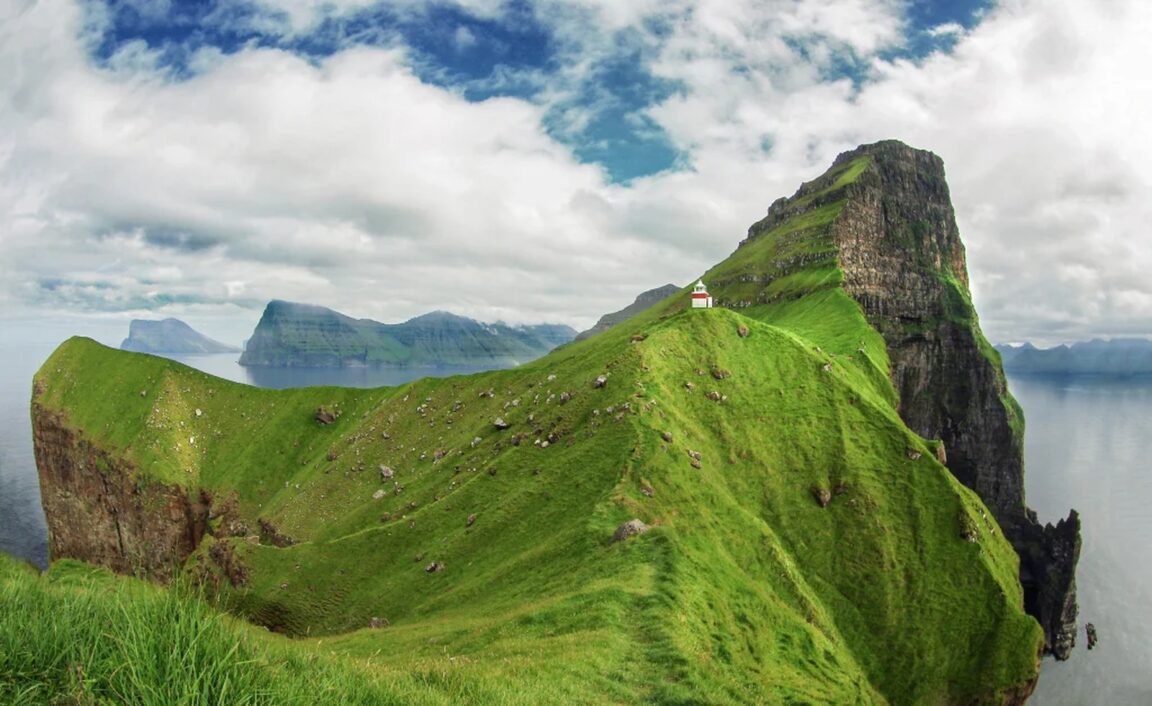
Kallur is the fee system at its most organised, because it has to be. The lighthouse stands on the northern tip of Kalsoy, reached by the car ferry from Klaksvík to Syðradalur and then by the island’s single 17 km road, through four tunnels, to the village of Trøllanes at its end. Parking in Trøllanes is limited and fills quickly in summer, which is why the official guidance recommends bus route 506, which connects with the ferry and runs the length of the island to the trailhead.
The fee is DKK 200 for adults and DKK 100 for children aged 13 to 17, with under 13s free. Visit North gives walkers two ways to pay: buy the hiking pass online at hiking.fo before travelling, or pay when you arrive. The online option is the one to choose. Kalsoy is exactly the kind of place where a card reader, a phone signal or a queue can fail at the wrong moment, and a pass bought the night before, with the confirmation saved offline on your phone, removes the whole question from the morning. The walk itself is about 4 km return with roughly 400 metres of climbing, rated moderately easy and usually done in 1.5 to 2 hours return. It crosses grassy hills that turn muddy and slippery after rain, so sturdy boots are not optional, and the official advice is to stay away in strong wind, heavy rain, thick fog, snow or ice, and to keep a safe distance from the cliff edges throughout.
What does the Saksun lagoon walk cost, and when can you do it?
Saksun, on the north west coast of Streymoy, is the gentler fee point. The village sits above a tidal lagoon, and the walk that matters, known as Út á Lónna, crosses the lagoon floor at low tide toward the black sand where the lagoon meets the sea. The access fee is DKK 75 per person, the lowest of the famous fee points, and the walk is a stroll of roughly 1.5 to 2 hours rather than a climb. The controlling fact at Saksun is not the money but the tide: the lagoon floor is only walkable in the window around low water, so the visit has to be planned backwards from the tide times, not forwards from lunch. Arrive as the tide falls, walk out with the water leaving, and be heading back well before it returns.
Saksun also teaches the etiquette that applies at every Faroese fee point. The village is tiny and lived in, the church and the turf roofed farm are not a film set, and walkers should stay on the marked line, close gates and keep out of the meadows. The broader island context for both walks is set out in Faroe Islands: why go, when to go, and how to reach Denmark’s wild North Atlantic outpost, which covers the archipelago’s regions and seasons.
Which other walks charge, and which need a guide?
On Vágar, the island of the airport, the walk from Miðvágur to the Traelanipa cliffs, where Sørvágsvatn appears to float above the ocean, and on to the Bøsdalafossur waterfall carries a DKK 200 per adult access fee for unguided walking, paid at the trailhead. It is the same headline price as Kallur and should be budgeted the same way. The Drangarnir sea stacks, also on Vágar, sit at the other end of the system: access is by guided hike only, on set days, booked ahead, so there is no question of paying at a gate and walking on. Other landowners around the islands charge smaller sums at individual gates and honesty boxes, and some routes that were free have joined the list in recent seasons. The only safe assumption is that a famous viewpoint on private land may charge, and the official fee listings are the place to confirm each one.
How should you handle payment where there is no signal?
Plan for the trailhead to be offline even when the payment system is not. Buy every pass that can be bought online, including the Kallur pass at hiking.fo, before you leave Tórshavn or Klaksvík, and save the confirmation somewhere the phone can show it without a connection. Carry a payment card as the main method, since the staffed fee points take cards, and carry a modest amount of Danish kroner in small notes as a back up for gates and boxes that cannot take a card. Photograph any paper ticket. Then forget about money entirely, because the walkers who enjoy the Faroes most are the ones whose only remaining decision on the hill is whether the weather still allows the walk at all. One seasonal caution from the official guidance: Visit Faroe Islands advises against hiking in the hare hunting season, from the start of November to the end of December, without contacting the landowner first, which is one more reason a winter walking trip needs local confirmation before it needs a fee.
Frequently Asked Questions
Do you have to pay to hike in the Faroe Islands?
On the famous routes across private land, yes. Kallur, Traelanipa and Saksun all charge, and some routes are guided only. Walks on public paths and village to village routes may be free, but check each named walk against the official listings before you go.
How much is the Kallur Lighthouse hiking fee?
DKK 200 for adults, DKK 100 for ages 13 to 17, and free for children under 13. The pass can be bought online at hiking.fo or paid on arrival at Trøllanes.
How much does the Saksun lagoon walk cost?
DKK 75 per person. The walk crosses the tidal lagoon floor and can only be done in the window around low tide, so check tide times before setting out.
Can you pay the Faroese hiking fees by card?
At the staffed fee points, yes, and Kallur passes can be bought online in advance. Carry some Danish kroner in small notes as a back up for unstaffed gates, and save online confirmations offline.
What happens if the weather turns on a paid walk?
The fee buys access, not a guarantee of conditions. Official guidance for Kallur is to avoid the trail in strong wind, heavy rain, thick fog, snow or ice. A fee paid for a walk the weather cancels is simply part of travelling in the North Atlantic.
Photo: The Kallur Lighthouse, the small red and white lighthouse on the green ridge at the northern tip of Kalsoy, with the cliffs of the neighbouring islands across the water. Credit: Visit Faroe Islands, via visitfaroeislands.com.