 Thandiwe Nkosi
Yes, Cape Town works well for a woman travelling alone, provided you choose your base the way Capetonians choose theirs: on the Atlantic Seaboard, in Sea Point, where the promenade keeps the pavements busy from dawn runs to sunset, the MyCiTi bus puts the city centre twenty minutes away, and Table Mountain can be attempted on the first calm morning rather than the last desperate afternoon. Base in Sea Point, ride route 104, walk the promenade in daylight and early evening, keep late nights to booked cars, and treat the cableway as a weather appointment, not a fixed booking. That is the whole system, and the detail below is how to run it.
Quick Facts
Best solo base: Sea Point, on the Atlantic Seaboard, for its flat, busy promenade, cafes and supermarkets on Main and Regent Roads, and apartment style stays at every price.
The bus that matters: MyCiTi route 104 runs Sea Point to the Waterfront and the Civic Centre station. You need a myconnect card to ride MyCiTi; load value before you travel and check live times in the MyCiTi app or at myciti.org.za.
Table Mountain Cableway: An adult return costs R475 bought online or R530 at the ticket office on the current tariff, and standard tickets are valid for seven days, which is what makes a wind plan workable.
November cableway hours: First car up at 7:30 a.m., last car up at 7:00 p.m., last car down at 8:00 p.m., always weather permitting. Hours change by season.
The wind rule: The cableway closes in strong wind, most often when the summer south easter blows. Check the live status on tablemountain.net on the morning, every morning, until you have been up.
Emergency basics: Save your accommodation address and number offline, keep your phone charged, and use the City’s Transport Information Centre line, 0800 65 64 63, for MyCiTi help around the clock.
Why does Sea Point work as a solo base?
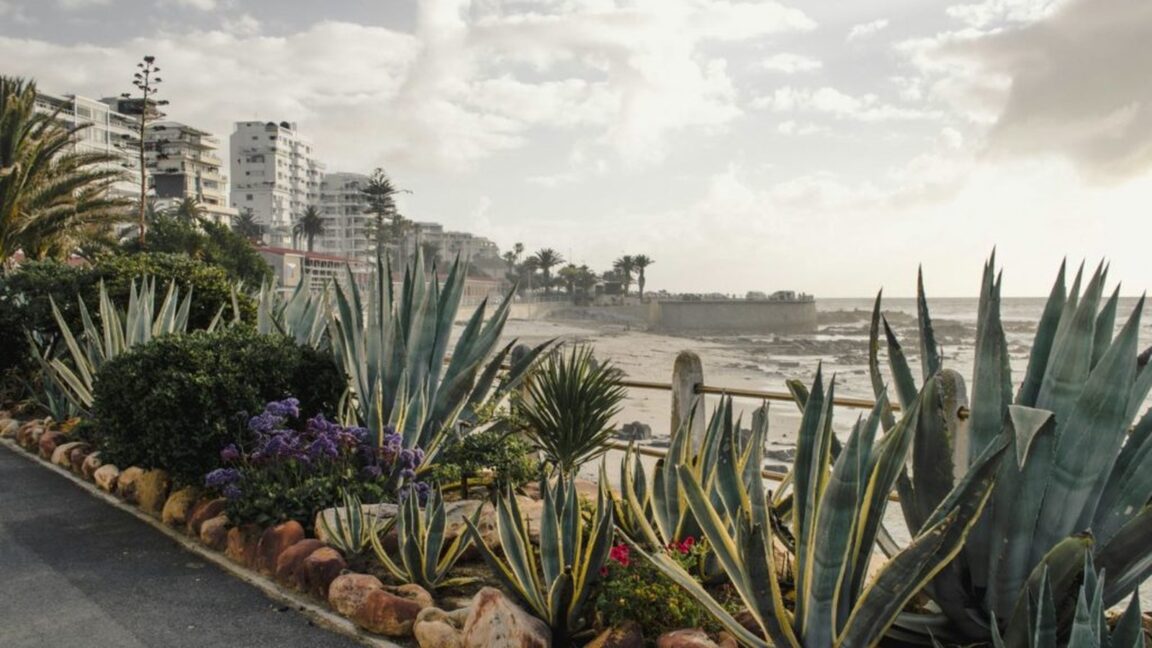
Sea Point solves the two problems a solo traveller actually has in Cape Town: what to do in the evening without a car, and how a neighbourhood feels after dark. The Sea Point Promenade runs for kilometres along the Atlantic between Mouille Point and Bantry Bay, past lawns, tidal pools, an outdoor gym and the Sea Point Pavilion pool, and it fills from early morning with runners, dog walkers, families and other women walking alone. That foot traffic is the amenity. You can take a full evening walk, eat on Regent Road or Main Road, and be back at your door without a taxi negotiation or a dark side street.
Stay within a few blocks of the promenade, on or just behind Beach Road, High Level Road or Regent Road, and favour buildings with a staffed entrance or secure access, a lift, and a host or front desk you can message at night. Apartment hotels and aparthotels are the sweet spot for solo stays here: your own kitchen for breakfast, laundry in the building, and people around. Green Point, one suburb closer to town, is the reasonable alternative, slightly nearer the Waterfront and the stadium, slightly quieter on its side streets at night. Camps Bay is prettier and pricier but empties earlier, and the city bowl suburbs under the mountain, lovely as they are, put a solo walker on steep, quiet streets after dinner. For the wider shape of a first trip, our 2 days in Cape Town itinerary sequences the mountain, the peninsula and the neighbourhoods in order.
How does the MyCiTi bus logic work?
MyCiTi is the City of Cape Town’s bus rapid transit system, and for a Sea Point base one route does most of the work. Route 104 links Sea Point with the V and A Waterfront and the Civic Centre station in the city centre, where the trunk routes fan out across the city, including the route up Kloof Nek Road toward the Table Mountain cableway stop. The City has published route 104 as a frequent all day service, improved to a bus every 20 minutes on weekdays in its inner city service upgrade, but timetables change, so plan with the live times in the MyCiTi app rather than a printed memory.
Three rules make the system easy. First, you cannot pay cash on board: you ride with a myconnect card, bought and loaded at stations and participating retailers, so sort the card on day one, at the Civic Centre or a station kiosk, not at the bus door. Second, tap in and out as the validators direct, and keep the card separate from your bank cards so a lost purse is not a lost transport system. Third, use the bus for the day and the early evening, and switch to a booked ride hail car for late returns. That split, bus by day and car by night, is how most Capetonians who do not drive actually live, and it keeps a solo trip simple: no rental car, no parking, no navigating unfamiliar suburbs after dark.
When should you attempt Table Mountain?
On the first morning the wind allows, and the cableway’s own ticketing is built for exactly that strategy. A standard ticket is valid for seven days from purchase, so buy the online return, R475 against R530 at the ticket office on the current tariff, and then watch the live status banner on the cableway website each morning. In November the first car climbs at 7:30 a.m. and the last car down leaves at 8:00 p.m.; in the December and January peak the last car down runs to 9:00 p.m., while winter brings an 8:30 a.m. start and a 6:00 p.m. last descent. The cars take about five minutes, and the summit station sits at about 1,067 metres, with views over the city, Table Bay and the Atlantic Seaboard you have been walking all week.
Wind is the deciding factor, not rain alone. The summer south easter, the Cape Doctor, can close the cableway for hours or whole days, and the flat cloud that pours over the plateau, the tablecloth, can leave the top in fog while Sea Point sits in sunshine. Go early, when queues and wind are both usually lower, walk the plateau paths at the top, and keep a firm turnaround time so you are never racing the last car down. If the cableway stays closed for your whole stay, the honest solo alternatives are the Lion’s Head path only in a guided group or with company, Kirstenbosch National Botanical Garden on the mountain’s eastern slopes by day, and the promenade sunset you already own. Solo hiking on remote mountain paths is the one thing this guide will not recommend: follow the mountain authorities’ standing advice to hike in groups, tell someone your route, and carry a charged phone and water.
What does a sensible solo safety routine look like?
It looks ordinary, which is the point. Walk the promenade and the busy retail streets freely in daylight and the well lit early evening; after about 10 p.m., take a car door to door. Keep the phone in a pocket or cross body bag on the street, not in a back pocket or held loosely at a cafe edge, and do your map checking inside a shop or cafe rather than standing on a corner. Use ride hailing apps from inside the restaurant or building, confirm the plate before you get in, and share your trip with a friend back home as a standing habit. Carry one card and modest cash, keep a second card and a phone photo of your documents at your accommodation, and drink the tap water, which in Cape Town is treated municipal water, while following any city notices during your stay.
None of this is Cape Town specific fear. It is the routine local women describe for their own evenings, and Sea Point is where that routine is easiest to keep, because the suburb gives you lit, busy, flat streets and a promenade full of people doing exactly what you are doing. For the food half of the evenings, our guide to what to eat in Cape Town covers braai culture, Cape Malay curries and the market circuit, all reachable from a Sea Point base by bus or a short ride.
Frequently Asked Questions
Is Sea Point safe for a woman travelling alone?
Sea Point is the base this guide recommends precisely because its promenade and main streets stay busy from dawn to the evening, with lit, flat walking and plenty of cafes and apartment buildings with secure access. Use the standard routine: promenade and busy streets by day and early evening, booked cars late at night, and your phone and documents split between your bag and your room.
How do you pay for MyCiTi buses in Cape Town?
You need a myconnect card, bought and loaded with value at MyCiTi stations and participating retailers before you ride. Cash is not taken on board. Check routes and live times at myciti.org.za or in the MyCiTi app, and call the Transport Information Centre on 0800 65 64 63 for help.
How much is the Table Mountain cable car?
On the current tariff an adult return costs R475 bought online and R530 at the ticket office, with one way tickets at R300 online and R330 at the office. Standard tickets are valid for seven days, so a wind closure does not waste the fare.
What time does the cableway run?
Hours change by season. In November the first car up is at 7:30 a.m., the last car up at 7:00 p.m. and the last car down at 8:00 p.m. In midwinter the first car is at 8:30 a.m. and the last car down at 6:00 p.m. Everything is weather permitting, so check the live status on the morning of your visit.
What should you do if the cableway is closed by wind?
Use the seven day validity and try the next calm morning, going early. Fill the closed day with the Waterfront, Kirstenbosch or the peninsula rather than a solo mountain hike, and keep checking the cableway’s live status, because wind closures can lift within a day.
Is it better to rent a car in Cape Town as a solo traveller?
For a Sea Point based city stay, no. Route 104 and ride hailing cover the city, the Waterfront and the cableway without parking or night driving. Rent a car only for a peninsula day, pick it up in the morning, and return it before dark.
Featured image: The Sea Point Promenade in Cape Town, with its planted walkway, tidal pool lawns, apartment blocks and the Atlantic beyond. Photo by Aldo Loya via Unsplash (photo NC9exMUSPT8, hosted copy via CapeTownEtc), Unsplash License, used with credit.