 Jonas Lindqvist
Yes, the village beach fales on Upolu’s south coast are taking bookings, and the bookable map is clearest village by village rather than as one blanket reopening. Lalomanu in the Aleipata district is bookable through Taufua Beach Fales, the coast’s best known operator. Further west along the same shore, Tafatafa, Vaovai, Sataoa and Tafitoala all have family run fales with live listings and direct contacts. One honest caveat comes first: no Samoa Tourism Authority announcement or operator notice checked on 25 November 2026 confirms a single storm repair reopening programme for these villages, and no village by village storm closure list could be verified. What can be verified, operator by operator, is who is open and taking reservations right now, and that is what this guide reports.
Quick Facts
Where: The south and south east coast of Upolu, Samoa, running from Lalomanu and the Aleipata villages in the east through Lotofaga, Tafatafa and Vaovai to Sataoa and Tafitoala in the Safata district.
Confirmed bookable: Taufua Beach Fales at Lalomanu; Vaiula Beach Fales and Maotaoma’a Beach Fales at Tafatafa; Heavenly Springs Beach Fales at Vaovai; Sataoa Beach Fale at Sataoa; Sina PJ Beach Fales at Tafitoala.
What a fale is: A traditional open sided hut on the sand, usually with mattresses or beds, mosquito nets, shared bathrooms and breakfast and dinner included in the rate.
Indicative rates checked 25 November 2026: From around WST 200 per night at Vaiula and WST 220 at Taufua, with meals included at both; platform listings for smaller south coast fales start lower per person.
Sunday: A sacred day of church, family and rest. Shops close, buses largely stop, surfing and watersports are generally not allowed, and villages expect quiet, modest behaviour.
Money: Samoan tala (WST). Village beach and attraction fees are cash only, typically ST$5 to ST$20 per person. Carry tala; card payment works only at some operators and larger properties.
Getting there: Lalomanu is roughly 1 hour 25 minutes by road from Apia and about 1 hour 30 minutes from Faleolo International Airport, per the operator’s own site.
First, the honest answer on the storm repair story
Travellers arriving at this headline usually want one thing: a confirmed list of which fales closed for storm repairs and which have reopened. That list does not exist in any official source checked for this article. The Samoa Tourism Authority has published no reopening bulletin for Upolu’s south coast fales, and none of the operators named below describes its current season as a post storm reopening. The one recent fale reopening story in Samoan tourism news, the Lauiula Beach Club at Lano, is on Savai’i, not Upolu, and cannot be borrowed to fill this map.
So this article does the verifiable version of the job. Every stretch named below is included only because the operator’s own official page or an STA registered booking listing confirms it is open and taking bookings today. If a fale is not named, that is not proof it is closed. It means its bookability could not be confirmed from an official source, which is exactly the standard a traveller wiring money across the Pacific should insist on.
Lalomanu and Aleipata: the headline stretch is bookable
Lalomanu, on Upolu’s south eastern tip in the Aleipata district, is the coast’s signature beach: a long sweep of white sand, a reef protected lagoon and views out to the offshore islets of Nu’utele and Nu’ulua. Its anchor operator, Taufua Beach Fales, is open and bookable. The operator’s own site lists six room types across two collections, from traditional open beach fales to enclosed fales and villas, and states that every stay includes breakfast and dinner at no extra charge, with breakfast served 9 to 10am and dinner 7 to 8pm. Current listings put rooms from WST 220 per night. The family also states plainly that the best mode of booking is by telephone, and the property runs an online reservation page for travellers who prefer to book ahead in writing.
The Lalomanu pattern is the one to copy down the whole coast. Book the named operator, not the beach. Each fale cluster belongs to a family, the coloured fales along the sand identify which family runs which section, and a booking with one family covers that family’s section. Day visitors should expect a village beach fee, collected on arrival, which is normal, goes to the family and should not be haggled over.
Just offshore, Samoa Tourism describes Namu’a Island, reached by a 5 to 10 minute boat ride from Mutiatele in Aleipata, as offering day and overnight stays in open sided fales. It is the coast’s easiest island add on, arranged through local hosts and boat operators rather than a central booking desk.
Tafatafa and Vaovai: the Falealili stretch west of Lotofaga
Driving west from Aleipata along the Main South Coast Road, the next confirmed cluster sits in the Falealili district around Tafatafa and Vaovai, south of Lotofaga village. Vaiula Beach Fales at Tafatafa is a family operation listing a traditional open sided fale from WST 200 per night, sleeping two to three guests, with breakfast and dinner prepared on site and included. The same beach hosts Maotaoma’a Beach Fales, an STA registered listing of 12 open air fales on a grassed site set back from the main road, open for both day visits and overnight stays, with bedding, mosquito nets and shared bathrooms included and children under 10 staying free.
At Vaovai, Heavenly Springs Beach Fales lists 11 open air fales steps from the shore, with a restaurant and bar, dinner included in the nightly rate, and boat trips to nearby Nu’usafe’e Island among its activities. Its listing is registered with the Samoa Tourism Authority and shows bookable availability across the year. Together, Tafatafa and Vaovai are the practical answer for travellers who find Lalomanu full: same south coast water, smaller scale, and hosts who answer WhatsApp and email directly.
Sataoa and Tafitoala: the Safata end of the coast
The western end of the fale coast, in the Safata district, is also bookable. Sataoa Beach Fale offers a choice of breezy open fales and air conditioned rooms, 13 rooms in total, with a home cooked breakfast and kayaking into the mangrove forest at Sataoa among its draws. Its STA registered listing shows flexible cancellation and year round availability. At Tafitoala, Sina PJ Beach Fales lists a standard double room with sea view from WST 260 per night, breakfast and dinner included, and leans into cultural skills alongside the beach: weaving, coconut scraping and watching an umu, the traditional earth oven, being prepared. A hire car is recommended for Tafitoala, which sits well off the main bus routes.
What this adds up to is a coast that is open in pieces, family by family, which is how it has always worked. There is no single switch that turns Samoa’s fale coast on or off, and any report claiming a coast wide reopening date should be treated with suspicion unless the Tourism Authority publishes it.
The Sunday rules that still apply everywhere
Sunday is the rule that outranks every booking confirmation. Samoa is a deeply Christian country and Sunday belongs to church, family and rest. Almost everything shuts: shops close, many restaurants and bars outside resorts close, public buses largely stop running, and alcohol sales are prohibited on Sundays. At the beach, surfing and watersports are generally not allowed on a Sunday, even though most beach fales themselves remain open for guests and day use.
Behaviour matters as much as logistics. Move slowly and quietly through villages, especially around church services, and never enter a village uninvited on a Sunday. Dress modestly away from the sand: swimwear belongs at the beach or the resort, and a lavalava, the wraparound sarong worn by men and women, is the practical cover up everywhere else. The same respect applies all week at dusk, when villages observe sa, the evening prayer time signalled by a bell or conch: stop, wait quietly for around ten minutes, and do not walk or drive through the village until it ends. Travellers weighing a very different Pacific stay can compare the fale model with the private island end of the market in our guide to Kokomo Private Island in Fiji, and the fee logic is familiar from our explainer on Hawaii’s visitor green fee: in both places, the charge exists because the place itself is cared for by the people who live there.
How payment actually works at a beach fale
Payment is where first time visitors get caught out, so plan for cash first and cards as a bonus. Samoa’s currency is the tala, written WST or ST$. Village controlled beaches, waterfalls and attractions charge small customary entry fees, typically ST$5 to ST$20 per person and sometimes ST$20 to ST$40 per vehicle, and these are accepted in cash only. The fee is rent paid to the family or village that owns and maintains the place, and at many beaches it includes the use of a day fale.
For overnight stays the picture is mixed, and it is improving operator by operator. Many smaller fales still run on direct booking by phone, email or Facebook message, with payment settled in tala during the stay, and some take no online booking at all. Larger or platform listed operators are different: Taufua runs an online reservation system, and the STA registered listings for Heavenly Springs, Maotaoma’a and Sataoa take bookings through their listing pages with stated cancellation terms. The safe routine is simple. Confirm the total, including meals, in writing before you travel. Ask how the balance is paid. Then carry enough tala for village fees, day fales, buses and any cash only balance, because ATMs are scarce along the south coast and Sunday closures can strand a card only plan.
Rates need the same care. Fale prices are quoted per person at some properties and per fale or room at others, and most include two meals, which makes a headline rate hard to compare with a hotel room. The figures in the Quick Facts above are the operators’ own current listings, checked on 25 November 2026, and they will move with season and fale type. Treat them as a booking starting point, not a promise.
How to book the south coast without getting it wrong
Start with the stretch, then the family. Pick Lalomanu for the classic beach and the widest choice, Tafatafa or Vaovai for a quieter Falealili base, and Sataoa or Tafitoala for the Safata end and its mangroves and surf. Contact the operator directly through its official site or listing, confirm the fale type, the meals included, the Sunday arrangements and the payment method, and get the confirmation in writing. Build the trip around Sunday rather than through it: arrive or depart on another day, stock cash and food before Sunday, and let the day itself be church singing, a to’ona’i Sunday lunch if you are invited, and a quiet beach. Finally, ask locally before every swim. Currents and reef passages change with the weather, and the family hosting you knows which part of their lagoon is safe that day.
Frequently asked questions
Are the beach fales at Lalomanu open and taking bookings?
Yes. Taufua Beach Fales, the main operator on Lalomanu Beach, is open with six room types listed on its official site, breakfast and dinner included in every stay, and both telephone and online booking available. Other family fale clusters line the same beach and are booked directly with each family.
Did the south coast fales reopen after storm repairs on a specific date?
No official source confirms that. Neither the Samoa Tourism Authority nor the operators named here has published a storm repair reopening date or a village by village closure list for Upolu’s south coast. The operators in this guide are included because their own pages confirm they are open and bookable now, not because of a reopening announcement.
What can visitors do on a Sunday in Samoa?
Very little commerce happens. Shops and most restaurants close, buses largely stop, alcohol is not sold, and surfing and watersports are generally not allowed. Beach fales stay open for their guests, church services welcome modestly dressed visitors, and the day is best spent quietly at the beach and over a long Sunday lunch.
Can visitors pay for beach fales by card?
Sometimes, but never assume it. Village beach and attraction fees are cash only in tala, and many small fales settle balances in cash. Larger and platform listed operators, including Taufua and the STA registered listings at Vaovai, Tafatafa and Sataoa, take online bookings. Confirm the payment method when you book and carry tala regardless.
What is included in a beach fale rate?
At most south coast fales the rate includes the fale itself, bedding and a mosquito net, shared bathroom facilities, and breakfast and dinner. Taufua, Vaiula and Sina PJ all state that breakfast and dinner are included. Lunch, drinks, transfers and activities such as boat trips are usually extra.
How far is Lalomanu from Apia and the airport?
Taufua Beach Fales gives about 1 hour 25 minutes by road from Apia and roughly 1 hour 30 minutes from Faleolo International Airport. Buses run along the south coast on weekdays and Saturdays for a small cash fare, but they stop around the early evening and do not run on Sundays, so a Sunday arrival needs a pre booked transfer or a hire car.
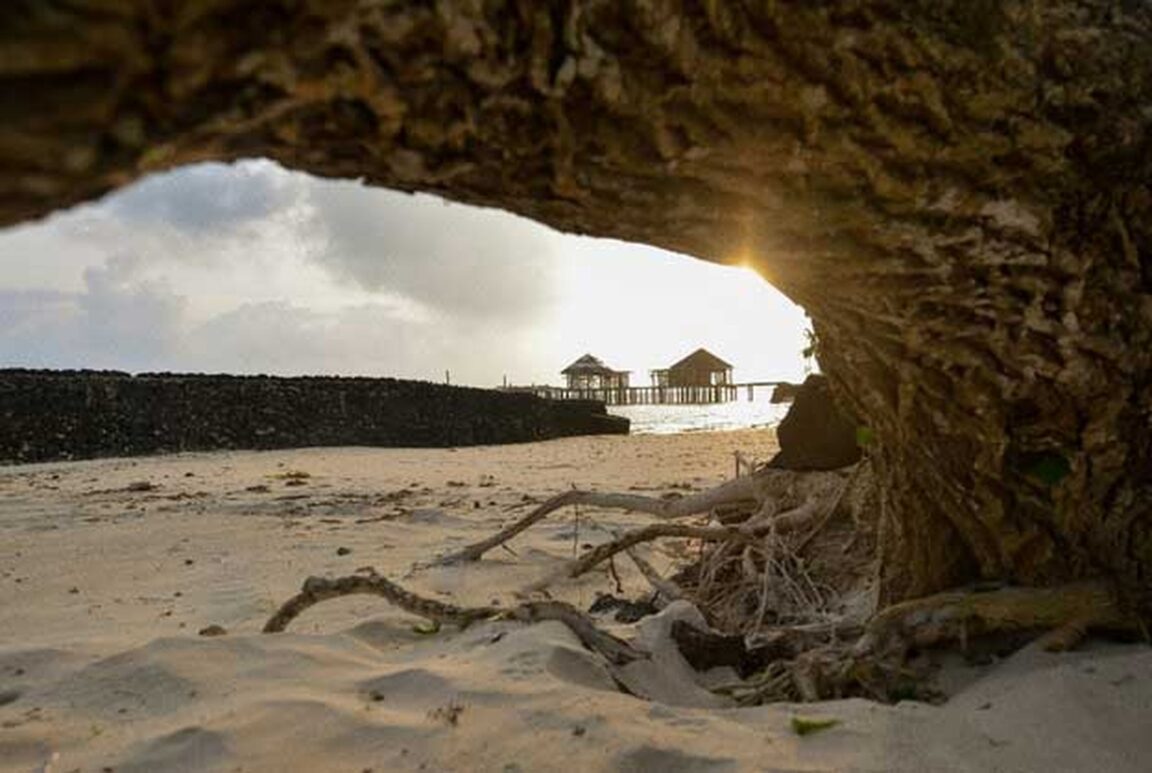
Featured image: A beach bungalow on a Samoa beach at low sun, photographed by Vidi Drone, via Unsplash, used with credit under the Unsplash License.