 Rafael Santos
Book Torres del Paine backwards, starting with the nights that disappear first. There is no single reservation for the W Trek or the O Circuit: a complete trip needs three separate bookings, made on three different systems, and the scarcest nights are the small camps and refugios at Chileno, Los Perros and Dickson, followed by peak season dates at Paine Grande and Grey. One honest caution before the calendar: no official source has announced that the booking windows are opening earlier than usual. What the official record does show is a fixed rhythm worth planning around. Vertice Patagonia, one of the park’s two accommodation operators, opened its 2025 to 2026 season reservations on April 1 through vertice.travel, and both operators work to a season that starts in mid September at the earliest sites and closes by late April. Travellers who read that calendar early, and who secure the bottleneck nights before the flexible ones, are the travellers who get the circuit they actually wanted.
Quick Facts
- Three bookings, not one: park entry from CONAF, western and northern nights from Vertice Patagonia, and eastern and central nights from Las Torres Patagonia.
- Park entry channel: CONAF sells entry in advance through its official portal, pasesparques.cl, and entry must be arranged before arrival.
- Vertice sites: Paine Grande and Grey on the western W, plus Dickson and Los Perros on the northern O Circuit, booked at vertice.travel.
- Las Torres sites: Central, Chileno, Cuernos, Frances and Seron, booked at lastorres.com.
- Season shape: the first sites open in mid September, the full W is generally in place from October 1, and the O Circuit back side opens November 1.
- Entry price check: the tariff table published by torresdelpaine.com, valid for visits until December 31, 2026, lists foreign adults at CLP 34,000 for one day and CLP 48,500 for more than one day. Confirm the live figure on pasesparques.cl before paying.
- Reservation rule: every night on the W or the O must be a confirmed, paid refugio or campsite reservation. Walking in and hoping is not an option.
- Free campsites: the old free CONAF campsites at Torres, Italiano and Paso were listed as closed for the 2025 to 2026 season, so every circuit night is a concession booking.
What Are the Three Bookings Every Circuit Traveller Has to Make?
The first booking is the park itself. Torres del Paine is administered by CONAF, Chile’s national forestry corporation, and entry tickets are sold online in advance through pasesparques.cl. The ticket is separate from every bed and tent site inside the park, and the price depends on nationality and age as well as on whether the visit lasts one day or more than one day. On the tariff table published for visits until December 31, 2026, a foreign adult pays CLP 34,000 for a one day stay and CLP 48,500 for a stay of more than one day, while foreign visitors aged over 12 and under 18 pay CLP 17,400 for one day and CLP 48,500 for more than one day, and children under 12 enter free. Chilean adults aged 18 to 59 pay CLP 9,900 for one day and CLP 14,200 for more than one day on the same table. Treat those figures as a budgeting guide rather than a quote, and confirm the amount in the portal on the day you buy, because CONAF revises its tariffs.
The second and third bookings cover where you sleep, and they split the map between two companies. Vertice Patagonia runs the western end of the W and the northern side of the O: the refugios and campsites at Paine Grande and Grey, the refugio and campsite at Dickson, and the campsite at Los Perros. Las Torres Patagonia runs the eastern and central sectors: Central, Chileno, Cuernos, Frances and Seron. A W Trek uses both companies. An O Circuit uses both companies and every one of their bottleneck sites. Neither operator can sell you the other’s nights, and a confirmed night with one company does nothing to hold a night with the other, which is why circuit booking is a sequencing problem rather than a single transaction.
Which Circuit Nights Sell Out First?
Chileno is the night to secure before all others on the W. It is the closest bed to the Base of the Towers viewpoint, which makes it the only practical base for reaching the towers at sunrise without a long pre-dawn climb from the valley floor. Its capacity is small, its purpose is singular, and every sunrise motivated trekker on the route wants the same limited set of dates. If Chileno is gone for your dates, the honest alternatives are a night at Central with a much earlier start, or a reshaped itinerary, and neither is a like for like swap.
On the O Circuit, the constraint is structural. Dickson and Los Perros are mandatory nights on the northern side of the loop, and Los Perros is the staging point for the John Gardner Pass, the high point of the whole circuit. Those sites open later and close earlier than the W sites, so their entire season is compressed into fewer bookable nights, and every O trekker in the park needs the same two camps in the same order. Seron, the usual first night out of Central on the O, belongs to the same compressed window. When Dickson or Los Perros sells out on a given date, the whole loop breaks, not just one evening of it, because there is no substitute campsite on that side of the massif.
Paine Grande and Grey sell out differently. Both are larger, both sit on the western W, and both are tied to the catamaran crossing of Lake Pehoe and to Grey Glacier visits, so their pressure concentrates on peak season dates, holiday periods and the days around popular arrival patterns rather than across the whole calendar. Frances and Cuernos, in the middle of the W below the French Valley, carry the overflow and the through traffic in both directions, and Cuernos has the added pull of its mountain cabins. Central is the largest and most flexible site, near the park’s Welcome Centre, and it is usually the last of the main sites to become a problem. The practical order of operations follows from all of this: fix Chileno or the O back side first, then the western nights, then fill in the middle, and keep Central as your flex night if the plan needs one.
How Does the Season Calendar Actually Run?
The published opening pattern for the 2025 to 2026 season shows how staggered the park really is. On the Las Torres side, the Central campsite opened on September 15 with the refugio following on October 1, and the sector runs to April 25. Frances opened on September 15 and runs to April 27, the longest window on the W. Chileno opened on October 1 and runs to April 25. Cuernos and Seron opened on November 1 and close on March 30, the shortest windows of the main sites. On the Vertice side, Paine Grande and Grey opened fully on October 1, while Dickson and Los Perros open on November 1 for the O Circuit season. Read together, those dates explain the booking behaviour the park produces every year. A full W is realistically an October to April proposition. A full O is a November to March proposition, because the loop cannot be walked until its latest opening sites are operating and must be finished before its earliest closing sites shut.
The reservation calendars open long before the trails do. Vertice announced that reservations for the 2025 to 2026 season opened on April 1, bookable through the online system at vertice.travel, with prices for that season starting at CLP 9,000 per person for campsites and CLP 35,500 per night for shared refugio rooms, alongside discounts of up to 30 percent on main services for Chilean travellers and residents. That April opening, roughly six months before the first sites open and seven months before the O back side opens, is the real planning deadline in this park. By the time the southern summer feels close in the northern hemisphere, the scarcest nights for December and January have been on sale for months. Anyone repeating a claim that the windows have suddenly moved earlier should be asked for the operator announcement behind it. Until an operator publishes a new opening date, plan on the established rhythm: calendars in the autumn of the northern hemisphere, meaning April, for a season that starts the following September.
Refugio or Camping: How Should You Split the Nights?
The refugio versus camping decision is not really about comfort preference. It is about availability, weight and weather insurance, and the smart circuit usually mixes the two. Refugio beds are the scarcest and most expensive product in the park, sold as shared dormitory rooms, and Vertice’s published starting point of CLP 35,500 per night for a shared shelter room gives the floor of that market. Beds remove the need to carry a tent, sleeping bag and mat, which matters on the O, where the John Gardner Pass day is long and exposed. Beds also vanish first at the bottleneck sites, so a traveller who insists on a bed every night has the narrowest possible calendar.
Camping widens the calendar considerably. Both operators sell tiers that range from a bare site for your own tent through to equipped camping with tent, mat and sleeping bag provided, and Vertice’s season prices started at CLP 9,000 per person for campsites. An equipped campsite at Chileno, Dickson or Los Perros can be the difference between a confirmed circuit and a waitlist, and it keeps pack weight close to the refugio option without depending on dormitory availability. Carrying your own full kit is the most flexible and cheapest route, and the most punishing in Patagonian wind, which is a genuine factor rather than a colourful detail in this park. A sensible split for most trekkers is equipped camping or a bed at the bottleneck nights, where certainty matters most, and your own tent or a basic site at the larger sites such as Central and Paine Grande, where availability is deeper. Whatever the mix, every night must be booked, because the free CONAF campsites that once absorbed spontaneous trekkers, at Torres, Italiano and Paso, were closed for the 2025 to 2026 season and every W or O night is now a paid reservation.
What Should You Do If Your Dates Are Already Gone?
Work the calendar, not the waitlist fantasy. First, reverse the direction of the trek. The W can be walked east to west or west to east, and the O can be started in either direction, and reversing the order moves every night to a different date, which often unlocks a chain that looked sold out in the original direction. Second, shift by a few days rather than a few weeks, because sellouts cluster on peak dates and the nights either side of a holiday period are frequently open. Third, change the product before changing the trip: a bed that is gone may have an equipped campsite beside it, and a campsite that is gone may sit next to a cabin at Cuernos or a hotel based night outside the tightest sector. Fourth, consider the shoulder of the season with open eyes. November and March offer the full O window with thinner demand than December and January, at the cost of colder and less settled weather. What not to do is arrive in Puerto Natales without confirmed nights and expect the system to bend. Rangers check reservations, the reservation requirement applies to every night of a multi day circuit, and there is no legal wild camping fallback inside the park.
For broader timing judgment across the region, our guide to the best time to visit Torres del Paine and El Chalten in their real seasons weighs wind, daylight and closures across both parks. Once your dates are fixed, the route detail in our O Circuit booking and refugio order guide and our W Trek refugio booking order guide will help you sequence the individual nights before you open the three booking systems.
Frequently Asked Questions
When do Torres del Paine reservations open for the southern summer?
On the most recent official pattern, months ahead of the season. Vertice Patagonia opened its 2025 to 2026 reservations on April 1 through vertice.travel, for sites that began opening the following September and October. No official announcement has moved that opening earlier, so plan around an April calendar opening and verify the date on each operator’s site each year.
Which Torres del Paine campsite sells out first?
Chileno, because it is the closest bed to the Base of the Towers and the practical base for a sunrise visit to the viewpoint. On the O Circuit, the mandatory northern camps at Dickson and Los Perros are equally critical, because their season is shorter and there are no substitute sites on that side of the park.
Do I book park entry and accommodation in the same place?
No. Park entry is bought from CONAF through pasesparques.cl. Accommodation is booked separately with Vertice Patagonia for Paine Grande, Grey, Dickson and Los Perros, and with Las Torres Patagonia for Central, Chileno, Cuernos, Frances and Seron. A complete circuit needs all three transactions confirmed.
How much is Torres del Paine park entry?
On the tariff table published by torresdelpaine.com for visits until December 31, 2026, a foreign adult pays CLP 34,000 for one day and CLP 48,500 for more than one day, and children under 12 enter free. Chilean adults pay CLP 9,900 and CLP 14,200 on the same table. Always confirm the current figure on pasesparques.cl before paying.
Can I walk the W or the O without booking every night?
No. A confirmed refugio or campsite reservation is required for every night of a multi day circuit, and the free CONAF campsites at Torres, Italiano and Paso were closed for the 2025 to 2026 season. There is no legal unbooked overnight option on either route.
When can the O Circuit actually be walked?
Only when its latest sites are open. Dickson, Los Perros, Cuernos and Seron open on November 1 on the published season pattern, and Cuernos and Seron close on March 30, so the full loop is realistically a November to March undertaking, narrower than the October to April window of the W.
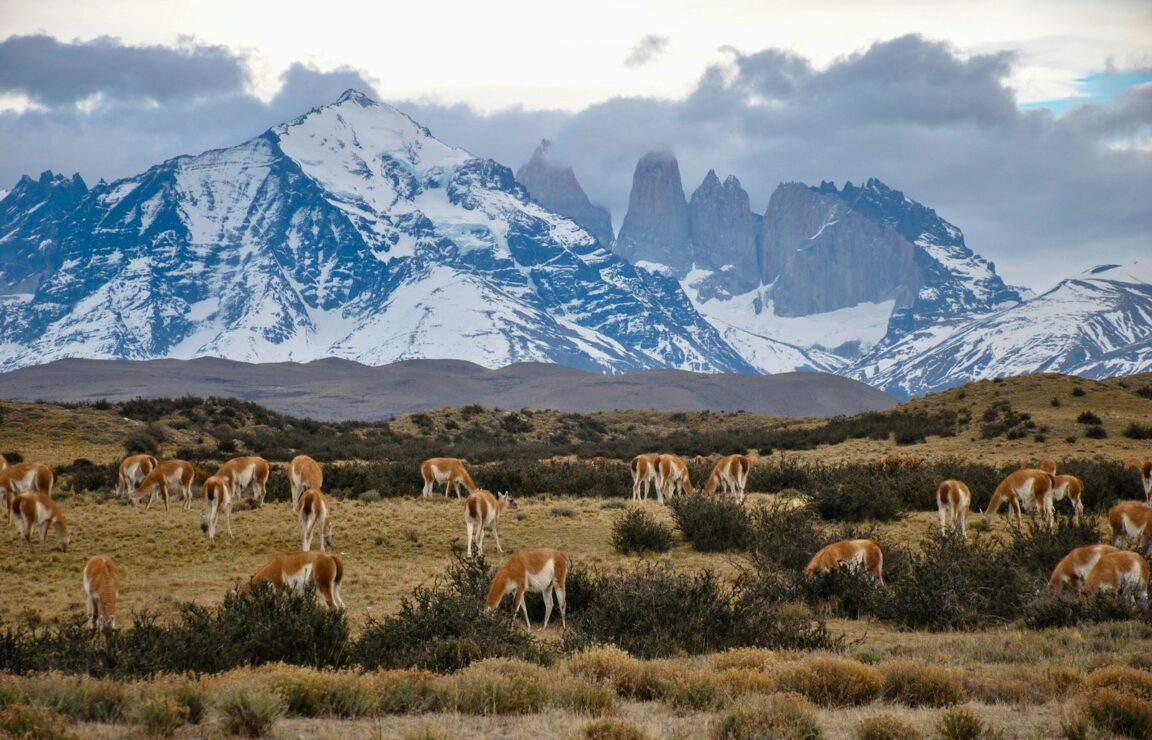
Featured image: the granite towers and Cuernos of Torres del Paine National Park, Chile. Photo by Alex Wolowiecki, via Unsplash, Unsplash License.