 Maya Chen
Vancouver International Airport is one of the easiest big airports in North America to leave and return to. The Canada Line SkyTrain runs from a station inside the terminal complex to Waterfront Station downtown in under 30 minutes, the airport publishes its restaurant hours gate by gate, and the honest layover answer is simple: downtown Vancouver is realistic on a long connection, Richmond is realistic on a medium one, and on a short one the best move is a good meal inside the terminal and the Indigenous art collection most passengers walk straight past.
Quick Facts
Airport: Vancouver International Airport (YVR), on Sea Island in Richmond, British Columbia.
Downtown train: Canada Line SkyTrain from YVR-Airport station to Waterfront Station, under 30 minutes by the airport’s own timing.
Train fare from the airport: A two zone adult fare plus the Canada Line YVR AddFare of $6.50 on trips leaving the Sea Island stations for Bridgeport or beyond. At TransLink’s July 2026 rates that is $11.60 by tapped card or cash on weekday daytimes and $10.70 on Compass stored value, with lower one zone totals in evenings and on weekends. Children 12 and under and prepaid pass holders are exempt from the AddFare.
Train hours: First train from YVR-Airport at 5:09 a.m., last at 12:54 a.m., per TransLink’s published Canada Line timetable.
Terminals: Domestic, International and the South Terminal for regional flights. The main terminal’s Domestic and International sides are connected and walkable.
Food anchors: Lift Bar and Grill in International departures by Gate D71, Salmon n’ Bannock On The Fly near Gate D71, Hangar 49 in Domestic departures by Gate B12.
Layover rule: Under four hours, stay airside. Four to six hours, Richmond is the sensible outing. Six hours or more, downtown opens up.
How the Canada Line actually works from YVR
The station could hardly be closer. YVR’s own passenger journey pages put the Canada Line ride at under 30 minutes to downtown Vancouver and 18 minutes to downtown Richmond, and the station sits between the Domestic and International terminals, signed from arrivals. Follow the trains signs, not the taxi signs, and you are on a platform within a few minutes of clearing the terminal doors.
Payment is tap based. Tap a contactless card or phone at the gate, or buy a Compass Card or single ticket from the platform machines. The fare structure is the one thing that catches visitors out. Trips starting at YVR-Airport, Sea Island Centre or Templeton and heading to Bridgeport or beyond carry the $6.50 YVR AddFare on top of the zone fare, as TransLink’s Canada Line timetable notes state in plain language. The AddFare applies only when leaving the airport area. Riding back to YVR costs the plain zone fare, which is why the return trip feels oddly cheap. Travel between the three Sea Island stations themselves is free.
Downtown stops worth knowing are Bridgeport for Richmond connections, Oakridge and King Edward for the west side, Broadway-City Hall for the Broadway corridor and hospital district, Yaletown-Round City Centre for the entertainment district, Vancouver City Centre for the shopping core, and Waterfront as the terminus, where the Expo Line, the SeaBus to North Vancouver and the West Coast Express all connect. If your hotel is near Waterfront or City Centre, the train beats a taxi on both price and predictability at almost any hour it runs.
For a worked comparison of how another hub handles the same terminal and train questions, our JFK airport terminal and AirTrain guide shows the New York version of this maths, and it makes YVR look simple by contrast.
Taxis, rideshare and the rental car decision
Taxis queue outside both arrivals areas and run on regulated zone fares to Vancouver, so the price is known before you ride. Rideshare pickups are assigned to signed zones, which keeps the kerb calmer than at most large airports. Either road option is exposed to the same weakness: the bridges and tunnels between Sea Island and downtown slow down in the afternoon peak, while the train does not. With heavy bags, a group of three or four, or a hotel far from a station, a taxi is a fair buy. Solo with a carry-on, the train wins almost every time.
Rental cars make sense when the trip leaves the city: Whistler, the Fraser Valley, Vancouver Island via the Tsawwassen ferry, or a road trip east. For a downtown-only stay, a car mostly buys parking charges. Pick the car up when the city days end rather than paying to store it.
Where to eat inside YVR, by terminal
YVR feeds people better than most North American airports, and the airport’s own listings give the hours to plan around. In International departures, Lift Bar and Grill by Gate D71 is the sit-down option, listed by YVR at 06:00 to midnight daily, with a West Coast seafood-led menu, a real brunch service until mid-morning and cocktails for the long evening departures bank. It is the right call when you have ninety minutes and want a table, a server and a view of the apron rather than a tray.
Near the same gate, Salmon n’ Bannock On The Fly is the meal with a sense of place. As YVR’s own guide to Indigenous culture at the airport notes, it is the only Indigenous restaurant in a Canadian airport, serving soups, salads and sandwiches and burgers built on salmon, bison and elk, with bannock mix to take home. In Domestic departures, Hangar 49 by Gate B12 is listed at 06:00 to 23:00 daily and does elevated comfort food with British Columbia ingredients, the practical choice before a domestic hop. Coffee, bakeries and grab-and-go counters fill the gaps in both terminals, and the pre-security food court in the International Terminal serves meeters, greeters and anyone with time before check-in.
The layover eating strategy follows from the clock. Under two hours airside, eat near your gate and do not cross the terminal for a famous name. Two to four hours, one proper sit-down meal is the best use of the time. Longer than that, the question stops being about airport food at all, which is where the next section starts.
The layover maths: Richmond, downtown, or stay put
Work backwards from your departure, not forwards from your arrival. For an international departure from YVR you should be back at the airport about three hours ahead, and about two hours ahead for a US or domestic flight, with security and, for US departures, preclearance to clear. The train takes under 30 minutes each way to downtown and about 18 minutes to Richmond’s centre. Everything between those fixed costs is your usable window.
On four to six hours, Richmond is the smart outing, and the dumpling run the board asks about is genuinely realistic. The Canada Line stops at Bridgeport, Aberdeen, Lansdowne and Richmond-Brighouse put you in the middle of one of the strongest Chinese food districts in North America, with dumpling houses, noodle shops and food courts within a short walk of the stations. You can be seated with soup dumplings roughly forty minutes after your inbound lands, eat properly, and still be back at YVR with a wide margin. Keep the outing to one neighbourhood, keep your boarding pass and passport on you, and set a phone alarm for the train back.
On six hours or more, downtown earns the trip: off the train at Waterfront, a walk through Gastown, the seawall from Canada Place, and back from Vancouver City Centre or Waterfront station. On under four hours, stay. The airport rewards staying more than most: the same YVR guide points to the Musqueam Welcome Area in the Canada Customs Hall, with its welcome figures and the world’s largest Coast Salish spindle whorl, and Bill Reid’s Spirit of Haida Gwaii, the Jade Canoe, before security in the International Terminal. A short layover spent with that collection and a Salmon n’ Bannock meal is not a wasted layover.
For how other hubs grade out on the same decision, compare our Singapore Changi long layover guide, the Doha Hamad airport long layover guide and the JFK long layover guide, then note how rarely an airport makes the medium-length outing as easy as YVR makes Richmond. The Amsterdam Schiphol long layover guide is the closest parallel, with a fast train and a city that starts minutes from the terminal.
Connections, preclearance and the mistakes to avoid
Most US-bound passengers clear US customs and immigration at YVR before departure, which is a gift on arrival in the United States and a time cost before departure. Build it into connection times, especially in the morning bank when preclearance queues build. Domestic to international connections are straightforward within the connected main terminal, but the South Terminal, used by some regional and seaplane services, is a separate building reached by shuttle, and no tight connection should be planned through it.
The classic YVR mistakes are small ones. Paying the AddFare twice by misunderstanding that it is one-directional. Taking a taxi at 4 p.m. for a downtown hotel two blocks from a Canada Line station. Planning a Richmond meal on a three-hour layover. And walking past the Jade Canoe at speed, then spending the flight wishing the airport had offered something to look at. It did.
Frequently asked questions
How long does the SkyTrain take from YVR to downtown Vancouver?
Under 30 minutes to Waterfront Station by YVR’s own timing, with Vancouver City Centre a couple of minutes sooner. Trains run from 5:09 a.m. to 12:54 a.m. from the airport per TransLink’s timetable.
How much is the train from Vancouver airport to downtown?
At TransLink’s July 2026 rates, a weekday daytime trip costs $11.60 by tapped card or cash, made up of the two zone fare plus the $6.50 YVR AddFare, or $10.70 on Compass stored value. Evenings and weekends price as one zone. The AddFare is not charged on trips to the airport.
Can I leave YVR on a five hour layover?
Yes, for Richmond. The Canada Line reaches Richmond’s dining district in about 18 minutes, which makes a dumpling lunch realistic with time to spare. Downtown is better kept for layovers of six hours or more.
Where should I eat at YVR before an international flight?
Lift Bar and Grill by Gate D71 for a sit-down meal, listed at 06:00 to midnight, or Salmon n’ Bannock On The Fly near the same gate for the airport’s Indigenous restaurant. Both are listed on YVR’s own dining pages.
Do I clear US customs at Vancouver airport?
Most US-bound flights preclear US customs and immigration at YVR, so you arrive in the United States as a domestic passenger. Allow extra time before departure for it, particularly in the morning.
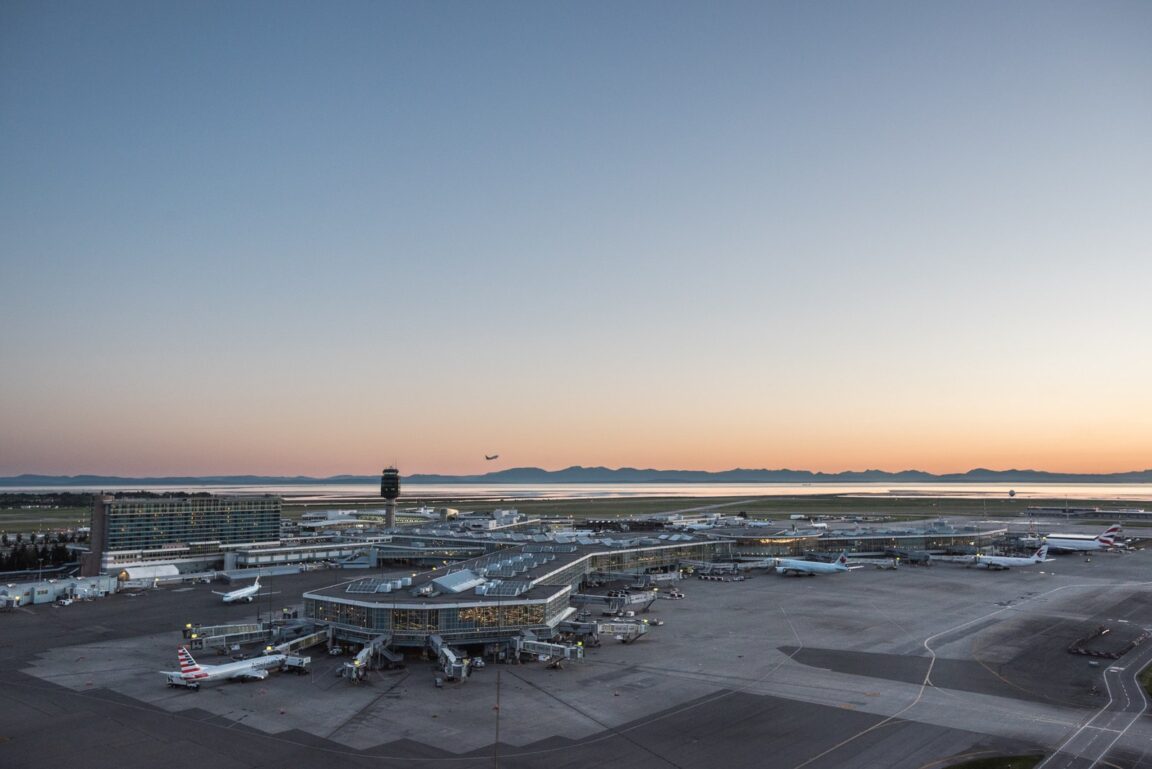
Featured image: Vancouver International Airport at dusk, from the YVR Photo Library via the Vancouver Airport Authority’s official media library at news.yvr.ca. Fares and hours checked 25 November 2026 against TransLink and YVR; recheck before travel.