 Elena Vasquez
Copenhagen is one of the easiest capitals in the world to travel through alone as a woman, and the honest guide starts with a reordering of risks: the thing most likely to spoil your day is not a stranger, it is a bicycle lane. Violent crime against visitors is rare, the driverless Metro runs around the clock, solo dining and solo drinking draw no comment at all, and the real skills to learn are district judgment after dark, cycling etiquette at commuter speed, and a budget plan for an expensive city.
Quick Facts
City: Copenhagen, capital of Denmark, built across the islands of Zealand and Amager around its harbour.
Solo verdict: Among the most comfortable European capitals for a woman travelling alone, with well lit central streets, reliable late night transport and a culture entirely used to solo diners, drinkers and cyclists.
Transport backbone: The driverless Metro runs 24 hours a day, supplemented by S-trains, buses and harbour buses. The airport line reaches the centre in about a quarter of an hour.
The real hazard: Cycle lanes carry fast, dense commuter traffic. Look both ways before crossing one, every time, including when stepping off a bus.
Best bases for a first solo trip: Indre By for centrality, Osterbro for calm, Vesterbro for food and nightlife with a short walk home, Frederiksberg for a leafy local feel.
Emergencies: 112 for police, fire and ambulance in Denmark. 114 is the non-emergency police number.
Money: Cards are accepted almost everywhere, including for small purchases. Cash is rarely needed.
Choosing your district, judged on the walk home
The right question for a solo stay is not which district is prettiest at noon. It is which district makes the walk from dinner to your door feel ordinary at 11 p.m. Visit Copenhagen, the city’s official visitor guide, maps the districts well, and the solo judgment on each runs as follows.
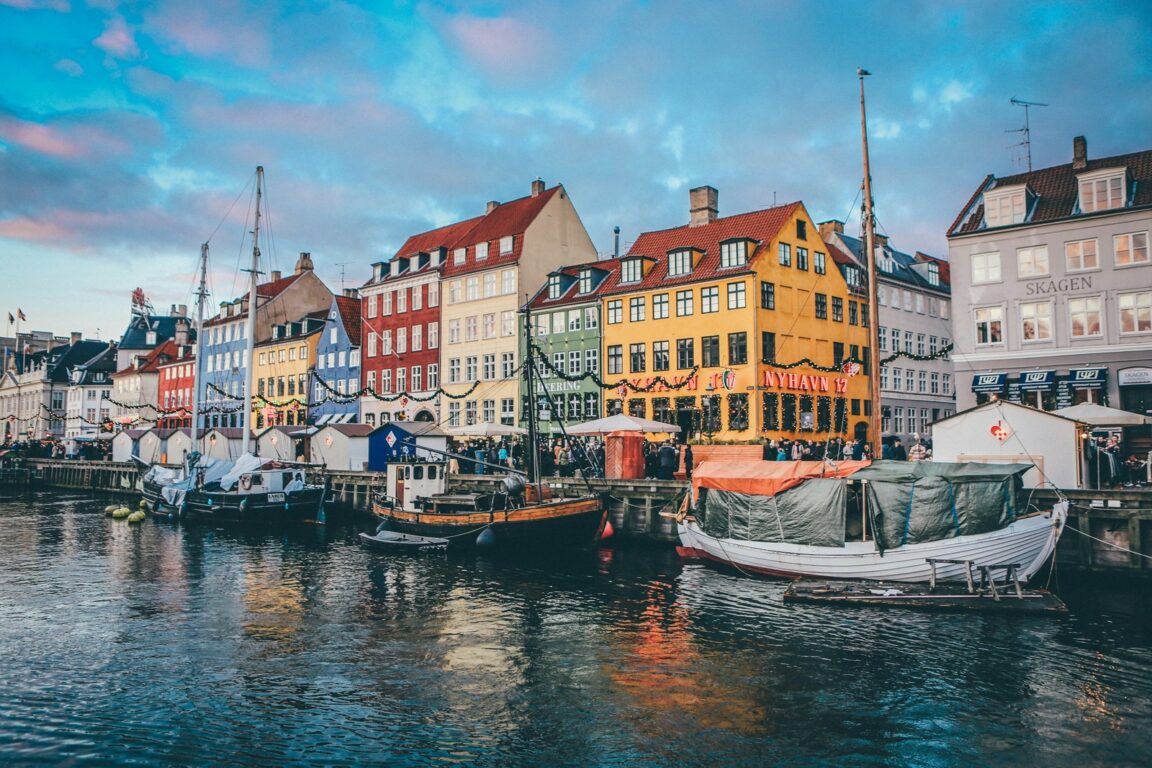
Indre By, the city centre, is the low-effort choice: historic streets, the Stroget shopping spine, Nyhavn’s painted harbour houses and the highest density of lit, peopled streets late into the evening. You pay for it in room rates and tourist pricing, but for a first solo trip of two or three nights, centrality is a safety feature in itself. Osterbro, north of the centre, is the calm choice: broad avenues, embassies, local cafes and a residential hush after dinner. It suits early risers, runners heading for the lakes and anyone who sleeps better on a quiet street.
Vesterbro is the food and nightlife choice, and it needs one honest footnote. The streets immediately behind Central Station, particularly the station end of Istedgade, carry a visible street drug scene that can feel uncomfortable on a first night, while the same district a few blocks west, around the Meatpacking District and Enghave Plads, is one of the best eating and drinking areas in the city. Book west, walk the lit main streets home, and Vesterbro is a pleasure rather than a problem. Norrebro is the multicultural, energetic choice: Jaegersborggade’s small shops, the Assistens Cemetery where Hans Christian Andersen is buried, and the city’s best cheap eating. It is vibrant rather than polished, and most solo travellers who choose it do so deliberately and enjoy it.
Christianshavn offers canals, houseboats and a village calm a short Metro ride from the centre, plus Christiania, the freetown. Visit Christiania by day, respect the photography rules posted around Pusher Street, and treat it as a daytime outing rather than a late night shortcut. Frederiksberg, technically its own municipality wrapped inside the city, is leafy, affluent and restful, with the gardens and the zoo, and it suits a second visit or a longer stay.
Compare the district-by-district method with our Lisbon female solo travel guide and the Melbourne solo women laneways and late trams guide, which judge their cities on exactly the same walk-home test.
Cycling Copenhagen without becoming a hazard
Renting a bike is not a tourist novelty here. It is how the city is designed to be used, and it roughly doubles what a solo traveller can see in a day. Donkey Republic’s app-based rental bikes are parked across the city and are the simplest visitor option, many hotels lend or rent bikes directly, and the city bike scheme adds electric assist for the harbour bridges. What matters is not the bike. It is the etiquette, because Copenhagen’s lanes are a transport system, not a leisure space.
Ride on the right of the lane and overtake on the left. Signal every turn with an arm out to the side, and signal a stop with a raised flat hand, because the rider behind you is travelling at commuter speed and reading your hands, not your mind. Never stop inside the lane to check a map: pull fully out of it first. Do not ride two abreast in busy lanes, do not ride on pavements, and at junctions watch for right-turning cars crossing the lane. Lock the bike every time you leave it, through the frame to something fixed, because bike theft is the city’s most ordinary crime and rental bikes are not exempt.
As a pedestrian, the discipline is simpler and just as important. Treat every cycle lane as a road. Look both ways before crossing one, look again when a bus sets you down beside one, and never drift into one while looking at your phone. Most visitor injuries in Copenhagen involve exactly that drift. A traveller planning a wider Denmark trip can pair the city days with our Aarhus in 2 days itinerary and the Bornholm Baltic island guide, both of which run at a slower cycling pace than the capital.
Going out alone: dinner, bars and the trip back
Solo dining in Copenhagen needs no strategy because it needs no apology. Counter seating in the food halls, wine bars that pour by the glass for one, and New Nordic restaurants accustomed to single covers all treat a woman alone as the most ordinary sight in the room. Book the famous tables ahead, eat early sittings if you prefer a quieter room, and do not skip a good restaurant out of self-consciousness that nobody in Copenhagen shares.
Nightlife divides by district. The Meatpacking District in Vesterbro concentrates bars and clubs within a few lit streets, which makes it the easiest area for a solo night out with a short walk or one Metro stop home. Indre By’s late bars are busy and central. Norrebro’s Jaegersborggade and Ravnsborggade run smaller and more local. Standard solo practice applies and is sufficient: watch your drink being poured, keep your phone charged, and know your route before the last glass. Petty theft, mostly pickpocketing around Central Station, Norreport and the Stroget crowds, is the realistic risk, so a zipped bag worn in front in crowds is the whole defence.
The trip home is where Copenhagen quietly excels. The Copenhagen Metro runs driverless trains through the night, stations are lit and camera-covered, and night buses and S-trains fill the gaps. A taxi or ride-hailing car for a short hop after midnight is a reasonable purchase in an expensive city, not a failure of nerve. In an emergency anywhere in Denmark, the Danish police are reached on 112, with 114 for non-emergencies.
Daylight, weather and the honest costs
Two planning facts shape a solo trip more than any safety question. The first is daylight. Copenhagen’s summer nights barely darken, which makes June and July the most forgiving months for a first solo visit, while midwinter gives you roughly seven hours of daylight and asks for a museum-heavy plan and a head start on dinner. The second is cost. Copenhagen is expensive in a way that surprises even Londoners: coffee, casual meals and hotel rooms all price at the top of the European range. The working counters are supermarket breakfasts from the good Danish chains, bakeries for lunch, food halls for variety without the tasting menu bill, and the city’s many free pleasures, the harbour baths in season, the gardens, the design shops you browse without buying.
For solo travellers weighing Copenhagen against other northern trips, our Iceland female solo Ring Road guide covers the driving version of the same independence, and the Kyoto solo women stays and evening buses guide shows how a very different culture answers the same questions.
Frequently asked questions
Is Copenhagen safe for a woman travelling alone?
Yes, by European capital standards it is among the safest. Violent crime against visitors is rare, central streets are lit and peopled late, and the Metro runs all night. The practical risks are pickpocketing in crowds, bike theft, and stepping into fast cycle lanes without looking.
Which district should a solo woman book first?
Indre By for a short first trip, Osterbro for quiet, and Vesterbro, a few blocks west of the station streets, for food and nightlife with an easy walk home. Frederiksberg suits longer, calmer stays.
Do I need to cycle in Copenhagen?
No, but it doubles the city. The Metro, S-trains and buses cover everything, yet a rental bike on the separated lanes, ridden by the local signalling rules, is the fastest way to string the districts together.
Is it normal to eat and drink alone in Copenhagen?
Completely. Solo diners and solo drinkers are unremarkable in Copenhagen’s restaurants, wine bars and food halls, and staff will seat a party of one without comment at any level of restaurant.
What number do I call in an emergency in Denmark?
112 reaches police, fire and ambulance anywhere in Denmark. For non-emergency police matters the number is 114.
Featured image: Nyhavn, Copenhagen, by Nick Karvounis via Unsplash, under the Unsplash License. District and transport details checked 25 November 2026 against Visit Copenhagen, the Copenhagen Metro and Danish police sources.