 River Callahan
Iceland is the solo road trip that women most often describe as easier than expected, and the structure explains why: the country sits at the top of the Global Peace Index year after year, the Ring Road is a single 1,332 kilometre loop with no route finding to speak of, and the culture of local swimming pools and hot pots gives every evening a social, public place to land. The real planning is about light and weather, not personal safety. In December and January daylight shrinks to four or five hours, so the trip has to be built in daylight chunks, with driving done in the light, conditions checked daily on road.is and vedur.is, and the 112 Iceland app on your phone before you leave Reykjavik.
Quick Facts
- The road: Route 1, the Ring Road, circles Iceland for 1,332 kilometres. Almost every major sight in this guide sits on or just off it.
- Safety standing: Iceland consistently tops the Global Peace Index, and solo travel, including solo driving, is a normal pattern for visitors and locals alike.
- Winter daylight: As low as four to five hours in December and January. Summer reverses the problem, with near continuous light in June.
- Daily checks: Road conditions and closures at road.is, weather and wind forecasts at vedur.is. Check both every morning, without exception.
- Emergency setup: Download the 112 Iceland app and leave your travel plan at SafeTravel (safetravel.is) so rescue services know your route.
- Evening institution: Every town has a geothermally heated pool, the hot pot, where locals socialise. It is the solo traveller’s evening venue.
Why Iceland Suits a Woman Driving Alone
Start with the honest baseline. Iceland’s risks are environmental: wind that can take a car door, rivers, ice, sudden weather and long empty stretches between services. Its human risks are among the lowest measured anywhere, which is why the Global Peace Index ranking matters practically rather than as a trophy. A woman alone at a waterfall car park, in a small town guesthouse or in a village pool is an unremarkable sight in Iceland, and help, when the weather creates the need for it, is organised and professional. The planning below therefore spends its attention on daylight, distance and conditions, which is where an Iceland trip is actually won or lost.
Reykjavik deserves two nights at the start, not one. Use them to stock the car, learn the wind in a low stakes setting, swim at a city pool and adjust to the daylight window you are working with. Our Reykjavik winter light culture guide covers how the capital organises its days around scarce light, and the same thinking scales to the whole loop.
Building the Ring Road in Daylight Chunks
The method is simple and strict: no leg longer than the daylight you have, arrival before dark, and one base for two nights wherever the map allows, so a bad weather day costs a sight rather than a booking. In winter that means legs of roughly 150 to 250 kilometres. In summer the same structure holds with longer legs, because fatigue and wind replace darkness as the limits.
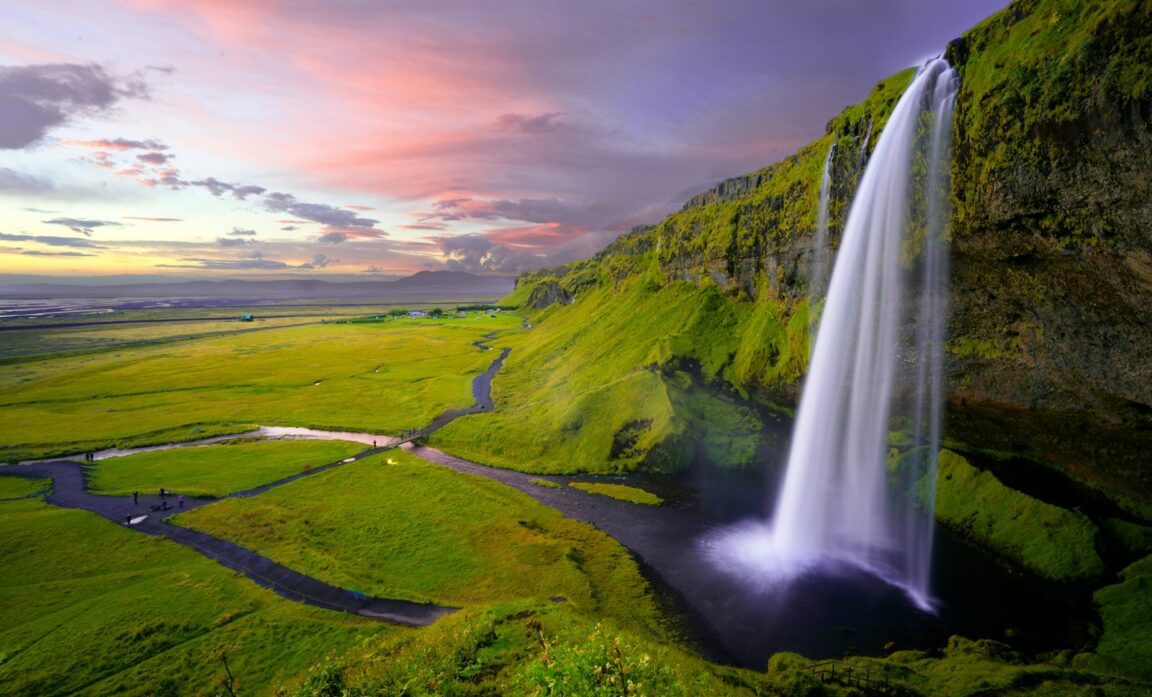
The south coast is the natural first chunk: Reykjavik to Vik, taking in Seljalandsfoss and Skogafoss, the black beach at Reynisfjara with its serious wave warnings, and glacier views from the road. The falls sit directly off Route 1 and reward an unhurried morning. Continue east in a second chunk to Hofn, through the Skaftafell area and past the Jokulsarlon glacier lagoon, where the scale of the country changes and the road empties. The east fjords slow the pace with single fjord roads and small fishing villages. The north is the third great chunk: Husavik for whale watching in season, the Myvatn area for geothermal fields and the best hot pot evening outside the capital, and Akureyri, Iceland’s second town, as a proper rest base. The final western leg back to Reykjavik is the gentlest, and in winter it is the one to keep shortest if the forecast turns.
Seven to ten days is the honest minimum for the full loop outside high summer. A five day winter trip should not attempt the circle at all; the south coast and back, done slowly, is the better journey, and our Reykjavik winter light guide helps frame what a shorter, capital based version can still include.
Driving Solo: The Rules That Matter
Check road.is and vedur.is each morning and obey them literally; a closed road or a wind warning is not a challenge, and Icelandic rescue services publish their callouts as a warning to others. Keep the tank above half, because distances between fuel stations in the east and north are long. Tell your accommodation your next destination daily, and file the SafeTravel plan before the loop starts. Download offline maps, since coverage gaps exist, and keep the 112 Iceland app installed; it can send your location to emergency services even with a weak signal.
Two physical rules deserve emphasis. In high wind, park facing the wind and open doors with both hands, holding them against the gust; door damage is the classic Iceland hire car claim. And never stop on the road itself for photographs, however empty it looks; use the marked pull offs, because the Ring Road is a working highway with fast local traffic. Sheep on the road in summer and ice patches in shaded winter corners complete the real hazard list. None of it requires a companion, only attention.
Hot Pot Evenings: The Social Solo Institution
Iceland’s local pools solve the solo traveller’s evening problem completely. Nearly every town has a sundlaug, a municipal pool complex with a heated outdoor pool and several hot pots at graduated temperatures, open into the evening, inexpensive, and used by the whole community. The etiquette is fixed and worth knowing: shower thoroughly without a swimsuit before entering, as the posted instructions require, then swim, then soak. Conversation in the hot pots is normal and easy to join or decline, which makes the pool the rare solo evening venue that is social on your own terms.
Build the rhythm into the route: drive in daylight, arrive, swim and soak, eat, sleep. In winter the experience peaks, soaking in 39 degree water while the dark comes down at 4pm and, on clear nights, watching for the aurora from the pot. Commercial lagoons are a treat version of the same idea; the village pool is the authentic one, and it costs a fraction as much.
Where to Stay and What It Costs One Person
Guesthouses, farm stays and small hotels line the Ring Road at sensible intervals, and single occupancy is priced plainly rather than punitively, though Iceland is expensive in every category and solo travellers carry the full cost of a hire car alone. Book winter accommodation with parking, breakfast and a host on site where possible; the host’s morning weather judgment is part of the value. In the east and north, some properties close in deep winter, which is another reason the chunked plan with confirmed bases beats improvisation. Self catering apartments in Reykjavik and Akureyri help with food costs, since even modest restaurant dinners add up across ten days.
Packing and Connectivity for a Solo Drive
A solo driver is her own support crew, so the car carries the safety margin: a phone charger and power bank, a paper map as backup to the downloaded offline maps, water and food for a full day, and layers that handle wind and rain at every stop, since south coast waterfalls soak visitors in spray in any season. Mobile coverage is strong around the Ring Road towns and thinner in the stretches between them, which is another argument for the daily check in habit with hosts. None of this needs specialist equipment, and everything on the list is available in Reykjavik supermarkets and petrol stations before departure, so there is no reason to fly it in.
Frequently Asked Questions
Is Iceland safe for a woman travelling alone?
Yes. Iceland consistently ranks first on the Global Peace Index, violent crime is rare, and solo women travellers are a common sight on the Ring Road. The significant risks are weather, wind and road conditions, managed through road.is, vedur.is and the daylight chunk method.
How long does the Ring Road take?
The loop is 1,332 kilometres. Seven to ten days is a realistic minimum with sightseeing, longer in winter when daylight limits driving to four or five hours in December and January. Shorter trips should cover the south coast rather than rush the circle.
Can I drive the Ring Road in winter?
Yes, with conditions respected daily. Route 1 is maintained through winter but sections close in storms, sometimes for a day or more. Build buffer days, check road.is and vedur.is every morning, and never drive a closed or wind warned road.
What is the 112 Iceland app?
The official emergency app for Iceland’s 112 services. It lets you call for help and transmit your location, and links to the SafeTravel system where you can leave your itinerary. Install it and file your plan before leaving Reykjavik.
What are hot pots and can I go alone?
Hot pots are the geothermally heated outdoor tubs at every local pool, and going alone is entirely normal. Pools are communal, inexpensive and open into the evening. Follow the posted rule to shower without a swimsuit before entering.
Featured image: Seljalandsfoss waterfall at sunset on Iceland’s south coast, directly off the Ring Road. Photo by Unsplash contributor (photo 1476610182048-b716b8518aae), via Unsplash.