 Aiko Tanaka
Kyoto suits a solo woman traveller who plans around two facts: the city’s temples mostly close at about 5pm, which makes early starts worth more than late nights, and its accommodation stock includes exactly the formats a solo traveller wants, machiya townhouse stays with a staffed front desk and a growing number of properties with women only floors or women only capsule sections. Base near a subway station on the Karasuma or Tozai line, use the flat fare city buses for the temple districts, front load the famous sights before the crowds build, and spend the evenings in Gion and the downtown lanes, where Kyoto is atmospheric, populated and easy to navigate home from.
Quick Facts
- Temple hours pattern: Many Kyoto temples close at around 17:00, some earlier in winter. The sightseeing day starts early by design, not by preference.
- City buses: Kyoto’s city buses run on a flat fare within the central zone, and bus routes serve temple districts the subway does not reach. Official visitor information is at Kyoto City Tourism, kyoto.travel.
- Subway: Two lines, Karasuma running north to south and Tozai running east to west, crossing downtown. They are the fastest way across the city.
- Solo friendly stays: Machiya stays with a staffed front desk, business hotels near stations, and properties offering women only floors or women only capsule sections across the Kyoto and Osaka market.
- Evening district: Gion, where the request is simple: enjoy the streets, and do not photograph on the private side roads, where signs prohibit it.
- National visitor source: The Japan National Tourism Organization publishes transport and etiquette guidance at japan.travel.
Choosing a Stay: Machiya With a Front Desk
Kyoto’s signature accommodation is the machiya, the traditional wooden townhouse, and the solo friendly version of it is specific: a machiya stay, guesthouse or small inn where a front desk is staffed, a host is present, and the building sits on a lit street near a station or a main bus route. That combination gives the atmosphere travellers come for, thick wooden beams, a small garden, tatami calm, with the practical solo benefits of a person to greet you, advise you and notice you. Whole house unstaffed rentals can be lovely for groups; for a first solo trip, the staffed version is the right call, and it is widely available in the downtown and Gion adjacent districts.
The alternatives each have a solo logic. Business hotels near Kyoto Station and the downtown subway stations trade charm for total simplicity: staffed around the clock, well lit approaches, easy luggage forwarding. Capsule hotels and hostel properties in the Kyoto and Osaka market increasingly include women only floors or women only capsule sections, with secure entry, female only washrooms and lockers, at the lowest price point in the city. Describe your shortlist by those features, staffed desk, women only section, station distance, and the right choice usually selects itself.
Temple Days Without the Crowds
Because many temples close at around 17:00, and tour groups arrive from mid morning, the crowd free Kyoto day is an early one. Reach a headline temple at opening, Kiyomizu-dera, Fushimi Inari or Arashiyama’s Tenryu-ji, walk it in the quiet first hour, then retreat to the second tier sights, the Zen gardens, smaller sub temples and neighbourhood shrines, as the famous names fill. By late afternoon the strategy inverts: revisit the lanes and viewpoints as day groups leave, and let the evening belong to the districts below. Families planning a gentler version of the same sequencing will find our Kyoto family guide to stroller friendly temples useful, since its step free routing and timing advice transfers directly to any traveller managing energy across a temple day.
Pacing matters more than coverage. Three temples visited properly, with time in their gardens, beat seven photographed at a run, and Kyoto’s gardens reward the slow version in every season. Build one anchor sight per half day, put a tea or coffee stop between districts, and remember that the city’s pleasures are cumulative: a quiet sub temple of Nanzen-ji with ten other visitors often outlasts the postcard sight in memory.
Buses and Subway: The Working System
Kyoto’s transport divides cleanly. The subway, Karasuma line north to south and Tozai line east to west, is fast, simple and best for crossing the city and reaching downtown, Gion’s edge and Kyoto Station. The city buses do the detailed work: they run on a flat fare in the central zone, board at the rear and pay on exit, and their routes reach the temple clusters at Arashiyama, Higashiyama and the northern districts that the subway passes at a distance. A one day bus and subway pass pays for itself on any temple heavy day. In the evening, the same buses run the useful routes home from Gion and downtown until late evening, after which the subway and taxis cover the centre; plan the last leg before the last temple of the day, not after dinner.
Two habits keep the system pleasant. Ride buses outside the morning and late afternoon peaks where possible, since the popular routes fill with visitors and luggage. And carry the route numbers rather than relying on announcements in English alone; Kyoto buses display stops in English on board, but a screenshot of your route removes the one moment of solo travel friction the city reliably produces.
Gion in the Evening, Done Respectfully
Gion at dusk is the Kyoto evening: lanterns lit along Hanamikoji street, wooden teahouse facades, and, with luck and patience, the sight of a geiko or maiko on her way to an appointment. Solo travellers are welcome in this picture as quiet observers. The rules are posted and specific: the side streets off Hanamikoji are private roads where photography is prohibited, and touching or stopping a geiko or maiko for a photograph is not acceptable anywhere. Stay on the public streets, keep cameras down on the private lanes, and the district remains what it has been for centuries, a working neighbourhood that visitors are permitted to enjoy.
Evening alternatives surround Gion. Pontocho Alley, across the river, packs restaurants along a lantern lit lane above the Kamo river and is built for a solo diner at a counter. Downtown’s covered shopping streets and department store food halls stay bright and busy into the evening, and the walk or short bus ride back to a downtown or station side base is straightforward on lit main streets. Kyoto is not a late night city, and for a solo traveller that is a feature: its evenings end at a civilised hour, and its mornings are the main event. A second read of our Kyoto family temple guide before a temple day is a good use of one of those quiet evenings, since its opening time and route notes are the practical core of crowd free planning.
A Solo Day, Shaped Correctly
Start at a headline temple at opening, in Higashiyama or at Fushimi Inari’s lower shrine before the climb crowds. Mid morning, drop to a quieter garden temple nearby and take tea. Lunch at a counter restaurant downtown, then one northern or western sight, Arashiyama’s bamboo grove in its late afternoon thinning, or a Zen garden at Ryoan-ji. Return by subway, rest, and go out again for Pontocho or Gion at dusk, home by bus or subway with the evening still young. The shape, early anchor, slow middle, atmospheric evening, is repeatable across three or four days without repetition of content, which is the real test of a solo itinerary.
Frequently Asked Questions
Is Kyoto safe for a woman travelling alone?
Yes. Japan is one of the world’s lowest crime countries and Kyoto is a calm, orderly city where solo women travellers are commonplace. Normal awareness applies, and the women only accommodation floors and capsule sections available in the market add a further option for travellers who prefer them.
What time do Kyoto temples close?
Many close at around 17:00, with some closing earlier in winter and a few major sites keeping longer hours. Check the closing time of your anchor temple the night before and build the day backwards from it, starting at opening to beat the crowds.
Are buses or the subway better in Kyoto?
Both, for different jobs. The subway, Karasuma and Tozai lines, crosses the city fastest. City buses, flat fare in the central zone, reach the temple districts directly. A combined one day pass suits most temple days.
What is a machiya stay?
A stay in a traditional Kyoto wooden townhouse, run as a guesthouse, inn or small hotel. For solo travellers, choose one with a staffed front desk on a lit street near a station, which combines the atmosphere with a host on site.
Can I photograph geiko and maiko in Gion?
Not on Gion’s private side roads, where photography is prohibited and signed, and never by stopping or touching them. From public streets, distant and respectful observation is the accepted pattern; the district is a workplace, not a performance.
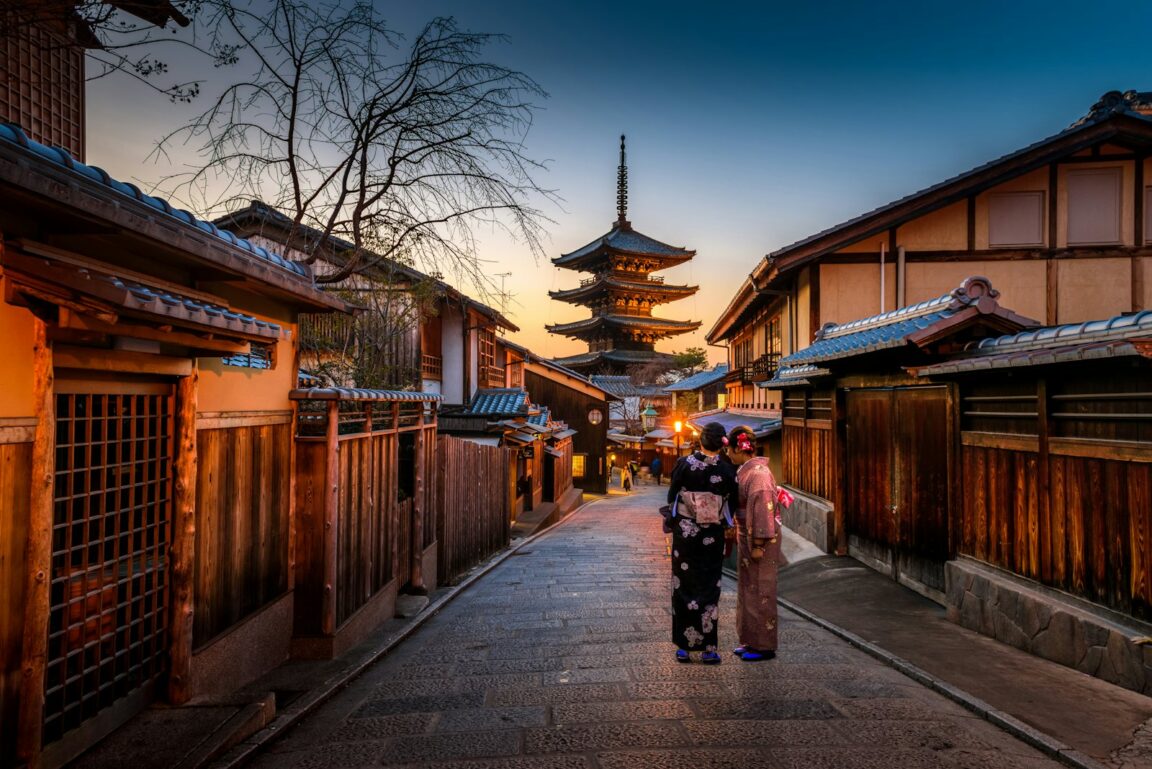
Featured image: Yasaka-dori in Kyoto’s Higashiyama district at dusk, looking toward the Yasaka pagoda, with two women in kimono on the lane. Photo by Sorasak, via Unsplash.