 Camille Baptiste
Lisbon works unusually well for a woman travelling alone, and the reason is urban rather than abstract: its central neighbourhoods stay populated late, its metro runs until 1am, its restaurant culture makes a table for one unremarkable, and its main risks are pickpockets and tired feet rather than anything more serious. Base yourself in Baixa or Chiado for lit, level, busy streets, use Alfama as an evening destination you plan rather than a maze you drift through, ride tram 28 early or not at all, and treat the steep cobbled lanes as a footwear decision made at packing, not a surprise on arrival. This guide works through the neighbourhoods, the transport logic and the mistakes that catch solo travellers out.
Quick Facts
- Best solo bases: Baixa and Chiado for flat, lit streets and late foot traffic; Principe Real for a calmer, cafe led version.
- Metro hours: Lisbon’s metro runs from early morning until 1am, which covers almost every evening a solo traveller will plan. Check current times at Metro Lisboa.
- Tram 28 reality: Famous, useful and crowded. Crowding is exactly why pickpockets work it, so ride it early in the day and guard your bag when you do.
- Footwear rule: Polished cobbles on steep gradients are slippery dry and treacherous wet. Flat shoes with grip are not a style compromise here; they are equipment.
- Evening pattern: Miradouro viewpoints at sunset, dinner from around 8pm, Bairro Alto for a drink, home by metro or on foot through lit streets.
- Transport operator: Trams and buses are run by Carris; routes and tickets are at carris.pt.
Choosing a Neighbourhood That Stays Lively Late
The solo question in Lisbon is rarely which district is charming, since most of them are, but which district is still busy at the hour you walk home. Baixa, the flat grid between Rossio and the river, answers best: wide lit streets, hotels and restaurants at every corner, and people around until late. Chiado, its uphill neighbour, adds bookshops, theatres and cafes and keeps the same evening energy with slightly more polish. Between them they form the base this guide recommends, and our 3 days in Lisbon itinerary is built on the same geography, so its day plans drop neatly into a solo trip.
Bairro Alto is the nightlife district proper, a grid of small bars that fills after 10pm and empties toward 2am. It is a place to go for an evening, five minutes from Chiado, rather than a place to sleep, since the same streets that entertain you at midnight will keep a light sleeper awake. Principe Real, just beyond, is the grown up alternative: a garden square, good restaurants and a local crowd. Alfama, the oldest district, is the one to treat with most thought, covered next.
Alfama After Dark: Beautiful, With a Plan
Alfama is a hillside warren of lanes below the castle, and in the evening it glows: fado spilling from small restaurants, laundry overhead, viewpoints over the river. It is also the district where lanes narrow, empty and fork without warning, and where a solo traveller should move with intent rather than wander. The working pattern is simple. Go up before sunset to a named viewpoint such as Portas do Sol or Santa Luzia, eat at a restaurant on a main lane, enjoy the fado, and leave by a lit route or a tram or taxi from the bottom of the hill. Alfama rewards that structure completely; what it punishes is the midnight shortcut through unlit alleys chosen because a map made it look shorter.
None of this is about fear. Lisbon’s violent crime rate is low and Alfama is a lived in neighbourhood, not a stage set, so residents are out on their steps all evening. It is about sightlines and footing: a district of stairs and polished stone deserves the same respect you would give a mountain path, in shoes chosen for it, at an hour when other people are around.
The Tram Logic, Including When to Skip Tram 28
Lisbon’s trams are transport first and attraction second, and reading them that way makes the city easier. Tram 28 crosses the centre from Martim Moniz to Prazeres through Alfama, Graca, Baixa and Chiado, which is why every visitor wants it and why its cars fill to standing by mid morning. For a solo traveller the calculus is: ride it before 9am for the pleasure of it, sit if you can, keep your bag in front of you and your phone in a zipped pocket, because the crowding that makes it atmospheric is the same crowding Lisbon’s pickpockets rely on. The rest of the day, the parallel buses and the metro do the same journeys faster and emptier.
The wider network is genuinely good. The metro’s four lines cover the centre, the airport and the northern districts until 1am, stations are staffed and lit, and the same travel card works across metro, tram and bus. Travellers with any mobility consideration should also read our Lisbon accessible transport guide, because its flat Baixa routing and lift information is equally useful for anyone managing luggage, an injury or plain fatigue on these hills. Late at night, ride share cars are plentiful and inexpensive, and using one for a cross town trip after midnight is a normal local choice, not an extravagance.
Hills, Cobbles and the Footwear Decision
Every Lisbon warning list mentions the hills, but the specific hazard is the calcada, the small polished limestone cubes that pave the old districts. They are beautiful, uneven and slippery, and the gradients in Alfama, Mouraria and the climb to the castle are steep enough that a descent in smooth soled shoes after rain is a genuine fall risk. Pack one pair of flat shoes or trainers with real tread and treat them as your evening footwear as well as your sightseeing footwear. Heels in Alfama are a local joke for a reason.
Pace the climbs, too. Lisbon rewards a rhythm of one hill district per half day, with cafe stops used as altitude breaks. The city’s miradouros, its tiled viewpoints, are placed exactly where a climber wants to stop: Santa Catarina for the river and bridge, Graca for the castle side, Senhora do Monte for the widest panorama of all. An evening that ends at a miradouro with a kiosk drink, among a crowd doing the same thing, is one of the reliable pleasures of solo Lisbon.
Evenings, Eating Alone and Nightlife Judgment
Dining alone in Lisbon carries no stigma worth mentioning. Restaurants seat solo diners without comment, the counter culture of tascas and pastelarias makes a quick meal at a bar normal, and dinner starts late enough that an 8pm table for one is early, not odd. The couvert items placed on the table, bread, olives and cheese, are charged if eaten, which is a billing custom to know rather than a trap. Fado houses in Alfama and Mouraria sell dinner with the music; smaller bars where locals sing, the fado vadio pattern, offer the art form at the price of a drink and respectful quiet during songs.
For nightlife, Bairro Alto’s streets are sociable and easy to join, drinks are inexpensive, and the crowd is mixed in age and nationality. The ordinary solo rules apply and suffice: watch your drink being poured, keep the bag zipped and across the body, and decide your route home before the last drink, while the metro is still running or with a ride share booked. Lisbon’s nightlife starts late and peaks after midnight, so a traveller who prefers evenings to end at 11pm loses nothing; the miradouro and dinner version of the city is complete in itself.
Mistakes Solo Travellers Make in Lisbon
The recurring errors are specific. Booking a charming Alfama apartment without realising the last hundred metres are stairs, then facing them nightly with luggage and in the dark. Riding tram 28 at noon with a phone in a back pocket. Wearing the wrong shoes on wet cobbles. Treating the castle queue as compulsory when the viewpoints below it are free and emptier. And underestimating the midday summer sun on exposed hilltops. Each is avoidable with the planning in this guide, and none requires spending more money, only choosing the base, the hour and the shoes with intent.
Frequently Asked Questions
Is Lisbon safe for a woman travelling alone?
Yes, by European capital standards Lisbon is a comfortable solo city, with low violent crime and busy central streets late into the evening. The realistic risks are pickpocketing in crowded trams and viewpoints, and falls on steep wet cobbles, both manageable with the precautions in this guide.
Where should a solo traveller stay in Lisbon?
Baixa or Chiado for a first trip: flat or gentle streets, lit and populated late, metro stations in every direction. Principe Real suits a return visit. In Alfama, choose a main lane near the tram route rather than the upper alleys.
Is tram 28 worth it?
Yes, early. Ride before 9am for a seat and the views, and treat it as sightseeing. Later in the day it is slow, crowded and the city’s best known pickpocket setting, so use the metro and buses for actual transport.
What time does the Lisbon metro close?
Services run until 1am across the network. After that, night buses and ride shares cover the centre, and Bairro Alto empties within walking distance of Baixa and Chiado hotels.
What shoes should I pack for Lisbon?
Flat shoes or trainers with grippy soles, broken in before the trip. The polished cobbles and steep gradients make smooth soles and heels impractical for sightseeing and genuinely risky when wet.
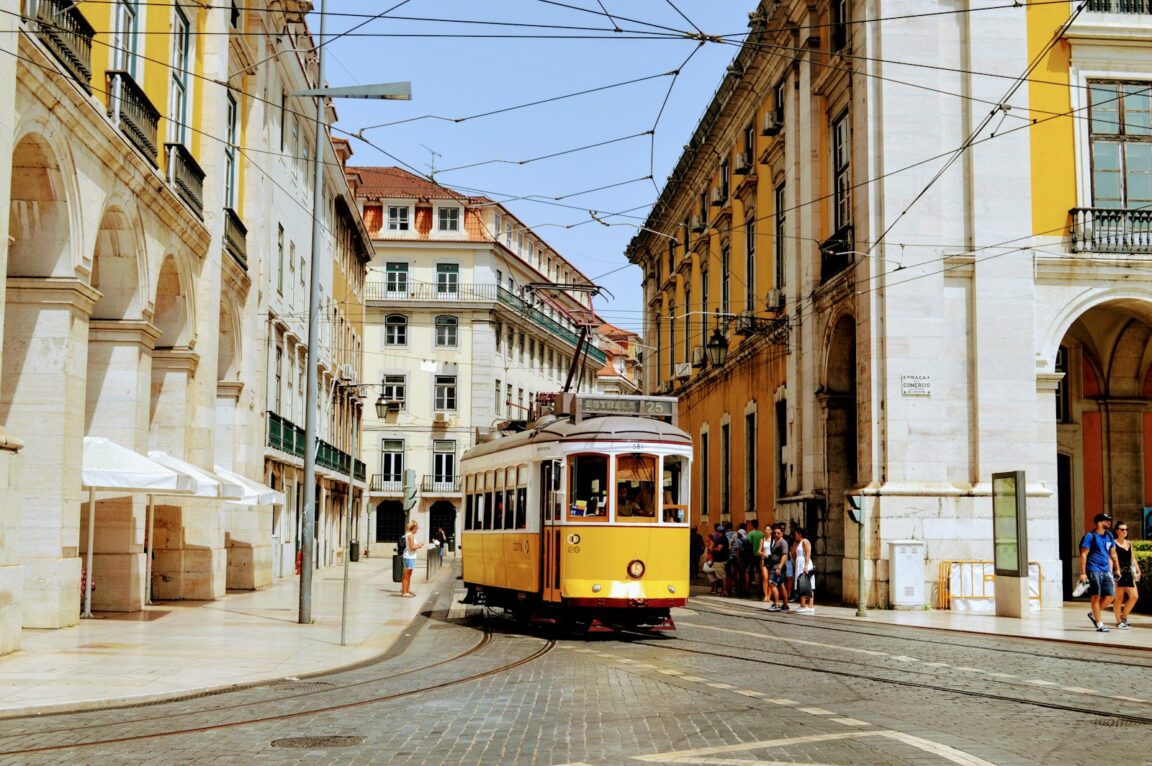
Featured image: A yellow Carris tram on a Baixa street in central Lisbon, between the district’s arcaded buildings. Photo by Unsplash contributor (photo 1585208798174-6cedd86e019a), via Unsplash.