 Jordan Ellis
Three days in Denver divide cleanly: one day for the historic downtown core of LoDo and Union Station, one for the RiNo art district and the big museums, and one morning at Red Rocks, the sandstone amphitheatre in the foothills west of the city, with the altitude rules applied from the first hour. Denver sits at exactly 5,280 feet above sea level, and the visitors who enjoy it most are the ones who treat that fact as the itinerary’s first item: hydrate before arrival, keep day one gentle, hold the serious drinking and the foothills hiking until the body has had a day to adjust. Done in that order, the city opens up as a walkable, sunny base with the Rocky Mountains permanently in view to the west.
Quick Facts
- Elevation: 5,280 feet, exactly one mile, marked on the west steps of the Colorado State Capitol; Red Rocks sits higher, at about 6,400 feet
- Airport link: The RTD A Line train runs from Denver International Airport to Union Station in about 37 minutes; the airport day pass costs US$10 and covers other RTD travel the same day
- Historic core: LoDo, Lower Downtown, the city’s oldest neighbourhood, centred on the restored 1914 Union Station
- Art district: RiNo, the River North Art District, a former industrial area of warehouses now covered in large scale murals
- Red Rocks: Red Rocks Park and Amphitheatre, about 15 miles west of downtown near Morrison; the park is free to enter on non-event days, and the Trading Post Trail loops 1.4 miles through the formations
- Orientation: The mountains are always west; downtown streets run on a diagonal grid aligned to the river, while the rest of the city uses a standard north to south grid
- Altitude rule of thumb: Drink roughly twice your usual water, expect alcohol to hit harder, and use more sun protection than the temperature suggests
The altitude rules, before anything else
At 5,280 feet there is roughly a quarter less atmosphere above you than at sea level, and the effects are consistent enough to plan around. The air is thin and very dry, so dehydration arrives quietly and early. Ultraviolet light is stronger, so sunburn happens faster than the mild mountain air implies. Alcohol reaches further: a drink at altitude behaves like more than a drink, which catches out visitors whose first evening involves a brewery crawl. Sleep can be restless on the first night, and exercise that feels easy at home, climbing the Red Rocks steps, walking uphill with luggage, produces a surprising shortage of breath.
The countermeasures are unglamorous and they work. Start drinking extra water the day before travel and continue through the first two days, aiming for roughly double your normal intake. Eat properly, including on arrival day, when appetite can dip. Keep the first day’s exertion modest and its alcohol minimal, then build. Most healthy visitors adjust within a day or two. The warning signs that mean stop and descend, a worsening headache with nausea, dizziness or unusual breathlessness at rest, are rare at Denver’s elevation but real on excursions higher up, and the correct response is always to go down, hydrate and rest, and to seek medical advice if symptoms persist. Visitors with heart or lung conditions should take personal medical advice before travelling to altitude at all.
One adjustment to expectations helps too. Denver is the gentle introduction to altitude, not the extreme of it. The mountain towns and passes reached from the city sit far higher, above 9,000 and even 11,000 feet, and Red Rocks itself is about 1,100 feet above the city. Sequence the trip so the highest places come last, as this itinerary does, and the body gets a staircase instead of a cliff.
Day 1: LoDo, Union Station and the Capitol mile
Start where the city started. LoDo, the Lower Downtown district, holds Denver’s oldest streets, its Victorian brick warehouses converted to restaurants, bookshops, bars and lofts, and its great set piece, Union Station. The station, rebuilt in 1914 in Beaux-Arts style after a fire, works today as a combined rail station, food hall and living room for the city, its Great Hall lined with sofas, a terminal bar and restaurants. It is also the practical hub of the trip: the A Line from the airport arrives here, light rail and buses fan out from here, and the free downtown shuttle runs along the 16th Street corridor from its door.
Walk LoDo slowly on this first, deliberately gentle day. Larimer Square, a short walk south, is the city’s oldest block, strung with lights and lined with independent shops and dining. Coors Field, the baseball stadium, anchors the district’s northern edge and rewards a look even outside game days, while the lanes around Blake and Market Streets carry the warehouse architecture that defines the neighbourhood. Everything is flat, close together and punctuated with places to sit down with coffee or water, which is exactly what a first day at altitude should look like.
In the afternoon, walk or ride southeast to the Civic Center and the Colorado State Capitol, whose gold plated dome is visible across downtown. On the west steps, markers record the exact mile high point, 5,280 feet, and successive surveys have placed the line on different steps, so Denver cheerfully maintains more than one marker. It is a small, likeable piece of civic honesty and the correct first day photograph. Free guided tours of the building run on weekdays; the surrounding park and the Denver Public Library and art museum complex across the street fill any spare hour without demanding exertion.
Day 2: RiNo murals in the morning, museums after
The River North Art District, RiNo, is Denver’s creative quarter, a grid of former warehouses and industrial buildings northeast of downtown that artists and brewers colonised and that now carries some of the densest street art in the United States. Whole walls are given over to large scale murals, renewed often enough that repeat visitors find a different district each time. Go in the morning, when the light rakes across the walls and the alleys are quiet, and walk it as a gallery without walls: the blocks around Larimer Street and the Denver Central Market are the natural centre.
The Central Market, a food hall inside a converted building on Larimer, solves lunch and demonstrates the district’s second identity as a food neighbourhood, with vendors covering coffee, pizza, charcuterie, tacos and ice cream under one roof. Around it, taprooms, coffee roasters, galleries and small shops fill the warehouse grid. RiNo asks for no tickets and no schedule; two to three hours of wandering is the right dose, with a guided graffiti tour available for travellers who want the artists and stories behind the walls.
Give the afternoon to one major museum rather than two rushed ones. The Denver Art Museum, beside the Civic Center, is the city’s flagship, known for its Indigenous arts collections and its angular Hamilton Building. In City Park, east of downtown, the Denver Museum of Nature and Science covers dinosaurs, gems, dioramas and an IMAX and planetarium programme, and the terrace behind it frames the classic Denver view: skyline in front, Front Range behind. That view is also the argument for ending the day in City Park itself, on the grass by Ferril Lake, as the light goes. Travellers pairing Denver with a mountain stay will find the natural sequel in our guide to the Hotel Jerome in Aspen, Colorado’s classic mountain hotel.
Day 3 morning: Red Rocks, done properly
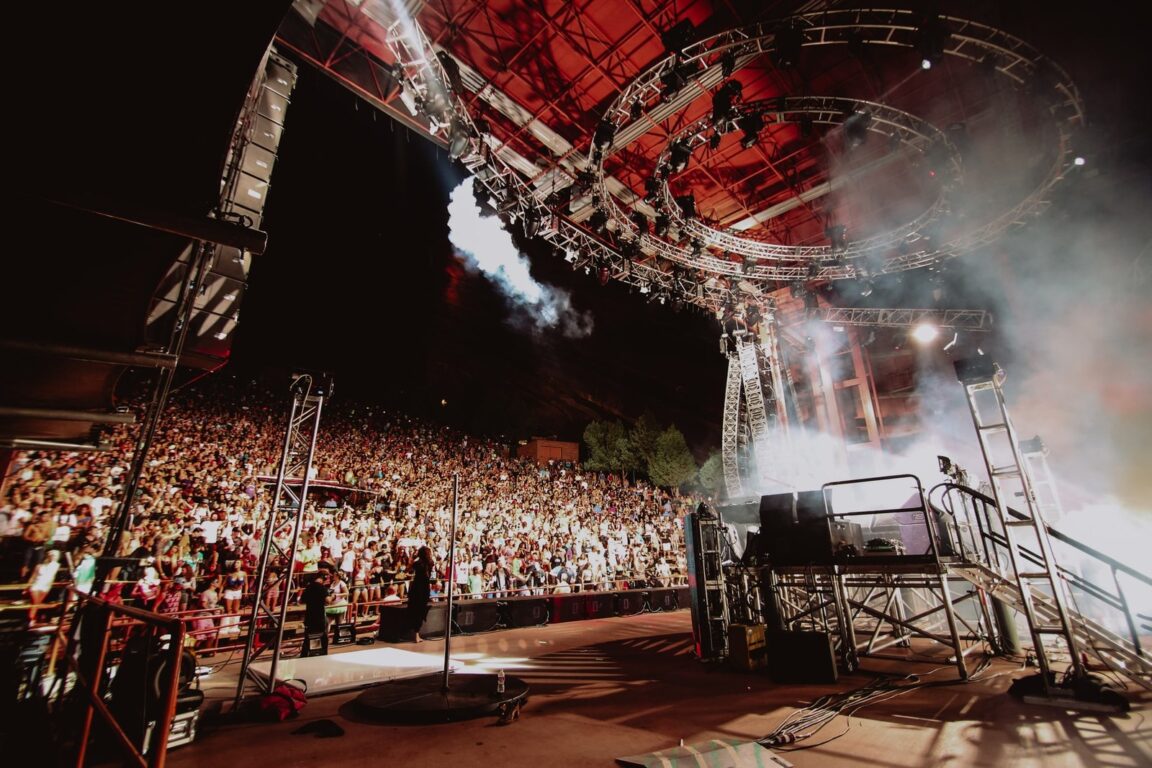
Red Rocks Park and Amphitheatre, about 15 miles west of downtown near Morrison, is the one excursion no Denver itinerary should trade away. Two immense tilted slabs of red sandstone, formed around 300 million years ago and pushed upward with the Rockies, frame a natural amphitheatre whose acoustics made it a concert venue of world reputation. On a morning without an event, the park is free to enter, the rows of seats are open to walk, and the scale of the place can be absorbed in quiet, with the plains and the distant city spread out below.
Arrive early. Morning light sets the rock alight, temperatures stay kind, and the crowds of concert days and weekend exercisers have not yet arrived. Walk the amphitheatre steps at altitude pace, remembering the park sits near 6,400 feet, then take the Trading Post Trail, a 1.4 mile loop from the historic trading post building through smaller formations, fins and scrub, for the geology at walking scale. Mobile phone signal inside the park is notoriously poor, which matters for the return trip: arrange the ride back before entering, whether that is a booked car, a tour pickup or a rideshare scheduled while signal lasts. On concert days the calculus changes completely; the venue closes to casual visitors as show time approaches, roads clog, and the correct plan is either a ticket or a different morning.
Day 3 afternoon: choose your Denver ending
With Red Rocks done by midday, the final afternoon is a choice between three good versions of the city. Golden, the former territorial capital in the foothills on the drive back, offers a compact historic main street, Clear Creek running through town and a brewing heritage anchored by Coors, and suits travellers who want one more mountain framed hour without altitude drama. Cherry Creek, southeast of downtown, is Denver’s polished shopping and gallery district, right for a slow final browse and a good dinner. Or return to LoDo and spend the last hours where the trip began, at Union Station and Larimer Square, which by now will read as familiar streets rather than sights. Familiarity, on day three of a city break, is a pleasure in itself.
Where to stay, and getting around without a car
First time visitors should stay in or near LoDo and Union Station. The position puts the A Line, the downtown shuttle, LoDo dining and the walk to RiNo and the Capitol inside one easy radius, and it removes the car question for the city days entirely. Capitol Hill and the Civic Center suit museum focused trips; Cherry Creek suits shoppers who accept a drive or bus ride downtown. Downtown hotel parking runs to US$20 to US$45 a night in recent visitor guidance, a real cost to weigh against a rental car that the city days do not need. Rent a car, if at all, for the Red Rocks day and any mountain excursion only, and book it for those days rather than the whole stay.
Within the city, walking and RTD light rail and buses cover this itinerary, and the downtown grid rewards one habit: navigate by the mountains. The Front Range fills the western horizon from any open sightline, so west is always findable, and the diagonal downtown streets, aligned to the South Platte River, meet the standard grid at predictable angles once the trick is known. Travellers planning a longer American city sequence can set Denver beside our first time Chicago three day itinerary, another flat, walkable downtown where the architecture does the guiding.
Frequently Asked Questions
How seriously should I take Denver’s altitude?
Seriously enough to plan around it, not enough to fear it. At 5,280 feet most visitors feel some combination of dry air, faster sunburn, stronger alcohol effects and breathlessness on stairs for the first day or two. Double your water intake, keep day one gentle, go easy on alcohol, and build to Red Rocks and the mountains later in the trip.
Do I need a car in Denver?
Not for the city itself. LoDo, Union Station, RiNo, the Capitol and the museum districts are walkable and linked by RTD trains and buses, and the airport A Line removes the transfer problem. A car earns its cost only for Red Rocks, Golden and mountain day trips, so rent for those days specifically.
When is the best time of day to visit Red Rocks?
Early morning on a non-event day. The light is best, the heat and crowds are lowest, and the amphitheatre is open to walk. Check the event calendar before going: on concert days the venue restricts casual visiting as show time nears, and phone signal in the park is poor, so arrange your return ride in advance.
How do I get from Denver airport to downtown?
Take the RTD A Line train from the airport station to Union Station. The ride takes about 37 minutes, runs regardless of road traffic, and the US$10 airport day pass also covers your other RTD travel that day. It is the simplest arrival in American air travel.
What is the one mile marker at the Capitol?
A marker on the west steps of the Colorado State Capitol records the point exactly 5,280 feet above sea level. Repeated surveys have placed the line on different steps over the years, so more than one step now claims the honour. It is free to visit and an easy walk from LoDo.
What is the best season for three days in Denver?
Late spring and early autumn give the kindest combination of warm city days, clear mountain views and comfortable Red Rocks mornings. Summer brings afternoon thunderstorms and the full concert season; winter is bright and cold, with the city entirely workable and the mountains at their most dramatic.
Transport fares, park details and visitor guidance checked 14 November 2026 against VISIT DENVER and venue information. Altitude affects individuals differently; this guide is planning advice, not medical advice.