 Jonas Lindqvist
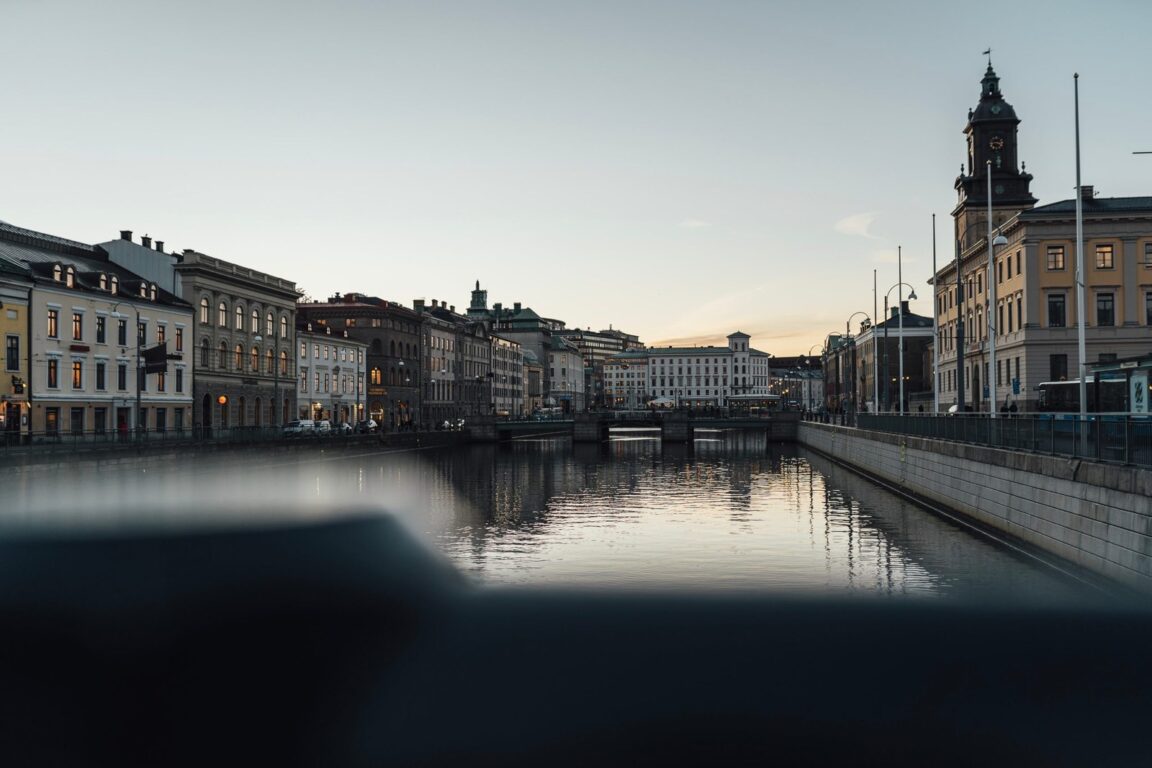
Two days in Gothenburg split naturally between the city and the sea: day one on foot through Haga’s cinnamon bun cafes, the Feskekorka fish hall and the Avenyn boulevard, and day two out in the southern archipelago, where car free islands are reached by ordinary city tram and ferry on a single Västtrafik ticket. The decision that shapes the trip is the island choice, and this guide makes it explicitly: Styrsö for the easiest all round island day, Vrångö for beaches and nature at the far end of the line, Brännö and Donsö for character in between. Gothenburg, Sweden’s second city, rewards travellers who treat the archipelago not as an excursion but as the second half of the city itself.
Quick Facts
- Base: Central Gothenburg, within walking distance of Haga, the canals and the main station; Sweden’s second largest city and its great west coast port
- Haga: The oldest suburb, preserved wooden houses along pedestrian Haga Nygata, home of the hagabulle, the plate sized cinnamon bun served in its cafes
- Feskekorka: The fish church, Gothenburg’s fish hall since 1874, built to resemble a Gothic church on the Rosenlund canal bank, now a renovated hall of fish counters and seafood restaurants
- Transport: Västtrafik trams, buses and archipelago ferries share one ticket; recent fares list a zone A single from SEK 38 and a 24 hour ticket from SEK 125, checked in autumn 2026
- Archipelago route: Tram 11 to Saltholmen in about 35 minutes, then Styrsöbolaget ferries to the southern islands, all inside zone A
- Island rule: The southern archipelago is completely car free; travel is on foot, by bicycle and by ferry, and the last return ferry sets the day’s real deadline
- Best season: Late May to early September for swimming and long evenings; the city itself works year round, with Liseberg and the cafes carrying the darker months
Day 1 morning: Haga and the fika that is a meal
Begin in Haga, the district Gothenburg saved. Haga was the city’s first suburb, a working class quarter of wooden houses that survived the demolition waves of the twentieth century to become its best loved streets. Its characteristic buildings are landshövdingehus, a Gothenburg invention with a stone ground floor and two wooden storeys above, a design that satisfied fire regulations while keeping timber construction. Along Haga Nygata, the pedestrian main street, those houses now hold cafes, bakeries, vintage shops and small design stores under the eye of the Skansen Kronan fortress on its hill above.
The Haga ritual is fika, and its monument is the hagabulle, a cinnamon bun of frankly comic size, baked to be shared and served warm in the street’s cafes. Order one between two people, with coffee, and treat it as the morning’s event rather than a snack between events. Afterwards, climb the short path to Skansen Kronan, the 17th century crown redoubt above the rooftops, for the orientation view of the whole trip: Haga below, the river and harbour beyond, and, on a clear day, the sea the second day is aimed at. The fortress grounds are free to wander and the panorama does the work of a map.
Day 1 midday: Feskekorka, the fish church
Walk north from Haga to the Rosenlund canal and the building Gothenburg calls Feskekorka, the fish church. Opened in 1874 and designed by city architect Victor von Gegerfelt, it is a fish hall built in the form of a Gothic church, wide arched windows and all, a joke about the seriousness with which this port takes fish that has been running for 150 years. After a long renovation the hall has reopened as a working temple again, its counters and seafood restaurants serving the west coast catch: shrimp, langoustines, oysters, cod and the rest of the cold water catalogue.
Lunch here is the day’s main meal and should be ordered like it: a shrimp sandwich in the Gothenburg style, piled high on rye with egg and mayonnaise, or fish soup, or oysters at a counter with a glass of something cold. The hall also teaches the geography of the second day without trying: much of what is sold here comes in on boats from the archipelago islands, including Donsö, whose harbour the ferry passes. Note the hall’s opening pattern before relying on it for a particular day, as market hours run shorter than restaurant hours and vary by season.
Day 1 afternoon and evening: Avenyn, Götaplatsen and Liseberg
The afternoon belongs to the city’s formal axis. Kungsportsavenyn, known universally as Avenyn, is Gothenburg’s grand boulevard, running from the old moat to Götaplatsen, the cultural square at its head. There the Poseidon statue by Carl Milles stands before the Gothenburg Museum of Art, whose collections run from Nordic painting to contemporary work, flanked by the concert hall and the city theatre. It is a handsome, unhurried sequence, built for a port city that wanted culture visible from the street, and an hour in the museum plus a slow walk back down the boulevard fills the afternoon exactly.
Evenings offer a choice of Gothenburgs. Liseberg, the amusement park a short tram ride southeast, is a genuine institution, one of Europe’s best loved city parks, with wooden and steel coasters, gardens and, in season, concerts and markets; in November and December its Christmas market is among Sweden’s largest. The alternative is the Linné and Majorna direction, west of Haga, where neighbourhood restaurants and bars serve the city’s own evening rather than the visitor version. Either is right. What the first day should not attempt is an island as well; the archipelago deserves its own full day and its own early start. Travellers extending a Swedish trip should pair this guide with our three days in Stockholm itinerary, the capital to Gothenburg’s west coast counterweight.
Day 2: the southern archipelago, and how to choose one island
The southern archipelago is a scatter of rocky, car free islands off the city’s southwest shore, home to about 5,000 permanent residents and many more in summer, all of them dependent on the same ferries visitors ride. The route out is part of the pleasure: tram 11 from the centre to the Saltholmen terminal in about 35 minutes, then a Styrsöbolaget ferry, with the same Västtrafik ticket covering both legs. Boats also leave from Stenpiren in the centre on some services. Frequency is roughly hourly on the main routes and better in summer, and the timetable, above all the last boat back, is the framework the whole day hangs on. Check it the night before, not at the pier.
With one day, choose one island properly rather than skimming three. Styrsö, the archipelago’s centre, is the default recommendation for first timers: it has the main villages, a guesthouse and cafe layer, marked walking paths across the island, and a choice of swimming spots from sandy family beaches to flat rock shelves, with the neighbouring island of Donsö connected by a bridge for a second harbour in the same day. Donsö itself is the working island, a serious fishing and shipping community whose harbour is ringed with boathouses and small shipowners’ offices, and it suits travellers who prefer a real port to a resort mood.
Vrångö, the southernmost island and the end of the ferry line, is the choice for nature: a nature reserve, sandy beaches on its western shore, a small harbour village and the feeling of the open Kattegat beyond. It asks for the longest ferry ride and repays it with the wildest swimming and walking. Brännö, closer in, is the lyrical option, meadows, a famous dance pier in Swedish song tradition and easy cycling, ideal in midsummer mood. Asperö, the nearest island, is the honest answer for a half day: a quick crossing, a village walk, a swim and a fika, and back in the city by mid afternoon. In November the archipelago is stark and quiet rather than a swimming trip; go then for walking, weather and empty paths, dressed for wind, and the islands are still worth the day.
The ferry decision, in one place
Short of time: Asperö. First visit, one full day, mixed swimming, walking and lunch: Styrsö, with the bridge walk to Donsö. Beaches and nature above facilities: Vrångö. Working harbour character: Donsö. Summer evening light and meadows: Brännö. In every case the method is identical: tram to Saltholmen on a zone A ticket or day pass, ferry out in the morning, the island on foot, a harbour lunch where the island offers one, a swim in season, and a return ferry taken one earlier than the last, because the last boat of the day is a deadline no traveller should test on a car free island. Visitors continuing north afterwards will find a useful comparison in our first time Oslo three day itinerary, another Scandinavian port city that sends its visitors out to islands by ferry.
Practical notes: tickets, weather and swimming
Buy Västtrafik tickets in the operator’s app before boarding; zone A covers the city and the southern archipelago, and a 24 hour ticket is the natural purchase on the island day, removing every fare decision after breakfast. Trams and ferries are step free or assisted in the usual Swedish manner, and the main island paths are manageable, though the rocky swimming shelves are not. West coast weather changes by the hour even in summer: pack a swimsuit and a windproof layer in the same bag, and treat the sea, which warms slowly and peaks in late summer, with the respect Swedish swimmers give it. Finally, the islands are home, not a theme park: keep to paths, take litter back to the mainland, and let the quiet stay quiet.
Frequently Asked Questions
Which archipelago island should a first time visitor choose?
Styrsö, for a full day. It has the best balance of villages, cafes, walking and swimming, the ferry service is the most forgiving, and the bridge to Donsö adds a working fishing harbour to the same day at no extra transport cost.
Is the archipelago ferry included in a city transport ticket?
Yes. The southern archipelago ferries are part of the Västtrafik public transport network, and a zone A ticket or day pass covers the tram to Saltholmen and the ferry alike. Recent fares list a single from SEK 38 and 24 hours from SEK 125; check the app for current prices.
What exactly is a hagabulle?
An oversized cinnamon bun, a Haga speciality served in the district’s cafes, big enough that ordering one per person is a rookie error. It is the centrepiece of a Haga fika, Sweden’s coffee and cake ritual, and it eats like a small meal.
Is Feskekorka a church or a market?
A market in a building shaped like a church. Gothenburg’s fish hall since 1874, it was designed with Gothic arches and windows, which earned it the fish church name. Inside are fish counters and seafood restaurants; the shrimp sandwich is the classic order.
Can I swim in the archipelago?
Yes, in season it is the point of going. Styrsö and Vrångö offer sandy beaches, bathing piers and flat rock shelves, and the water is cleanest and warmest in late summer. Outside the season the islands are for walking, and the sea is for looking at.
Do I need a car anywhere in this itinerary?
No. The city days are walkable and tram served, and the southern archipelago is entirely car free, reached by tram and ferry on one ticket. A car would be parked, expensively, for the whole two days.
Fares, ferry arrangements and venue details checked 14 November 2026 against Västtrafik and city information. Archipelago timetables change by season, so verify the return ferry for your exact date before travelling.