 Lucas Meyer
Pack for Iceland in summer as if winter is travelling with you, politely, in the same duffel. A Ring Road trip in June, July or August still means Reykjavik highs averaging only about 12 to 15 degrees Celsius, wind that finds every gap, waterfall spray that soaks faster than rain, and nights that can drop toward freezing in the highlands and interior even while the sky never fully darkens. The system below is built for that reality: a full waterproof outer layer, a real insulation stack, and sleep and light gear for the midnight sun, all in one checked duffel sized for a rental car boot and a different guesthouse every night or two. Travellers who pack for a European summer get one cold, wet day and learn. Travellers who pack with this list just call it Tuesday.
Quick Facts
- The season: Summer runs June to August, with the midnight sun peaking around the late June solstice
- Reykjavik temperatures: Average highs of roughly 12 to 13 degrees Celsius in June and 14 to 15 in July, with lows around 7 to 9 degrees, and inland and highland nights colder, at times near 3 degrees
- Daylight: About 21 hours around the solstice in Reykjavik, and effectively no true darkness for much of June and early July
- The waterproof rule: Jacket and trousers, both fully waterproof, because waterfall spray and horizontal rain are daily events, not risks
- The bag: One checked duffel, soft sided for car boots and guesthouse stairs, plus a daypack that carries the full weather system
- The sleep rule: An eye mask is core kit under the midnight sun, not a luxury
Why is it called four seasons in a day?
Because the North Atlantic weather machine does not settle in summer, it just speeds up. A calm, bright morning at a black sand beach can become a gale with driving rain by the time you reach the next waterfall, and clear again for a golden evening that lasts until midnight. The temperature band is narrow but the wind chill is not: 12 degrees in still air is a pleasant walking day, and 12 degrees in a Ring Road gale is a hat, gloves and full shell day. Altitude adds its own tax on highland detours and mountain passes. The packing answer is the classic three layer stack, built properly: merino or synthetic base layers, a fleece plus an insulated jacket as the warmth stack, and a genuinely waterproof shell over everything. This is the summer sibling of our Iceland winter packing guide, sharing the same skeleton with the heaviest insulation removed and the daylight kit added.
What makes waterfall spray a separate packing problem?
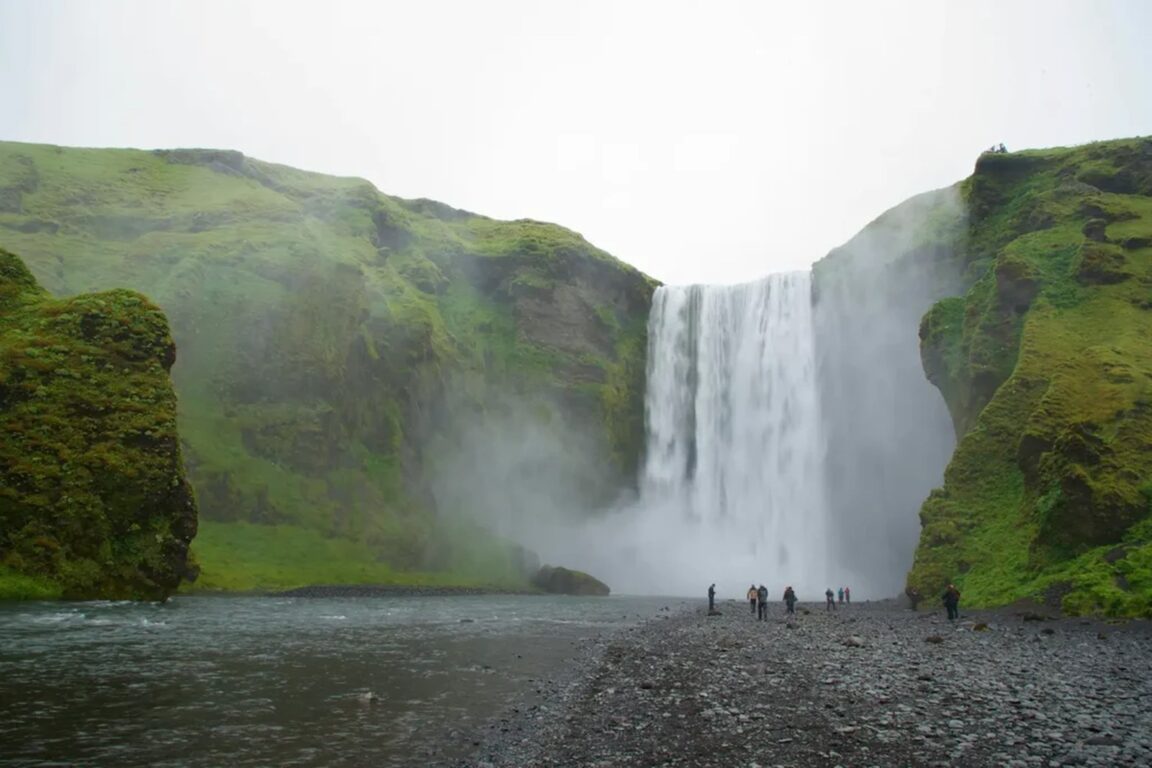
Rain falls from the sky. Waterfall spray arrives from every direction at once, driven by wind, and the great south coast falls are Ring Road fixtures you will not skip. At falls you can walk behind or approach closely, visitors get soaked to the skin in minutes without full waterproofs, and paths, steps and viewing areas are wet and slippery even on dry days. So the waterproof trousers in this list are not rain insurance, they are waterfall equipment, worn on purpose on falls days over your walking trousers. Add a waterproof cover or dry bag for camera and phone, a lens cloth that lives in a pocket, and boots with real grip for wet rock and mud. Keep a full change of clothes in the car on south coast days, in a dry bag, because the traveller who planned the change enjoys the falls twice as much as the one rationing dry socks. The same spray logic drives the deck layer thinking in our Greek island ferry packing guide: water in motion, wind behind it, and one dry layer kept in reserve.
How do you pack for nights that never get dark?
The midnight sun is the joy of the season and the enemy of sleep. Around the solstice Reykjavik gets about 21 hours of daylight and the remaining hours are twilight, and further north it is brighter still. Guesthouse and hotel curtains vary from excellent blackout to optimistic gauze. The fixes are small and total: a proper contoured eye mask, earplugs for light sleepers in thin walled farm stays, and a routine that treats 11 at night like evening, because your body will not do it unaided. Pack sleepwear you can wear in shared bathroom farm accommodation, and a head torch anyway, because toilets, campsites and aurora free summer nights still have practical dark corners, and by late August real darkness returns to the evenings. On the road, sunglasses are safety equipment as much as comfort: low sun at midnight on a straight east west stretch is a genuine driving hazard, and the driver rotation should plan for it.
What does the one duffel actually hold?
Everything, in cubes, because a Ring Road trip means packing and unpacking every day or two and the duffel is also your wardrobe. Base layers for rotation, two walking trousers, the fleece and insulated jacket, full waterproofs, one smarter set for Reykjavik dinners (casual warm beats formal everywhere in Iceland), swimwear and a quick dry towel for the geothermal pools and hot pots that punctuate the route, and the footwear pair: waterproof hiking boots worn or packed as the main shoe, plus a lighter pair for evenings and pool visits. Gloves, warm hat and a buff live in the daypack all summer, not in the duffel, because the moment you need them is a windy viewpoint an hour from the car park, not the guesthouse. A small laundry bag and a sink wash kit stretch the wardrobe across ten days, and a car kit completes the system: water, snacks, a paper map backup for signal gaps, and the dry change of clothes on waterfall days.
Frequently Asked Questions
Do I really need winter layers in July?
You need autumn layers, honestly labelled. Reykjavik July highs average around 14 to 15 degrees Celsius, wind chill cuts that hard, and highland and night temperatures can fall toward 3 degrees. A fleece, an insulated jacket, hat and gloves are standard July kit in Iceland, and locals dress exactly that way.
Are waterproof trousers essential, or just cautious?
Essential. Between wind driven rain and waterfall spray, your legs will get wet on most Ring Road trips, and wet trousers in wind at 10 degrees end days early. They weigh little, pack flat, and double as wind protection on exposed coasts and boat trips.
Can I do the Ring Road with carry on only?
In summer, a determined packer can, because there is no heavy winter insulation. But the full waterproof system, boots and the warmth stack push most travellers to one checked duffel, which suits a car based trip with no public transport leg. If you fly home with souvenirs, the duffel space will be welcome.
What should I wear for the geothermal pools?
Standard swimwear, plus the quick dry towel and a warm layer ready for the walk back to the changing room. Outdoor pools are a year round Icelandic institution and a summer evening in a hot pot under a bright sky is one of the great Ring Road pleasures. Follow each pool shower rules, which are posted and taken seriously.
Is an eye mask really necessary?
For most visitors, yes. With about 21 hours of daylight at the solstice and thin curtains in many stays, sleep quality is the first casualty of an Iceland summer trip. The mask weighs nothing and rescues every night of the journey.
Climate and daylight figures checked 14 November 2026 against Icelandic Meteorological Office patterns and published Reykjavik summer averages. Highland and interior nights run colder than the capital. Check the road and weather forecasts daily on the Ring Road, and respect all closures and warnings.