 James Wolfe
Nuwara Eliya is Sri Lanka turned inside out: the island’s highest town, at 1,868 metres above sea level, where the air is cool enough for sweaters, the hills are combed into tea gardens, and a British colonial hill station of golf greens, rose gardens and a red brick post office still sets the town’s tone. Come for a working tea factory, a walk around Lake Gregory and the train ride in, which climbs from Kandy to Nanu Oya station, about 8 kilometres from town, through some of the most celebrated rail scenery in Asia. One night is a taste. Two nights let you do the tea country properly, including the dawn trip out to Horton Plains.
Quick Facts
- Where: Central Province, Sri Lanka, in the hill country southeast of Kandy
- Altitude: 1,868 metres, or 6,128 feet, the highest town in Sri Lanka
- Climate: Cool year round by Sri Lankan standards, commonly in the teens Celsius, coldest at night in the dry season months
- Signature experience: A working tea factory tour, withering, rolling, oxidising, drying and grading, ending in a tasting of high grown Ceylon tea
- Town lake: Lake Gregory, created in 1873 under Governor Sir William Gregory, with a lakeside park, boats and pony rides
- Nearest station: Nanu Oya, about 8 kilometres away, on the Kandy to Ella line
- Day trip: Horton Plains National Park, about 32 kilometres away, for the World’s End escarpment walk
- How long: Two nights, arriving or leaving by train for at least one direction
Little England, honestly assessed
The nickname Little England is overused and, in Nuwara Eliya’s case, unusually accurate as a description of the built town. The hill station was developed in the 19th century under Governor Sir Edward Barnes and his successors as a sanatorium and retreat from the coastal heat, and the survivors are everywhere: the Grand Hotel’s timbered gables, the Hill Club, the Queen’s Cottage, the golf course founded in 1889 and still running through the middle of town, trout streams, vegetable gardens growing leeks, carrots and roses in volcanic soil, and a pink brick post office, built in 1894, that is one of the most photographed buildings in Sri Lanka.
None of this should be mistaken for England, and that is the pleasure of it. The colonial shell is filled entirely with Sri Lankan life: a busy market, the racecourse that hosts the April season, Hindu kovils serving the Tamil community whose labour built the tea industry, and families from Colombo up for the cool weather in the April holidays, when the town holds its festive season of racing, shows and garden competitions. Visit outside April for quiet, or in April for the party, but know which one you are booking.
Tea: the reason the town exists
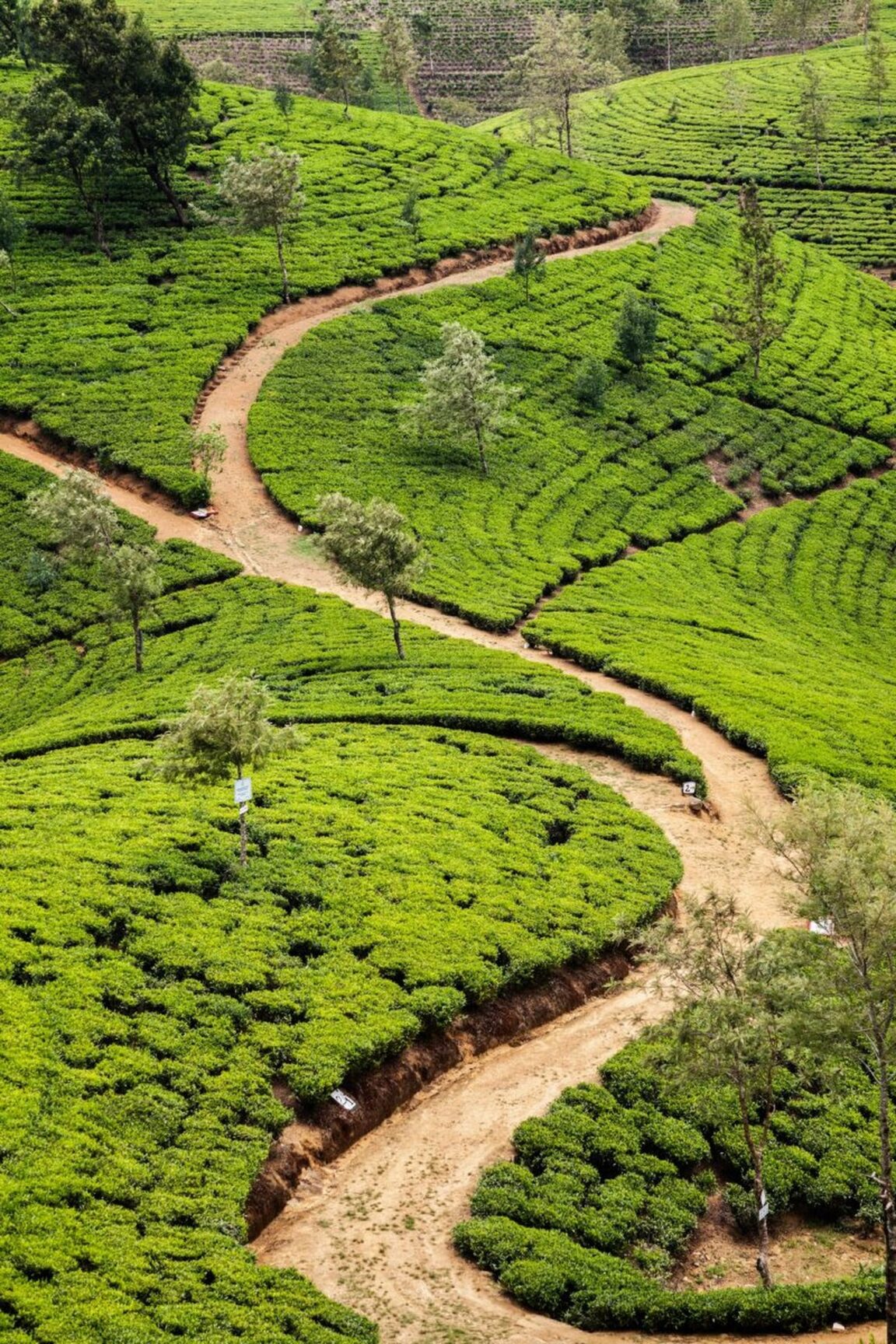
Tea is not a theme in Nuwara Eliya. It is the economy, the landscape and the history, all in one crop. The estates around the town produce high grown Ceylon tea, grown above 1,200 metres, and the altitude, mist and cool nights slow the leaf’s growth, producing the light, delicate, fragrant teas that connoisseurs rank as the champagne of Ceylon tea. Every hillside view in this article’s photographs is a working farm, picked by hand, two leaves and a bud, by the estate communities who live in the line rooms you will see along the roads.
A factory visit is the essential half day, and the format is consistent across estates. At Pedro Tea Estate, about 3 kilometres from town and among the most accessible, and at Damro Labookellie, roughly 10 kilometres towards Kandy, guided tours walk through the full process: withering the fresh leaf on long troughs, rolling, oxidising (the step tea makers call fermentation), drying, then grading and sorting, before a tasting in the estate shop. Go in the morning, when the factory floor is working at full pace and the withering rooms smell of fresh leaf. Buy tea here if you buy it anywhere; estate shops sell the genuine grades at fair prices. For the ritual end of the tea story, our guide to the Kyoto tea ceremony makes a fascinating contrast with Sri Lanka’s industrial, generous, drink-another-cup approach.
Lake Gregory, Victoria Park and the town walks
Lake Gregory anchors the town’s leisure. Created in 1873 by damming a stream under Governor Sir William Gregory, whose name it keeps, the lake is ringed by a paved park with lawns, flower beds, paddle boats, swan boats and pony rides, busy with Sri Lankan families at weekends and blissfully quiet on weekday mornings. The circuit makes the town’s best easy walk, about an hour at strolling pace, with the golf course and the hills behind it as the backdrop.
Pair it with Victoria Park, the town’s botanical heart, planted with trees from across the temperate world and at its best in the flowering months, roughly March to May, and with a climb up Single Tree Hill, the 2,100 metre viewpoint above the town reached on paths through tea gardens, for the full panorama: lake, town, golf course and the ridge of Pidurutalagala, Sri Lanka’s highest mountain at 2,524 metres, which rises directly behind the town and whose summit area is a military zone and closed to visitors.
Horton Plains and World’s End: the dawn expedition
The serious day trip is Horton Plains National Park, a protected montane grassland plateau at around 2,100 metres, about 32 kilometres and an hour’s drive south of town. The circular walk, roughly 9 kilometres, crosses patana grassland and cloud forest to World’s End, where the plateau drops in a sheer escarpment of around 870 metres, and on to Baker’s Falls. The rule that governs the trip is timing: cloud rolls in from mid morning and can erase the view entirely, so the standard pattern is a pre dawn departure from Nuwara Eliya, entry at opening, and the escarpment reached by around nine. Sambar deer graze the grasslands near the entrance, and the park is a stronghold of endemic birds and the purple faced langur. It is cold, wet underfoot and completely worth it; take layers, waterproofs and breakfast from your hotel.
The train in: Kandy to Nanu Oya
However you leave, try to arrive by rail. The line from Kandy climbs through tea country in a long series of curves, tunnels and viaducts, passing Pattipola and the highest sections of Sri Lanka Railways before reaching Nanu Oya, the station for Nuwara Eliya, about 8 kilometres and 20 minutes by taxi or tuk tuk from the town centre. Journey times from Kandy vary by service, commonly around four hours, and the onward stretch from Nanu Oya to Ella is the most famous of all, so many travellers ride Kandy to Ella in one go and stop at Nuwara Eliya on the way. Reserved seats on popular services sell out well ahead in peak periods; book as early as your plans allow, and treat any specific fare quoted in older guides as out of date until checked. The road alternative from Kandy, around 75 to 80 kilometres of switchbacks, takes roughly two and a half to three and a half hours and passes the Ramboda Falls and several estates, making it a sightseeing route in its own right.
Finish the Sri Lanka loop by contrasting the hills with the coast: our guide to Weligama, Sri Lanka’s surf and yoga town, is the warm water counterpoint to all this cool green altitude.
How to plan your days
Day one: arrive by train to Nanu Oya, settle in, walk Lake Gregory and Victoria Park in the afternoon, dinner in town. Day two: a tea factory in the morning, Pedro for convenience or Labookellie on the Kandy road, then the post office, market and Single Tree Hill if the cloud allows. With a third day, give it to Horton Plains at dawn. Pack for a different country from the rest of Sri Lanka: a warm layer and a waterproof are not optional at 1,868 metres, and nights in the coolest months can approach single figures Celsius.
Frequently Asked Questions
How high is Nuwara Eliya and does the altitude affect travellers?
The town sits at 1,868 metres, the highest in Sri Lanka. Most travellers feel nothing more than the cool air and better sleep, but the winding road or rail climb and cold nights are worth planning for with layers and a relaxed first day.
What is the best tea factory to visit near Nuwara Eliya?
Pedro Tea Estate, about 3 kilometres from town, is the most convenient full factory tour. Damro Labookellie, about 10 kilometres towards Kandy, is the scenic alternative on the main road. Both walk through withering, rolling, oxidising, drying and grading, and end with a tasting.
How do you get to Nuwara Eliya by train?
Trains from Kandy and Colombo serve Nanu Oya station, about 8 kilometres from the town, with taxis and tuk tuks meeting arrivals for the final climb into town. The Kandy to Nanu Oya stretch takes around four hours on most services and is one of Asia’s great rail journeys.
Is Horton Plains worth the early start?
Yes, and the early start is the point. Cloud usually closes in from mid morning and hides the World’s End escarpment, which drops around 870 metres. A dawn departure and an early walk are the difference between the view and a whiteout.
When is the best time to visit Nuwara Eliya?
The drier months, roughly January to April, give the clearest views and the town’s April festive season. The town is cool year round, and rain and mist are part of its character in every season, so pack waterproofs whenever you come.