 Elena Vasquez
Entry to St Peter’s Basilica itself is free, and the decisions that shape the visit are whether to book the timed entry with a digital audio guide for 7 euros to cut the security queue, whether to climb the dome for 17 euros by stairs or 22 euros with the lift for the first section, and whether to request the tiny Scavi tour of the necropolis months ahead. The dome climb is 551 steps in full, or 320 steps after the lift to the roof terrace, and in winter it runs from 7:30 in the morning to 17:00. Do the dome first, then work down through the basilica in a set order, and the largest church in the world becomes manageable in about three hours.
Quick Facts
- Basilica entry: Free, with no ticket required for ordinary admission. Every visitor passes airport style security screening in St Peter’s Square.
- Timed entry option: 7 euros on the official booking site, booking.basilicasanpietro.va, including a digital audio guide and a set entry time. Children up to 6 years old are free on the official products.
- Dome climb: 17 euros by stairs, 551 steps in total, or 22 euros with the lift to the terrace, leaving 320 steps. Both dome tickets include basilica entry and the digital audio guide, and neither can be refunded or changed.
- Dome hours: 7:30 to 17:00 in the winter season, 26 October 2026 to 28 March 2027, per the basilica’s official site. Summer hours run later.
- Dress code: Shoulders covered and trousers or skirts covering the knee, for all visitors. It is enforced at security, with no exceptions for hot weather.
- Scavi tour: The necropolis under the basilica, by advance request only to the Excavations Office, in guided groups of about 12, with roughly 250 places a day. Closed Sundays and Vatican holidays.
- Time needed: About 90 minutes for the basilica alone, and 2.5 to 3 hours with the dome climb.
How does entry work now, free queue or timed booking?
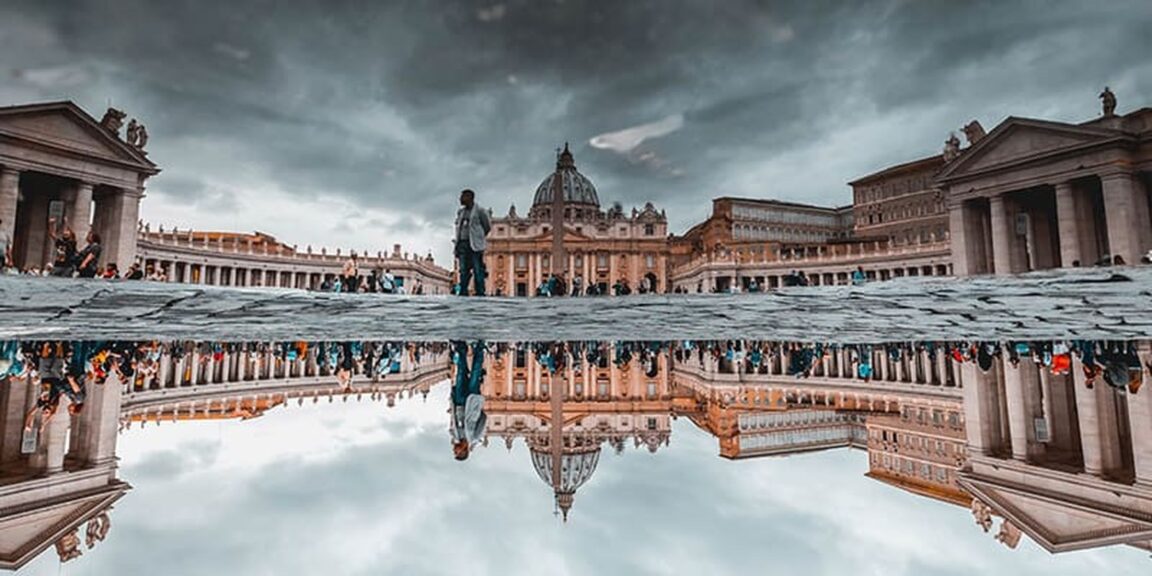
St Peter’s has always been a church first and a sight second, and ordinary admission remains free: join the queue in St Peter’s Square, pass the security screening under the colonnade, and walk in. What has changed is the layer of bookable products on the basilica’s own site. The 7 euro timed visit buys a set entry time and a digital audio guide, and routes its holders through a shorter entry flow. The dome tickets bundle that same basilica visit with the climb, with the basilica slot set an hour before or after the dome time, so buying both a dome ticket and a separate timed basilica ticket for the same visit is money wasted.
The queue question is really a time question. On a quiet winter weekday morning the free line can move in minutes. On a weekend, a feast day or any morning in high season, the security queue can stretch across the square and consume the best hour of the visit before the doors are even reached. The Wednesday papal audience and Sunday Angelus reshape the square entirely, and the basilica itself closes to sightseeing during major celebrations. Check the official calendar for the visit date, and treat any third party selling simple basilica entry at a large markup with suspicion, because the underlying admission is free.
What is the dome climb actually like?
Michelangelo’s dome is climbed from inside the basilica, and the ticket choice is about the first section only. The stairs ticket climbs all 551 steps. The lift ticket rides to the roof terrace, skipping 231 steps, and climbs the remaining 320. Between the two levels the route passes the inner gallery of the dome itself, looking down into the nave far below and up into the mosaics at close range, which many visitors rate above the final view. Above the terrace the stair becomes a narrow spiral squeezed between the inner and outer shells of the dome, leaning with the curve of the structure, with a rope handrail in the tightest section and no way to turn back against the flow.
Who should skip the climb?
The basilica’s own guidance and common sense agree: the climb is unsuitable for anyone with vertigo, claustrophobia, heart or mobility problems, and it is not wheelchair accessible. The final section is genuinely tight, hot in summer and single file. The terrace reached by lift, with its rooftop statues at eye level, its cafe and its first panorama, is a satisfying finish in itself, and visitors who stop there have not wasted the ticket. Everyone climbing should carry water, keep bags small, and expect the full round trip, including time at the lantern balcony at the top, to take 60 to 90 minutes.
What order should the basilica itself be seen in?
With the dome done first, while legs and the morning are fresh, the basilica floor rewards a slow clockwise order. Start at the Pieta, Michelangelo’s early masterpiece, in the first chapel on the right, protected behind glass since the 1972 attack. Walk the nave reading the floor markers that compare the lengths of other great churches against St Peter’s, to the bronze statue of St Peter, its foot worn smooth by pilgrims. Continue to the crossing, where Bernini’s vast bronze baldacchino rises over the papal altar and the dome soars directly above the tomb of St Peter in the crypt below. Then work along the left side: the apse with the Chair of St Peter in glory, the side chapels and tombs, and finally the Vatican Grottoes, the crypt level of papal tombs, which are entered from inside the basilica and exited outside by the square. The treasury museum is currently listed as closed for renovation, so do not build it into the plan without checking the official site.
Two courtesies govern the floor at all times. This is a working church with Masses through the day, and areas rope off without notice for services. Photography is permitted in the basilica but not during services in the immediate area, silence is expected, and the dress code, covered shoulders and knees, applies to everyone, children included in the enforcement culture even where the rule is aimed at adults. Travellers planning other great church and monument visits can compare the entry order logic with our Acropolis entry gates guide and the timed ticket discipline in our guide to the Grand Egyptian Museum visit.
What is the Scavi question, and how do you answer it?
Beneath the grottoes lies an older level again: a Roman street of mausoleums from the second to fourth centuries, excavated under the basilica from the 1940s, ending at the shrine venerated as the tomb of St Peter. This is the Scavi, the excavations, and it is the most restricted visit in Vatican City. There is no ticket window and no walk up availability. Visits are guided only, in groups of about twelve, with roughly 250 visitors a day, arranged by written request to the Excavations Office of the Fabbrica di San Pietro, through the official request route linked from the basilica’s own channels.
The honest planning advice is to request early, months ahead for busy seasons, offer the widest possible range of dates, and treat the reply, with its allocated date, time and payment instructions, as the booking. Sources differ on the current price and minimum age because the office has revised its arrangements, so this guide deliberately does not quote a figure: the office confirms the cost and conditions with the allocated place, and that confirmation is the document to rely on. The tour lasts about an hour to 90 minutes in warm, humid, confined underground spaces, with no photography, and it is closed on Sundays and Vatican holidays. The separate papal tombs of the grottoes, by contrast, need no booking at all and are the realistic underground visit for anyone who decides the Scavi request too late.
When should you go, and how long does it take?
Early is best twice over: the dome opens at 7:30 and its narrow stair is at its most comfortable before the day warms and the flow builds, and the basilica floor in its first hour has a quiet that no later slot matches. Late afternoon is the second best window, as day groups leave and the light through the windows turns golden, but the dome’s last entry and the winter 17:00 close must be respected. Allow about 90 minutes for the basilica and grottoes alone, and up to three hours for the full visit with the dome. Security, not sightseeing, is the variable, so the timed booking earns its 7 euros on any day when the square looks full.
Frequently Asked Questions
Is St Peter’s Basilica really free to enter?
Yes. Ordinary admission is free with no ticket. The paid products on the official site buy a timed entry slot, a digital audio guide, the dome climb, or combinations of those, not admission itself.
How many steps is the dome climb?
551 steps by the stairs route. With the lift to the roof terrace, the first 231 steps are skipped and 320 remain. There is no lift for the upper section.
Should you take the lift or the stairs?
Take the lift unless the full climb is itself the goal. It saves the least interesting section, preserves energy for the narrow upper spiral, and costs 5 euros more, 22 euros against 17.
Can dome tickets be changed or refunded?
No. Official dome and timed tickets are sold as non refundable and cannot be changed to another name, date or time, except that the cost is refunded if the Holy See closes the dome at short notice for a celebration.
How do you book the Scavi tour?
By advance written request to the Excavations Office through the official basilica channels, offering a wide range of dates, ideally months ahead. Places are allocated by the office, which confirms the time, cost and payment route. There are no walk up places.
What happens if you arrive in shorts or a sleeveless top?
Entry is refused at security. The dress code requires covered shoulders and knees for all visitors, and vendors around the square sell scarves and wraps precisely because refusals are routine.
Prices, hours and booking rules checked against basilicasanpietro.va and its official booking site on 14 November 2026. The basilica closes to sightseeing during major liturgical celebrations, so confirm the calendar for the visit date.