 Jordan Ellis
The Heilbronner Circular Trail is the right way to structure an active day on Dachstein Krippenstein: ride the cable car to the Krippenstein mountain station at about 2,100 metres, walk the well-marked karst trail to the Dachstein shark and on to the Heilbronn Cross, and finish at the Gjaid station, roughly three hours of walking in total, with the third cable car section returning you to the Krippenstein. The gradients are gentle enough that the operator describes the trail as suitable for less experienced hikers and children, which makes fitness a pacing question rather than a gate: go early, protect the descent timing, and keep a genuine recovery margin for the caves, the 5fingers platform or a lodge night at the Gjaidalm. This guide sets out the loop, the booking order and the pacing in full.
Quick Facts
- Trail: Heilbronner Circular Trail, starting at the Krippenstein mountain station (cable car section 2) and ending at the Gjaid station (section 3)
- Walking time: About 3 hours for the loop itself, before detours
- Altitude: Mountain station and plateau at about 2,100 metres; weather changes fast at this height
- Highlights on route: Dachstein shark viewing platform, 8 metres long and entered from inside; Heilbronn Cross; Hirzkarsee lake, 25 metres across; Krippenstein ice cave detour, under 5 minutes off the trail
- Difficulty: Rated an easy hike with gentle gradients by the operator, suitable for children and less experienced hikers, on a well-marked route
- Descent options: Section 3 cable car from Gjaid back to the Krippenstein, then sections 2 and 1 down to Obertraun; never miss the last descent
- Base: Obertraun, on Lake Hallstatt in the Salzkammergut, in the Hallstatt Dachstein UNESCO World Heritage region
How does the Heilbronner loop actually run?
Start at the valley station in Obertraun and ride the Dachstein Krippenstein cable car in sections: section 1 rises to the cave world level at Schonbergalm, and section 2 continues to the Krippenstein mountain station on the high plateau. From the station, the karst nature trail leads along the marked route, trail 661, toward the Heilbronn Cross, and the first highlight arrives early: the Dachstein shark, an 8 metre long viewing structure that visitors enter from inside, climbing a ladder to look out through the shark’s mouth over the plateau and the abyss below. It is the loop’s signature photo point and the right place for the first real stop.
From the shark, the trail continues via the Heilbronn Cross to the Gjaid station. Two short detours sit near the shark and belong in the timing plan: the Krippenstein ice cave, the fourth cave on the mountain, freely accessible and reached in under five minutes from a signed junction, where ice remains even in summer; and the Hirzkarsee, a small karst lake about 25 metres in diameter set in a moor depression, with sundew and marsh marigolds around its edge. At the Gjaid station, the choice is the section 3 cable car back up to the Krippenstein, or a rest stop first: the Gjaidalm hut is about five minutes further and is the natural lunch and recovery point of the day. The official route description is published by the operator at dachstein-salzkammergut.com, and current cable car operating times should be checked there on the morning of the hike.
What fitness does the loop really require?
Less than the altitude suggests, and more than a valley walk. The operator rates the Heilbronner trail as an easy hike with gentle gradients, suitable for less experienced hikers and children, and the path is wide and well signposted across the plateau. The honest demands are three: about three hours on your feet at around 2,100 metres, where the air is thinner and unfit walkers feel it on the short rises; uneven karst limestone underfoot, which asks for ankle-supporting footwear rather than trainers; and exposure, because the plateau offers no shelter and the operator’s own guidance is explicit that weather in the high mountains can change quickly, so sun, rain and cold protection, a phone, a snack and enough water are essential kit, not extras.
Pace it as a half day with margin, not a three hour block. A workable rhythm is the cable car up in the morning, the shark and ice cave in the first hour, the Cross and the lake in the second, and the Gjaidalm rest built into the third, with the descent timed well before the last cable car. Walkers who want more can add the 5fingers platform, reached in about 30 to 40 minutes from the mountain station on a separate path, either before the loop or as the following day’s objective. The Always Packed guide to Dachstein Five Fingers covers that platform in full, and the Salzburger Gaisberg circuit guide is the natural pairing for a second active day in the region.
Booking order: cable cars, caves and lodge nights
Book in this order. First, the day itself: the loop needs a clear enough forecast to justify the plateau, so hold the Krippenstein day flexible within a Hallstatt or Obertraun stay if the itinerary allows. Second, the cable car: the Panorama ticket pattern covering all three sections is the ticket the loop assumes, because the finish at Gjaid uses section 3. Third, any guided elements, such as the Dachstein Giant Ice Cave and Mammut Cave tours at the section 1 level, which are guided and timed, and which fit best either on the way up early or as the afternoon after the loop, not squeezed into the loop’s middle. Fourth, the lodge night, if the trip includes one: the Gjaidalm, at the end of the trail by the section 3 station, is the lodge the loop finishes beside, and a night there converts the day from a descent deadline into a sunset and an early morning on the plateau. Lodge nights should be booked ahead in season, and the descent plan the next day is simply the reverse cable car sequence to Obertraun.
What should recovery pacing look like across a Krippenstein trip?
Treat the Krippenstein day as the load day and build the days around it accordingly. The day before should be a lake level day: Hallstatt itself, the Echerntal valley or a boat on the lake, with an early night, because the loop day works best with a morning start. The loop day itself should end without a second objective stacked on top; the caves, if not done on the way up, are the ceiling for the afternoon. The day after is the right day for the 5fingers walk, the World Heritage Spiral near the summit station, or a move onward toward Salzburg, with legs that have had a night to recover.
On the trail, the recovery rules are simple and worth stating plainly. Drink before you are thirsty, because altitude and dry plateau air dehydrate without obvious sweating. Stop at the shark, the cave junction and the lake rather than only at the Cross, so the three hours arrive in four short blocks. And protect the descent: the operator’s warning not to miss the last cable car down is the one deadline on the mountain, and every pacing decision, including the Gjaidalm stop, should be made backwards from it. Walkers caught by fast weather should return to the nearest station rather than pushing on to complete the loop; the trail is a circuit of stations, and using them is the design, not a failure.
What to carry on the plateau
A daypack with sun, rain and cold layers, at least a litre of water per person, a snack beyond the hut plan, a charged phone, and footwear with ankle support and tread for karst limestone. The plateau is a fossil landscape, a former sea floor with fossilised crustaceans and shells in the rock and information boards on the karst nature trail explaining its formation, so the walking is also the interpretation: budget the stops to read it. No technical equipment is needed for the Heilbronner trail itself; via ferrata kit belongs to the separate climbing routes by the mountain station and should never be improvised into a hiking day.
Frequently asked questions
How long does the Heilbronner Circular Trail take?
About 3 hours of walking, from the Krippenstein mountain station (section 2) to the Gjaid station (section 3), before detours. Add time for the Dachstein shark, the ice cave detour of under 5 minutes each way, the Hirzkarsee and a Gjaidalm stop.
Is the Heilbronner loop suitable for beginners and children?
Yes, by the operator’s own rating: an easy hike with gentle gradients on a well-marked trail, described as the family hiking trail on the Dachstein plateau. Altitude, uneven karst and fast weather changes are the real demands, so footwear and layers still matter.
How do I get back down from Gjaid?
The section 3 cable car returns from the Gjaid station to the Krippenstein, and sections 2 and 1 continue down to Obertraun. Check the last descent time on the day and plan backwards from it; do not miss the last cable car.
What is the Dachstein shark?
An 8 metre long viewing platform in the shape of a shark, entered from inside, with a ladder up to a panoramic view from the shark’s mouth. It sits on the first part of the Heilbronner trail from the mountain station, near the ice cave junction and the Hirzkarsee.
Can I stay overnight on the mountain?
Yes. The Gjaidalm, about five minutes from the Gjaid station at the end of the trail, is the lodge option the loop finishes beside. Book ahead in season, and descend the next day by the same cable car sections in reverse.
Last checked 16 November 2026. Trail, station and timing facts from the Dachstein Salzkammergut operator’s Heilbronner Circular Trail page; cable car operating times and trail closures change with season and weather, so confirm both on the morning of the hike.
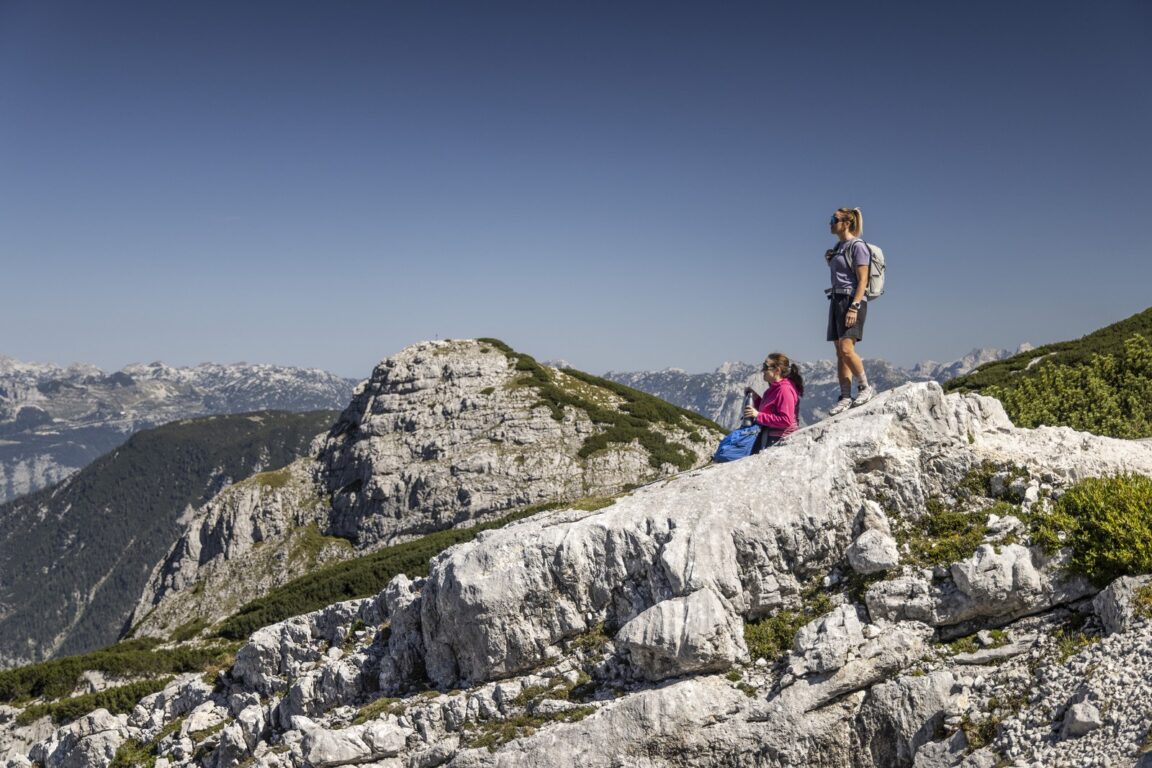
Featured image: Photo: Dachstein Krippenstein, via dachstein-salzkammergut.com, the official Dachstein Salzkammergut operator site.