 River Callahan
For the San Juan Islands in autumn, pack as if every day includes an hour standing on a windy ferry deck in light rain, because most days do: a waterproof shell with a hood, a warm mid layer, waterproof footwear, and gloves and a hat that live in the daypack from September onward. The Washington State Ferries fall schedule runs from 20 September to 26 December 2026 on the Anacortes route, serving Lopez, Shaw, Orcas and Friday Harbor on San Juan Island, and autumn crossings take roughly 50 to 70 minutes depending on the island. The bag below is one carry-on sized system for ferry decks, island cycling, shoreline walks and cool evenings, built for the season as it actually behaves.
Quick Facts
- Gateway: Anacortes, Washington; Washington State Ferries serves Lopez, Shaw, Orcas and Friday Harbor
- Fall schedule: 20 September to 26 December 2026, with about eight departures a day to Friday Harbor on most dates checked
- Crossing times: About 50 to 55 minutes to Lopez, about an hour to Shaw or Orcas, about 70 minutes to Friday Harbor
- Fares: Collected westbound only at Anacortes; an adult on foot pays once and the return is covered, and riders aged 18 and under travel free
- Core kit: Hooded waterproof shell, insulated mid layer, waterproof shoes, hat and gloves in the daypack
- Cycling: Islands are rideable in autumn with lights, a repair basics kit and the same shell; days shorten fast in November
- Bag: One 40 litre bag plus daypack; vehicle travellers should still pack a walk-on day bag for deck time
Why does the ferry set the packing rules?
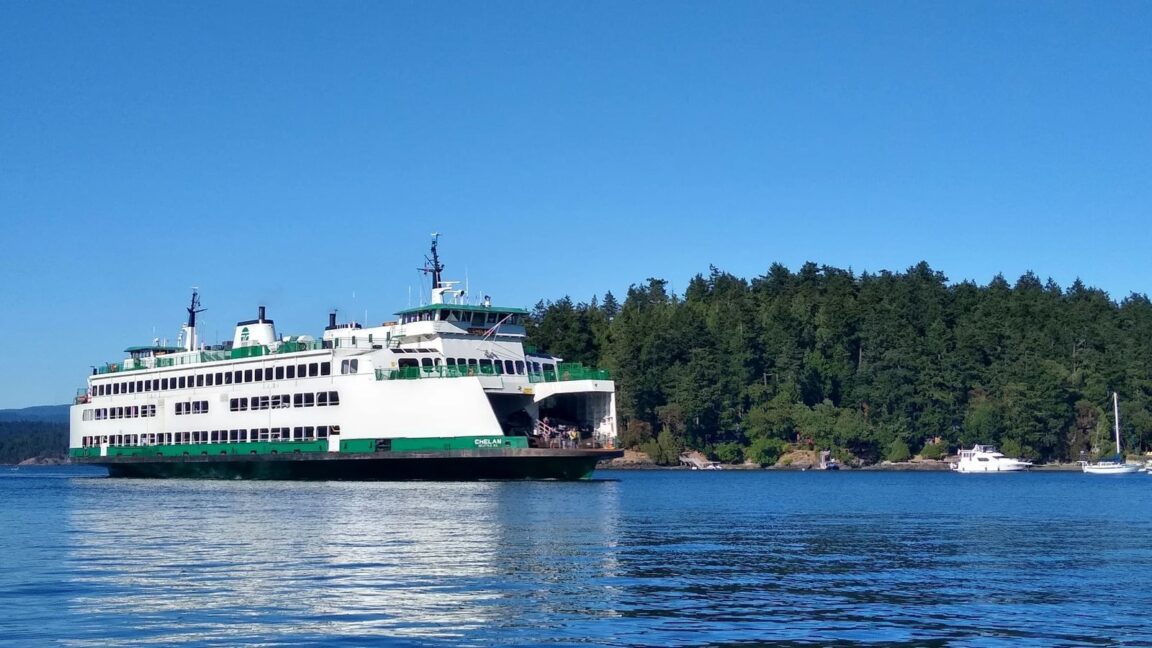
Most autumn days in the San Juans start and end on the water. The Anacortes ferry loads vehicles and walk-on passengers for a crossing of up to about 70 minutes to Friday Harbor, and the natural place to spend it is on deck, watching the channels and islands pass. On deck in October or November, the apparent temperature is the air temperature minus an hour of moving wind over cold water, and travellers in summer layers last about five minutes before retreating inside. With the shell, mid layer, hat and gloves, the whole crossing is comfortable, and the same four pieces then handle shoreline walks and cycling stops all day.
The practical ferry facts shape the bag too. Fares are collected in one direction only, at Anacortes, so the return leg needs no ticket purchase on the island. Vehicle space on this route is reservable and autumn reservations for the 20 September to 26 December season opened in July, which matters because a missed sailing in fall, with fewer departures than summer, can mean hours of waiting at a terminal with limited shelter. Pack the daypack as a self-contained waiting kit: warm layer, water, snacks, power bank and something to read, whether the car makes the boat or not. The international sailing to Sidney, British Columbia, is out of service until spring 2030 at the earliest, so autumn itineraries should treat the islands as a domestic round trip from Anacortes.
What is the island cycling layer system?
Orcas, Lopez and San Juan Island all reward cycling in autumn: quieter roads than summer, working farms, and shoreline routes such as the run out to Lime Kiln Point on San Juan Island. The clothing system is the standard cool-weather cycling stack adapted from the bag, not a second wardrobe. Padded shorts or leggings if cycling is a main activity, the merino base top, the insulated mid layer at the start of the day, and the waterproof shell as the outer layer, which is also the wind layer on descents. Lights are essential equipment, not an accessory: by November, daylight ends in the late afternoon, and island roads are unlit.
Carry the repair basics that island distances demand: a spare tube or tubeless plugs, tyre levers, a mini pump and a multitool, because bike support on the islands is limited and a puncture ten miles from Friday Harbor is a long walk in the rain. Rental fleets thin out in autumn, so travellers set on cycling should confirm availability before arrival. For the cultural anchor of a Friday Harbor base, the Always Packed guide to the Whale Museum in Friday Harbor plans the indoor half of an autumn day, and the Shenandoah Valley autumn packing guide uses the same shell and layers system for the mainland fall trip many travellers pair with this one.
Rain shells, footwear and the wet ground rule
Autumn in the San Juans is wet in a specific way: frequent light rain and drizzle rather than constant storms, ground that stays damp, and trails and farm tracks that are muddy from October onward. A waterproof shell with a hood and sealed seams earns its place over a water resistant jacket, which wets through in an hour of drizzle. Footwear follows the same rule: waterproof walking shoes or light boots with tread, worn for travel, trails and cycling stops alike, plus one clean dry pair for evenings. Socks should be merino or synthetic; cotton socks in damp shoes are the fastest route to cold feet on a ferry deck. A small dry bag inside the daypack protects documents, phone and a change of socks on the wettest days, the same system used for boat travel anywhere in this programme.
What goes in the bag, in full?
Three merino or synthetic tops, one long-sleeved base layer, one insulated mid layer, one hooded waterproof shell, two pairs of trousers with one water resistant or quick-drying pair for cycling and trail days, underwear and socks for four days washed in rotation, sleepwear with long sleeves, and the hat, gloves and scarf set. Cabins, inns and vacation rentals on the islands are heated, but autumn nights are cool and a proper sleep layer matters in older buildings. Add a swimsuit only for properties with hot tubs or saunas, which are a genuine autumn pleasure on the islands, and leave summer clothing at home without regret.
Small items close the list: a head torch for unlit lanes and early nightfall, a power bank for ferry waits and long deck crossings, a refillable water bottle, and a packable tote for island farm stands and the Friday Harbor and Orcas markets, which run into autumn with a smaller, more local character than summer. Binoculars earn their weight for deck crossings and shoreline stops, where harbour porpoises, sea lions and wintering seabirds are regular sights, and autumn is also the quiet season for the whale watching story the islands are known for in summer.
Frequently asked questions
When does the fall ferry schedule run to the San Juan Islands?
The Washington State Ferries fall timetable for the Anacortes route runs from 20 September to 26 December 2026, serving Lopez, Shaw, Orcas and Friday Harbor, with about eight departures a day to Friday Harbor on most dates checked.
Do I pay the ferry fare in both directions?
No. Fares are collected westbound only, at Anacortes. An adult on foot pays once and the return trip is covered; riders aged 18 and under travel free.
How long is the crossing to Friday Harbor?
About 70 minutes from Anacortes. Lopez is about 50 to 55 minutes, and Shaw and Orcas are about an hour, depending on the sailing pattern.
What is the single most important item for autumn in the San Juans?
A hooded waterproof shell, worn with an insulated mid layer. Between ferry decks, drizzle and unlit evening walks, those two pieces are used every day of an autumn trip.
Can I cycle the islands in autumn?
Yes, with lights, repair basics and the same layer system. Roads are quieter than summer, but daylight ends in the late afternoon by November and bike support is limited, so carry a tube, levers, pump and multitool.
Last checked 16 November 2026. Schedule, fare and reservation details from Washington State Ferries fall 2026 information; sailings can be cancelled for crew, vessel or weather reasons, so check service alerts on the day of travel.
Featured image: Photo by Kris DeBruine on Unsplash, Unsplash License.