 Hana Kim
Winter is the quietest and, for many visitors, the most rewarding season at Gila Cliff Dwellings National Monument, provided you plan around three fixed facts: entry is free, the Cliff Dweller Trail runs only from 9:00 a.m. to 4:00 p.m. with the last entry at 3:59 p.m., and the 44 mile drive from Silver City takes at least an hour and a half each way on a winding mountain road. Come with layers, boots with real traction and a full tank of fuel, and you can walk through 700 year old Mogollon rooms in near silence, with low winter light raking across the canyon and nobody queueing behind you on the ladders.
Quick Facts
- Entrance fee: Free. The National Park Service confirms no entrance pass is required at Gila Cliff Dwellings.
- Hours: Visitor center, bookstore and Cliff Dweller Trail open daily 9:00 a.m. to 4:00 p.m. Last trail entry is 3:59 p.m. and everyone must be off the trail and out of the monument by 4:50 p.m.
- Closed: Thanksgiving Day, Christmas Day and New Years Day.
- The trail: A moderately strenuous 1 mile round trip loop, climbing about 180 feet to just below 6,000 feet above sea level. Allow 1 to 2 hours.
- Drive time: 44 miles from Silver City, at least 1.5 hours and up to 2 hours each way. There is no cell phone service anywhere in the region.
- Trail rules: Only water is allowed on the trail. No food, flavored drinks, gum or tobacco, and no pets. Free kennels are available at the trailhead.
- Winter kit: Warm layers, hat and gloves, boots with good traction, and traction devices such as slip on spikes for icy sections.
Why does winter change the Gila Cliff Dwellings experience so much?
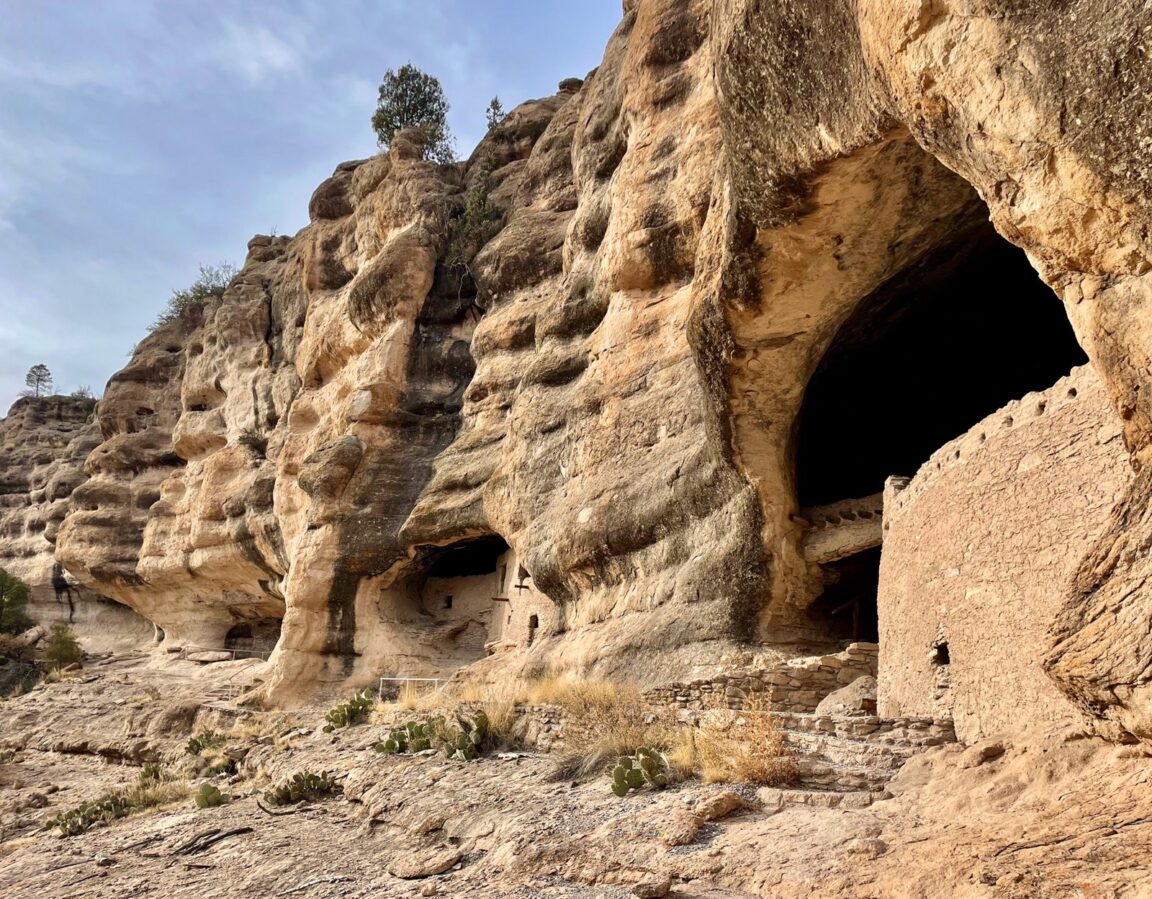
The dwellings sit inside natural caves in the wall of Cliff Dweller Canyon, built by people of the Mogollon culture in the late 1270s through about 1300, using stone, timber and the shelter of the alcoves themselves. The Park Service notes the walls visitors walk past today are still roughly 80 percent original, which is why touching, leaning on or sitting on them is prohibited. In summer this is one of the most remote but still busy stops in southwestern New Mexico. In winter the calculus flips. The monument stays open on the same daily schedule, the trail stays the same 1 mile loop, but visitation drops away, ranger attention is easier to get, and the cold, clear air that settles over the Gila Wilderness in December, January and February gives the canyon a stillness that suits a place this old.
Winter also suits the structure of the visit itself. Because the last entry to the trail is 3:59 p.m. and the site empties by 4:50 p.m., a Gila day is always a morning weighted day. Short winter daylight simply makes that discipline unavoidable rather than optional. Visitors who accept it, leaving Silver City early and walking the trail in the late morning, get the dwellings at their best: sun reaching into the south facing alcoves, frost still holding in the shaded canyon bottom, and time afterwards for the visitor center museum and the short Trail to the Past near the Lower Scorpion Campground.
What will a winter visit actually cost?
Very little at the monument itself. The National Park Service fees page for Gila Cliff Dwellings, checked for this guide in November 2026, states plainly that entrance is free and that it is no longer possible to buy interagency passes at the site, because there is no fee to cover. Your real budget lines sit outside the park boundary: fuel for roughly 88 miles of mountain driving from Silver City and back, a night or two of lodging in Silver City, which is the practical base, and food, since there is no cafe at the monument and no food at all is permitted on the trail. Eat before you start the trail and carry only water on it. Travelers combining the monument with other fee charging parks on a longer Southwest loop should still carry an interagency pass for those parks, but Gila itself will not ask for it.
That free entry also removes the usual reservation question. There is no timed entry system and no booking window to manage here. The scarce resource in winter is not a ticket, it is daylight and road condition, and both are managed by leaving early rather than by booking early. For wider context on which parks in the region do require reservations, see our guide to US national park reservations in 2026.
How should you time the drive from Silver City in winter?
The Park Service is unusually direct about this road: the 44 mile trip from Silver City will take at least an hour and a half and up to two hours because of the mountainous, winding nature of New Mexico Highway 15. In winter, build the slower end of that range into your plan and then add a margin. Frost and ice linger on shaded bends long after the sun is up, and the road climbs and descends through country where a slow vehicle ahead of you can set your pace for miles. A sensible winter rhythm is to leave Silver City by about 8:00 a.m., reach the trailhead parking area beside the bookstore by 10:00 a.m. at the latest, and be on the Cliff Dweller Trail well before midday. That leaves the full 1 to 2 hour trail window in hand, an unhurried pass through the dwellings, and a return drive completed in daylight.
Two further winter specifics matter. First, cell phones do not work anywhere in the region, in any season, so download or print everything you need before leaving Silver City and tell someone your plan. Second, fuel and services thin out quickly once you leave town. Start with a full tank, carry water and warm clothing in the car as well as on the trail, and check the monument alerts page and the weather forecast the night before, because snowfall can change both road and trail conditions overnight.
What is the Cliff Dweller Trail like in cold weather?
The trail is a 1 mile unpaved loop that climbs about 180 feet on uneven masonry rock stairs with no handrails, crosses the canyon drainage on wooden bridges, and then enters the dwellings themselves, a series of rooms built inside five natural caves set about 180 feet above the canyon floor. The Park Service rates it moderately strenuous and puts the average hiking time at about an hour to an hour and a half including time inside the rooms. In winter the same trail asks for more care rather than more fitness. The Park Service winter guidance for the hike warns that temperatures can drop below freezing, especially in the mornings and evenings, that the canyon can stay chilly even during the day, and that snowfall can make the trail icy. Boots with good traction are essential, and the park suggests considering trekking poles and traction devices for stability on slippery sections.
Inside the caves, take your time. Ladders connect levels, original timbers still carry roofs, and the soot darkened ceilings and worn thresholds carry the detail that photographs flatten. Rangers and volunteers are often stationed at the dwellings when staffing allows, and in winter, with few visitors, their explanations of Mogollon farming on the mesa tops, the move into the caves in the late 1200s, and the relatively short occupation of the site tend to run longer and more conversational. Stay on the trail, do not enter closed off rooms, and do not touch the walls: the same cold that preserves the quiet also makes old masonry brittle.
What should you wear and carry on a winter Gila hike?
Dress in layers, as both the Park Service trail guidance and basic mountain sense dictate: a warm jacket, gloves and a hat for the shaded canyon and the exposed climb, sturdy footwear with tread you trust on wet stone, and at least a liter of water per person even in cold weather, because the climb and the altitude, just below 6,000 feet, dehydrate quietly. Sunglasses earn their place too, since low winter sun reflecting off pale conglomerate rock is bright. Everything else edible stays in the car. Only water may be carried on the trail, a rule that protects the site from pests and crumbs in rooms that have survived seven centuries.
What else fits around the dwellings on a short winter day?
Start or finish at the visitor center, where the museum covers Mogollon artifacts found in the area and the wider story of the Gila, the first designated wilderness area in the United States, which surrounds the monument. The Western National Parks bookstore at the trailhead keeps the same 9:00 a.m. to 4:00 p.m. hours and sells the free trail guide companion material and maps for the wider forest. With an hour to spare, the Trail to the Past, just before the end of the road near the Lower Scorpion Campground, is an easy quarter mile walk to a small alcove dwelling and a large pictograph panel, and it is the monument area trail that works for visitors who cannot manage the main climb. Hot springs are part of the wider Gila story, with developed and backcountry springs in the canyons around the monument, but in winter they are an add on for a second day with local advice taken in Silver City, not a casual extension of a short day, since river crossings and unmaintained trails change character completely in cold water and short light.
Silver City itself rewards the overnight this trip effectively requires. It is the supply base, the fuel stop and the place with the motels, inns and restaurants that make an 8:00 a.m. mountain start civilized, and its old mining town center fills the evening after a monument day comfortably. Travelers building a longer New Mexico loop often pair Gila with White Sands or with the parks of southern Arizona, and our planning notes in the 2026 reservations guide help sequence the fee and booking rules across that wider trip.
What are the most common winter mistakes at Gila Cliff Dwellings?
The first is treating the drive as a normal 44 miles. It is not, and visitors who leave Silver City at 10:00 a.m. in winter routinely arrive with barely enough time to hurry the trail before the 3:59 p.m. last entry, which defeats the entire point of coming in the quiet season. The second is arriving in summer footwear. Trainers on icy masonry steps with no handrails are the monument most preventable accident. The third is assuming services: there is no cell signal, no food on the trail, no fee machine to worry about but also no cafe, and no pets on the trail, although the free trailhead kennels solve the dog problem if you are traveling with one. The fourth is skipping the alerts check. The monument closes only on Thanksgiving, Christmas and New Years Day, but weather can close or ice the trail on any given winter morning, and the only reliable word is the Park Service alerts and conditions for the monument on the day itself.
Travelers who enjoy cold season heritage trips in quiet conditions may also like our winter guide to Banff in winter, which applies the same early starts, layers and traction first thinking to a very different mountain landscape.
Frequently asked questions about Gila Cliff Dwellings in winter
Is Gila Cliff Dwellings National Monument free to enter?
Yes. The National Park Service confirms that entrance to the monument is free and no entrance pass is required. Budget instead for fuel, Silver City lodging and food, none of which are sold at the monument.
What are the winter hours for the Cliff Dweller Trail?
The trail, visitor center and bookstore are open daily from 9:00 a.m. to 4:00 p.m. year round, with the last visitors allowed on the trail at 3:59 p.m. and everyone off the trail and out of the monument by 4:50 p.m. The monument is closed on Thanksgiving Day, Christmas Day and New Years Day.
How long does the drive from Silver City really take?
The Park Service says to allow at least 1.5 hours and up to 2 hours for the 44 mile mountain drive, and winter frost or slow traffic can push you to the long end of that range. Leave by about 8:00 a.m. for a relaxed late morning hike.
Can the trail be icy in winter?
Yes. Park Service winter guidance for the hike notes that snowfall is possible, temperatures can drop below freezing, and the trail can become icy. Wear boots with good traction and consider trekking poles and traction devices for the uneven stone stairs, which have no handrails.
Are dogs allowed at Gila Cliff Dwellings?
Dogs are not allowed on the Cliff Dweller Trail, but free kennels are available at the trailhead, and dogs are allowed on surrounding Forest Service trails. Only water may be carried on the monument trail itself.
Is there cell phone service at the monument?
No. The Park Service states that cell phones do not work anywhere in the region. Download maps and information before leaving Silver City and plan to be self reliant for the whole visit.
Prices, hours and conditions checked against National Park Service pages for Gila Cliff Dwellings National Monument on 16 November 2026. Recheck park alerts on the morning of a winter visit, since snow and ice can change trail conditions overnight.